
- Published on
What Is Fitrah in Islam — The Inner Compass You Were Born With
- Authors

- Name
- Ahmad
- Role
- Senior Marketing Manager, Islamic education • Deen Back
بِسْمِ اللهِ الرَّحْمٰنِ الرَّحِيْمِ
In the name of God, the Most Gracious, the Most Merciful.
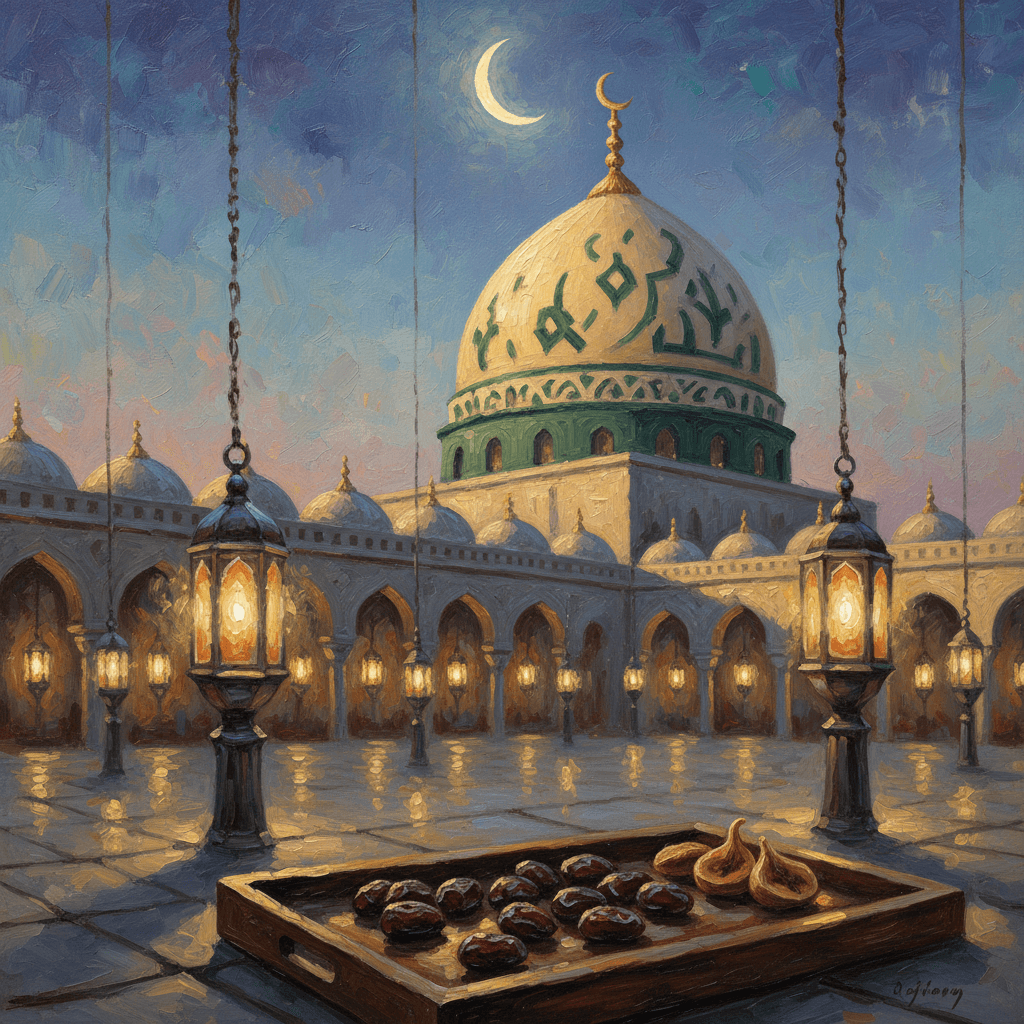
Have you ever seen a small child look up at the night sky and ask, without being taught, "Who made all of this?" Or felt, in a moment of genuine stillness, something stir in you — a recognition of something larger than yourself — before any formal religious thought arrived?
That is not coincidence. That is fitrah speaking. And according to Islam, it is speaking in every human being — not as a product of education or culture, but as a factory setting placed there by Allah Himself.
What Fitrah Actually Means
Fitrah (فطرة) comes from the Arabic root fatara — to split, to originate, to create with a particular nature. It refers to the innate disposition Allah placed in every human being at the point of creation: an inclination toward recognizing Him, an orientation toward truth, and a natural pull toward goodness.
The Quran states it directly:
فَأَقِمْ وَجْهَكَ لِلدِّينِ حَنِيفًا فِطْرَتَ اللَّهِ الَّتِي فَطَرَ النَّاسَ عَلَيْهَا لَا تَبْدِيلَ لِخَلْقِ اللَّهِ ذَلِكَ الدِّينُ الْقَيِّمُ
"So set your face toward the religion, inclining to truth. The fitrah of Allah upon which He has created all people. No change should there be in Allah's creation. That is the correct, enduring religion."
— (Surah Ar-Rum, 30:30)
And the Prophet ﷺ elaborated:
كُلُّ مَوْلُودٍ يُولَدُ عَلَى الْفِطْرَةِ فَأَبَوَاهُ يُهَوِّدَانِهِ أَوْ يُنَصِّرَانِهِ أَوْ يُمَجِّسَانِهِ
Kullu mawludin yuladu 'ala al-fitrah fa-abawahu yuhawidanihi aw yunassiranhi aw yumajjisanhi
"Every child is born on the fitrah, and then their parents make them a Jew, a Christian, or a Zoroastrian."
— (Sahih Bukhari 1358, sunnah.com)
Think of fitrah like the factory calibration of a compass. Every compass comes set to point north. But if you place strong magnets around it, subject it to consistent pressure in one direction, and tell it that north is actually somewhere else — it will drift. The compass has not changed; it has been pushed off its original orientation. The calibration is still there, deep in its design. It can be recovered. This is the fitrah.
Why Modern Muslims Struggle With Their Fitrah
The modern world is exceptionally skilled at suppressing the fitrah. Not through dramatic means — but through constant, low-level noise.
Entertainment that keeps the inner voice busy so it never has a chance to surface. Content designed to keep you reacting, scrolling, consuming — never pausing long enough to notice what the fitrah is saying. Materialism that trains you to measure meaning by acquisition. Environments that are entirely human-made, with no natural world to break through and remind you of something larger.
The result for many Muslims is a strange double life: formally Muslim in label and practice, but increasingly disconnected from the feeling of what it means. Prayer becomes mechanical. Quran becomes a ritual. The fitrah — that deep inner orientation — has been slowly displaced by the noise of a life running at full speed.
This is not a moral failure. It is an environmental problem that requires a structural solution.
How to Reconnect With Your Fitrah Daily
Create Regular Silence
The fitrah speaks in the quiet. It does not compete well with constant stimulation. The single most important environmental change for reconnecting with fitrah is creating regular periods of genuine silence — not the absence of external noise, but the quieting of internal noise as well.
The morning adhkar, said slowly and with presence, is one of the most reliable ways to start the day in fitrah-alignment. These supplications were designed for exactly this — speaking to the reality of Allah's presence and your dependence, before the noise of the day begins.
Spend Time in Nature
The Quran points to the natural world repeatedly as evidence of Allah's reality and signs of His creation. Surah Ar-Rum — the same chapter that mentions fitrah — speaks extensively about the signs in the natural world that "people who reflect" will recognize. The fitrah responds to natural creation powerfully: open sky, running water, mountains, green spaces. These are not just pleasant environments — they are the kind of creation the fitrah is calibrated to recognize as evidence.
A twenty-minute walk with no phone, simply observing the created world, can do more to reconnect with fitrah than hours of content consumption.
Practice Honest Gratitude
Shukr — gratitude — is one of the most natural expressions of fitrah. The person in contact with their fitrah naturally feels grateful for existence, for the body that works, for the breath that arrives without effort. Read how to be more grateful Islamically and what is shukr in Islam for practical frameworks.
The morning dua upon waking:
الْحَمْدُ لِلَّهِ الَّذِي أَحْيَانَا بَعْدَ مَا أَمَاتَنَا وَإِلَيْهِ النُّشُورُ
Alhamdulillahi alladhi ahyana ba'da ma amatana wa ilayhi an-nushur
"All praise is due to Allah who gave us life after causing us to die, and to Him is the resurrection."
This is fitrah speaking: the immediate acknowledgment, upon waking, that life itself is a gift.
Rebuild Your Daily Connection to the Fitrah Through Consistent Morning and Evening Practice
The adhkar and dua routines in DeenBack are designed to keep your heart aligned with what the fitrah already knows — starting and ending each day with the remembrance of Allah.


Free download. Premium features available in-app.
Minimize What Suppresses the Fitrah
Identifying and reducing the specific inputs that suppress your inner voice is as important as adding practices that support it. For most people, this means honest assessment of: screen time and content consumption, the social environments that pressure away from authentic faith expression, and the habits that keep the nafs busy so the fitrah cannot be heard.
This is the work how to break bad habits as a Muslim addresses systematically — not just stopping behaviors but replacing the suppressive inputs with ones that support fitrah alignment.
Signs Your Fitrah Is Coming Back Online
When the work of reconnecting with fitrah is taking effect, you notice:
- Prayer begins to feel less mechanical — there are moments of genuine presence
- You feel discomfort at moral wrongs that you had previously become numb to
- Gratitude arises spontaneously, not just when prompted
- You have a sense of meaning that does not require constant external maintenance
- Quiet, alone time becomes restful rather than uncomfortable — because you are comfortable with what the fitrah says
This is not a dramatic transformation — it is a recalibration, like a compass finding north again after being moved away from the interfering magnets.
Common Questions
If fitrah is innate, why do people reject Allah?
The Quran addresses this: the fitrah can be layered over so thoroughly by education, environment, sin, and conditioning that a person lives entirely disconnected from it — even while it continues to pulse underneath. The examples of people who return to faith after years of rejection are often experienced as a breakthrough of the fitrah through layers of suppression. The fitrah does not disappear; it waits.
Is my specific version of Islam determined by fitrah?
The fitrah inclines toward monotheism, truth, and goodness — the broad recognition of Allah and moral reality. The specific details of how to worship, the legal framework, the community practices — these require the guidance that came through prophets and revelation. Fitrah is the starting orientation; the Quran and Sunnah are the complete map.
What if I have never felt anything spiritual?
Then the fitrah has been heavily suppressed by layers of conditioning and environment. This is not a permanent state. The practices described above — silence, nature, honest gratitude, gradual reduction of suppressive inputs — are not guaranteed to produce a dramatic spiritual experience. They are the conditions under which the fitrah, which is still there, can begin to resurface. Start with dua for guidance — asking Allah directly to reconnect you is one of the most honest and powerful starting points.
The Compass That Never Stops Pointing
The fitrah does not expire. It is not taken away. Every human being — regardless of their history, their distance from Islam, their years of neglect — carries it as the original design of their being. Reconnecting with it is not about becoming someone new. It is about becoming who you were made to be.
The Fitrah Responds to Consistency — Start Your Daily Practice and Watch It Awaken
DeenBack helps you build the morning and evening routines that create the conditions for your fitrah to come back to life — daily dhikr, dua, and Quran that reconnect you with what is deepest in you.
Free download. Premium features available in-app.
Frequently Asked Questions
Does fitrah mean everyone is born Muslim?
The Prophet ﷺ said every child is born on fitrah and then their parents make them Jewish, Christian, or Zoroastrian. Scholars interpret this to mean that every human being is born with a natural disposition toward recognizing Allah, an innate inclination toward goodness and monotheism. This is not the same as being born with full knowledge of Islamic law. It means the baseline of human nature inclines toward Allah — and that inclination must be shaped, nurtured, or suppressed by the environment, education, and choices of life.
Can the fitrah be lost permanently?
Scholars say the fitrah cannot be entirely erased — it is built into human nature by Allah's design. However, it can become so buried under layers of sin, conditioning, and neglect that a person lives entirely disconnected from it. The good news is that tawbah and sincere return to Allah can reconnect a person to their fitrah at any point in their life. The many stories of people who returned to Islam or experienced a profound spiritual awakening later in life are often described as the fitrah breaking through after years of suppression.
What are the acts associated with fitrah in hadith?
The Prophet ﷺ mentioned several specific practices as being part of fitrah: circumcision, trimming the mustache, cutting the nails, plucking the underarm hair, shaving the pubic hair, using the siwak (tooth-cleaning stick), rinsing the nose, and using water for purification. These are called the sunan al-fitrah — practices that align the body with its natural, clean state. They represent one specific usage of the word; the broader concept of fitrah as innate disposition toward Allah and goodness is the larger spiritual meaning.
Why does the Quran tell us to set our face toward the religion according to fitrah?
The Quran verse (30:30) connects Islam — the religion — with fitrah directly. The command to 'set your face toward the religion, inclining to truth' is paired with 'the fitrah of Allah upon which He has created all people.' The point is that following Islam is not going against human nature — it is aligning with it. The natural human state is one of gratitude, worship, and orientation toward truth. Islam provides the complete framework for expressing what the fitrah already knows is right.
How do I know if I am living in alignment with my fitrah?
Signs of alignment with fitrah include: a sense of meaning and purpose that does not depend entirely on external circumstances, genuine discomfort with moral wrongs (not just rule-breaking but inner aversion), a natural inclination toward gratitude, honesty, and care for others, and a felt orientation toward Allah even in ordinary moments. Misalignment often shows up as the opposite: a persistent sense of emptiness despite external success, a numbed conscience, and a life that feels like performance rather than genuine living.