
- Published on
Sunnah Foods of the Prophet: What He Ate and Why It Matters
- Authors

- Name
- Ahmad
- Role
- Senior Marketing Manager, Islamic education • Deen Back
بِسْمِ اللهِ الرَّحْمٰنِ الرَّحِيْمِ
In the name of God, the Most Gracious, the Most Merciful.
You eat every day. Several times a day, in fact. And yet how often do you think about whether what you are putting in your body connects to your deen?
The Prophet Muhammad ﷺ was not just a spiritual leader. He was a man who ate, slept, dressed, and moved through the world — and his choices in all of these areas are preserved in hadith for a reason. The sunnah foods of the Prophet are not a diet trend. They are a doorway into living more intentionally, more gratefully, and more in alignment with a tradition that understood the connection between what enters the body and what happens in the heart.
What the Quran and Sunnah Say About Food
Allah does not leave food as a neutral matter. The Quran repeatedly connects eating with gratitude:
يَا أَيُّهَا الَّذِينَ آمَنُوا كُلُوا مِن طَيِّبَاتِ مَا رَزَقْنَاكُمْ
Yaa ayyuhalladhiina aamanuu kuluu min tayyibaati maa razaqnaakum
"O you who believe, eat from the good things We have provided for you." — (Surah Al-Baqarah, 2:172)
The word tayyibaat means wholesome, good, and pure — not just halal in the legal sense, but genuinely nourishing and beneficial. The Prophet ﷺ embodied this in what he chose to eat.
On the Prophet's overall approach to food:
"The son of Adam does not fill any vessel worse than his stomach. It is sufficient for the son of Adam to eat a few mouthfuls to keep him going. If he must do that, then let him fill one-third with food, one-third with drink, and one-third with air."
— (Tirmidhi 2380)
This is not asceticism — it is wisdom. The body is an amanah (trust), and feeding it correctly is part of fulfilling that trust.
The Core Sunnah Foods and Their Evidence
Dates (Tamr)
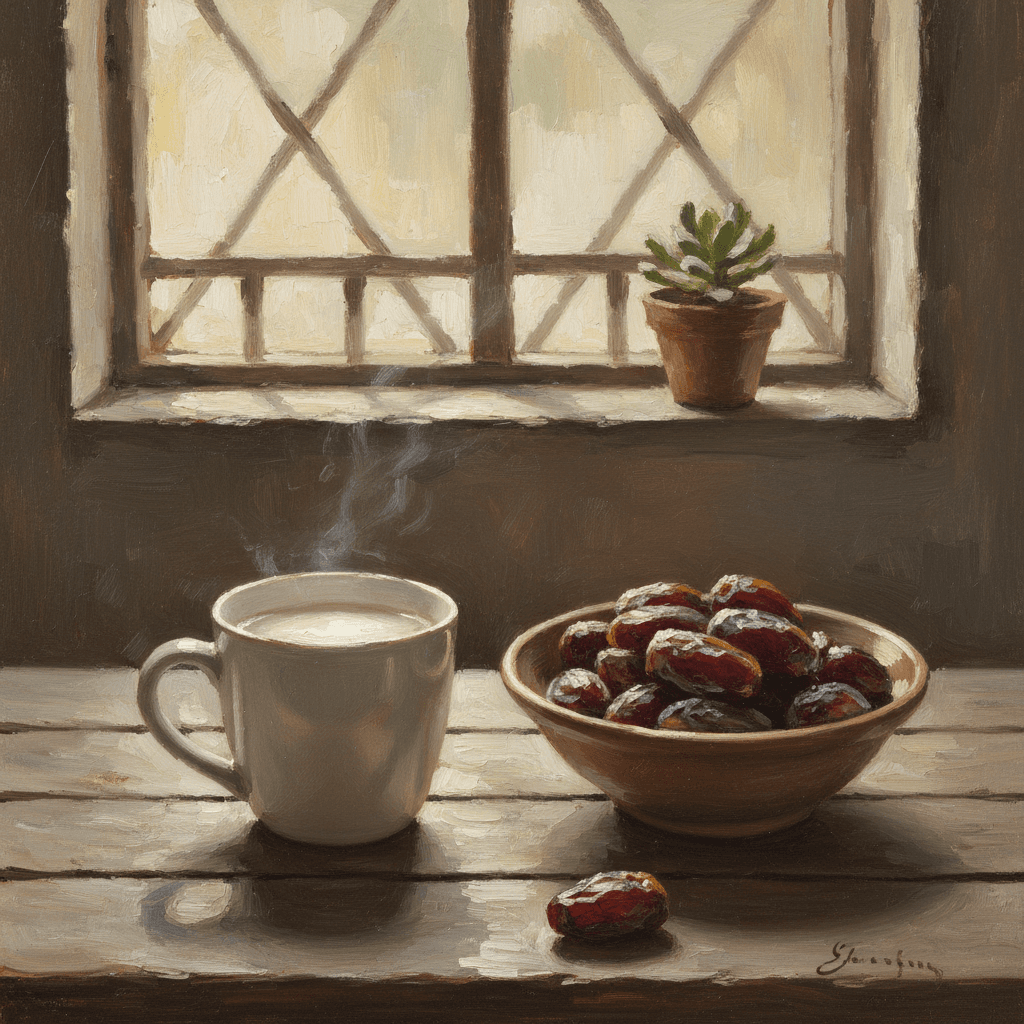
Dates are the most consistently mentioned food in prophetic tradition. The Prophet ﷺ ate them at nearly every meal and broke his fast with them.
"Whoever starts his morning with seven Ajwa dates will not be harmed that day by poison or magic."
He also said: "A house that has dates will never go hungry." (Sahih Muslim 2046). Dates are high in natural sugars, fibre, potassium, and magnesium — a near-perfect food for sustained energy without blood sugar spikes.
Olive Oil (Zayt)
"Eat olive oil and use it as ointment, for it comes from a blessed tree."
— (Tirmidhi 1851)
Allah describes the olive tree as mubarakah (blessed) in the Quran (Surah An-Nur, 24:35). Modern nutrition confirms what prophetic wisdom taught centuries ago: extra-virgin olive oil contains powerful anti-inflammatory compounds and is central to some of the world's healthiest dietary patterns.
Honey (Asal)
"There is healing in three things: a stroke of the cupping glass, a drink of honey, and cauterization by fire, but I forbid my people from cauterization."
The Quran devotes an entire surah to bees (An-Nahl) and describes honey as "a healing for people" (16:69). Raw honey contains antibacterial properties, antioxidants, and enzymes not present in processed alternatives.
Black Seed (Habbatus Sauda)
"Use the black seed, for it is a healing for every disease except death."
Nigella sativa (black seed / black cumin) has been the subject of modern research for its immune-modulating and anti-inflammatory effects. The Prophet ﷺ said this about it over 1,400 years ago.
Barley and Talbina
Talbina is a porridge made from barley flour, often with honey and milk. The Prophet ﷺ recommended it particularly for the sick and the grieving:
"Talbina brings comfort to the heart of the sick person, and takes away some of the grief."
Why We Eat the Opposite of This Today
The foods the modern world offers are designed to hijack your appetite, not nourish your body. Ultra-processed foods engineer cravings that are nearly impossible to resist through willpower alone.
This is where the nafs enters the picture. The nafs does not want dates and olive oil. It wants whatever triggers the most dopamine in the shortest time — and food manufacturers know this. The sunnah of eating is not just a dietary practice; it is an act of resistance against an environment that is working against your physical and spiritual health.
The Prophet ﷺ did not eat out of craving. He ate out of intention. That shift — from reactive eating to intentional eating — is the deeper sunnah.
How to Make Sunnah Foods Part of Your Daily Life
Start with the morning date habit. Eat seven dates before breakfast, specifically before anything else enters your stomach. This takes thirty seconds and costs almost nothing, but it connects your morning to prophetic practice immediately. For a deeper morning routine, see daily sunnahs of the Prophet.
Replace one processed oil with olive oil. You do not need to overhaul your kitchen. Simply use olive oil for dipping bread or dressing salads. The shift from seed oils to olive oil can happen gradually.
Add honey to your tea instead of sugar. Use raw honey — the processed, clear variety sold in supermarkets has most of the beneficial enzymes removed. One teaspoon of raw honey in warm (not boiling) water in the morning is a prophetic habit with measurable nutritional benefits.
Eat less at each meal. The one-third principle from Tirmidhi 2380 is harder than it sounds. The nafs pushes you to fill the plate and finish it. Practice stopping when you are 60-70% full. This single habit, adopted from the sunnah, has outsized effects on energy, focus, and how your worship feels after meals.
Cook with intention. Begin with bismillah before cooking and eating, and end with alhamdulillah after. This frames food as provision (rizq) from Allah, not just fuel you consume. For more on sunnah of eating, including the etiquette of eating together, the right hand, and what to say.
Track Your Sunnah Food Habits Daily
DeenBack helps you build small prophetic habits — including diet intentions, morning adhkar, and daily tracking — with streaks that keep you consistent week after week.


Free download. Premium features available in-app.
Signs Your Relationship With Food Is Changing
When sunnah food habits are taking root, you will notice that you think about food differently before eating, not just during it. You might find yourself pausing before a meal — not because you are checking your phone, but because you are saying bismillah with actual awareness.
You will also notice that eating less feels more normal than it once did. The nafs adapts. What once felt like deprivation starts to feel like clarity. And the food you do eat — simpler, more intentional — tastes better and sustains you longer.
For broader self-improvement through Quranic and prophetic guidance, see how to purify your heart in Islam and how to increase iman. The sunnah diet is one thread in a much larger tapestry of prophetic living.
Common Questions
Do I need to eat only these foods? No. The sunnah foods are additions and improvements, not exclusions. The Prophet ﷺ ate what was available in his environment. The principle is: eat halal, eat in moderation, and where possible, favour the foods the Prophet ﷺ praised. Everything else is flexibility.
Can I take black seed oil in capsule form? Yes. Many Muslims who find the taste of black seed oil difficult take it in capsule form. The benefit is in the active compounds — the method of delivery is secondary. Choose cold-pressed, additive-free black seed oil when possible.
What about the sunnah of fasting — does that count? Absolutely. The Prophet ﷺ fasted regularly: Mondays and Thursdays, the white days of each lunar month (13th, 14th, 15th), and six days of Shawwal after Ramadan. Fasting is itself a sunnah food practice — specifically, the practice of disciplining the appetite entirely. See sunnah acts on Jummah for other prophetic practices to build alongside these.
The Table of a Prophet Is Still Open
Every time you eat dates in the morning, drizzle olive oil on your bread, or stir honey into your tea — you are doing something the Prophet ﷺ did. That is not a small thing. It is a thread connecting you across fourteen centuries to a man whose every habit was an act of worship.
The food you eat changes you — physically and spiritually. The sunnah foods were chosen by the best of creation for a reason. They deserve a place on your table.
Build One Prophetic Habit at a Time
DeenBack lets you set daily habit goals — including sunnah food practices, morning duas, and consistency tracking — so prophetic living becomes your normal, not your exception.
Free download. Premium features available in-app.
Frequently Asked Questions
What foods did the Prophet ﷺ eat most often?
The Prophet ﷺ ate dates most frequently, along with bread, olive oil, vinegar, meat when available, and honey. He is reported to have loved dates, cucumbers with dates, barley bread, and gourd. His diet was simple, light, and purposeful rather than indulgent.
Is eating sunnah foods a religious obligation?
No, eating these specific foods is not obligatory (fard). It is a recommended practice (sunnah) that carries spiritual and physical benefit. The obligation is to eat halal food and avoid excess — the sunnah foods are a beloved addition to that foundation.
How do I start incorporating sunnah foods without overhauling my diet?
Start with one food at a time. Add seven dates to your morning before breakfast — this is the specific sunnah of eating seven Ajwa dates in the morning (Sahih Bukhari 5445). Once that habit is established, add olive oil as a dip with bread. Layer rather than overhaul.
Does eating sunnah foods guarantee health benefits?
The Prophet ﷺ did not prescribe these foods as medical cures in the clinical sense. They are foods with recognized nutritional value that the Prophet ate and recommended. Relying on them with tawakkul — while also seeking proper medical care when needed — is the balanced Islamic approach.
What did the Prophet ﷺ avoid eating?
The Prophet ﷺ never ate to excess. He described filling a third of the stomach with food, a third with water, and leaving a third for air (Tirmidhi 2380). He also did not eat very hot food, believing it carries less blessing than food allowed to cool slightly.