
- Published on
Prophetic Medicine in Islam: The Healing Tradition of the Sunnah
- Authors

- Name
- Ahmad
- Role
- Senior Marketing Manager, Islamic education • Deen Back
بِسْمِ اللهِ الرَّحْمٰنِ الرَّحِيْمِ
In the name of God, the Most Gracious, the Most Merciful.
Before modern medicine, before pharmaceutical companies, before the age of clinics and scans and synthetic compounds — there was prophetic medicine. A system of health and healing that the Prophet Muhammad ﷺ practiced, recommended, and transmitted to his companions across fourteen centuries.
This is not alternative medicine in the contemporary sense. It is not mysticism or superstition. It is a coherent tradition that combines physical remedies, spiritual practices, and a worldview that sees health as deeply connected to the state of the heart.
Modern Muslims often inherit it as fragments — someone mentions black seed, someone else does cupping for the first time. But understanding it as a system changes how you relate to your own body, your health, and the daily choices that either support or undermine it.
What Prophetic Medicine Is — and Is Not
The Prophet ﷺ stated a foundational principle:
"There is no disease that Allah has created except that He also created its cure, known by some and unknown by others."
This is a statement of theological confidence: illness and cure both come from Allah. Seeking a cure is not a lack of faith — it is the correct Islamic response to illness. The Prophet ﷺ himself sought remedies and encouraged others to do the same.
Prophetic medicine (Tibb Nabawi) includes three categories:
- Physical remedies explicitly recommended by the Prophet ﷺ (black seed, honey, olive oil, dates, cupping)
- Spiritual remedies for ailments with a spiritual dimension (Quranic recitation, ruqyah, dua for the sick)
- Preventive practices that maintain health (fasting, moderation in food and drink, cleanliness)
What it is not: a claim that prophetic remedies replace modern medicine for serious illness. The prophetic tradition explicitly encourages seeking medical care. The Prophet ﷺ said to one companion: "Seek treatment, O servants of Allah, for Allah has not created a disease without creating a cure for it." (Abu Dawud 3855).
The Core Prophetic Remedies and Their Evidence
Black Seed (Habbatus Sauda / Nigella Sativa)
The most famous prophetic medicine statement:
"Use the black seed, for it contains a cure for every disease except death."
Black seed has been studied extensively in modern research for its immune-modulating, anti-inflammatory, and antimicrobial properties. The active compound thymoquinone has shown effects in numerous peer-reviewed studies. What the Prophet ﷺ said 1,400 years ago is now scientifically investigated — and largely supported.
Use: one teaspoon of black seed oil daily, or a teaspoon of whole seeds mixed with honey. Consistency matters more than quantity.
Honey (Asal)
وَأَوْحَى رَبُّكَ إِلَى النَّحْلِ... يَخْرُجُ مِن بُطُونِهَا شَرَابٌ مُّخْتَلِفٌ أَلْوَانُهُ فِيهِ شِفَاءٌ لِّلنَّاسِ
"And your Lord revealed to the bee... from their bellies comes a drink of varying colors, in which there is healing for people." — (Surah An-Nahl, 16:68-69)
The Prophet ﷺ also used honey therapeutically, prescribing it for stomach ailments. The companion narrates: "A man came to the Prophet ﷺ saying his brother had stomach problems. The Prophet ﷺ said: 'Give him honey.'" (Sahih Bukhari 5684).
Use: raw honey, not processed. The beneficial enzymes and antimicrobial properties are largely destroyed in commercially heated honey. One to two teaspoons daily in warm (not boiling) water, or mixed with black seed.
Hijama (Cupping Therapy)
"The best of what you treat yourselves with is cupping (hijama), and kust al-bahri (marine costus)."
The Prophet ﷺ used hijama himself and recommended it for specific conditions. Wet cupping (hijama) involves applying cups to the skin to draw blood, traditionally on specific points on the back and head.
The recommended days for hijama are the 17th, 19th, and 21st of the lunar month, based on prophetic practice. For more on building prophetic daily habits including timing-specific ones, see daily sunnahs of the Prophet.
Zamzam Water
"The water of Zamzam is for whatever it is drunk for."
— (Ibn Majah 3062)
When drinking Zamzam, make dua first — specifying your intention. The prophetic tradition of drinking Zamzam standing, facing the Qiblah, and in three breaths is well documented.
Olive Oil
"Eat olive oil and use it for anointing, for it comes from a blessed tree."
— (Tirmidhi 1851)
Olive oil used both internally and externally. The scientific support for extra-virgin olive oil's anti-inflammatory and cardiovascular benefits is among the most robust in nutritional research.
Why Modern Muslims Struggle With Prophetic Medicine
The challenge is not belief — most Muslims accept these remedies in principle. The challenge is integration.
Modern life compartmentalizes health into: see a doctor when sick, take medication, recover. The prophetic model integrates health practices into daily life before illness arrives. Black seed daily. Honey in the morning. Fasting on Mondays and Thursdays. Cupping periodically. Moderation in eating consistently.
The nafs resists this because it requires daily effort without visible immediate reward. The benefit of prophetic health practices is largely preventive and cumulative — exactly the kind of outcome that the nafs, which prefers immediate gratification, tends to dismiss.
This is where Islamic self-improvement connects directly to physical health: training the nafs toward long-term benefit over short-term ease is the work of both spiritual and physical development.
How to Practice Prophetic Medicine Daily
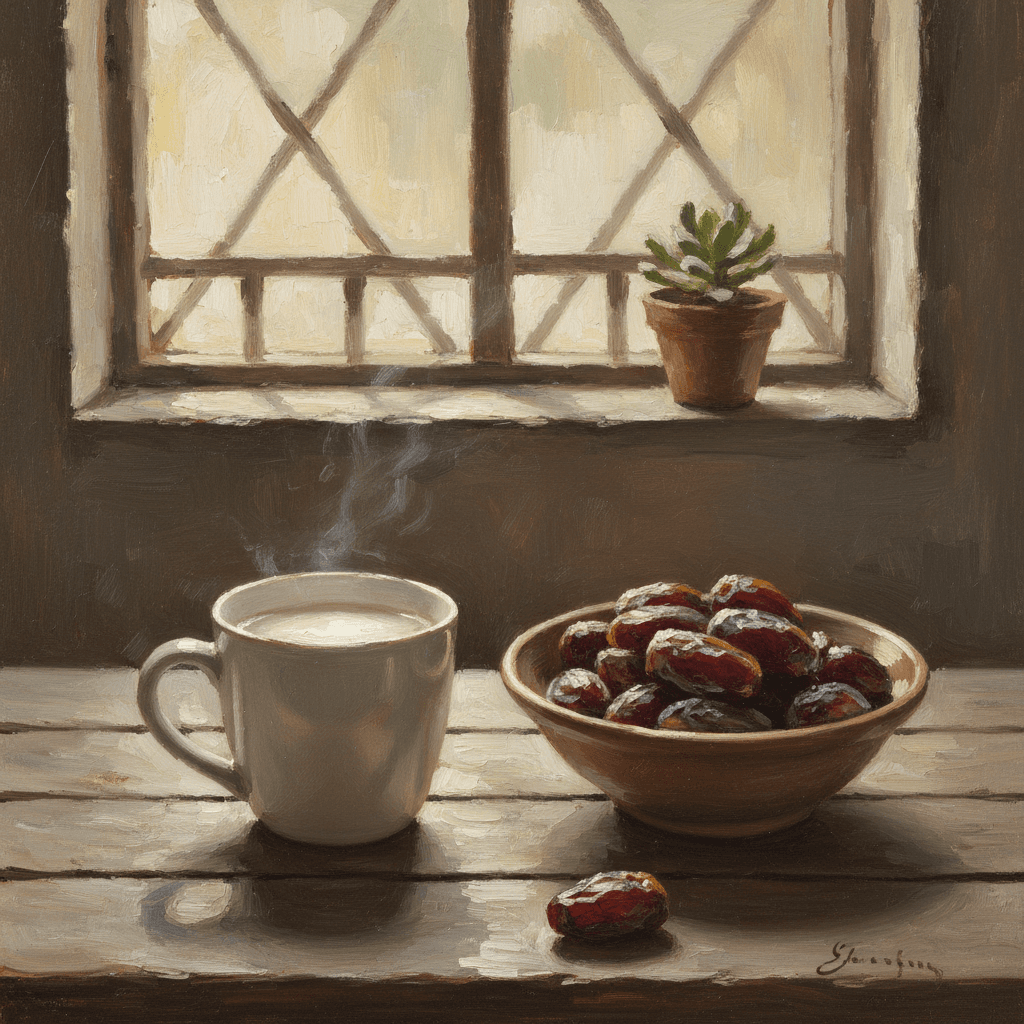
Build a morning preventive routine. Start with seven Ajwa dates before breakfast. Add a teaspoon of black seed in honey. This takes three minutes and costs almost nothing, but it establishes a daily prophetic health practice that compounds over months and years. For broader morning habits, see sunnah of eating.
Use the one-third principle at every meal. "Fill one-third with food, one-third with drink, one-third with air." (Tirmidhi 2380). This single prophetic eating guideline — consistently applied — is more impactful on long-term health than most specific food interventions. The nafs pushes you to eat until full. Stopping at two-thirds is an active, repeated act of self-discipline.
Add voluntary fasting. Monday and Thursday fasting is established sunnah with dual benefit — spiritual practice and physical health (intermittent fasting effects are well documented). Even monthly white-days fasting (13th, 14th, 15th of the lunar month) builds a habit of periodic detox from the endless eating that modern life normalizes.
Learn basic ruqyah for illness. The Prophet ﷺ would recite the three Quls (Surah Ikhlas, Falaq, Nas) and blow over himself when ill or going to sleep. For yourself or a sick family member, reciting Al-Fatihah with intention and blowing over the affected area is a well-established prophetic practice.
Seek proper medical care when needed. Prophetic medicine does not replace physicians for serious illness. Use both — seek diagnosis and treatment, and maintain prophetic health practices alongside. For more on integrating Islamic practice with daily life, see how to purify your heart in Islam and how to increase iman.
Build Prophetic Health Habits Daily
DeenBack helps you track daily prophetic practices — from morning dates and black seed to voluntary fasting — with streak tracking that makes preventive sunnah habits automatic.


Free download. Premium features available in-app.
Signs Prophetic Medicine Is Working in You
You know the practices are becoming part of your life when health feels less reactive and more proactive. You are not waiting to get sick before reaching for remedies — you have built habits that maintain health before illness arrives.
You will also notice changes in how you relate to illness when it does come. Instead of helpless frustration, there is a structure: reach for the prophetic remedies, make dua, seek medical help as needed, trust in the healing that Allah has placed in creation.
This is the mindset prophetic medicine produces — not passivity or superstition, but confident stewardship of the body Allah entrusted to you.
Common Questions
Is there scientific evidence for prophetic medicine? For black seed and honey, yes — substantial and growing research supports their beneficial properties. For hijama (cupping), there is clinical evidence for specific applications (pain reduction, certain inflammatory conditions), though it is more limited than for the dietary recommendations. The position of Islamic scholars is that prophetic medicine statements are true regardless of whether modern science has yet confirmed them — but for the major ones, science is catching up.
Can I use prophetic medicine during Ramadan fasting? Dry cupping (without breaking the skin) is generally agreed to be permissible while fasting. Wet cupping (hijama) may break the fast according to some scholars — consult a ruling appropriate for your madhab. Taking honey or black seed would break the fast since they are consumed orally.
Is using conventional supplements alongside prophetic medicine permissible? Yes, with the condition that they are halal (not derived from haram sources) and verified as safe. Taking vitamin D alongside black seed, for instance, is entirely compatible with prophetic medicine principles. The intention matters: use them as part of caring for the body as an amanah (trust) from Allah.
A Healing Tradition You Already Own
You did not need to discover prophetic medicine — it was transmitted to you through the religion you were born into. The black seed sitting in a kitchen somewhere. The honey in a jar. The dates eaten at suhoor.
The question is not whether these practices are real. It is whether you are using them with the consistency and intention they deserve.
Make Prophetic Sunnah Your Daily Default
DeenBack helps you build the small but powerful daily habits of prophetic living — including health practices, morning routines, and fasting streaks — so the sunnah becomes your lifestyle.
Free download. Premium features available in-app.
Frequently Asked Questions
Is prophetic medicine a substitute for modern medical treatment?
No. Seeking medical treatment when ill is encouraged in Islam — the Prophet ﷺ said: 'There is no disease that Allah has created except that He also created its cure' (Sahih Bukhari 5678). Prophetic medicine and modern medicine are complementary, not competing. Use proven medical care for illness while incorporating prophetic practices as preventive habits and supplementary support.
What is the most important prophetic medicine practice?
The most consistently emphasized practice across hadith is black seed (habbatus sauda). The Prophet ﷺ described it as 'a healing for every disease except death' (Sahih Bukhari 5688). Honey is similarly highly recommended. These are the two most authentically documented healing remedies in the prophetic tradition.
Is hijama (cupping) obligatory for Muslims?
No, hijama is sunnah — a highly recommended practice, not obligatory. The Prophet ﷺ praised it and used it himself. It is not a religious obligation, but a practice that the Prophet ﷺ endorsed for physical benefit. Many Muslims choose to do it periodically, particularly on recommended days (17th, 19th, 21st of the lunar month).
Does the Quran itself mention healing?
Yes. The Quran says about honey: 'There comes from their bellies a drink of varying colors in which there is healing for people' (16:69). The Quran also describes itself as 'a healing for what is in the breasts' (10:57) — referring to spiritual healing. Prophetic medicine addresses both the physical and spiritual dimensions of health.
What is the connection between spiritual health and physical health in Islamic medicine?
Islamic medicine does not separate body and soul the way modern medicine often does. The Prophet ﷺ addressed both in tandem: he recommended physical remedies (black seed, honey, cupping) alongside spiritual ones (Quran recitation, ruqyah, prayer). The heart's spiritual state affects physical wellbeing, and physical health supports spiritual practice. Both need attention.