
- Published on
Subhanallah Meaning: What You're Really Saying and When to Say It
- Authors

- Name
- Ahmad
- Role
- Senior Marketing Manager, Islamic education • Deen Back
بِسْمِ اللهِ الرَّحْمٰنِ الرَّحِيْمِ
In the name of God, the Most Gracious, the Most Merciful.
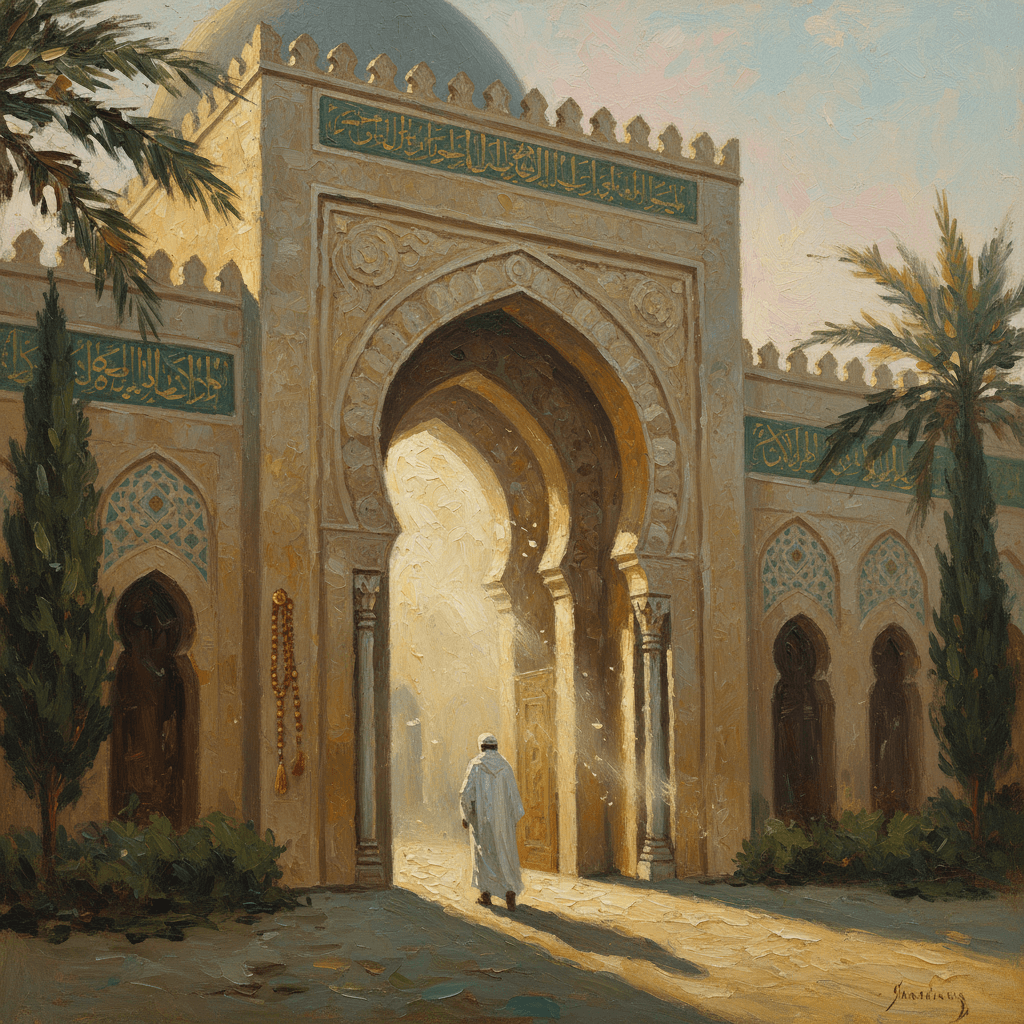
Muslims say Subhanallah dozens of times a day — in salah, after prayer, in conversation, when something amazes them, sometimes just as a filler when words run out.
But most of us say it without really hearing what we are saying.
That is not a criticism. It is one of the subtle costs of familiarity — the most powerful words become the most automatic ones. When Subhanallah becomes a reflex, it stops being an act of conscious worship and becomes background noise.
Understanding what you are actually declaring when you say Subhanallah changes that.
What Does Subhanallah Actually Mean?
سُبْحَانَ اللَّهِ — Subhanallah.
The word subhana comes from the Arabic root s-b-h (سبح), which means to swim or glide freely — without resistance, without hindrance. When applied to Allah, it means He moves, acts, and exists in a state of total perfection and freedom from any limitation.
Subhanallah is not just "Glory be to Allah." That translation captures the praise aspect but misses the depth. The fuller meaning is: "Allah is utterly perfect, free from every deficiency, every imperfection, every associate, and every limitation that created things have."
When you say Subhanallah:
- You are declaring that Allah has no partners, no flaws, no needs
- You are affirming He is free from what disbelievers say about Him
- You are testifying that His power, knowledge, and mercy are without limit
- You are participating in the tasbih (glorification) that everything in creation performs
تُسَبِّحُ لَهُ السَّمَاوَاتُ السَّبْعُ وَالْأَرْضُ وَمَن فِيهِنَّ
"The seven heavens and the earth and all that is in them glorify Him (tusabbihu lahu)."
— (Surah Al-Isra, 17:44)
Every atom of creation says Subhanallah. When you say it consciously, you are joining that universal chorus.
The Story Behind Tasbih
The practice of tasbih — repeating Subhanallah — has roots in some of the most treasured moments of the Sunnah.
The Prophet ﷺ said: "Two phrases are light on the tongue, heavy on the scale, and beloved to the Most Merciful: Subhanallahi wa bihamdih, Subhanallahil-Azim — Glory be to Allah and His is all praise; Glory be to Allah, the Most Great." (Sahih Bukhari 6682)
These two phrases take under three seconds to say. The Prophet ﷺ called them light on the tongue — not requiring effort. But he said they are heavy on the scale — weighty in the sight of Allah on the Day of Judgment. That ratio — minimal effort, immense weight — is one of the most generous gifts in the Sunnah.
Fatimah رضي الله عنها asked her father for a servant because of the difficulty of household work. He told her instead to say Subhanallah 33 times, Alhamdulillah 33 times, and Allahu Akbar 34 times before sleeping. He said: "That is better for you than a servant." (Sahih Bukhari 3705). This became one of the most well-known Sunnah practices in Islam — Tasbih Fatimah.
When to Say Subhanallah
After every salah (33 times): The Prophet ﷺ taught a specific post-salah dhikr: Subhanallah 33 times, Alhamdulillah 33 times, Allahu Akbar 34 times. He said whoever does this "will have his sins forgiven even if they were as abundant as sea foam." (Sahih Muslim 597)
When something amazes you: Seeing a breathtaking landscape, hearing an incredible piece of news, witnessing something extraordinary — Subhanallah is the Muslim response to wonder. It orients amazement toward its proper direction: the Creator, not the creation.
When something is wrongly attributed to Allah: The Quran uses the phrase Subhanahu (Glory be to Him) frequently in response to false attributions — people claiming Allah has children, partners, or limitations. Saying Subhanallah in these contexts is an act of correcting the record.
As general dhikr throughout the day: Walking, commuting, doing chores — any moment can hold a Subhanallah. The Prophet recommended making the tongue constantly moist with the remembrance of Allah. (Tirmidhi 3375)
Before sleeping (33 times, with Alhamdulillah and Allahu Akbar): Tasbih Fatimah — 33/33/34 — is a Sunnah that takes about two minutes before sleeping and is among the most rewarded acts a Muslim can do.
Why Modern Muslims Struggle With Dhikr
The challenge is not knowing about Subhanallah. Almost every Muslim already knows. The challenge is the gap between knowing and doing — and that gap is filled with distraction.
The nafs defaults to stimulation. Your phone is engineered to provide it. Subhanallah requires nothing — no screen, no sound, no engagement beyond a turning of the heart toward Allah. Against the backdrop of constant digital input, a quiet act of remembrance feels almost unfamiliar.
This is not a modern failure. It is a very old test in a new form. The Prophet ﷺ understood it: "The strong believer is better and more beloved to Allah than the weak believer, while there is goodness in both. Strive for what benefits you, seek the help of Allah and do not feel helpless." (Sahih Muslim 2664)
The striving here is not dramatic. It is saying Subhanallah during your commute instead of scrolling. It is reaching for tasbih beads before your phone. It is making the post-salah dhikr non-negotiable even when you are in a rush.
Make Subhanallah a Daily Habit
DeenBack tracks your daily tasbih and dhikr streaks — helping you build the consistent practice of remembering Allah that the Prophet described as the lightest deed with the heaviest reward.


Free download. Premium features available in-app.
Subhanallah wa Bihamdihi — The Most Beloved Phrase
Among all dhikr phrases, the Prophet ﷺ specifically called this one out:
سُبْحَانَ اللَّهِ وَبِحَمْدِهِ
Subhanallahi wa bihamdihi
"Glory be to Allah and His is all praise."
Said 100 times in a day, this phrase "wipes away sins even if they were like the foam of the sea." (Sahih Bukhari 6405)
The additional word bihamdihi — "and His is all praise" — adds the dimension of gratitude to the declaration of perfection. Together, the phrase covers two of the three fundamental attributes of a believer's relationship to Allah: His perfection (subhan) and His deserving all praise (bihamdihi). The third — Allahu Akbar (His greatness over everything) — completes the set.
Signs of Progress
When Subhanallah begins to shift from reflex to presence:
- You catch yourself saying it during quiet moments without planning to
- Wonder at creation — a tree, the sky, a sleeping child — automatically becomes Subhanallah
- The post-salah tasbih feels incomplete rather than optional
- You find yourself reaching for dhikr instead of distraction when stressed
These are not dramatic signs. They are quiet shifts that indicate the heart is changing alongside the tongue.
Common Questions
How many times should I say Subhanallah each day? The Sunnah prescribes specific counts in specific contexts: 33 after salah (x5 prayers = 165 minimum), 33 before sleeping (Tasbih Fatimah), 100 times of Subhanallah wa bihamdihi for the sea-foam benefit. Outside those, there is no upper limit — say it as often as possible.
Can I count on my fingers instead of tasbih beads? Yes. The Prophet ﷺ counted on his fingers (Abu Dawud 1502). The Companions used this method. Tasbih beads are a permissible aid, not a requirement.
Is there a specific time for Subhanallah that is most rewarding? After each of the five prayers is the most consistently mentioned time. Morning and evening are also specifically rewarded periods for dhikr. Night time, especially in the last third of the night, carries additional blessing. That said, any time you remember Allah is a good time.
What You Are Really Saying
Every time you say Subhanallah — even quickly, even in habit — you are declaring that the One who created you is utterly perfect. Not limited by anything. Not diminished by anything. Not in need of anything, including your acknowledgment.
That declaration, repeated across a lifetime, quietly reshapes the believer. It is why the Prophet ﷺ said to make the tongue moist with dhikr (Tirmidhi 3375). The practice changes the tongue first. Then the heart follows.
For the full set of Islamic phrase meanings, see mashallah meaning and inshallah meaning. For building a complete morning and evening dhikr routine, how to do morning adhkar gives you the full Prophetic guide. And for an immersion in the names and attributes of Allah that make Subhanallah meaningful, see 99 names of Allah.
Build a Daily Dhikr Streak That Actually Sticks
DeenBack tracks your tasbih, morning adhkar, and evening dhikr — helping you go from knowing Subhanallah to living it, one consistent day at a time.
Free download. Premium features available in-app.
Frequently Asked Questions
What does Subhanallah mean in English?
Subhanallah (سُبْحَانَ اللَّهِ) means 'Glory be to Allah' or 'How Perfect is Allah.' The Arabic root subhana carries the meaning of complete purity, perfection, and freedom from any deficiency or fault. When you say it, you are affirming that Allah is utterly free from every limitation, imperfection, or associate.
When should you say Subhanallah?
Subhanallah is said: (1) after salah as part of the 33-times tasbih, (2) when seeing something that amazes you, (3) when hearing something that should not be attributed to Allah, (4) at any moment as general dhikr, and (5) as part of the daily morning and evening adhkar.
What is the difference between Subhanallah, Alhamdulillah, and Allahu Akbar?
These three form the core dhikr of Islam: Subhanallah (Allah is free from all imperfection), Alhamdulillah (All praise and gratitude belong to Allah), Allahu Akbar (Allah is the Greatest). Together they cover the three pillars of recognizing Allah: His perfection, His deserving of all praise, and His supremacy over everything.
What are the rewards for saying Subhanallah?
The Prophet said saying Subhanallah 33 times after each salah, combined with Alhamdulillah 33 times and Allahu Akbar 34 times, forgives sins even if they are as abundant as sea foam (Sahih Muslim 597). He also said that Subhanallah wa bihamdihi said 100 times wipes away sins even if they were like the foam of the sea (Sahih Bukhari 6405).
What is the meaning of Subhanallah wa bihamdihi?
Subhanallah wa bihamdihi means 'Glory be to Allah and His is all praise.' This combined phrase is one of the most beloved expressions to Allah. The Prophet said it is light on the tongue, heavy on the scale of good deeds, and beloved to the Most Merciful. (Sahih Bukhari 6682)