
- Published on
Allahu Akbar Meaning: More Than Words, a Daily Declaration
- Authors

- Name
- Ahmad
- Role
- Senior Marketing Manager, Islamic education • Deen Back
بِسْمِ اللهِ الرَّحْمٰنِ الرَّحِيْمِ
In the name of God, the Most Gracious, the Most Merciful.
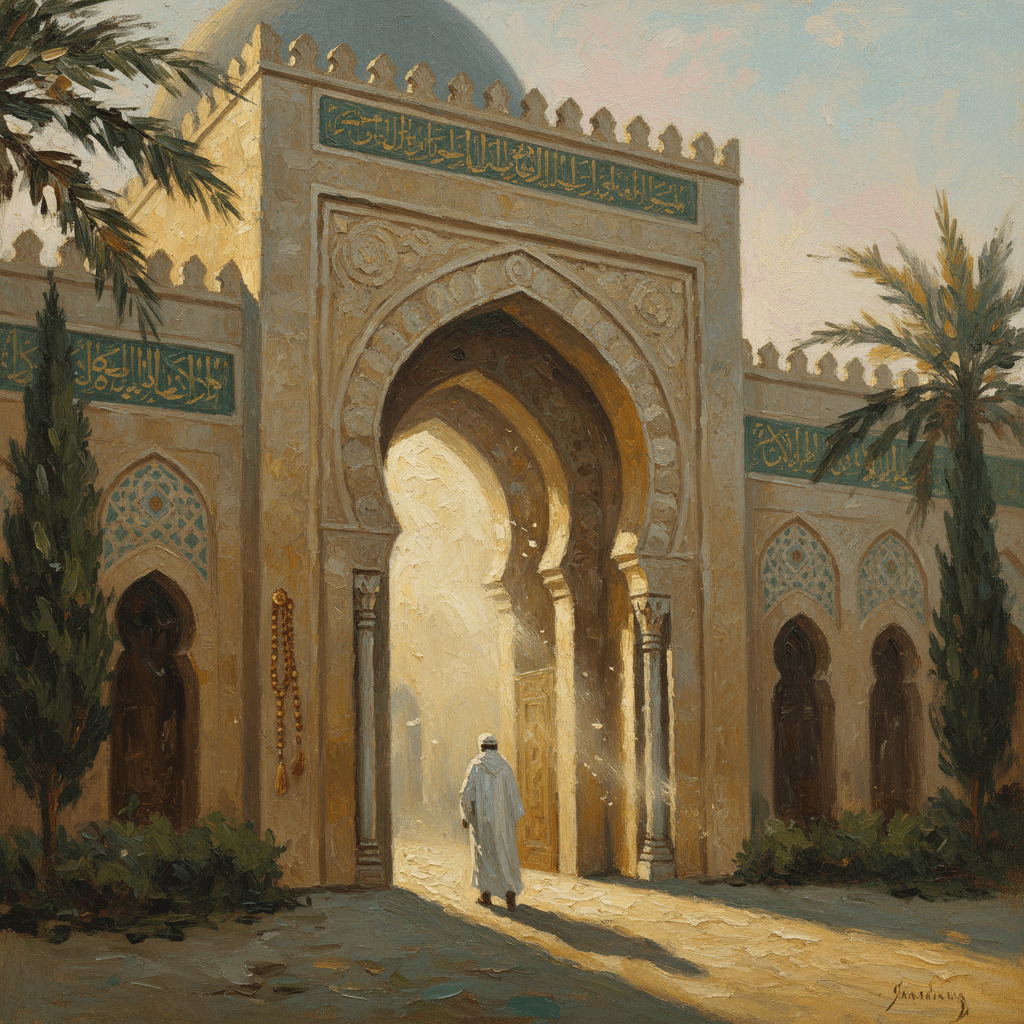
Before you begin any prayer, before your hands rise to the sides of your face, before a single word of Quran leaves your lips — you say two words.
اللَّهُ أَكْبَرُ. Allahu Akbar.
In that moment, something shifts. You are not just beginning a ritual. You are making a declaration about where everything stands: your worries, your to-do list, the argument you had this morning, the bill sitting on your counter. You are stating — out loud, to Allah — that none of it outranks Him. That He is bigger than all of it combined.
Most people in the world hear these words and think of conflict, of news footage, of fear. Muslims who have prayed five times a day since they were children hear something completely different: the sound of a door opening. The sound of leaving the world behind, even for a few minutes, and stepping into presence with Allah.
Understanding what you are actually saying changes every prayer you will ever pray.
What Allahu Akbar Actually Means
اللَّهُ أَكْبَرُ — Allahu Akbar.
The phrase is built from two parts. اللَّهُ (Allah) — the proper name of God in Islam, not a generic term, but His personal name. And أَكْبَرُ (akbar) — the comparative and superlative form of كَبِير (kabir), meaning great.
So the literal translation is "Allah is Greater." Not simply great. Greater.
Greater than what? That is the key. The Arabic is deliberately open-ended. Allah is not described as greater than any one specific thing — He is greater than whatever you could name. Greater than your ego, your fear, your ambition, your distractions. Greater than your problems, your pleasures, the entire duniya and everything in it. The comparison is left open because there is nothing, and will never be anything, that comes close to completing that sentence.
This act of declaring Allah's greatness is called تَكْبِير (takbeer), from the same root as akbar. When you say Allahu Akbar, you are performing takbeer — you are actively declaring that Allah is above and beyond all things.
The opening takbeer of salah carries a specific name: تَكْبِيرَةُ الْإِحْرَام (Takbeerat al-Ihram). The word ihram here means "forbidding" — when you utter these words, worldly actions become forbidden to you. You have entered a consecrated state. Eating, speaking to others, looking around for distraction — all of it is set aside. The prayer has begun and you are now in it.
Think of it as a threshold. Most doors, you can walk back through whenever you want. This one is different. When you say Allahu Akbar and cross it, you have made a commitment. The Prophet ﷺ described this precisely:
"The key to prayer is purification, its opening is the takbeer, and its closing is the tasleem." — (Abu Dawud 61)
The key to the door is purity. The act of opening it is the takbeer.
Why Modern Muslims Struggle With This
Here is an honest observation: most Muslims say Allahu Akbar dozens of times every single day — and most of those times, they are on autopilot.
It is not a character flaw. It is what familiarity does to language. The more you say something, the less you hear it. What begins as a declaration becomes a signal — the verbal equivalent of pressing the start button on a machine you use every day without thinking about what the machine actually does.
But the weight of what we are saying does not disappear just because we stop feeling it. And the nafs — the self — has a way of quietly rearranging the rankings. Work feels more urgent than prayer. The phone feels more immediate than the adhan. Finishing one more thing before standing up feels reasonable every time, right up until the prayer time ends.
This is what makes the true meaning of Allahu Akbar so direct — almost uncomfortable. If Allah is genuinely akbar, greater than everything, then why does a notification interrupt your prayer? Why does a meeting feel like a better reason to delay Dhuhr than it did to delay your lunch?
There is also a dimension that is specific to Muslims living in the West: the media has spent decades attaching these words to violence. For some Muslims, hearing or saying Allahu Akbar in a public space comes with a flicker of self-consciousness that would have been unthinkable to any Muslim a generation ago. Reconnecting with the actual meaning is not just a personal act of worship — it is a form of reclamation.
How to Practice This Daily
In Salah — Make Every One Count
In a single prayer, Allahu Akbar is said approximately 17–22 times depending on the prayer. Across five prayers, that is roughly 94 declarations of Allah's greatness. Add the post-prayer dhikr — 34 Allahu Akbars after each salah, based on the tasbih of Fatimah (Bukhari 3113, Muslim 2727) — and you have over 260 opportunities per day.
Each takbeer in prayer marks a transition: the opening, the bowing, the rising, the prostration, the sitting, the second prostration. These are not filler words between positions. They are reminders inserted at every physical movement, pulling your attention back to where it needs to be. Before you bow, you say: He is greater. Before you prostrate your face to the ground, you say: He is greater. Make each one a conscious thought, not just a sound.
The goal of khushu in salah — true presence and humility in prayer — begins here. You cannot have khushu in a prayer you never really entered. The opening takbeer is where you either cross the threshold or don't.
In the Adhan — Say It With the Muadhin
The adhan opens with اللَّهُ أَكْبَرُ said four times, and closes with it twice. That is six declarations of Allah's greatness before the first congregant has even moved toward the masjid. When you hear the adhan, the Sunnah is to repeat what the muadhin says. Say Allahu Akbar with him — not as a formality, but as your personal response to the call.
The adhan is not background noise. It is an invitation addressed to you, five times a day. Building consistency in answering that call starts with hearing it the way it was meant to be heard.
As a Response to Blessings
When something good happens — an answer to a dua, good news, an unexpected ease — say Allahu Akbar. Not just Alhamdulillah, though that is also right. Allahu Akbar as a statement that this came from Him, that He is greater than whatever obstacle you feared, that the blessing itself is a sign of His supremacy over your circumstances.
As a Reality Check
This is perhaps the most underused application. When something feels overwhelming — a financial pressure, a conflict you do not know how to resolve, a fear that has taken up too much space in your mind — stop and say it.
Allahu Akbar. This thing I am carrying is smaller than Allah.
Not as a dismissal of your problem. As a reorientation of scale. Whatever you are facing exists within a creation that Allah controls entirely. The takbeer is a way of remembering that.
Tie It to Prayer Punctuality
Every adhan that calls Allahu Akbar is not just a notification — it is an invitation. And like any invitation, the response matters. Stopping the habit of procrastinating salah and making dhikr part of your mornings are two of the most practical ways to live out what the takbeer declares.
Hear Every Adhan — Answer Every Takbeer
DeenBack helps you build the habit of praying on time so every Allahu Akbar you say is an answered call.


Free download. Premium features available in-app.
Signs of Progress
You will know the meaning of Allahu Akbar is landing when you begin to feel a weight before the opening takbeer — a moment of deliberateness where you are actually preparing to mean what you are about to say.
You will notice yourself pausing before each prayer, even for two or three seconds, to settle before crossing the threshold. You will find that prayers with a conscious opening takbeer have less mental noise in them — not because your mind is perfectly calm, but because you actually entered.
And gradually, outside of salah, the words will start to show up naturally. Not as a phrase you remember to say, but as your honest response to the size of what you are facing versus the size of Who you are trusting.
Common Questions
What does Allahu Akbar mean exactly?
اللَّهُ أَكْبَرُ (Allahu Akbar) means "Allah is Greater" — with the comparison left deliberately open. He is greater than anything you could name: your worries, your ego, the world itself. It is a statement of supremacy with no ceiling.
Why do we say Allahu Akbar in prayer so many times?
Each takbeer in salah marks a transition — the opening, the bowing, the prostration, the rising. The repetition is intentional. It brings your attention back to Allah at every physical movement, so that the entire prayer becomes a series of conscious declarations rather than a single one at the start that fades. The meaning of Alhamdulillah and Astaghfirullah work similarly — these phrases are designed to be said often so they become the default orientation of the heart.
Can I say Allahu Akbar outside of prayer?
Yes — and you should. Allahu Akbar can be said at any time: when you receive good news, when you are overwhelmed, when something amazes you, as part of general dhikr. The Prophet ﷺ prescribed it as part of the post-prayer tasbih (34 times), and it appears in the adhan and iqamah. It is not confined to ritual — it is a statement of reality that applies everywhere.
What is the difference between Allahu Akbar and Takbeer?
Takbeer (تَكْبِير) is the act of saying Allahu Akbar. The word takbeer comes from the same Arabic root as akbar (k-b-r, كبر). So Allahu Akbar is the phrase itself; Takbeer is the name for the action of declaring it. When the imam signals the start of prayer, he makes the opening takbeer — meaning he says Allahu Akbar to begin.
Is there a response to Allahu Akbar in the adhan?
Yes. The Sunnah is to repeat what the muadhin says. When he says اللَّهُ أَكْبَرُ, you say اللَّهُ أَكْبَرُ. This applies to every phrase of the adhan except for Hayya 'ala as-salah and Hayya 'ala al-falah, where you instead say لَا حَوْلَ وَلَا قُوَّةَ إِلَّا بِاللَّهِ (La hawla wa la quwwata illa billah) — "there is no power or might except with Allah."
Closing
Every time you say اللَّهُ أَكْبَرُ, you are making a declaration: Allah is bigger than everything I am carrying right now.
That is not theology stored in a book. It is a daily act of surrender and strength — said before you bow your head in prayer, said when the adhan calls, said when the world presses in and you need to remember what actually outranks everything else.
The phrase has been misrepresented, stripped of its context, and handed back in a shape that bears no resemblance to what it means. But its meaning has not changed. It has never changed. It is what it has always been: the most honest statement a person can make about where they stand in relation to their Creator.
Say it like you mean it.
Start Each Prayer With Meaning
Build a consistent prayer habit with DeenBack and let every Allahu Akbar be a genuine declaration — not just a ritual.
Free download. Premium features available in-app.
Frequently Asked Questions
What does Allahu Akbar mean in English?
Allahu Akbar (اللَّهُ أَكْبَرُ) means 'Allah is Greater' or 'Allah is the Greatest.' It is a declaration that Allah is greater than everything — all worries, desires, and worldly concerns.
Why do we say Allahu Akbar in prayer?
The opening Allahu Akbar (Takbeerat al-Ihram) marks the start of salah and signals that you have entered into the presence of Allah, leaving the worldly behind. It is also said at every transition during prayer — bowing, prostrating, and rising.
What is the difference between Allahu Akbar and Takbeer?
Takbeer (تَكْبِير) is the act of saying Allahu Akbar. The word comes from the same root. So Allahu Akbar is the phrase; Takbeer is the action of declaring it.
How many times do we say Allahu Akbar in a day?
In the five daily prayers alone, Allahu Akbar is said approximately 94 times. Adding the post-prayer dhikr (34 times after each prayer), that is over 260 declarations of Allah's greatness each day.