
- Published on
Is Celebrating Birthdays Haram? What Muslims Should Know
- Authors

- Name
- Ahmad
- Role
- Senior Marketing Manager, Islamic education • Deen Back
بِسْمِ اللهِ الرَّحْمٰنِ الرَّحِيْمِ
In the name of God, the Most Gracious, the Most Merciful.
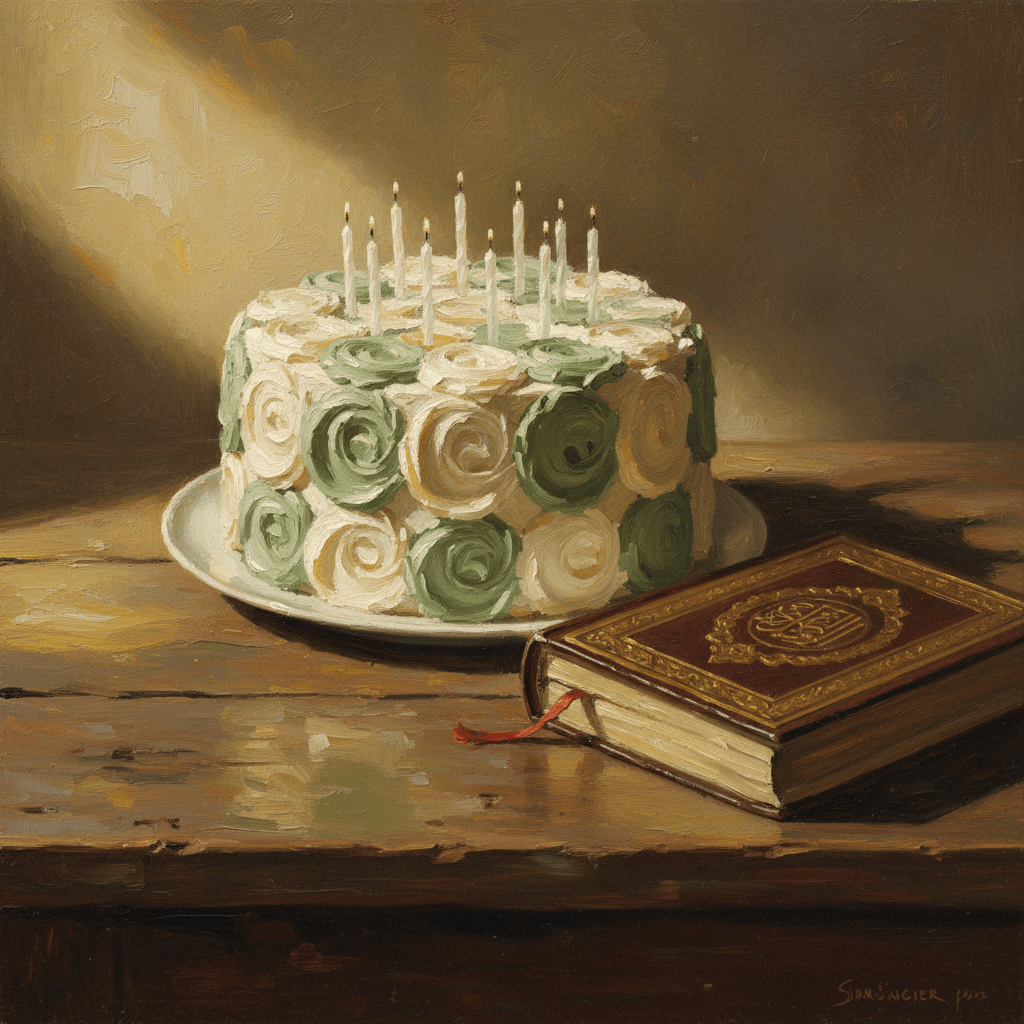
Your birthday comes around once a year, and the world has very strong opinions about what that day should look like. The cake, the balloons, the social media posts, the friends gathering to celebrate — it is hard to step back from all of that without feeling like you are being unnecessarily rigid, or even ungrateful for the life Allah gave you.
And yet something in you keeps asking the question. Is celebrating birthdays haram? Is there something about this tradition that does not belong in a Muslim's life? The discomfort is real — and so is the pressure from family, friends, and culture to just go along with it.
This article does not treat you like a scholar. It treats you like a Muslim trying to live with integrity, navigate your nafs, and make decisions you can stand behind.
The Quick Answer
The majority of scholars consider formal birthday celebrations to be either bid'ah (religious innovation) or imitation of non-Islamic customs — both of which are discouraged in Islam. A minority of scholars permit simple, halal gatherings without those elements.
"Every innovation is going astray, and every going astray is in the Fire." — (Sahih Muslim 867)
The ruling is not about disliking the idea of gratitude. It is about the origin and form of the celebration.
What the Quran and Sunnah Say
The core principle at stake is bid'ah (بِدْعَة) — introducing into Islam practices that were not from the Prophet ﷺ or his companions. Islam has a complete system of celebration: Eid al-Fitr, Eid al-Adha, weddings, the birth of a child, aqiqah. Birthday anniversaries are not part of that system.
The Prophet ﷺ said:
"Every nation has its celebration, and this (Eid) is our celebration." — (Sahih al-Bukhari 952)
This hadith draws a clear line. Muslims have their own designated celebrations given by Allah and His Messenger. Adopting the celebration patterns of other peoples — whether ancient pagan birthdays, modern secular custom, or anything in between — falls under the prohibition of tashabbuh (imitation):
"Whoever imitates a people is one of them." — (Abu Dawud 4031)
Birthday celebrations as we know them have roots in ancient Greek and Roman practices — the idea of marking the anniversary of one's birth with candles and ritual has no origin in Islamic tradition. Early Muslims did not celebrate birthdays. The Prophet ﷺ did not celebrate his own. His companions did not celebrate theirs.
Allah reminds us in the Quran:
وَمَا آتَاكُمُ الرَّسُولُ فَخُذُوهُ وَمَا نَهَاكُمْ عَنْهُ فَانتَهُوا
"And whatever the Messenger gives you, take it; and whatever he forbids you, refrain from it." — (Surah Al-Hashr, 59:7)
The standard for a Muslim's practice is what was brought by the Prophet ﷺ — not what culture normalises.
Why This Is Actually Hard
Here is the honest reality: is celebrating birthdays haram in the same way drinking alcohol is haram? No. This is not a clear-cut prohibition in the same category. That ambiguity is exactly what makes it difficult.
Your nafs is skilled at exploiting grey areas. It says: "Scholars disagree, so I will just go with the comfortable option." It reframes discipline as extremism and capitulation as wisdom.
The social pressure is also real. Your non-Muslim coworkers will invite you to their birthday lunches. Your family will expect a party. Your child's classmates will have birthday celebrations at school. Opting out of the birthday culture, even partially, marks you as different in a way that has a social cost.
There is also the emotional dimension. Birthdays are tied to family, to love, to the feeling of being valued. Saying "this is not for us" can feel like rejecting warmth, not just a custom. That emotional pull is not weakness — it is human. Recognising it is the first step to not being controlled by it.
What to Do About It
The question of whether celebrating birthdays is haram is ultimately less important than the question of what to do instead. Islam does not leave you with a prohibition and no path forward.
1. Replace the celebration, not just the form
The impulse behind a birthday — gratitude for life, love for the person, acknowledgment of time passing — is not wrong. The form it takes matters. On the day of your birth, or your child's, make du'a of gratitude, give sadaqah (voluntary charity) in their name, and gather family for a halal meal without the trappings of a birthday party. You are channelling the same impulse through an Islamic lens.
2. Be honest with yourself about what is driving you
If you are celebrating a birthday primarily because of social pressure and not because you genuinely believe it is fine, that is your nafs speaking. Ask yourself: if there were no social consequences at all, would I still want this? That question cuts through a lot of rationalisation.
3. Prepare a warm, non-defensive response
When people invite you to birthday celebrations or ask why you do not do them, you do not need to lecture anyone. "We do not really do birthday parties, but I would love to get together and celebrate you some other way" is both honest and warm. Confidence without confrontation goes a long way.
4. Be consistent across the year, not just reactive
The ability to hold your ground on questions like this comes from a daily relationship with your deen. Muslims who have a consistent practice of dhikr, salah, and Quran find it far easier to navigate these moments with clarity. The struggle is not won on your birthday — it is won or lost in the consistency of your daily habits.
Build the daily habits that make hard decisions easier
Deen Back helps you stay consistent with dhikr, dua, and Quran so your Islamic identity is strong enough to hold — even when the culture pushes back.


Free download. Premium features available in-app.
5. Understand the broader framework
This question sits within a larger set of decisions Muslims face about cultural participation. If you have not already, read through our guides on is Halloween haram, is dancing haram, and halal vs haram — they share the same underlying principles and will help you build a consistent framework rather than making these calls case by case.
A Dua for Strength
When you feel the pull of culture and want clarity, return to this prophetic supplication:
اللَّهُمَّ أَرِنَا الْحَقَّ حَقًّا وَارْزُقْنَا اتِّبَاعَهُ وَأَرِنَا الْبَاطِلَ بَاطِلًا وَارْزُقْنَا اجْتِنَابَهُ
"Allahumma arinal haqqa haqqan warzuqna ittiba'ahu wa arinal batila batilan warzuqna ijtinabah"
"O Allah, show us the truth as truth and grant us the ability to follow it, and show us falsehood as falsehood and grant us the ability to avoid it." — (Bazzar, authenticated by scholars)
Say this dua whenever a decision feels cloudy. It is a request for clarity from the One who has it.
Common Questions
Is celebrating birthdays haram if there is no haram activity involved?
This is the nuanced version of the question, and it is where scholars diverge most. Scholars who consider all birthday celebrations impermissible point to bid'ah and tashabbuh regardless of what happens at the gathering. Scholars who permit them under conditions argue that a simple, halal family meal is not a religious act and therefore does not fall under those prohibitions. The IslamQA ruling on birthday celebrations represents the majority classical position.
What about the birthday of the Prophet — Mawlid al-Nabi?
Mawlid al-Nabi is itself a contested question among scholars, and many of those who consider birthday celebrations bid'ah extend this to Mawlid as well. This is a large and separate discussion, but it underlines the consistency of the scholarly concern: the Prophet ﷺ himself did not prescribe the commemoration of his own birth.
Is it haram to attend a birthday party for a non-Muslim friend or family member?
Attending a non-Muslim's birthday gathering is generally treated differently from celebrating your own. You can be present at a gathering without actively participating in elements that contradict your deen. The same principle that applies to is Halloween haram or is Thanksgiving haram applies here: your presence does not constitute religious imitation, but your active participation in rituals might. Use your judgment and maintain your Islamic boundaries gracefully.
How does this compare to other haram-adjacent celebrations?
Birthday celebrations sit in a category similar to the questions around is Halloween haram and is dancing haram — not categorically forbidden in the way alcohol or usury is, but also not Islamic practice, and carrying real risk of leading to haram elements or eroding Islamic identity over time. The principle of sadd al-dhara'i' (blocking the means to haram) is relevant: even if the birthday gathering itself is halal, where does the habit of marking these occasions lead?
What do I tell my children?
Be honest and age-appropriate. "We do not do birthday parties the way some families do, but we celebrate your life in our own way." Then make that true — give them something meaningful on that day that is connected to Islam. A gift, a special family meal, a dua made for them out loud, a sadaqah given in their name. Children raised this way associate milestones with gratitude to Allah, not with secular ritual.
Moving Forward
The question of whether celebrating birthdays is haram does not have a single answer that every scholar agrees on. What it does have is a clear direction: Islam does not prescribe birthday celebrations, the strongest scholarly opinion is against them, and there are better alternatives that align with Islamic values.
The real work is not in the ruling — it is in training your nafs to find those alternatives genuinely sufficient. That training happens daily, not just on your birthday. It is built through dhikr, through Quran, through dua, through small consistent acts of worship that root your sense of worth in your relationship with Allah rather than in cultural milestones.
For more on navigating cultural pressure through an Islamic lens, see our guides on is dating haram, are Labubus haram, and is it haram to celebrate Thanksgiving.
Anchor your daily life in Islamic practice — not in cultural drift
Deen Back helps you build consistent dhikr, dua, and Quran habits so your identity is shaped by your deen, not by what everyone else is doing.
Free download. Premium features available in-app.
Frequently Asked Questions
Is celebrating birthdays haram in Islam?
Scholars differ. The majority position among classical and contemporary scholars is that birthday celebrations — especially those that imitate non-Islamic customs or involve haram elements — are not prescribed in Islam and lean toward being impermissible due to _bid'ah_ (religious innovation) and _tashabbuh_ (imitation of non-Muslims). However, a minority of scholars permit simple, halal gatherings with family. The safest position is to avoid formal birthday celebrations and replace them with gratitude to Allah on that day.
Is it haram to say Happy Birthday to someone?
Most scholars who consider birthday celebrations problematic make a distinction between formal participation and a casual well-wish. Saying "Happy Birthday" to a non-Muslim colleague or family member in passing is generally considered permissible. Hosting or attending a birthday party that involves haram elements is a different matter. Use your judgment based on context and the company you keep.
Can I have a birthday cake with family — no party, no fanfare?
This is where scholarly opinion genuinely varies. Many scholars who discourage formal birthday celebrations make room for a quiet family meal or gathering that does not imitate non-Islamic customs, involves no haram activities, and is not treated as a religious occasion. The key is intention: gratitude to Allah rather than marking an anniversary of one's birth as a ritual.
Did the Prophet celebrate his own birthday?
No. The Prophet ﷺ did not celebrate his birthday, and neither did his companions. The commemoration of the Prophet's birthday (_Mawlid al-Nabi_) emerged centuries after his death and is itself a point of scholarly disagreement. This is one of the primary reasons scholars classify birthday celebrations under _bid'ah_ — it was not from the practice of the Prophet or his companions.
What about celebrating a child's birthday?
The ruling does not change because the person is a child. What you can do is mark the occasion in an Islamic way: make dua for your child, thank Allah for the blessing of their life, give charity in their name, and gather family for a halal meal without treating it as a formal birthday party. Children raised this way learn to connect milestones to gratitude to Allah rather than to a secular celebration.