
- Published on
How to Stop Being Angry as a Muslim — Practical Steps
- Authors

- Name
- Ahmad
- Role
- Senior Marketing Manager, Islamic education • Deen Back
بِسْمِ اللهِ الرَّحْمٰنِ الرَّحِيْمِ
In the name of God, the Most Gracious, the Most Merciful.
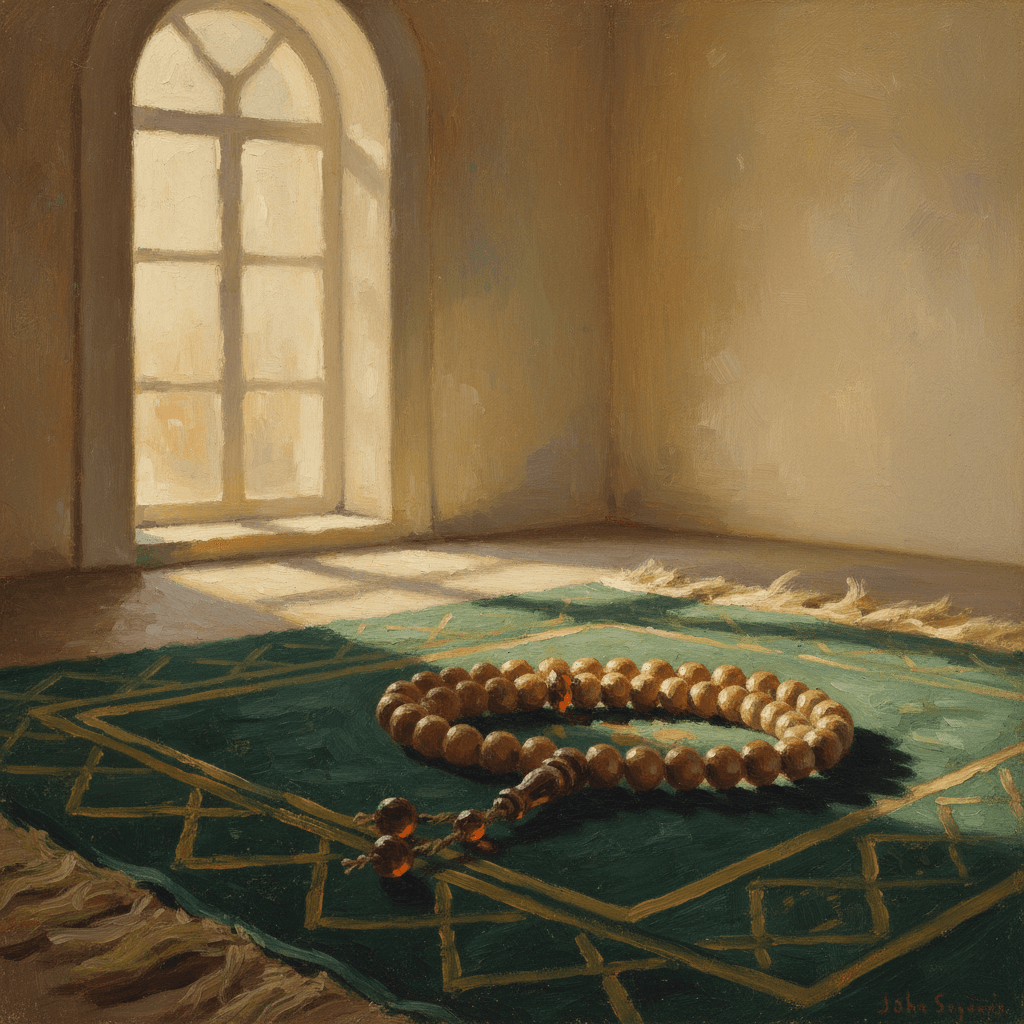
You have been here before. The anger rises fast — faster than you can think, faster than you can pray. Words come out that you immediately regret. Or the silence comes, cold and heavy, and you withdraw. Either way, you end up asking yourself the same question: how do I stop being angry as a Muslim when my nafs is so much stronger than my intentions?
The good news is that Islam does not just tell you to "control yourself." It gives you a precise toolkit — techniques that the Prophet ﷺ himself taught, tested against his own experience, and passed down to us. This guide walks through that toolkit and shows you how to actually use it.
Why This Matters — The Islamic Foundation
Anger is one of the most direct expressions of the nafs al-ammara — the lower self that commands towards evil. The Prophet ﷺ said:
"The strong person is not the one who overcomes others by force, but the one who controls themselves when angry." — (Sahih al-Bukhari 6114)
This is a radical reframing. In most cultures, strength means winning fights. In Islam, strength means winning the inner battle — and the inner battle is the one you fight with your own anger.
The consequences of unchecked anger are severe. It destroys marriages. It damages children. It severs family ties. It causes words to be said that cannot be unsaid. And spiritually, it opens the door for Shaytan — the Prophet explicitly linked anger to Shaytan's influence.
But here is what makes DeenBack's approach different: we are not just asking you to suppress anger. We are helping you understand it, work with your own psychology, and build daily practices that reduce the grip anger has on you over time. For a deeper foundation, read our guide on what is sabr in Islam — patience is not passivity, it is an active spiritual discipline.
Step-by-Step Guide to Stopping Anger
Step 1: Learn the immediate technique — the ta'awwudh
The first and most practical step is the one the Prophet taught directly:
أَعُوذُ بِاللَّهِ مِنَ الشَّيْطَانِ الرَّجِيمِ
"A'udhu billahi minash-shaytanir-rajeem"
"I seek refuge in Allah from the accursed Shaytan."
A man came to the Prophet ﷺ and asked for advice. The Prophet said: "Do not be angry." He repeated the question, and the Prophet repeated: "Do not be angry." (Sahih al-Bukhari 6116). The ta'awwudh is the mechanism behind this instruction — it is an acknowledgment that the anger you feel in this moment has a spiritual dimension, and you are asking Allah to step between you and it.
Say it out loud, even if you do not feel it. Especially then.
Step 2: Change your physical position
The Prophet ﷺ said: "If one of you becomes angry while standing, let him sit down. If the anger does not leave him, let him lie down." (Abu Dawud 4782)
This is not metaphorical. The physical act of lowering your body reduces arousal in your nervous system. It makes it physically harder to escalate. Practice this even when you do not want to.
Step 3: Make wudu
The Prophet said: "Anger comes from Shaytan, and Shaytan is created from fire. Fire is extinguished by water. So when one of you becomes angry, let him make wudu." (Abu Dawud 4784)
Wudu is a physical act of purification that also works psychologically. The cold water, the deliberate ritual, the act of mentioning Allah's name — each of these interrupts the cycle of anger before it escalates.
Step 4: Be silent
"If you are angry, be silent." (Musnad Ahmad, authenticated by Al-Albani). The worst outcomes of anger happen through words. Most things said in anger are either untrue, unfair, or unnecessarily cruel — and none of them solve the problem. The most powerful tool you have in an angry moment is your silence.
Make a rule for yourself: when you are angry, you have permission to leave the room, to take ten minutes, to delay any conversation. You do not have permission to speak until the heat has passed.
Step 5: Identify your anger triggers
Immediate techniques handle the moment. But real transformation requires understanding why you get angry so frequently in the first place.
Keep a simple journal for two weeks. After each angry episode, write down: what happened, what you were thinking just before, and what you were feeling beneath the anger (fear? humiliation? exhaustion? unmet expectation?). Anger is almost always a secondary emotion — it covers something more vulnerable.
When you know your triggers, you can address them at the root. Many Muslims discover that their anger spikes when they are sleep-deprived, spiritually disconnected, or feeling out of control in other areas of life.
Step 6: Build daily dhikr that reduces baseline anger
The Prophet ﷺ said: "Whoever fears Allah, Allah will find a way out for them and provide for them from where they do not expect." The practice of consistent dhikr — especially morning and evening adhkar — genuinely reduces baseline anxiety and reactivity over time. This is not a metaphor. Regular remembrance of Allah creates a calm interior life that anger has less room to fill.
Step 7: Fast regularly
Fasting is one of the most underutilised tools for emotional regulation. The Prophet linked fasting to controlling desires of all kinds — including anger. Try fasting on Mondays and Thursdays consistently for a month and observe the effect on your temperament.
Track your dhikr, fasting, and daily habits — watch your anger shrink
Deen Back helps you build the consistent Islamic practices that reduce anger at its source. Small daily wins compound into real character change.


Free download. Premium features available in-app.
Making It Stick — The Habit Science
The Prophet ﷺ said: "The most beloved deeds to Allah are those that are done consistently, even if they are small." (Sahih al-Bukhari 6465)
Anger management in Islam is not a one-time decision — it is a daily practice. Here is what makes the difference:
Anchor the techniques to existing habits. Practice the ta'awwudh every day after Fajr, even when you are not angry. When you practice the tool daily without needing it, it becomes automatic when you do need it.
Start small. If you can only master one technique this month, master the silence. Not speaking when angry is itself a monumental achievement. Build on that.
Track your progress. After each week, ask yourself: did I act on anger in a way I regret? How many times? What triggered it? Progress is rarely linear, but seeing improvement over time is enormously motivating.
For a deeper dive into the inner work, see how to control your nafs in Islam and how to stop committing the same sin.
Common Mistakes to Avoid
Starting too big. Trying to never feel anger is unrealistic and demoralising. Start with one goal: not acting on anger in ways you regret.
Waiting until you are angry to practice. The ta'awwudh works best when it is already habitual. Practice it daily, not just in crisis.
Confusing suppression with control. Swallowing anger while it burns inside you is not Islamic self-control — it is repression, which tends to explode later. The goal is to process the anger through legitimate means, not to pretend it does not exist.
Skipping the root-cause work. Techniques help in the moment. But if you do not understand why you are angry so often, the pattern will not change. The journal exercise in Step 5 is not optional.
Common Questions
Is it okay to express anger when something genuinely unjust happens?
Yes. The Prophet ﷺ felt anger when the limits of Allah were violated — and that anger moved him to action. Righteous anger, channeled through wisdom and without personal vindictiveness, is not what Islam prohibits. What Islam prohibits is anger that harms others for personal reasons.
What if my spouse or child keeps pushing my buttons?
This is not a fiqh question — it is a relationship question. Identifying that your anger is being triggered by a specific person in a specific context means the relationship dynamics need to be addressed, not just your anger management. Seek counseling, have honest conversations, and see our guide on how to control anger as a Muslim for more targeted advice.
What if I have been failing at this for years?
Tawbah is always open. The fact that you have failed before does not define whether you will succeed this time — it defines what not to do. Start with one technique, anchor it to one prayer, and protect it for one week. Progress is built on consistency with small things, not dramatic changes.
Your Journey Starts Now
Learning how to stop being angry as a Muslim is not about achieving some impossible state of perpetual calm. It is about building the daily practices — ta'awwudh, silence, wudu, dhikr, fasting — that gradually shift who you are.
Every angry outburst you prevent through these tools is a victory. Every time you say the ta'awwudh instead of the words that would hurt someone, you are becoming the strong person the Prophet described.
Build the daily Islamic habits that transform your character
Deen Back helps you track dhikr, dua, and daily sunnah practices consistently so that anger has less and less room in your life.
Free download. Premium features available in-app.
Frequently Asked Questions
What does Islam say about anger?
Islam acknowledges that anger is a natural human emotion but warns strongly against acting on it. The Prophet said that the strong person is not the one who overpowers others, but the one who controls themselves when angry. Expressing anger in ways that harm others — through words or actions — is condemned, and the Prophet gave specific techniques for managing it.
What dua should I say when I feel angry?
Say: A'udhu billahi minash-shaytanir-rajeem (I seek refuge in Allah from the accursed Shaytan). This is the specific dua the Prophet taught for moments of anger. He said that when someone is angry, if they say this, their anger will subside.
What are the practical steps to control anger in Islam?
The Prophet gave several techniques: say the ta'awwudh (seeking refuge from Shaytan), change your physical position (sit if standing, lie down if sitting), make wudu, and be silent. Beyond the immediate moment, regular dhikr, fasting, and identifying your triggers help rewire the pattern over time.
Is being angry haram?
Feeling anger is not haram — it is human. Acting on anger in ways that harm others, through verbal abuse, physical aggression, or deliberate cruelty, is what Islam forbids. The Prophet himself felt anger, but he never acted on it for personal reasons. The goal is not to eliminate anger but to master it.
How long does it take to overcome anger issues as a Muslim?
Anger management is a process that unfolds over weeks and months, not days. The key is consistent daily practice — dhikr, dua, and self-reflection — combined with identifying the specific triggers that ignite your anger and working on them systematically. Most Muslims who struggle with anger see real improvement within 30-60 days of consistent effort.