
- Published on
Dua for the Ummah: Praying for All Muslims Together
- Authors

- Name
- Ahmad
- Role
- Senior Marketing Manager, Islamic education • Deen Back
بِسْمِ اللهِ الرَّحْمٰنِ الرَّحِيْمِ
In the name of God, the Most Gracious, the Most Merciful.
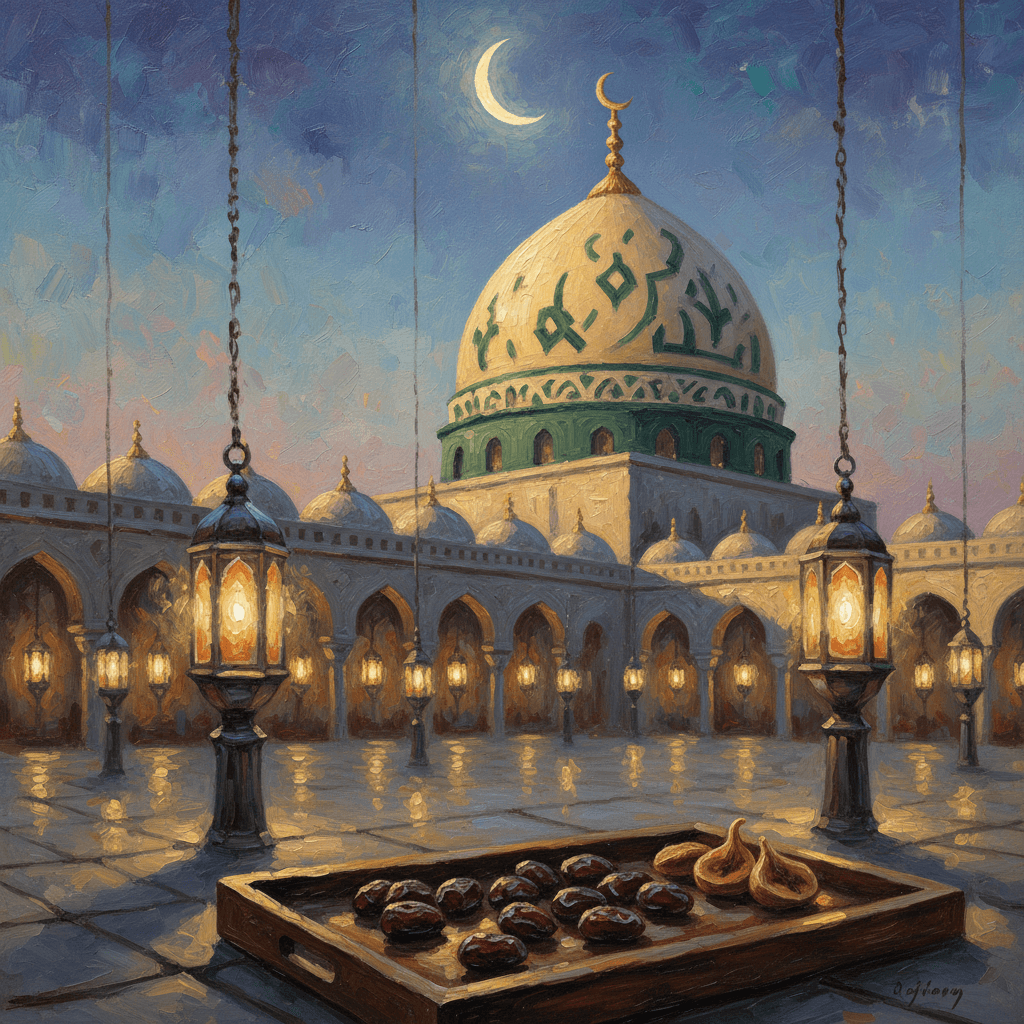
Most dua is personal. You ask for your health, your family, your rizq, your forgiveness. This is right and this is the sunnah — the Prophet prayed for specific people, specific needs, specific situations.
But Islam never lets you stay only personal.
There are 1.8 billion Muslims in the world today, and at any given moment, a significant number of them are suffering — imprisoned, displaced, sick, afraid, in grief. The ummah is one body. The Prophet was explicit about this: "The likeness of the believers in their mutual love, mercy, and compassion is like one body: when one part aches, the whole body responds with sleeplessness and fever." (Bukhari 6011)
When you make dua only for yourself, you are treating a fever in your finger while ignoring the one in your chest.
The Dua
اللَّهُمَّ أَصْلِحْ أُمَّةَ مُحَمَّدٍ، اللَّهُمَّ فَرِّجْ عَنْ أُمَّةِ مُحَمَّدٍ، اللَّهُمَّ ارْحَمْ أُمَّةَ مُحَمَّدٍ
Allahumma aslih ummata Muhammad, Allahumma farrij 'an ummati Muhammad, Allahumma irham ummata Muhammad.
"O Allah, reform the Ummah of Muhammad. O Allah, relieve the Ummah of Muhammad. O Allah, have mercy on the Ummah of Muhammad." — (Abu Dawud 1488)
When to say it: After salah, in prostration during Tahajjud, and specifically during Fajr and Jumu'ah. The three lines are simple enough to memorize in one sitting and cover the three primary needs of any suffering community: reform (islah), relief (faraj), and mercy (rahma).
The Quranic dua for solidarity with believers:
رَبَّنَا اغْفِرْ لَنَا وَلِإِخْوَانِنَا الَّذِينَ سَبَقُونَا بِالْإِيمَانِ وَلَا تَجْعَلْ فِي قُلُوبِنَا غِلًّا لِّلَّذِينَ آمَنُوا
Rabbana-ghfir lana wa li-ikhwanina alladhina sabaquna bil-iman wa la taj'al fi qulubina ghillan lil-ladhina amanu.
"Our Lord, forgive us and our brothers who preceded us in faith, and put not in our hearts any resentment toward those who have believed." — (Surah Al-Hashr 59:10)
The Story Behind It
At Ta'if, the Prophet was driven out of the city. The people had refused to listen, mocked him, and set children and slaves to pelt him with stones until his feet bled. He sat in an orchard, exhausted, humiliated, and alone.
An angel appeared and offered to crush the city between two mountains.
The Prophet refused. He said: "O Allah, guide my people, for they do not know." (Allahumma ihdi qawmi fa innahum la ya'lamun.)
This is the ummah dua in its essence. Not a prayer for revenge. Not a prayer to be rescued. A prayer for the people who had just hurt him — because he understood that guidance was worth more than justice, and that the ummah he was building included the people who had not yet joined it.
The scholars note that the Prophet also preserved a major supplication — the khassa — specifically as intercession for his ummah on the Day of Judgment. He could have used it in this world for any number of purposes. He saved it for them. For us.
How to Make Dua for the Ummah a Daily Practice
The nafs makes dua narrow. When there is no immediate personal crisis, it forgets to ask for anything beyond what it directly needs. Building the habit of ummah dua requires a deliberate expansion of your du'a circle.
Add it to your after-salah routine. The simplest way to make this consistent is to say the three-line dua — Allahumma aslih ummata Muhammad... — after every salah, just before you get up. It takes less than thirty seconds. If you pray five times a day, that is five moments of collective supplication daily.
Make it specific when the news demands it. When you hear of Muslims suffering in a particular place, make dua for them by name. Allahumma farrij 'an muslimi [country/region] — "O Allah, relieve the Muslims of..." — is a dua that the Prophet's companions made. Named, specific, present. The ummah is not an abstraction. It is people.
Connect it to your Jumu'ah. The Prophet emphasized Friday as a day of ummah consciousness. The congregational prayer, the khutbah, the shared space — these are all reminders that you are part of a body larger than yourself. Add the ummah dua to your personal supplication during Jumu'ah.
Pair dua with action. The dua for the ummah is not a substitute for doing something about the ummah's needs. It is the foundation under action — the acknowledgment that the outcome belongs to Allah, while the effort belongs to you. Sadaqah, advocacy, education, and support for Islamic organizations are the asbab (means); dua is the anchor.
Pray Bigger. Build Better Habits.
DeenBack helps you track your daily supplications — including the ones for yourself and for your global community. Expand your practice beyond the personal.


Free download. Premium features available in-app.
Related Duas
Dua for guidance: The most powerful gift you can ask for the ummah is guidance. See dua for guidance for the prophetic supplications asking Allah to guide individuals and communities.
Dua for patience: When the ummah's situation is painful to witness and hope is hard to maintain, the dua for patience is the companion prayer.
Dua for steadfastness: The ability to remain consistent in worship and hope when the world is difficult is addressed in dua for steadfastness.
Dua for Palestine: For a specific focus on a community facing ongoing suffering, see dua for Palestine.
Common Questions
Does my dua for the ummah actually help, or is it just symbolic?
It is both substantial and spiritual. The Prophet said that the angel responds to dua for an absent brother with "and for you the same." — meaning your dua for others is also a dua for yourself. Beyond the personal benefit, the Islamic understanding is that collective dua — millions of Muslims asking Allah for the same thing — has a weight and a reach that individual dua does not. It is not symbolic. It is the most available form of global action every Muslim has access to.
What if I feel disconnected from the global ummah and cannot feel much when I make this dua?
This is a common experience, and it is honest. Feeling connected to 1.8 billion people is not natural or automatic. The practice works in both directions: dua for the ummah builds the feeling of connection over time, even if the feeling is not there yet when you start. Begin with names and places you do know — your local Muslim community, a family member in another country, Muslims you have read about. Specificity builds feeling.
Should I make dua for Muslim leaders who are corrupt or unjust?
Yes, but thoughtfully. The sunnah includes making dua for leaders to be guided and reformed — allahumma aslih means "reform" as well as "improve." You are not endorsing unjust leaders by asking Allah to guide them. Guidance of those in power has far-reaching effects on the ummah.
How do I balance making dua for the ummah with my personal duas?
There is no competition. A salah contains both personal surahs and collective surahs. A prayer session can open with personal needs and close with ummah concerns. The prophet modeled both consistently. The goal is simply not to let dua become entirely inward — to keep the body of the ummah in your supplication as regularly as your own needs.
Closing
The Prophet saved his greatest supplication for the ummah on the Day of Judgment. He gave the most valuable thing he had — his special intercessory dua — not to himself, but to the billions of Muslims who would come after him.
When you say Allahumma aslih ummata Muhammad, you are joining a conversation that has been ongoing since the first Muslim prayed for the community of believers. Your voice adds to it. Your dua matters.
Say it today. Say it after every salah. Let the ummah be in your prayers as consistently as your own name.
Pray for Something Larger Than Yourself
DeenBack tracks your salah, dhikr, and daily supplications — helping you build a practice that is generous, consistent, and connected to the global Muslim community.
Free download. Premium features available in-app.
Frequently Asked Questions
What is the dua for the Muslim ummah?
One of the most comprehensive is: Allahumma aslih ummata Muhammad, Allahumma farrij 'an ummati Muhammad, Allahumma irham ummata Muhammad — O Allah, reform the Ummah of Muhammad. O Allah, relieve the Ummah of Muhammad. O Allah, have mercy on the Ummah of Muhammad. (Abu Dawud 1488)
Did the Prophet make dua for the entire ummah?
Yes, consistently. The Prophet withheld one of his major supplications — saying he was saving it as intercession for his ummah on the Day of Judgment. He regularly prayed for Muslims who had not yet been born. And at Ta'if, after being pelted with stones, he prayed: O Allah, guide my people, for they do not know.
Does dua for others benefit the one making dua?
Yes. The Prophet said: Whenever a Muslim makes dua for his absent brother, an angel says: And for you the same. (Muslim 2732) Making dua for the ummah is therefore one of the most efficient forms of supplication — it comes back to you.
Is there a specific time to make dua for the ummah?
The last third of the night is the most powerful time for any dua, including dua for the ummah. Additionally, Jumu'ah contains a hidden hour of acceptance. After salah — particularly Fajr and Maghrib — is also recommended. But making dua for Muslims collectively can and should happen at any time.
What Quranic verse teaches us to pray for fellow believers?
Surah Al-Hashr (59:10): Our Lord, forgive us and our brothers who preceded us in faith, and put not in our hearts any resentment toward those who have believed. This verse connects prayer for the ummah with the removal of grudges — showing that loving your fellow Muslims spiritually and praying for them are inseparable.