
- Published on
How to Increase Your Rizq Islamically — The Practical Muslim Guide
- Authors

- Name
- Ahmad
- Role
- Senior Marketing Manager, Islamic education • Deen Back
بِسْمِ اللهِ الرَّحْمٰنِ الرَّحِيْمِ
In the name of God, the Most Gracious, the Most Merciful.
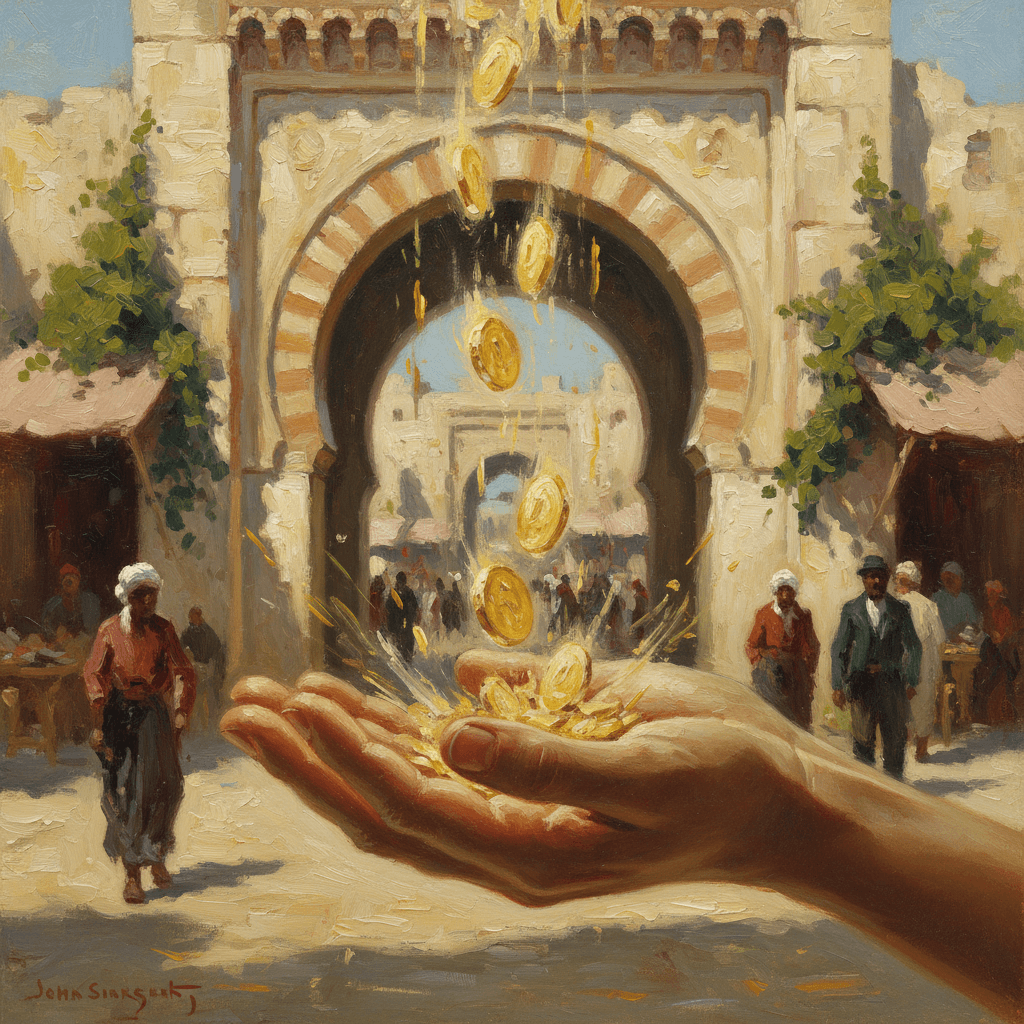
You have tried working harder. Longer hours, more hustle, extra income streams. And yet the feeling of financial tightness — or just not having enough — persists. Sometimes you wonder if you are missing something.
Islam says: you probably are. Not because you are spiritually deficient, but because the Islamic model of rizq connects provision to a set of practices that most people either do not know about or know about but do not consistently practice.
This is not prosperity gospel — Islam does not promise that following these steps will make you rich. What Islam promises is barakah (blessed increase) in your provision, however much or little that is, and relief from the feeling of scarcity that has nothing to do with your bank balance.
Why This Matters — The Islamic Foundation of Rizq
The Prophet ﷺ told a man who was complaining about poverty to say istighfar consistently. The man was confused — what does seeking forgiveness have to do with money?
The answer is in the Quran. In Surah Nuh, the Prophet Nuh tells his people:
فَقُلْتُ اسْتَغْفِرُوا رَبَّكُمْ إِنَّهُ كَانَ غَفَّارًا يُرْسِلِ السَّمَاءَ عَلَيْكُم مِّدْرَارًا وَيُمْدِدْكُم بِأَمْوَالٍ وَبَنِينَ
Fastaqhfiru rabbakum innahu kana ghaffara yursilis-sama'a alaykum midrara wa yumdidkum bi-amwalin wa banin
"Ask forgiveness of your Lord — He is ever-forgiving. He will send rain upon you in abundance, and increase you in wealth and children."
— (Surah Nuh, 71:10-12)
This is not metaphor. Seeking forgiveness opens a spiritual door to provision. The mechanism may be invisible, but the source is reliable: Allah's own words.
Step-by-Step: Islamic Rizq-Opening Practices
Step 1 — Make Istighfar a Daily Non-Negotiable
The Prophet ﷺ said:
"Whoever makes istighfar regularly, Allah will give them relief from every distress, a way out from every difficulty, and provision from where they did not expect."
— (Abu Dawud 1518 — view on sunnah.com)
Start with 100 Astaghfirullah per day — it takes less than five minutes. Set a specific time: after Fajr, or during your commute, or before sleep. This is the foundation that many people overlook because they are focused on the more visible practices.
Step 2 — Give Sadaqah Even When It Feels Counterintuitive
The nafs resists giving when finances are tight. But the Quran is explicit:
مَن ذَا الَّذِي يُقْرِضُ اللَّهَ قَرْضًا حَسَنًا فَيُضَاعِفَهُ لَهُ أَضْعَافًا كَثِيرَةً
"Who is it that will lend to Allah a good loan, and He will multiply it for them many times over?"
— (Surah Al-Baqarah, 2:245)
Give something — even small — daily or weekly. The consistent sadaqah habit matters more than the amount. When your nafs says "I cannot afford to give," that is precisely when the practice has the most spiritual weight.
Step 3 — Maintain Family Ties (Silat ar-Rahim)
The Prophet ﷺ said:
"Whoever wishes to have their rizq expanded and their lifespan extended should maintain family ties."
— (Sahih Bukhari 5985 — view on sunnah.com)
This is one of the most overlooked rizq practices. Call your parents. Reconnect with relatives you have been avoiding. Repair broken family relationships. The connection between family ties and provision is explicitly prophetic.
Step 4 — Pray Fajr on Time and Stay Awake Afterward
The Prophet ﷺ prayed: Allahumma barik li-ummati fi bukuratiha — "O Allah, bless my Ummah in its early morning." (Abu Dawud 2606). The word buku (early morning) refers specifically to the time from Fajr until sunrise.
Muslims who build the habit of praying Fajr on time and staying active in the morning consistently report a different quality to their days — more productivity, more opportunities, more barakah in time. The spiritual and practical reinforce each other.
For help building this habit, see how to never miss Fajr again.
Step 5 — Make Tawakkul Practical, Not Theoretical
The Prophet ﷺ gave a beautiful picture of tawakkul and rizq:
"If you relied on Allah as He deserves to be relied on, He would provide for you as He provides for the birds — they leave hungry in the morning and return full in the evening."
— (Tirmidhi 2344 — view on sunnah.com)
The birds do not sit in the nest waiting. They leave the nest, they work (they fly and search), and they trust that provision will be there. Tawakkul is not passivity — it is combining full effort with full trust.
Practically: do your work fully, then release attachment to outcomes. Worry about the effort, not the result. Review your anxiety about money and replace it with specific dua and action.
Step 6 — Recite the Dua for Rizq Regularly
اللَّهُمَّ اكْفِنِي بِحَلَالِكَ عَنْ حَرَامِكَ وَأَغْنِنِي بِفَضْلِكَ عَمَّنْ سِوَاكَ
Allahumma akfini bihalaalika 'an haramika wa aghnini bifadlika amman siwak
"O Allah, make Your lawful provisions sufficient for me so I do not need the haram, and enrich me from Your bounty so I need no one but You."
— (Tirmidhi 3563 — view on sunnah.com)
Say this after Fajr and Asr. The dua itself is a re-orientation — you are asking not just for more, but to be enriched in a way that makes you free from dependence on anything other than Allah.
Track Your Daily Rizq-Opening Practices
DeenBack helps you build consistent habits — istighfar, sadaqah reminders, Fajr streaks — so the practices that open rizq become your daily default, not occasional intentions.


Free download. Premium features available in-app.
Step 7 — Recite Surah Waqiah Regularly
Surah Waqiah is the Surah of provision. Ibn Masud رضي الله عنه reported the Prophet as saying: "Whoever recites Surah Waqiah every night will never be afflicted by poverty." (Ibn Hibban — classified as hasan). Make it part of your evening routine, or see how many times to read Surah Waqiah for rizq for details on this practice.
Making the Rizq Practices Into a Habit System
The mistake most people make is treating rizq practices as things to do when finances are difficult — like emergency medicine. The Islamic model is a preventive, daily system:
Morning: Fajr on time → stay awake → istighfar → rizq dua Daily: Give sadaqah (even one small amount) Weekly: Call family you have been neglecting Nightly: Surah Waqiah recitation
These are not complex. They take collectively perhaps twenty minutes of deliberate practice per day. The consistency is the key — Al-Shakur (the Most Appreciative) values the daily small practice above the occasional grand gesture.
Common Mistakes That Block Rizq
Looking for rizq while ignoring haram income. The Quran and Sunnah clearly link rizq to halal earning. Any income from haram sources — interest, deception, haram products — is explicitly connected in narrations to a reduction in barakah. Cleaning up your income is more important than adding extra practices.
Doing the practices without tawakkul. If you do istighfar and sadaqah while still drowning in anxiety about money, you are not fully in the practice. The practices are meant to shift your internal state, not just add actions to your list.
Neglecting family ties. This is the most practically overlooked of all the rizq practices. A difficult family relationship, maintained through consistent contact despite the difficulty, has direct prophetic connection to provision.
Common Questions
Is it acceptable to ask Allah for more money directly? Yes. Islam does not frown on making dua for wealth — the Companions did it openly. The condition is that you are asking for halal provision and your relationship with Allah is not purely transactional.
What if I do all these practices and my financial situation does not improve? Rizq includes more than money. You may find your provision comes in different forms — health, time, peace of mind, relationships — rather than cash. And Allah's timing operates differently from ours. Continue the practices with sincerity. The promise from the Lord of the worlds is reliable even when the timeline is not what you expected.
Your Provision Has Not Been Forgotten
Allah said to Musa: "I have knowledge of all things." (Surah Ta-Ha, 20:52). Your situation, your need, your effort, your honesty — none of it is invisible to the One who holds every treasury.
The practices above are not formulas for guaranteed wealth. They are the means Allah prescribed for opening the doors of provision. Take the means, fully and consistently, then leave the outcome in the hands of the One who owns everything. See dua for rizq and names of Allah for rizq for supplementary practices that deepen this work.
Build Your Daily Rizq-Opening Routine
Use DeenBack to track istighfar, Fajr attendance, and daily dua habits — building the consistent Islamic practice that keeps the doors of provision open, day after day.
Free download. Premium features available in-app.
Frequently Asked Questions
What increases rizq in Islam?
The Quran and Sunnah mention several: consistent istighfar (Allah ties forgiveness to abundance), maintaining family ties (silat ar-rahim), giving sadaqah (which Allah promises to multiply), tawakkul (relying on Allah like a bird that leaves hungry and returns full), and praying Fajr on time (a blessed start that carries barakah through the day).
Does istighfar really increase rizq?
Yes — this is explicitly Quranic. Allah says in Surah Nuh (71:10-12): 'Ask forgiveness of your Lord — He is ever-forgiving. He will send rain upon you in abundance, increase you in wealth and children, and provide you gardens and rivers.' The Prophet further said that whoever regularizes istighfar, Allah will give them relief from distress and provision from unexpected sources.
Is rizq only about money?
No. Rizq (رزق) means everything Allah provides — health, children, knowledge, peace of mind, relationships, time, and spiritual blessings. When you make dua for rizq, you are asking for the whole package of provisions, not just financial wealth.
Does sadaqah reduce wealth or increase it?
Increase it — this is a clear Quranic and hadith promise. 'Allah blights usury and causes charitable deeds to prosper.' (Surah Al-Baqarah, 2:276). The Prophet said no wealth was ever reduced by charity. The mechanism is both metaphysical (Allah's blessing) and practical (generosity builds community and trust that often returns materially).
What is the best time to make dua for rizq?
The last third of the night is the most powerful time — this is when Allah descends and says 'Who is asking that I may give?' (Sahih Bukhari 1145). After Fajr is also highly recommended — the Prophet prayed: 'O Allah, bless my Ummah in its early morning.' Surah Waqiah is traditionally recited for rizq, particularly in the evening.