
- Published on
Names of Allah for Rizq — Calling on Your Provider by His Most Powerful Names
- Authors

- Name
- Ahmad
- Role
- Senior Marketing Manager, Islamic education • Deen Back
بِسْمِ اللهِ الرَّحْمٰنِ الرَّحِيْمِ
In the name of God, the Most Gracious, the Most Merciful.
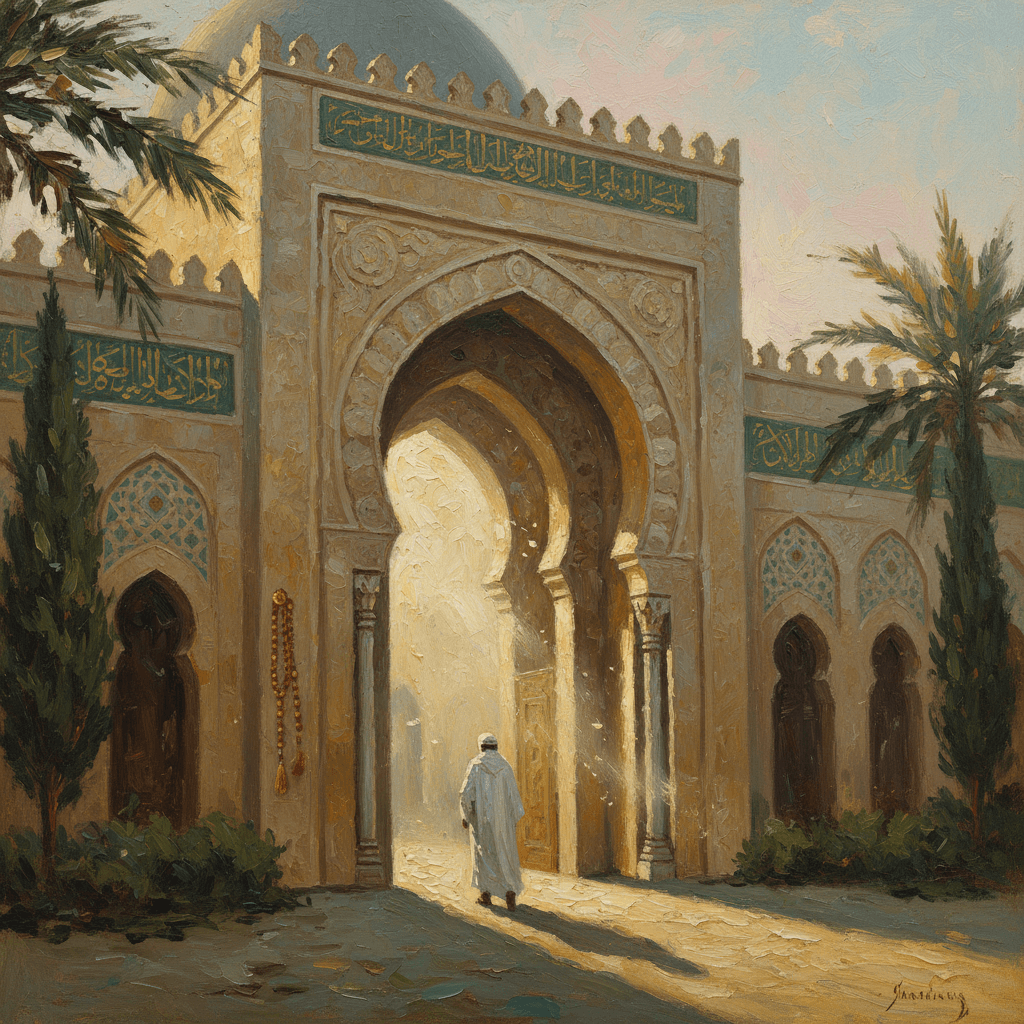
Money worries have a particular weight to them. Bills that don't wait. Job markets that shift without warning. The sinking feeling that no matter how hard you grind, provision feels like it's always slightly out of reach.
Most of us respond to that feeling the same way: refresh the job board, do the math again, stress, scroll, repeat. And there's nothing wrong with practical effort — Islam explicitly values it. But before the strategy, before the CV, before the side hustle, the Muslim has something more powerful available: turning directly to Allah by the names that define His total authority over all provision.
This isn't a motivational reframe. This is a shift in where you're directing your need. If you've been asking the wrong sources, this post is about pointing yourself back toward the right One.
What Rizq Actually Is
Before calling on Allah for rizq, it helps to understand what rizq actually means — because most of us have shrunk it down to money.
Rizq (رِزْق) means provision in its fullest sense. Yes, it includes income and wealth. But it also includes health, knowledge, a peaceful heart, righteous children, time, good relationships, and guidance itself. When you ask Allah for rizq, you're asking for all of it — not just the salary.
That matters because sometimes Allah responds to your dua for rizq with something you weren't expecting: a reconnection with family that heals something in you, a conversation that opens a door, a health improvement that makes everything else possible. Keep your definition of rizq wide.
Allah makes His position on provision absolutely clear:
إِنَّ اللَّهَ هُوَ الرَّزَّاقُ ذُو الْقُوَّةِ الْمَتِينُ
Inna Allaha huwa al-Razzaqu dhu al-quwwati al-mateen
"Indeed, it is Allah who is the [continual] Provider, the firm possessor of strength."
— Quran 51:58
Notice the emphasis: huwa — He is the Provider. Not one of the providers. Not the main provider with others assisting. He is the Provider, possessing firm, unshakeable strength. Your employer doesn't provide for you. Your skills don't provide for you. They are channels — and Allah is the source behind every channel.
Understanding this changes everything about how you approach your need.
Why We Forget to Actually Call on Him
Here's the gap most Muslims live in: we know Allah provides. We say it. We believe it intellectually. But when the pressure is on, our actions tell a different story. We refresh the email inbox rather than make dua after Fajr. We calculate and recalculate the budget instead of calling on Al-Fattah to open a door.
It's not hypocrisy — it's habit. We've been trained by the world to treat anxiety as productive and dua as supplementary. The world says: worry more, work harder, hustle. Islam says: turn to the One who controls the outcome, then work with full effort.
The names of Allah are not decorative. They are attributes that describe how He actually operates — and calling on Him by those names is one of the most direct forms of dua. Allah says in the Quran: "And to Allah belong the best names, so invoke Him by them." (7:180). This is a direct instruction, not a suggestion.
Learning about the 99 names of Allah is one thing. Calling on them in your specific need is the practice that changes your heart.
The 5 Names of Allah Most Tied to Rizq
1. الرَّزَّاقُ — Ar-Razzaq — The Continual Provider
This is the primary name for provision. Razzaq is an intensive form — not just "the one who provides once" but "the one who provides continuously, abundantly, without ceasing."
How to call on Him: After Fajr or in the last third of the night:
يَا رَزَّاقُ ارْزُقْنِي
Ya Razzaqu urzuqni
"O Continual Provider, provide for me."
Be specific. Ask for the provision you need — halal income, a particular opportunity, a resolution to a financial stress. He knows, but the act of asking specifically strengthens your tawakkul and your awareness that it comes from Him.
2. الْفَتَّاحُ — Al-Fattah — The Opener of Doors
Al-Fattah is the One who opens what is closed — opportunities, hearts, pathways that seemed impossible. When you're facing a closed door — a job rejection, a stalled deal, a dead end — Al-Fattah is the name to invoke.
How to call on Him:
يَا فَتَّاحُ افْتَحْ لِي أَبْوَابَ رِزْقِكَ
Ya Fattahu iftah li abwaba rizqik
"O Opener, open for me the doors of Your provision."
Say it when you've done what you can and feel the door isn't moving. You're not asking for a shortcut — you're asking the One who holds the keys.
3. الْوَهَّابُ — Al-Wahhab — The Bestower of Gifts
Al-Wahhab gives without being asked, without conditions, without expecting return. This name carries the quality of pure, unconditional generosity. When you feel you have nothing to offer, no leverage, no credentials — Al-Wahhab gives without requiring them.
How to call on Him: When you feel undeserving or like your situation is too dire to even request:
يَا وَهَّابُ هَبْ لِي رِزْقًا وَاسِعًا
Ya Wahhabu hab li rizqan wasi'a
"O Bestower, grant me abundant provision."
4. الْكَرِيمُ — Al-Kareem — The Most Generous
Al-Kareem describes boundless generosity — Allah gives beyond what is asked, beyond what is expected. When you make dua to Al-Kareem, you're reminding yourself that His generosity has no ceiling. You're not limited to what you can imagine or calculate.
How to call on Him: When making dua, don't be small in your ask. Ask big. Allah loves generosity in both giving and asking.
يَا كَرِيمُ أَكْرِمْنِي بِرِزْقٍ حَلَالٍ
Ya Kariimu akrimnii birizqin halaal
"O Most Generous, honor me with lawful provision."
5. الْمُغْنِي — Al-Mughni — The Enricher
Al-Mughni is the One who creates sufficiency — who takes a person from need to self-sufficiency. This name speaks to the state of ghina (being free from want), not just receiving a one-time provision but being elevated out of scarcity altogether.
How to call on Him: When you're tired of barely getting by and want lasting change:
يَا مُغْنِي أَغْنِنِي بِفَضْلِكَ
Ya Mughnii aghninii bifadlik
"O Enricher, enrich me through Your bounty."
Build a daily dua habit for rizq
DeenBack helps you track your post-Fajr dua practice and call on Allah's names consistently — so turning to Him becomes your first response, not your last resort.


Free download. Premium features available in-app.
Putting It Together: A Daily Practice
After Fajr — before you open your phone, before you check anything — spend three minutes calling on these names. You don't need to go through all five every day. Pick the one that speaks to your current situation.
The benefits of reciting the 99 names of Allah are rooted in this: you're not just memorizing a list, you're building a living relationship with who Allah actually is. When you know Al-Fattah as a living attribute and not just a fact, your dua changes. You're calling on someone you know, not reciting a formula.
For a structured dua that weaves provision and guidance together, see dua for rizq — a companion piece to this one.
Signs You're Shifting
The first sign isn't a pay raise. It's quieter than that.
It's the moment you catch yourself not spiraling about money at 2am, and instead making a short dua and returning to sleep. It's the moment a financial worry crosses your mind and your first instinct is to say Ya Razzaq rather than to calculate. It's a small reduction in the grip that provision anxiety has on your daily functioning.
This is what the Asma ul Husna benefits look like in real life — not magic, but a reorientation. Your circumstances may still be the same. But your heart knows who holds them, and that knowledge creates a stability that no bank account balance can replicate.
The 99 names of Allah with meaning are worth studying beyond these five — because every name shapes how you relate to Allah in a different dimension of life. But start here, with provision, because this is where the worry lives.
Common Questions
Which name of Allah is best to recite for rizq? Ar-Razzaq is the most directly connected. Start there — especially after Fajr or in the last third of the night.
How many times should I repeat a name of Allah? There's no universally fixed number for most cases. Odd numbers (7, 11, 33, 99) after prayers are common in scholarly recommendations, but sincerity and consistency matter more than hitting a specific count.
Is there a specific dua for rizq? Yes — the short form: Ya Razzaqu urzuqni (O Provider, provide for me). You can also recite Surah Al-Waqiah regularly; scholars have long associated it with barakah in provision.
Does calling on Allah's names actually change my situation? It changes you first — your reliance, your anxiety, your tawakkul. And from that place of genuine dependence, doors open in ways you cannot plan or engineer.
Can I call on multiple names in one dua? Absolutely — Ya Razzaq, Ya Fattah, Ya Mughni in a single supplication is consistent with the Sunnah of comprehensive dua.
The Source Is Always Allah
Provision anxiety is real. The bills are real. The uncertainty is real. Islam doesn't ask you to pretend otherwise — it asks you to direct your need toward the One who has unlimited capacity to meet it.
Ar-Razzaq never runs out. Al-Fattah never runs out of doors to open. Al-Mughni never runs out of capacity to enrich. These aren't poetic titles — they're descriptions of how Allah actually operates, always and without limit.
Start calling on Him by these names tomorrow morning. Three minutes after Fajr. One name, your specific need, spoken from your chest. Then do your best in the day — and trust the One who controls what your best cannot.
Turn provision anxiety into daily dua practice
DeenBack helps you build a consistent post-Fajr dua habit — so calling on Allah's names for rizq becomes your daily foundation, not an emergency measure.
Free download. Premium features available in-app.
Frequently Asked Questions
Which name of Allah is best to recite for rizq?
Ar-Razzaq (the Provider) is the most directly connected to rizq. Calling on Allah as Ya Razzaq — especially in the last third of the night — is one of the most recommended practices for seeking provision.
How many times should I repeat a name of Allah for rizq?
There is no fixed required number in most cases. What matters most is sincerity and consistency. Some scholars recommend repeating names in odd numbers (7, 11, 33, 99) after prayers, but the key is making it a daily habit rather than a one-time recitation.
Is there a specific dua for rizq in the Quran or Sunnah?
Yes. One brief dua: يَا رَزَّاقُ ارْزُقْنِي (Ya Razzaqu urzuqni) — 'O Provider, provide for me.' You can also recite Surah Al-Waqiah regularly, as the scholars have noted its connection to barakah in provision.
Does calling on Allah's names actually change my financial situation?
Calling on Allah's names changes you first — your reliance, your heart, your tawakkul. And from that place of genuine dependence, doors open in ways you cannot engineer. It is not magic; it is the natural result of turning to the One who controls all provision.
Can I call on multiple names of Allah in one dua?
Absolutely. You can move through several names in a single supplication — 'Ya Razzaq, Ya Fattah, Ya Mughni' — calling on each attribute as it relates to your need. This is consistent with the Sunnah of comprehensive dua.