
- Published on
How to Deal with Grief Islamically — Finding Peace Through Loss
- Authors

- Name
- Ahmad
- Role
- Senior Marketing Manager, Islamic education • Deen Back
بِسْمِ اللهِ الرَّحْمٰنِ الرَّحِيْمِ
In the name of God, the Most Gracious, the Most Merciful.
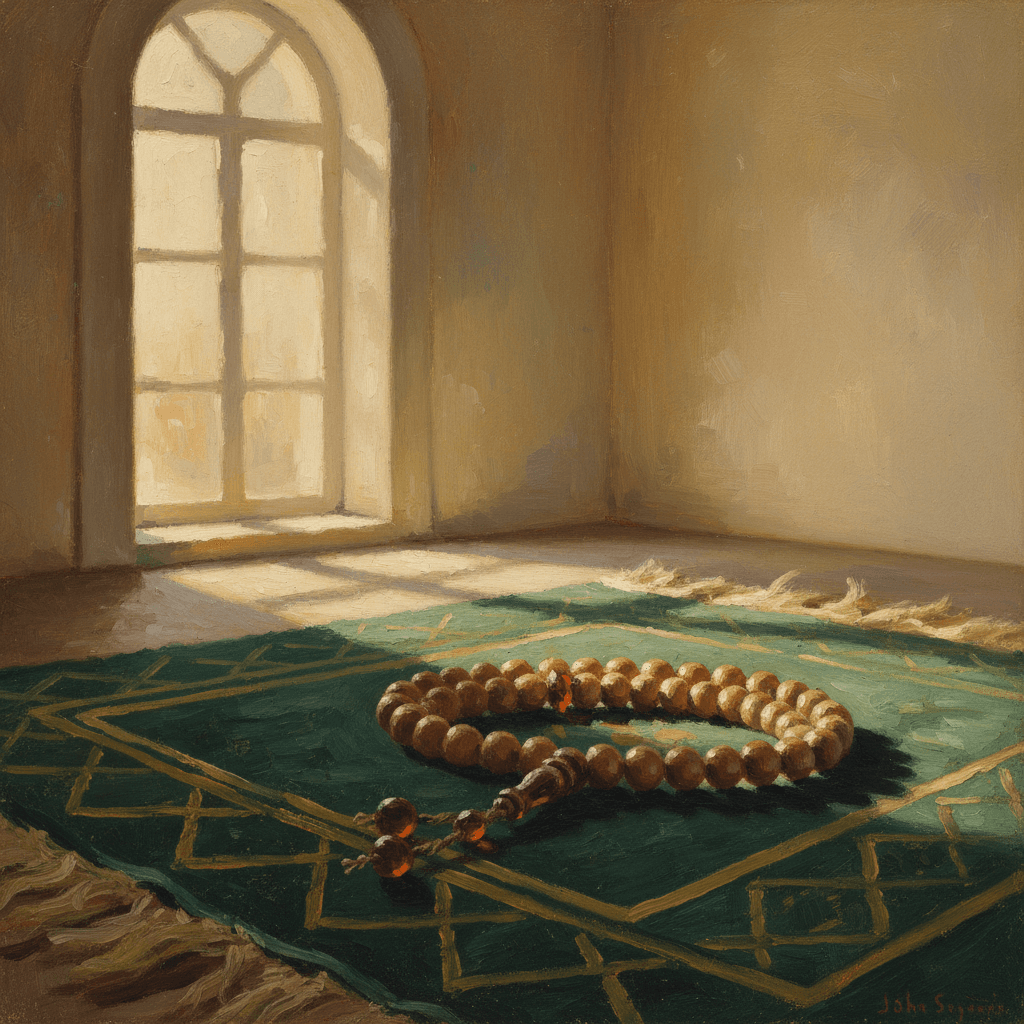
Grief is one of the heaviest things a human being can carry. The loss of someone you love — whether sudden or expected — has a weight that words do not adequately capture. And in that weight, some well-meaning people tell grieving Muslims to "be patient" or "it is Allah's will," as if those words dissolve the pain. They do not. Islam knows they do not.
What Islam offers is not a removal of grief but a container for it — a framework of meaning, practice, and community that holds you through the loss rather than denying it.
What Islam Actually Says About Grief
The Prophet ﷺ grieved. When his son Ibrahim died, he wept and said:
إِنَّ الْعَيْنَ تَدْمَعُ وَالْقَلْبَ يَحْزَنُ وَلَا نَقُولُ إِلَّا مَا يَرْضَى رَبُّنَا وَإِنَّا بِفِرَاقِكَ يَا إِبْرَاهِيمُ لَمَحْزُونُونَ
Inna al-'ayna tadma'u wa al-qalba yahzanu wa la naqulu illa ma yarda rabbuna wa inna bifiraqika ya Ibrahim lamahzunun
"The eye weeps, the heart grieves, and we say only what pleases our Lord. O Ibrahim, we are indeed saddened by your parting."
The Prophet cried. The companions cried. Islam does not require suppression of genuine emotion — it requires that grief not cross into despair, that loss not lead to rejecting Allah's wisdom. There is a vast space between those two limits, and grief lives in that space.
Step-by-Step Guide to Grieving Islamically
Step 1 — Say the Words of Return
When a loss strikes, the Quran prescribes one immediate response:
الَّذِينَ إِذَا أَصَابَتْهُم مُّصِيبَةٌ قَالُوا إِنَّا لِلَّهِ وَإِنَّا إِلَيْهِ رَاجِعُونَ
Alladhina idha asabathum musibatun qalu inna lillahi wa inna ilayhi raji'un
"Those who, when calamity strikes them, say: Truly, to Allah we belong, and to Him we shall return."
— (Surah Al-Baqarah, 2:156)
This phrase — Inna lillahi wa inna ilayhi raji'un — is not a formula to dismiss pain. It is a statement of theological reality: we came from Allah and we return to Him. Every person who dies has simply arrived before us. Saying this phrase reorients the heart, gently, toward the truth that grief exists within.
Step 2 — Allow Yourself to Grieve
Islam does not suppress grief — it sanctifies it. You are permitted to cry, to miss the person deeply, to feel the absence with your whole body. What is forbidden is niyahah — wailing, striking the face, tearing garments, making public expressions of despair that implicitly reject Allah's decree.
Short of those limits, grieve. Cry in your salah, cry in your sujood, cry when the memories arrive. Tell Allah in your own words what you are feeling and what you have lost. The heart that is allowed to grieve heals; the heart that is forced to perform strength breaks quietly.
Step 3 — Turn Specifically to Allah in This Pain
Loss opens a door to Allah that ease often keeps closed. The experience of grief — the feeling of helplessness, of needing something beyond yourself — is precisely the spiritual posture Islam calls us toward in prayer.
Read the dua for hardship and make it specifically, naming the person you have lost and the pain you are carrying. The dua for ease is for this moment. Pour your honest words into sujood — unedited, in whatever language your heart speaks.
Step 4 — Maintain Your Salah Through the Grief
This is the hardest step in acute grief and the most important. The nafs in grief wants to withdraw from everything, including worship. But salah is what keeps you tethered to the source of healing when grief wants to isolate you.
Even if salah feels mechanical and distant, perform it. Even if you cry through every rakah. The act of continuing worship during grief is itself sabr — patient endurance — which the Quran promises extraordinary reward for. Salah does not make grief disappear, but it makes it bearable by keeping you connected to the One who holds everything.
Step 5 — Seek Community — Do Not Isolate
Isolation intensifies grief. It is one of the nafs's most effective tools during difficult periods — convincing you that no one understands, that company is too much effort, that you are better off alone. You are not.
The Islamic tradition of consolation visits — ta'ziyah — exists precisely because community is medicine for grief. Accept help. Allow people to sit with you without needing to be entertained or to perform strength. Tell one trusted person honestly what you are feeling. Read how to forgive someone Islamically if your grief involves a complicated relationship — sometimes loss comes with unresolved threads.
Step 6 — Give Sadaqah on Behalf of the Deceased
One of the most profound Islamic practices after a loss is giving sadaqah on behalf of the person who died. The Prophet confirmed that sadaqah given after death on behalf of the deceased reaches and benefits them:
إِنَّ مِمَّا يَلْحَقُ الْمُؤْمِنَ مِنْ عَمَلِهِ وَحَسَنَاتِهِ بَعْدَ مَوْتِهِ عِلْمًا عَلَّمَهُ... وَصَدَقَةً أَجْرَاهَا
"Among the deeds that reach a believer after death are knowledge he taught... and sadaqah he gave."
This act transforms grief from passive loss into active love. You can still do something for them. Give in their name, make dua for them, read Quran and send the reward. This is one of the most healing practical steps available.
Stay Connected to Allah Through Every Season — Including the Hard Ones
DeenBack helps you maintain your daily worship habits even during difficult times — dua reminders, dhikr tracking, and consistent Islamic practices that hold you through grief.


Free download. Premium features available in-app.
Making It Stick — Sabr as a Practice, Not a State
Sabr is often translated as patience, but it means something more active — steadfast endurance with continued action. It is not the absence of emotion but the presence of resolve to continue despite emotion. The Quran promises:
إِنَّ اللَّهَ مَعَ الصَّابِرِينَ
Inna Allaha ma'a al-sabirin
"Truly, Allah is with those who are patient."
— (Surah Al-Baqarah, 2:153)
Sabr in grief means continuing salah, continuing dhikr, continuing to ask Allah — even when the heart is heavy and the effort feels enormous. Read dua for patience for the specific supplications that build this capacity. And read dua for sadness for the duas the Prophet ﷺ taught for the specific pain of grief.
Common Mistakes to Avoid
Telling yourself you should be over it by now. Grief has no standard timeline. Comparing your healing to others is a path to unnecessary suffering. The Prophet grieved his wife Khadijah for years after her death.
Completely abandoning worship during grief. Withdrawing from salah, dhikr, and dua cuts you off from the only source powerful enough to hold you through what you are experiencing. The worship does not have to be beautiful to be valid.
Performing strength for others. Performing strength when you are not strong is spiritually exhausting and lonely. Allow at least one person to know how you actually are. Allow yourself to receive care.
Isolating from the community that would help. People genuinely want to support you. Accepting their presence, their food, their company — this is not weakness. It is one of the ways Allah's mercy arrives in human form.
Common Questions
What if I am angry at Allah because of the loss?
This is a real experience and does not make you a bad Muslim. Bring that anger directly to Allah in dua — be honest. The relationship with Allah can hold your anger. What it cannot hold is silence and withdrawal. Talk to Allah about exactly what you feel, and keep showing up to salah even while you are working through it.
How do I help my children grieve?
Name the loss honestly and age-appropriately. Allow them to cry and to ask questions. Maintain their routines — children find stability in consistency during loss. Make dua together for the person who died. Tell them about where the person has gone in Islamic terms — not sugarcoated, but comforting.
Grief Is Not the End of the Story
The person you lost is not erased. In Islamic understanding, death is a transition, not an extinction. The relationship continues through dua, through sadaqah given in their name, through the righteous children they left behind, through the knowledge they passed on. Your grief honors who they were and what they meant. And the Islam that holds you through this grief promises reunion — in a place where loss does not follow.
Let Your Worship Carry You Through — Even in the Hardest Seasons
DeenBack supports your daily connection to Allah through consistent Islamic habits — so that when grief comes, your foundation of dhikr and dua is already there to hold you.
Free download. Premium features available in-app.
Frequently Asked Questions
Is it permissible to cry when grieving in Islam?
Yes — the Prophet cried when his son Ibrahim died and said: 'The eyes shed tears, the heart grieves, and we say only what pleases our Lord. O Ibrahim, we are indeed saddened by your parting.' Islam permits and acknowledges grief. What is prohibited is wailing, striking the face, tearing clothing, and expressions of despair that reject Allah's decree.
How long is a normal grieving period in Islam?
Islam does not set a fixed timeline for grief — healing is individual. There is an exception for widows, who observe a waiting period of four months and ten days (iddah). For other losses, grief can take as long as it takes. What Islam guides is how to grieve — with patience, trust in Allah, and continued worship — not how quickly to stop.
What do I say when someone dies?
Say: Inna lillahi wa inna ilayhi raji'un — Truly, to Allah we belong, and to Him we shall return. This is the complete Quranic phrase from Surah Al-Baqarah 2:156, revealed specifically for moments of loss. The Prophet taught it as the response to any calamity, and it reorients the heart toward the reality of return.
How do I support a grieving Muslim?
Be present without advice. Bring food. Say the dua for the deceased and mention them by name with the bereaved. Do not try to explain or justify the loss. Do not say things like 'everything happens for a reason' — even if true, this often lands poorly in acute grief. Simply being there, consistently, is more valuable than words.
Can grief become sinful in Islam?
Grief itself is not sinful. Expressions of grief that involve rejecting Allah's decree — saying things like 'Why did Allah do this to me?' in a way that denies His wisdom — cross a line. Similarly, neglecting salah because of grief or abandoning responsibilities entirely becomes problematic over time. The grief is honored; the response to it is guided.