
- Published on
Dua for Good Manners: The Prophetic Supplication for Beautiful Character
- Authors

- Name
- Ahmad
- Role
- Senior Marketing Manager, Islamic education • Deen Back
بِسْمِ اللهِ الرَّحْمٰنِ الرَّحِيْمِ
In the name of God, the Most Gracious, the Most Merciful.
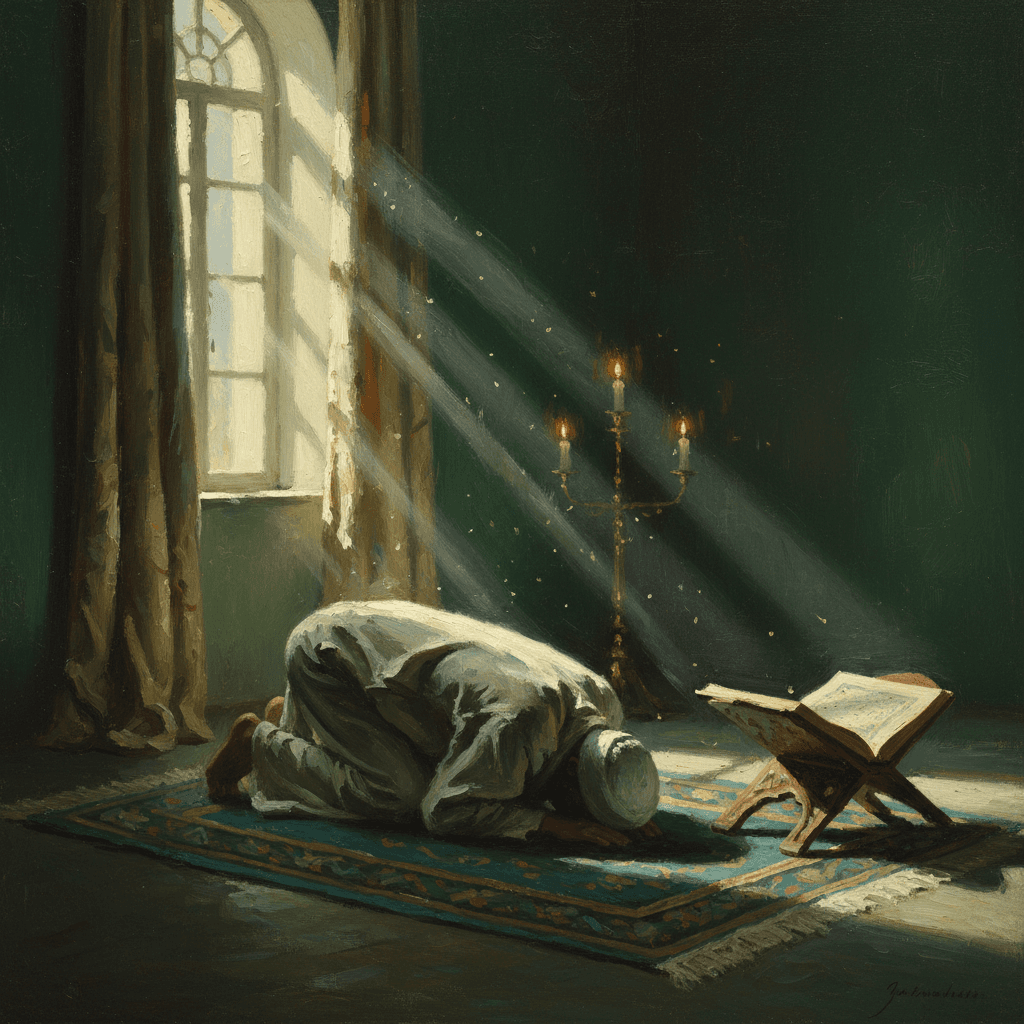
You know people whose presence makes a room better. Whose words never sting even when they carry a correction. Who treat the cleaner with the same warmth as the director. Who smile first, listen fully, and never make you feel like an inconvenience.
You probably also know what it feels like to not be that person. To snap at someone and wish immediately that you had not. To let a sharp comment escape before you could stop it. To feel the gap between who you want to be and who you actually are in moments of irritation, exhaustion, or stress.
The nafs is capable of both. What determines which one shows up is character — and character, in Islam, is something you ask Allah for help with, not something you manufacture alone.
The Dua for Good Manners
The Prophet ﷺ included this supplication in his opening dua at the beginning of salah:
اللَّهُمَّ اهْدِنِي لِأَحْسَنِ الْأَخْلَاقِ لَا يَهْدِي لِأَحْسَنِهَا إِلَّا أَنْتَ وَاصْرِفْ عَنِّي سَيِّئَهَا لَا يَصْرِفُ عَنِّي سَيِّئَهَا إِلَّا أَنْتَ
Allahumma-hdini li-ahsanil-akhlaq la yahdi li-ahsanihā illā anta, wasrif 'anni sayyi'ahā la yasrifu 'anni sayyi'ahā illā anta.
"O Allah, guide me to the best of character, for none can guide to the best of it except You, and turn away from me its worst, for none can turn away its worst except You." — (Muslim 771)
This dua has a structure that reveals something important about Islamic moral psychology:
Guidance is needed, not just effort. You cannot find the best of character through your own navigation alone. You need Allah to show you what it looks like in your specific situation — because good character is not abstract. It shows up in specific moments with specific people, and it often requires wisdom that goes beyond your default reactions.
Driving away bad character requires the same divine help. The dua asks both for guidance toward good and for removal of bad — as separate requests. This is honest. Knowing what is right does not automatically stop you from doing what is wrong. The nafs resists transformation. You need Allah working in both directions.
"None can do this except You" — said twice. This is not an add-on phrase. It is the theological core. The Prophet ﷺ is saying that human character transformation is fundamentally a divine act, not a self-improvement project. Your effort matters — but the actual transformation of character requires Allah's involvement.
The Story Behind It
Aisha رضي الله عنها was asked about the character of the Prophet ﷺ. She said: "His character was the Quran." (Muslim 746). This means the Quran's guidance — its commands, its prohibitions, its ethical vision — was perfectly embodied in his day-to-day interactions.
He was, by all accounts — even those of his enemies — extraordinarily well-mannered. The Quran itself testifies: "And indeed, you are of a great moral character." (Quran 68:4). This came from sustained practice, from the dua he made in every salah, and from his intimate relationship with the source of all good character.
The scholars note that the Prophet said this dua before beginning the recitation in salah — in the moment of stillness before diving into the Quran. He began his formal worship by asking Allah to make his character match what he was about to recite. The prayer and the character were connected at their root.
How to Build the Habit of Better Manners
Character does not change through lectures or resolutions. It changes through practice sustained over time with divine help.
Say this dua before every salah. The Prophet included it in the iftitah — the opening dua. If you are not currently saying an iftitah dua, start here. Say it in Arabic, then reflect on what you are asking for. Who in your life have you been harsh with? In what situations do your worst qualities appear? Ask Allah to address those specifically.
Identify your trigger situations. Bad character does not show up randomly. It shows up when you are tired, disrespected, under pressure, or around specific people. Know your triggers. Before entering those situations, say this dua. The dua for anger is a natural companion when the trigger is frustration or irritation.
Practice the habit of pausing. The Prophet ﷺ said: "If one of you becomes angry while standing, let him sit down, and if his anger does not leave him, let him lie down." (Abu Dawud 4782). The pause — the moment between stimulus and response — is where character lives. Use that moment to say a'udhu billah min al-shaytan al-rajim and breathe.
Treat every difficult interaction as practice. A difficult family member, a rude colleague, a frustrating situation — these are not obstacles to your character development. They are the conditions in which character develops. Thank Allah for the people who make it hard. They are your training ground.
Track your progress honestly. At the end of each day, ask yourself: where did my character show up well today? Where did it fail? This is muhasabah — the self-accounting that the Prophet ﷺ encouraged. Combined with the dua for self-control, it creates a practical loop of reflection and improvement.
Build Beautiful Character One Day at a Time
DeenBack helps you track your daily dhikr, dua, and self-reflection so that the character transformation you are asking Allah for is supported by consistent daily practice.


Free download. Premium features available in-app.
Related Duas
Dua for good character: The dua for good character covers the broader landscape of moral virtue in Islam — generosity, honesty, patience — complementing this dua's specific focus on the behavioral expression of character in daily interactions.
Dua for patience: Patience (sabr) is the foundation of most good manners. The ability to not snap, not overreact, not say what you feel like saying — these all require sabr. The dua for patience is an essential companion to this practice.
Dua for resisting nafs: The worst of character comes from the nafs — the lower self that wants to react, retaliate, and prioritize its own comfort. The dua for resisting nafs is the targeted work on the source of bad character.
Common Questions
What if I try for years but my character does not seem to improve?
Character change is slow and rarely linear. You will have good days and terrible days. What matters is the direction of travel over months and years, not the quality of every single interaction. The Prophet ﷺ said deeds are judged by their conclusions, not by any single moment. Keep making the dua. Keep practicing. Keep doing muhasabah. Allah sees the effort even when you cannot see the progress.
My culture values bluntness and directness. Is it acceptable to be direct in Islam?
Directness and harshness are different things. Islam strongly values truth-telling and clear communication. The Prophet ﷺ said what needed to be said — directly, clearly, and without hedging. What he avoided was cruelty, belittling, and unnecessary sharpness. You can be completely honest and completely kind at the same time. That combination is the ideal.
How do I improve my manners with family when it is hardest with the people closest to me?
The people who know us best can also provoke us most reliably. The Islamic response is not to feel guilty about this universal experience but to take it seriously as a practice ground. Make dua specifically for your interactions with the people who push your buttons. Treat each difficult family interaction as an opportunity to practice the character you are asking Allah to give you.
Closing
The Prophet ﷺ was sent, as he himself said, "to perfect good character." (Ahmad 8729). His entire mission — the Quran, the Sunnah, the community he built — was aimed at producing people whose character reflected divine guidance.
You are the inheritor of that mission in your own life. Your home, your workplace, your street — these are your domain. The character you bring to them matters.
Make this dua in every salah. Ask Allah to guide you toward the best of it. And trust that the One who sent the Prophet ﷺ to perfect character in the world can perfect yours too.
Let Your Salah Build Your Character
Every salah is an opportunity to ask Allah for beautiful manners. DeenBack helps you make that dua consistently so character transformation becomes part of your daily worship.
Free download. Premium features available in-app.
Frequently Asked Questions
What is the dua for good manners in Islam?
Allahumma-hdini li-ahsanil-akhlaq la yahdi li-ahsaniha illa anta, wasrif 'anni sayyi'aha la yasrifu 'anni sayyi'aha illa anta — O Allah, guide me to the best of character, for none can guide to the best of it except You, and turn away from me its worst, for none can turn away its worst except You. (Muslim 771). The Prophet said this in his opening dua at the beginning of salah.
What does akhlaq mean in Islam?
Akhlaq (plural of khuluq) refers to character, manners, and moral conduct — both in relation to Allah and in relation to other people. The Prophet said: 'The most perfect believers in terms of faith are those with the best character.' (Abu Dawud 4682). Akhlaq covers how you speak, how you treat people, how you respond to difficulty, how you carry yourself when no one is watching. It is the practical expression of iman in daily life.
What were the manners of the Prophet in daily life?
The Prophet was described by Aisha as 'his character was the Quran' (Muslim 746). In practice, this meant: he never used obscene language, he did not respond to evil with evil, he was gentle with children and kind to servants, he would smile when greeting people, he would stand for the elderly and disabled, he acknowledged mistakes, he never interrupted, and he treated every person with dignity regardless of their status.
Can I change my character through dua and effort?
Yes. The Prophet said: 'Knowledge comes by learning, and forbearance comes by practicing forbearance.' (Al-Khatib al-Baghdadi — the concept is supported by many narrations). Character is not fixed. The nafs can be trained. This dua asks Allah to both guide you toward good character and drive away bad character — acknowledging that transformation requires divine assistance, not just willpower.
How is the dua for good manners different from the dua for good character?
They overlap significantly, but the focus differs. Good character (husn al-khuluq) refers broadly to moral virtue — patience, generosity, honesty. Good manners (ahsan al-akhlaq) refers more specifically to the behavioral expressions of that character — how you speak, how you treat people in interaction, your etiquette and demeanor. Both are needed; this dua covers the full spectrum by asking Allah to guide toward the best of all character and turn away all of its worst aspects.