
- Published on
Dua for a Good Death: Asking Allah for a Blessed Ending
- Authors

- Name
- Ahmad
- Role
- Senior Marketing Manager, Islamic education • Deen Back
بِسْمِ اللهِ الرَّحْمٰنِ الرَّحِيْمِ
In the name of God, the Most Gracious, the Most Merciful.
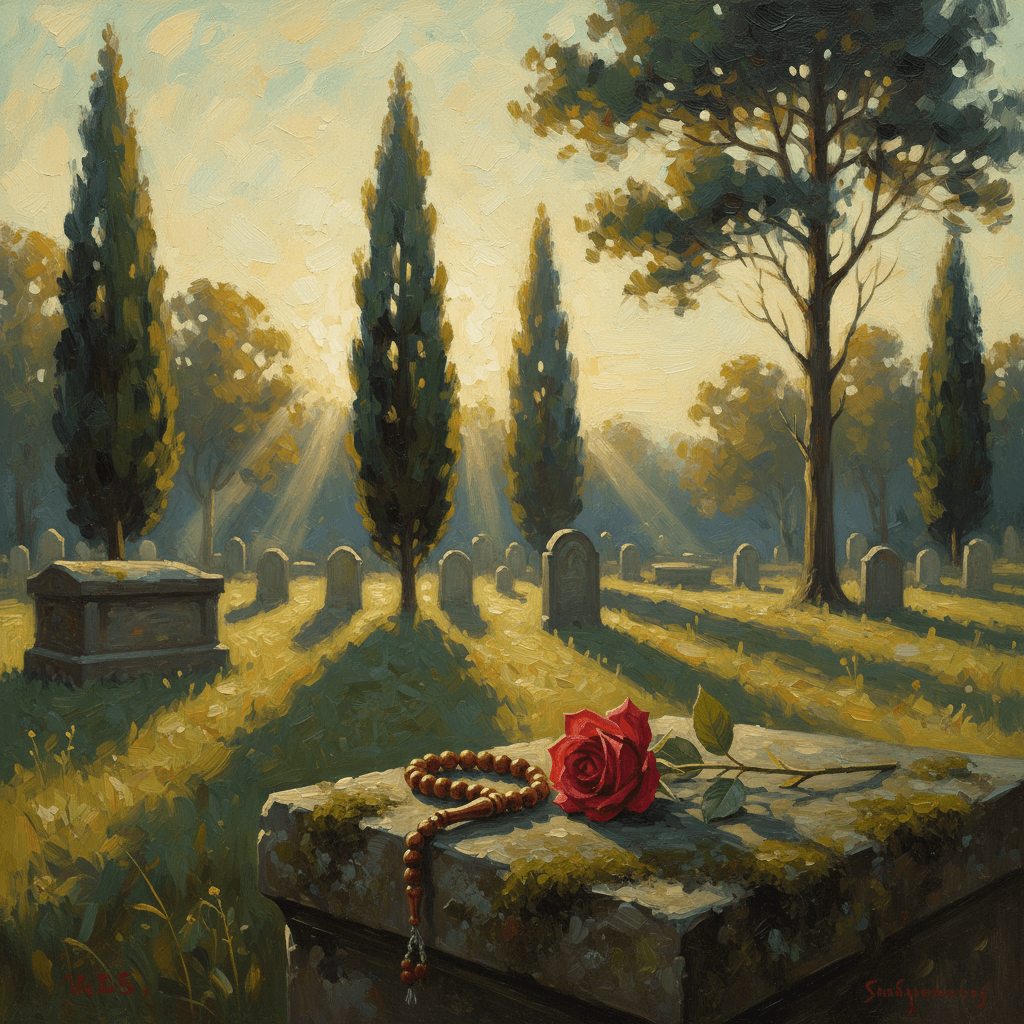
Every human being on Earth has the same appointment at the end. The date is not known. The circumstances are not known. The only thing certain is that it is coming, for each of us, without exception.
Islam takes this reality seriously enough to have built-in practices around it. The Prophet ﷺ said: "Remember death frequently." (Tirmidhi 2307). Not to induce anxiety, but to install the right priorities — to live in a way that makes the ending good.
Because while we cannot control when or how we die, there is something we can actively seek: a good ending. Husn al-khatimah. And this is specifically something we can ask Allah for.
The Dua for a Good Death
اللَّهُمَّ اجْعَلْ خَيْرَ عُمُرِي آخِرَهُ وَخَيْرَ عَمَلِي خَوَاتِيمَهُ وَخَيْرَ أَيَّامِي يَوْمَ أَلْقَاكَ
Allahumma aj'al khayra 'umuri akhirahu wa khayra 'amali khawatimahu wa khayra ayyami yawma alqak
"O Allah, make the best of my life its last part, the best of my deeds their seal, and the best of my days the day I meet You."
— (Recorded in Tabaqat Ibn Sa'd and authenticated by scholars; see also Al-Mu'jam Al-Awsat)
Three requests in one dua. Each one is profound.
Khayra 'umuri akhirahu — make the best of my life its last part. Not my youth, not my peak years — my ending. Ask Allah to make you better at the end than at the beginning.
Khayra 'amali khawatimahu — make the best of my deeds their seal. That the final deeds — the ones done closest to death — are the best ones. This is the essence of husn al-khatimah.
Khayra ayyami yawma alqak — make the best of my days the day I meet You. The day of death, the day of resurrection — make that the peak day, not the worst day.
The Quranic Anchor
يَا أَيُّهَا الَّذِينَ آمَنُوا اتَّقُوا اللَّهَ حَقَّ تُقَاتِهِ وَلَا تَمُوتُنَّ إِلَّا وَأَنْتُمْ مُسْلِمُونَ
"O you who have believed, fear Allah as He should be feared and do not die except as Muslims."
— (Quran, Surah Aal-Imran, 3:102)
This verse frames the question of a good death: dying as a Muslim — in a state of submission, in a state of faith. This is the fundamental condition of the good ending. The dua is the request for Allah's help in arriving at that state.
The Story Behind This Dua
The concept of khatimah — the seal or ending of one's deeds — is central to Islamic ethics. The Prophet ﷺ said: "Deeds are [judged] by the last actions." (Sahih Bukhari 6607). This hadith carries enormous weight. It is both a warning and a hope.
Warning: a person can spend a lifetime in apparent righteousness and end poorly through arrogance, apostasy, or persistent sin. Hope: a person can spend much of their life in sin and turn sincerely to Allah and die in that state of tawbah.
The practical implication is that today's choices matter for tomorrow's ending. You cannot secure a good death by committing to righteousness at seventy. The character that arrives at death is built from the daily habits of the decades before it.
The dua for good death is therefore a dua for the daily practice that builds toward the ending. It is asking Allah: shape my entire trajectory so that the ending is the peak. Make me better next year than this year. Make me better in my final years than my middle years. Make my death the best moment.
How to Make This Dua Part of Your Daily Life
Remembrance of death is a practice, not just a concept. Here is how to build it into your days.
Morning practice: say the dua before beginning the day. Starting the day with the dua for good death resets your priority hierarchy. It reminds you that this day is one of a finite number. It asks Allah to make this particular day — not just the last day — one of your best. Every day is a potential seal-of-deeds moment.
Evening practice: use the dua as a closing review. Before sleep, the Prophet ﷺ taught Muslims to reflect. Adding the dua for good death to evening dhikr frames the sleep as a mini-death — and the awakening as a return. The Prophet ﷺ explicitly used this frame: "Praise be to Allah who returned my soul to me after taking it, and did not let me die in my sleep." (Sahih Bukhari 6312)
Regular tawbah: the prerequisite for a good death. The dua is not a substitute for living righteously — it is the accompaniment to it. Make daily istighfar (seeking forgiveness) a habit. Clean relationships: repay debts, seek forgiveness from those you have wronged, return things that are not yours. The good death comes to those whose record is as clear as they can make it.
Maintain your five prayers. The Prophet ﷺ said: "The covenant between us and them (the hypocrites) is the prayer — whoever abandons it has disbelieved." (Tirmidhi 2621). The five prayers are the most basic marker of the state you want to be in at death. Maintaining them daily is the most direct preparation for a good ending.
Build the Daily Habits That Lead to a Blessed Ending
DeenBack tracks your five prayers, daily dua, and dhikr streaks — the consistent practice that shapes the character that arrives at the ending Allah grants.


Free download. Premium features available in-app.
Related Duas for the Good Ending
The dua asking for a good final state:
اللَّهُمَّ أَحْسِنْ عَاقِبَتَنَا فِي الْأُمُورِ كُلِّهَا وَأَجِرْنَا مِنْ خِزْيِ الدُّنْيَا وَعَذَابِ الْآخِرَةِ
Allahumma ahsin 'aqibatana fi al-umuri kulliha wa ajirna min khizyi al-dunya wa 'adhabi al-akhira
"O Allah, make our ending good in all our affairs and protect us from the disgrace of this world and the punishment of the Hereafter."
— (Recorded in Musnad Ahmad)
This dua asks for good endings in all matters — not just death, but every situation and transition. It is appropriate for daily use.
The dua for good death connects naturally to other afterlife duas. The dua to avoid hellfire addresses the most important concern at the moment of death. The dua for jannah is the positive counterpart. When grieving someone who has died, the dua when someone dies provides the right framework. For the daily practice that prepares for a good death, the dua for morning contains the prophetic morning adhkar.
Common Questions
How can I know if I will have a good death?
You cannot know — and that uncertainty is by design. The scholars say this uncertainty is what keeps the believer humble and consistent. What you can know is whether you are building toward it: maintaining prayer, making regular tawbah, keeping relationships clean, doing righteous deeds. If you are doing these things, you have reason for hope.
What are the signs of a good death?
The Prophet ﷺ mentioned several: perspiring at the forehead at the moment of death (Tirmidhi 982), dying on a Friday or Friday night (Abu Dawud 3110), dying while performing a good deed, dying with the shahada on the lips, and dying in a state of fasting for Allah. These are signs, not guarantees — but they are worth aspiring to.
Is it wrong to pray to die in Mecca or Medina?
Making dua to die in a blessed place or in a state of worship is a praiseworthy aspiration. The Prophet ﷺ did not prohibit it. However, scholars note that over-attachment to a specific place or circumstance of death can become a distraction from the actual preparation, which is daily righteous living. Ask for the blessed death, then focus on building what makes it possible.
The Most Important Day
The day you meet Allah will be the most important day of your existence. Everything before it was preparation. Every dua, every prayer, every act of character — building toward that moment.
The dua for good death is not about obsessing over death. It is about orienting life. When you regularly ask Allah to make your best days the day you meet Him, you are asking Him to make your life an upward trajectory — better at the end than the beginning, better at the final deeds than the first, better at the moment of arrival than the moment of departure.
That is the Muslim's hope. Express it daily.
Live Every Day Like It Could Be Your Best Day
DeenBack helps you stay consistent in prayer, dua, and dhikr — so every day is a good day to meet Allah, not just the one you hope for at the end.
Free download. Premium features available in-app.
Frequently Asked Questions
What is the dua for a good death in Islam?
One of the most beloved prophetic duas for a good ending is: Allahumma aj'al khayra 'umuri akhirahu wa khayra 'amali khawatimahu wa khayra ayyami yawma alqak — O Allah, make the best of my life its last part, the best of my deeds their seal, and the best of my days the day I meet You. This asks for a blessed conclusion at every level.
What does a good death mean in Islam?
A good death (husn al-khatimah) includes: dying in a state of faith (on the shahada), dying in a state of purity and worship, being in a righteous situation when death arrives, and having one's final acts be good deeds. The Prophet ﷺ said that the last deed of a person determines their end — which is why maintaining consistent worship matters daily, not just at the end.
How do I prepare for a good death as a Muslim?
The scholars say: live every day as if it could be your last. Practically, this means: maintaining your five prayers consistently, ending each day with dhikr and istighfar, making regular tawbah without delay, keeping your relationships clean (paying debts, seeking forgiveness from those you have wronged), and making this dua regularly.
Is making dua for a good death morbid or negative?
No — the Prophet ﷺ made this dua and encouraged it. Remembrance of death is specifically recommended in Islam: 'Remember death frequently — it cuts off pleasures and eliminates heedlessness.' (Tirmidhi 2307). Thinking about death with the right frame makes you more intentional about life, not less. The dua for good death is an act of wisdom, not morbidity.