
- Published on
Dua for Eid al-Fitr: Supplications for a Blessed Celebration
- Authors

- Name
- Ahmad
- Role
- Senior Marketing Manager, Islamic education • Deen Back
بِسْمِ اللهِ الرَّحْمٰنِ الرَّحِيْمِ
In the name of God, the Most Gracious, the Most Merciful.
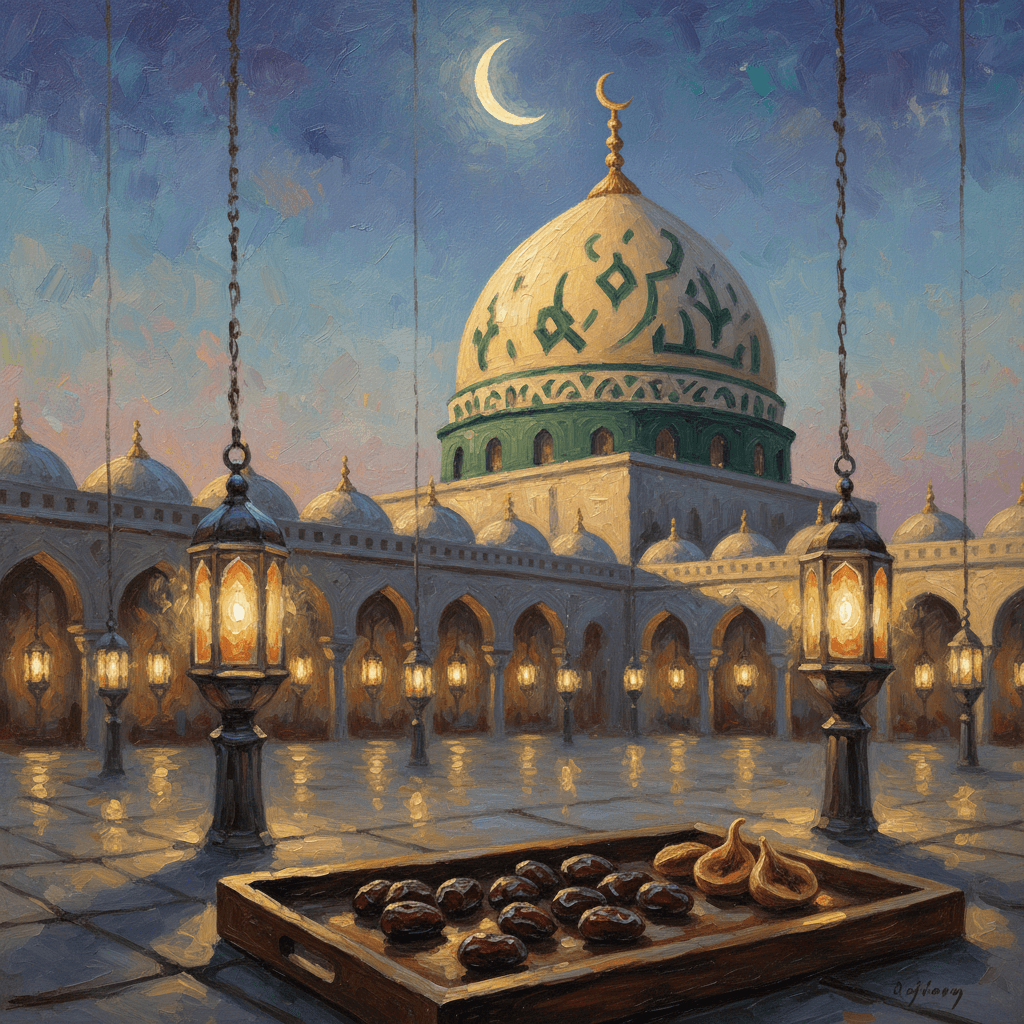
Eid al-Fitr is the day the fast ends. But what many people do not realize is that the day itself carries enormous spiritual weight — not just as a celebration of what you did in Ramadan, but as one of the most potent windows of the year for supplication.
The Companions of the Prophet ﷺ greeted each other on Eid with a dua, not just a festive phrase. They understood that Eid was not merely a reward — it was itself a spiritual occasion. The celebration was inseparable from the supplication.
And the most urgent request on Eid? That what you did in Ramadan actually counts.
The Primary Dua of Eid al-Fitr
تَقَبَّلَ اللَّهُ مِنَّا وَمِنْكُمْ
Taqabbal Allahu minna wa minkum
"May Allah accept from us and from you."
— (Transmitted by the Companions, authenticated by Ibn Hajar Al-Asqalani in Fath al-Bari)
This phrase is both a greeting and a dua. When you say it to another Muslim on Eid, you are making supplication for them — asking that their Ramadan be accepted. When they respond in kind, they are making the same supplication for you.
The Companions specifically used this dua when they met each other on Eid. Ibn Hajar recorded that it was their established practice. This is not a cultural tradition that developed later — it traces back to the generation that received Islam directly from the Prophet ﷺ.
The Dua for Acceptance of All Worship
اللَّهُمَّ تَقَبَّلْ مِنَّا صَلَاتَنَا وَصِيَامَنَا وَقِيَامَنَا وَرُكُوعَنَا وَسُجُودَنَا
Allahumma taqabbal minna salatana wa siyamana wa qiyamana wa rukuu'ana wa sujoodana
"O Allah, accept from us our prayer, our fasting, our night standing, our bowing, and our prostrating."
This comprehensive dua of acceptance covers every dimension of Ramadan's worship. Say it on Eid morning before the prayer, and continue saying it throughout the day.
The Story Behind Eid Supplications
The night of Eid — the Arabic phrase laylat al-ja'izah, the night of the prize — is mentioned in the prophetic tradition as a time of extraordinary acceptance. The Prophet ﷺ taught that whoever stands in prayer on the two nights of the two Eids seeking reward, their heart will not die when hearts die. (Ibn Majah 1782)
The morning of Eid al-Fitr falls after a month in which the gates of Paradise were open, the gates of Hellfire were closed, and Shaytan was chained. (Sahih Bukhari 1899). The Eid morning prayer itself carries special significance as the communal celebration of a community that completed an act of worship together.
The companions were known to say Taqabbal Allahu minna wa minkum from the moment Eid was confirmed through the night and morning — understanding that the entire occasion was a spiritually charged window.
How to Make the Most of Eid Day's Duas
Eid can easily become entirely about the social and material dimensions — food, gifts, gatherings — while the spiritual opportunity passes. Here is how to actively use it as the dua occasion it is.
The night before Eid. When Ramadan's final night transitions into Eid, stay up for a portion of the night in prayer and supplication. The prayer does not need to be long — but the dua should be intentional. List what you want Allah to accept, what you are asking forgiveness for, and what you want the coming year to look like.
Before the Eid prayer. While walking to the prayer, say the Eid takbeer — Allahu Akbar, Allahu Akbar, la ilaha illa Allah, Allahu Akbar, Allahu Akbar, wa lillah al-hamd — and follow it with personal dua. You are arriving at one of the year's most accepted prayer times.
After the Eid prayer, before returning home. The period after a major prayer, while still in the state of worship's momentum, is an excellent dua window. Sit for a few minutes with specific requests.
Throughout the day, with every Eid greeting. When you say Taqabbal Allahu minna wa minkum to someone, mean it as a dua. When they say it back, receive it as a dua being made for you. The entire day becomes a continuous supplication exchange.
Make specific dua about what comes after Ramadan. The single most important request of Eid: Allah, do not let me return to who I was before Ramadan. Keep in me what Ramadan built. Let the habits survive the celebration.
Carry Ramadan's Habits Into the Rest of the Year
DeenBack helps you maintain the prayer, dua, and dhikr streaks built in Ramadan — so Eid is the beginning of a better year, not the end of a good month.


Free download. Premium features available in-app.
Related Duas for the Eid Season
The takbeer of Eid:
اللَّهُ أَكْبَرُ اللَّهُ أَكْبَرُ لَا إِلَٰهَ إِلَّا اللَّهُ وَاللَّهُ أَكْبَرُ اللَّهُ أَكْبَرُ وَلِلَّهِ الْحَمْدُ
Allahu Akbar Allahu Akbar la ilaha illa Allah wa Allahu Akbar Allahu Akbar wa lillah al-hamd
"Allah is the Greatest, Allah is the Greatest. There is no deity but Allah. Allah is the Greatest, Allah is the Greatest, and all praise is to Allah."
Say this throughout Eid morning — walking to the prayer, returning home, and throughout the day.
The Eid season connects naturally to other Ramadan duas: the dua for completing Ramadan addresses the transition moment, while the dua for arafah — the day most similar to Eid al-Adha in spiritual intensity — shows how major Islamic occasions function as supplication windows. For the gratitude that Eid should inspire, the dua for thanks to Allah provides the right framework.
Common Questions
Is Eid al-Fitr a day of rest from worship?
It is a day of celebration — but in Islam, celebration and worship are not opposites. The Eid prayer itself is obligatory according to the majority of scholars. The takbeer is a worship. The dua exchanges are worship. Visiting family with an intention of maintaining ties is worship. Eid is a celebration through worship, not a break from it.
What if my Ramadan was poor — should I still celebrate Eid?
Yes. Eid is not only for those who had a perfect Ramadan — it is for everyone who fasted. If your Ramadan was weak, use Eid as a sincere moment of asking for acceptance despite the weakness. "Taqabbal Allahu minna" — accept from us — is a dua that acknowledges our imperfect performance and asks for acceptance anyway. That honesty is itself beautiful.
Can I make dua in English on Eid?
Absolutely. The Eid greeting Taqabbal Allahu minna wa minkum in Arabic carries the blessing of being from the companions' practice, so it is worth learning. But your personal duas on Eid day can and should be in whatever language allows you to be most present and sincere.
The Day That Seals the Month
Eid al-Fitr is called Eid — recurring occasion — because it comes back every year. But this particular Eid, in this particular year, with this particular state of your heart, will not come again.
The fasting is done. The prayers have been made. The charity has gone out. Now comes the ask: accept it. Accept it from us. Accept it from our families. Accept it from our communities.
Taqabbal Allahu minna wa minkum. May Allah accept from us and from you.
Start the New Year With a Streak You Can Be Proud Of
DeenBack turns Eid into the starting point of your best Islamic year yet — track your daily prayer, dua, and dhikr consistently all year, not just in Ramadan.
Free download. Premium features available in-app.
Frequently Asked Questions
What is the dua said on Eid al-Fitr?
The primary Eid greeting between Muslims is Taqabbal Allahu minna wa minkum — May Allah accept from us and from you. This was the practice of the companions of the Prophet ﷺ. It is a dua, not merely a greeting — an active supplication that what was done in Ramadan be accepted.
Is Eid al-Fitr a day of accepted duas?
Yes. The scholars mention that the night of Eid — the night between the last day of Ramadan and Eid morning — is among the nights when duas are accepted. The Prophet ﷺ described several times in the year when supplications are answered, and the Eid period is considered one of the most blessed windows for acceptance.
What should I ask Allah for on Eid al-Fitr?
Prioritize: acceptance of Ramadan's fasting, prayers, and charity; continuation of the worship habits built in Ramadan; forgiveness of sins; and blessings for the coming year. The dua for acceptance — Taqabbal Allahu minna wa minkum — covers the first. Add personal requests afterward while the door is wide open.
How do I carry the spirit of Ramadan into Eid and beyond?
Eid is the celebration of completion, but the habits built in Ramadan are the real gift. Make dua on Eid day specifically for consistency in prayer, Quran, dhikr, and charity throughout the year. Ask Allah to make the post-Ramadan easier than the pre-Ramadan — not a return to the default, but a step up.