
- Published on
Dua for Entering Cemetery: Etiquette and Supplications
- Authors

- Name
- Ahmad
- Role
- Senior Marketing Manager, Islamic education • Deen Back
بِسْمِ اللهِ الرَّحْمٰنِ الرَّحِيْمِ
In the name of God, the Most Gracious, the Most Merciful.
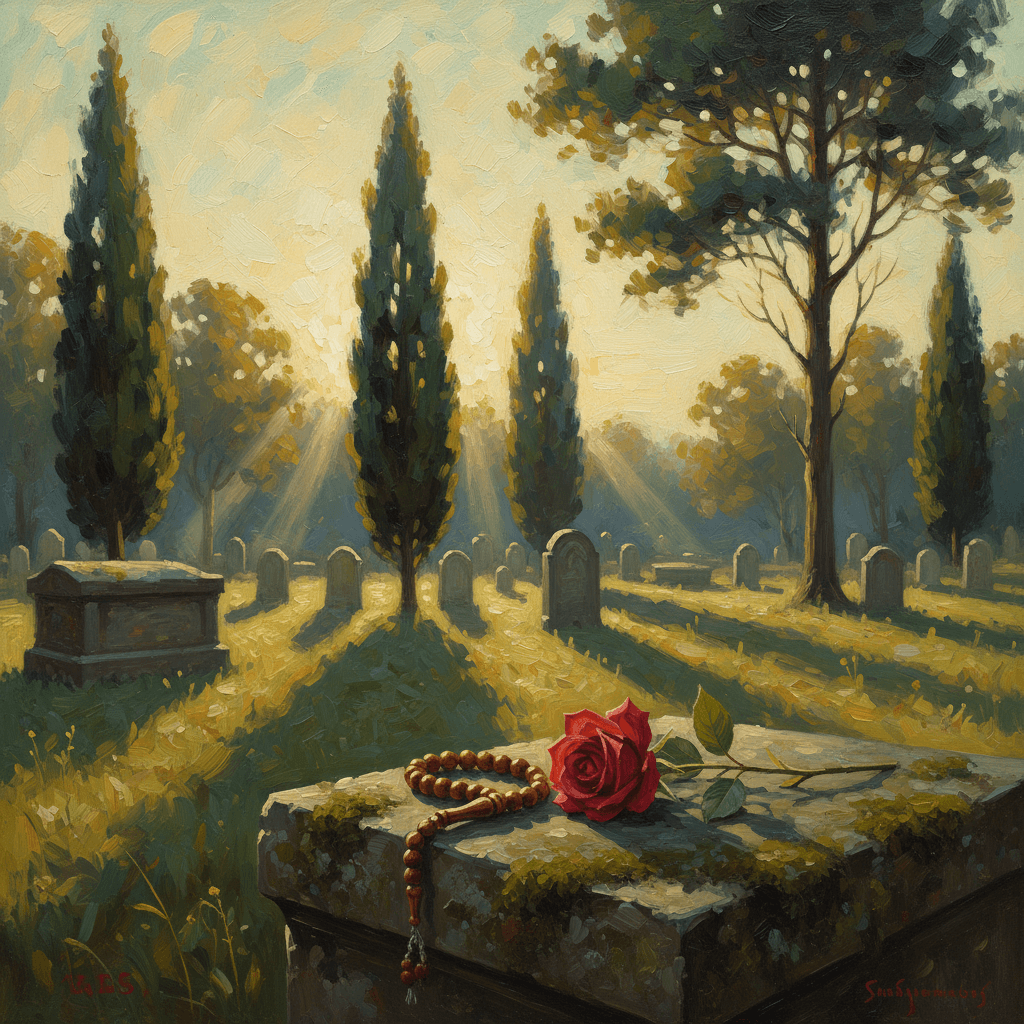
There is a moment, just before you push open the gate of a cemetery, when ordinary life pauses. The noise, the to-do lists, the small urgencies — none of it follows you through that threshold.
The Islamic tradition treats this threshold as sacred. When you enter a cemetery with the Prophet's words on your lips, you are not performing a ritual. You are crossing into a space where the veil between dunya and akhirah feels thinner, and where the nafs — that restless lower self — finally quiets down enough to hear something real.
The dua for entering the cemetery is not complicated. But what you do with it — the intention you carry, the presence you bring — transforms a simple visit into one of the most underused forms of worship available to every Muslim.
The Dua
Upon entering the cemetery:
السَّلَامُ عَلَيْكُمْ أَهْلَ الدِّيَارِ مِنَ الْمُؤْمِنِينَ وَالْمُسْلِمِينَ، وَإِنَّا إِنْ شَاءَ اللهُ بِكُمْ لَاحِقُونَ، نَسْأَلُ اللهَ لَنَا وَلَكُمُ الْعَافِيَةَ
Assalamu alaykum ahl al-diyar min al-mu'minin wal-muslimin, wa inna insha-Allahu bikum lahiqun, nas'alu Allaha lana wa lakum al-afiyah.
"Peace be upon you, O inhabitants of these dwellings, from the believers and the Muslims. We will join you, insha-Allah. We ask Allah for well-being for us and for you." — (Sahih Muslim 975)
Say this clearly but quietly as you step in — directed toward the graves as a whole, the way you would greet a gathering of people whose names you do not all know but whose community you share.
When at a specific grave, you may add:
يَرْحَمُ اللهُ الْمُسْتَقْدِمِينَ مِنَّا وَالْمُسْتَأْخِرِينَ
"May Allah have mercy on those of us who came before and those who came after."
Then make personal dua — asking Allah to forgive the deceased, expand their grave, illuminate it, and grant them mercy.
The Story Behind It
The Prophet (peace be upon him) initially restricted grave visits. The early Muslim community had only recently left behind a world where tombs were centers of worship and intercession — places where the boundaries between honoring the dead and worshipping them had blurred dangerously.
The prohibition was a quarantine, not a permanent ruling.
When the community was spiritually stable, the Prophet lifted it: "I used to prohibit you from visiting graves, but now visit them — for indeed they remind you of the Hereafter." (Muslim 977)
This is important. The permission was not casual. It was granted precisely because the remembrance of death is a spiritual tool. The Prophet's own aunt, 'A'ishah (may Allah be pleased with her), asked him what to say at the graveyard — and he taught her the full greeting. She visited graves throughout her life and became one of the people who transmitted this practice to future generations.
The cemetery visit was never meant to be a place of sadness alone. It was designed to be a reset — a few minutes outside the noise of living that recalibrates everything.
How to Make Cemetery Visits a Spiritual Practice
The problem is not that Muslims do not know the dua. The problem is that almost no one visits regularly. Graveyard visits have become events tied to death — something you do when someone has just died — rather than a recurring spiritual discipline.
Commit to visiting once a month. You do not need a recently deceased family member to justify going. Scholars across all four madhabs consider regular cemetery visits a recommended act. Once a month — perhaps on a Friday, as some narrations suggest visiting on Jumu'ah carries extra blessing — is a realistic target.
Prepare your intention before you go. The intention is not grief. It is dhikr al-mawt — remembrance of death. You are going to remember that you are temporary, that the people you love are temporary, and that what is permanent is your deeds and Allah's mercy.
Follow a simple sequence. At the gate: say the entrance greeting. Walk calmly — do not step directly on graves (Muslim 972). At the grave of a family member or any believer: say salaam, make dua, recite Surah Al-Fatiha. Stay as long as your heart needs. Do not rush.
Let the discomfort work. The nafs resists the cemetery because it resists mortality. That resistance is information — it tells you that your attachment to dunya is strong. Do not suppress the discomfort. Sit with it. Let it soften something.
Build Habits That Prepare You for What Comes Next
DeenBack helps you track the Islamic practices that keep death in view and the Hereafter in focus — from dhikr to the habits the Prophet never abandoned.


Free download. Premium features available in-app.
Related Duas
Dua for the deceased: The personal supplication you make inside the cemetery for those who have passed is just as important as the entrance greeting. See dua for the deceased for the authentic texts.
Dua for the graveyard visit: For a deeper look at the spiritual benefits and etiquette of visiting graves as a whole practice, read dua for the graveyard.
Dua for good death: What you ask for before you die is shaped by what you think about daily. The dua for good death is the natural companion to every cemetery visit.
Dua for deceased parents: Visiting the graves of your parents carries a particular weight. The dua for deceased parents includes the specific supplications for a mother or father who has passed.
Common Questions
How long should you stay in the cemetery?
There is no fixed minimum or maximum. The purpose is remembrance and supplication. Some scholars say even a brief visit — five minutes with a sincere heart — is sufficient and better than a long, distracted one. Stay long enough to actually feel the weight of what you are doing.
Should you face Makkah when making dua at a grave?
For personal dua after the initial greeting, yes — facing Makkah is recommended as it is for all dua. The entrance greeting itself is directed toward the graves, not toward Makkah.
Is it permissible to visit the graves of non-Muslims?
You may be present in a cemetery that has non-Muslim graves, and you can stand near the grave of a non-Muslim relative. However, you do not say the Islamic greeting for them or make dua for their forgiveness, as Surah At-Tawbah (9:113) addresses this. You may make dua for living non-Muslims to receive guidance.
What if I feel emotionally overwhelmed at the cemetery?
That is the point. The Prophet said: "The wisest of people is the one who remembers death most often." Feeling the weight of mortality is not a problem to solve — it is a sign that something real is happening inside you. Cry if you need to. Make dua. The heart that has been softened at a grave is better equipped for everything else.
Closing
The gate of the cemetery is one of the only places in ordinary life where you can step out of the dunya completely — no screens, no noise, no performance required. The Prophet gave you a dua for that moment not as a ritual formality but as a gift: words that connect you to the people resting there, remind you of your own destination, and ask Allah for what you both need.
Go regularly. Say the words. Let the visit do its work.
Track the Practices That Keep Your Heart Aligned
DeenBack is for Muslims building real spiritual habits — from daily dhikr to the sunnah practices most people forget. Start tracking what matters.
Free download. Premium features available in-app.
Frequently Asked Questions
What dua do you say when entering a cemetery?
The Prophet (peace be upon him) taught: Assalamu alaykum ahl al-diyar min al-mu'minin wal-muslimin, wa inna insha-Allahu bikum lahiqun, nas'alu Allaha lana wa lakum al-afiyah. (Muslim 975) — Peace be upon you, O inhabitants of these dwellings, from the believers and Muslims. We will join you, insha-Allah. We ask Allah for well-being for us and for you.
Do you say Bismillah before entering a cemetery?
Some scholars recommend seeking refuge from Shaytan (saying A'udhu billahi min ash-shaytanir rajim) before entering, as one would before any spiritually significant act. Saying Bismillah at the entrance is also a good practice, though there is no specific narration requiring it.
Can women enter a cemetery in Islam?
Yes. The earlier prohibition was abrogated. The Prophet said: I used to prohibit you from visiting graves, but now visit them — they remind you of the Hereafter. (Muslim 977) Women may visit graves, though scholars recommend doing so without excessive wailing or lamenting.
What should you do while inside the cemetery?
Walk calmly and quietly. Say the entrance greeting. Make dua for those buried there. Recite Surah Al-Fatiha or Surah Al-Ikhlas if you wish. Reflect on the reality of death. Avoid sitting on graves or walking directly over them.
Is there a dua when leaving the cemetery?
There is no specific narration for a leaving dua, but it is appropriate to say salaam again as you depart, much as one would greet and farewell guests. Some scholars recommend finishing with personal dua for the deceased and for yourself.