
- Published on
Dua for Graveyard: What to Say When You Visit the Dead
- Authors

- Name
- Ahmad
- Role
- Senior Marketing Manager, Islamic education • Deen Back
بِسْمِ اللهِ الرَّحْمٰنِ الرَّحِيْمِ
In the name of God, the Most Gracious, the Most Merciful.
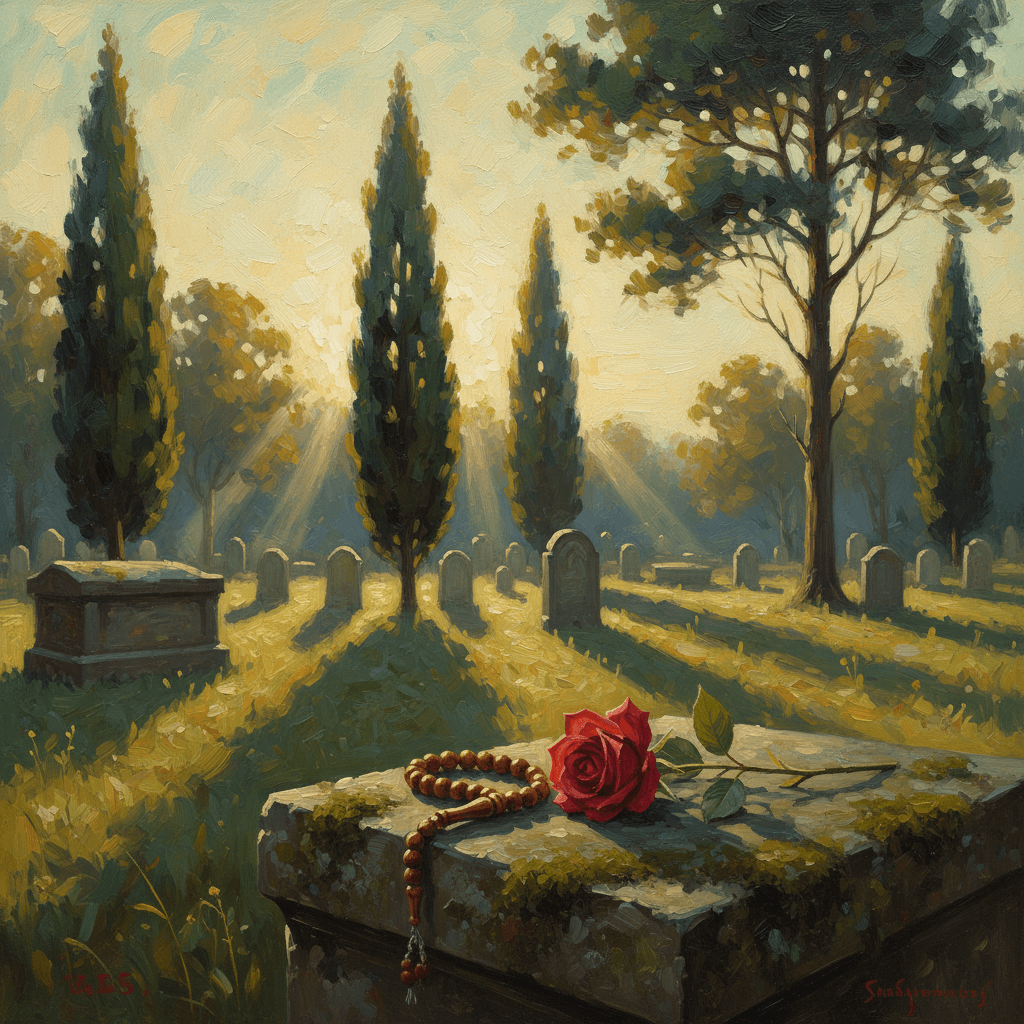
There is almost nothing in ordinary life that forces you to reckon with your own mortality. The graveyard does.
The Prophet (peace be upon him) reintroduced grave visits to his Companions not as a ritual of mourning, but as a discipline for the living. Walking among the graves, greeting those who lie there, and remembering that you will join them — this is one of the oldest tools in Islamic spirituality for softening a hardened heart and reordering your priorities.
The dua you say at the graveyard is not just a greeting to the dead. It is an acknowledgment of your own destination. And that shift in perspective — however brief — is one of the most powerful resets a Muslim can experience.
The Dua
Upon entering the graveyard:
السَّلَامُ عَلَيْكُمْ أَهْلَ الدِّيَارِ مِنَ الْمُؤْمِنِينَ وَالْمُسْلِمِينَ، وَإِنَّا إِنْ شَاءَ اللهُ بِكُمْ لَاحِقُونَ، نَسْأَلُ اللهَ لَنَا وَلَكُمُ الْعَافِيَةَ
Assalamu alaykum ahl al-diyar min al-mu'minin wal-muslimin, wa inna insha-Allahu bikum lahiqun, nas'alu Allaha lana wa lakum al-afiyah.
"Peace be upon you, O inhabitants of these dwellings, from the believers and the Muslims. We will join you, insha-Allah. We ask Allah for well-being for us and for you." — (Muslim 975)
This greeting was taught directly by the Prophet (peace be upon him) to 'A'ishah (may Allah be pleased with her) when she asked what she should say during graveyard visits. It has three dimensions: a greeting of peace, an acknowledgment of our own mortality, and a shared supplication for well-being in both worlds.
After the greeting, make personal dua for the deceased — asking Allah to forgive them, have mercy on them, expand their grave, and illuminate it with light. There is no fixed formula for this; the sunnah is to supplicate sincerely.
The Story Behind It
The Prophet (peace be upon him) initially prohibited grave visits, as the early Muslim community had come from a context of idol worship centered on tombs. The prohibition was protective — a quarantine against pre-Islamic practices bleeding back in.
But the prohibition was lifted. The Prophet said: "I used to prohibit you from visiting graves, but now visit them — for indeed they remind you of the Hereafter." (Muslim 977)
This was not just permission. It was a command rooted in wisdom: the graveyard is one of the few places that cuts through the noise of dunya without effort. You do not need to work hard to feel the weight of mortality there. The rows of graves do it for you.
'A'ishah (may Allah be pleased with her) is reported to have visited the grave of her brother 'Abdur-Rahman. When asked about it, she explained that she had learned the graveyard greeting from the Prophet himself. Her example became a reference for women visiting graves — a practice the scholars of all four major schools accept.
How to Make Graveyard Visits Part of Your Life
Very few Muslims visit graves with any regularity. It is one of those sunnahs that disappears without a deliberate intention to practice it — because unlike daily prayers or fasting, nothing in daily life reminds you to go.
Start with intention. The first step is simply deciding that you will do this — perhaps once a month, or whenever you pass a graveyard. Many Muslims live near Islamic cemeteries and have never visited. A single visit with the proper greeting and a few minutes of dua for the deceased is more spiritually weighty than most other optional acts.
Visit during grief, not only during grief. Most people only visit graves when a family member has recently died. The sunnah is broader than that: you visit to remember death for your own sake. This is the difference between visiting out of obligation and visiting as a spiritual discipline.
Combine it with dua for your deceased relatives. If you have family members buried in accessible cemeteries, visit them. Stand at the grave. Say the greeting. Make dua specifically for that person — ask Allah to forgive their sins, expand their grave, and illuminate it. This act of remembrance benefits both you and them.
Let it reorder your week. Many scholars note that visiting the graveyard on Friday is particularly recommended, with narrations suggesting the deceased are aware of visits on that day. Even a ten-minute detour before or after Jumu'ah can become a weekly anchor — the moment in the week when you remember that dunya is temporary and akhirah is not.
Use the discomfort. The graveyard is uncomfortable because death is uncomfortable. That discomfort is the point. The Prophet (peace be upon him) said: "Remember often the destroyer of pleasures" — meaning death. (Tirmidhi 2307) The graveyard forces that remembrance without requiring willpower.
Build a Habit of Remembering What Matters
DeenBack helps you track your Islamic practices — including the remembrance of death and daily dhikr — so that the disciplines that matter most do not quietly disappear.


Free download. Premium features available in-app.
Related Duas
Dua for the deceased: When visiting a grave, your personal dua for the person buried there is just as important as the formal greeting. See the full guide on dua for the deceased for authentic supplications for the dead.
Dua for protection: The morning and evening dua for protection pairs naturally with the graveyard visit — a reminder that seeking Allah's protection is for both this life and what comes after it.
Dua for parents: If you are visiting the grave of a parent, the dua for parents contains specific supplications the Quran itself teaches for those who have passed.
Dua for ease: Grief and the weight of mortality can be heavy. The dua for ease is a companion supplication for the moments when remembering death becomes difficult to sit with.
Common Questions
Does visiting graves benefit the deceased?
Yes — dua for the deceased is one of the clearest forms of benefit that reaches a Muslim after death. The Prophet (peace be upon him) said that three things continue to benefit a person after death: ongoing charity, beneficial knowledge left behind, and a righteous child who prays for them. (Muslim 1631) Scholars extend this to any Muslim making sincere dua for the dead — the deceased benefit from the supplication.
Is there a specific time to visit?
There is no obligatory time, but visiting on Fridays is recommended based on several narrations about the Prophet's practice and statements. Some scholars also say early morning visits are preferable because the cemetery is quieter and the mindset more reflective. What matters most is going with sincere intention and proper conduct.
What is the correct way to stand at a grave?
Face the deceased — this means facing the head of the grave, which is typically the side closer to the person's face. You do not face Makkah when doing the graveyard greeting (though you can turn to face Makkah for personal dua after). The greeting is directed to the occupant of the grave.
Can you make dua for a non-Muslim buried in the same cemetery?
You cannot make dua for forgiveness for a non-Muslim who died outside of Islam — the Quran explicitly addresses this in Surah At-Tawbah (9:113). However, you can make dua for guidance for living non-Muslims, and there is no prohibition on being present in a mixed cemetery or on visiting the graves of deceased non-Muslim relatives while abstaining from the specific Islamic greeting for them.
Closing
The Prophet (peace be upon him) called visiting graves a reminder of the Hereafter. He did not call it a sad occasion or a heavy obligation. He called it a reminder — implying it is something useful, something clarifying.
When you stand at a grave and say assalamu alaykum ahl al-diyar, you are doing something that the best generations of Muslims did regularly. You are also doing something for yourself: resetting your perspective, softening your attachment to dunya, and remembering that your real life is ahead of you, not behind.
Go when you can. Say the words. Make dua for those who are waiting.
Track the Practices That Keep Your Heart Alive
DeenBack is built for Muslims who want to build real Islamic habits — from daily dhikr to the remembrance of death. Start your streak today.
Free download. Premium features available in-app.
Frequently Asked Questions
What do you say when you visit a graveyard in Islam?
The Prophet (peace be upon him) taught: Assalamu alaykum ahl al-diyar min al-mu'minin wal-muslimin, wa inna insha-Allahu bikum lahiqun, nas'alu Allaha lana wa lakum al-afiyah — Peace be upon you, O inhabitants of these dwellings, from the believers and Muslims. We will join you, insha-Allah. We ask Allah for well-being for us and for you. (Muslim 975)
Is it permissible for women to visit graves in Islam?
The earlier prohibition on women visiting graves was abrogated. The Prophet (peace be upon him) said: I used to prohibit you from visiting graves, but now visit them — for indeed they remind you of the Hereafter. (Muslim 977) This applies to men and women alike. Women should visit modestly and avoid wailing or excessive lamenting.
Can you recite Quran at the graveyard?
Scholars differ on this. The majority of the Hanafi, Maliki, and Hanbali schools permit reciting Quran at the grave with the intention that its reward reach the deceased. The key is that the recitation is sincere and not treated as a social performance. Reading Surah Al-Fatiha and Surah Al-Ikhlas are commonly recommended.
What should you avoid doing at a graveyard?
Avoid sitting or walking on graves (Muslim 972), wailing and loud lamenting (Bukhari 1291), making the graves into places of sajdah or worship (Muslim 532), and lighting candles or incense on graves as a regular ritual. The visit should be focused on remembrance of death and dua for the deceased — not performance.
How often should you visit the graveyard?
There is no fixed frequency in the sunnah — it is a recommended act, not obligatory. Many scholars suggest visiting at least occasionally, particularly on Fridays, as there are narrations indicating Friday visits carry extra blessing. The key is that the visit softens your heart and reorients you toward the Hereafter.