
- Published on
Dua for the Deceased: How to Keep Praying for Those Who Have Left
- Authors

- Name
- Ahmad
- Role
- Senior Marketing Manager, Islamic education • Deen Back
بِسْمِ اللهِ الرَّحْمٰنِ الرَّحِيْمِ
In the name of God, the Most Gracious, the Most Merciful.
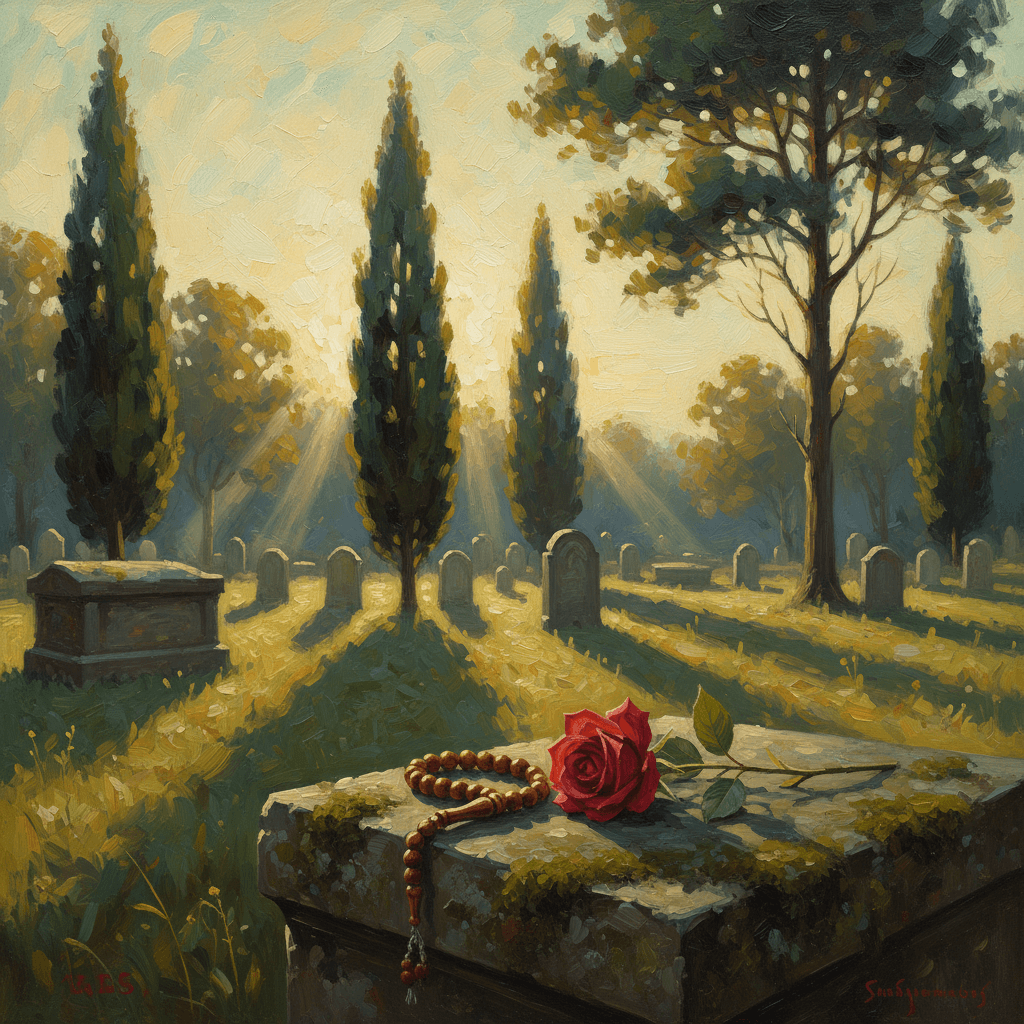
Losing someone changes everything.
One day they are here — their voice, their presence, their place at the table. The next day, silence. And in that silence, the most painful realization: you cannot do anything for them anymore. You cannot cook for them, call them, or make them smile.
But Islam says otherwise. Islam says there is one thing you can still do — something that reaches them in their grave, something they need now more than ever.
You can make dua for them.
And if you build that dua into a daily habit, you are doing something most people never manage: turning grief into 'amal — action that benefits both you and the one you lost.
The Dua for the Deceased
The primary dua taught by the Prophet (peace be upon him) for the deceased:
اللَّهُمَّ اغْفِرْ لَهُ وَارْحَمْهُ وَعَافِهِ وَاعْفُ عَنْهُ وَأَكْرِمْ نُزُلَهُ وَوَسِّعْ مُدْخَلَهُ وَاغْسِلْهُ بِالْمَاءِ وَالثَّلْجِ وَالْبَرَدِ وَنَقِّهِ مِنَ الْخَطَايَا كَمَا نَقَّيْتَ الثَّوْبَ الأَبْيَضَ مِنَ الدَّنَسِ
Allahummaghfir lahu warhamhu wa 'afihi wa'fu 'anhu wa akrim nuzulahu wa wassi' mudkhalahu waghsilhu bil-ma'i wath-thalji wal-baradi wa naqqihi minal-khataya kama naqqaytath-thawbal-abyada minad-danas.
"O Allah, forgive them, have mercy on them, give them peace, pardon them, make their resting place noble, make their entrance wide, wash them with water, snow, and ice, and purify them of sins as a white garment is purified of stains." — (Sahih Muslim 963)
When to say it: During the funeral prayer (salat al-janazah), at the graveside, after any salah, or at any quiet moment when you remember your loved one.
A shorter version for daily use:
اللَّهُمَّ اغْفِرْ لَهُ وَارْحَمْهُ
Allahummaghfir lahu warhamhu.
"O Allah, forgive them and have mercy on them."
The Story Behind It
When the Prophet (peace be upon him) led the funeral prayer, he did not rush through it. He stood and poured his heart into dua for the deceased — specific, detailed, asking Allah for every type of mercy and relief.
Auf ibn Malik (may Allah be pleased with him) narrated that the Prophet (peace be upon him) prayed a funeral prayer, and he memorized the dua because of how moving it was (Sahih Muslim 963). The Prophet asked Allah to wash the deceased of sins the way a white garment is washed clean — a vivid, intimate image.
This was not a formality. This was a man who understood that the dead are in desperate need of every dua they can receive. The Prophet (peace be upon him) also said:
"When a person dies, their deeds come to an end except for three: ongoing charity (sadaqah jariyah), beneficial knowledge, and a righteous child who prays for them." — (Sahih Muslim 1631)
That third category is you. Your dua is not just a nice gesture — it is one of only three lifelines that still reach the person in their grave.
How to Make This Dua Part of Your Daily Life
Grief has a way of fading into the background. The first weeks after losing someone, you think about them constantly. But months pass, life fills in the gaps, and slowly — without meaning to — you stop making dua for them.
This is where habit building matters. Not because you need to force grief, but because your deceased loved ones need your dua consistently, not just when sadness hits.
Here is how to build a daily dua habit for the deceased:
Anchor it to salah. After every Fajr prayer, before you get up from your prayer mat, say the short dua: Allahummaghfir lahu warhamhu. It takes five seconds. Anchoring it to something you already do every day makes it automatic.
Keep a list. Write down the names of deceased people you want to pray for — parents, grandparents, teachers, friends, community members. Seeing the names makes the dua more intentional and personal.
Start with one. If making dua for multiple people feels overwhelming, start with just one person after one salah. One dua, once a day. That is infinitely better than nothing.
Track your streak. Consistency is harder than intensity. Tracking whether you made dua today or not keeps you honest. A 30-day streak of daily dua for the deceased is worth more than one emotional session once a year.
Use Friday especially. The Prophet (peace be upon him) encouraged increasing salawat on Fridays. Add your dua for the deceased to your Friday routine — after Jumu'ah prayer is a powerful time.
Build a Daily Dua Habit for Those You've Lost
Track your daily dhikr and dua streaks with Deen Back. Set reminders after Fajr, build consistency, and never let a day pass without praying for your loved ones.


Free download. Premium features available in-app.
Related Duas
Dua when visiting the graveyard:
السَّلاَمُ عَلَيْكُمْ أَهْلَ الدِّيَارِ مِنَ الْمُؤْمِنِينَ وَالْمُسْلِمِينَ وَإِنَّا إِنْ شَاءَ اللَّهُ بِكُمْ لَلاَحِقُونَ نَسْأَلُ اللَّهَ لَنَا وَلَكُمُ الْعَافِيَةَ
"Peace be upon you, people of this abode, believers and Muslims. We will, Allah willing, join you. We ask Allah for well-being for us and for you." — (Sahih Muslim 975)
Dua for forgiveness for all believers:
رَبَّنَا اغْفِرْ لَنَا وَلِإِخْوَانِنَا الَّذِينَ سَبَقُونَا بِالْإِيمَانِ
"Our Lord, forgive us and our brothers who preceded us in faith." — (Surah Al-Hashr, 59:10)
For more on building a strong dua practice, see our guides on dua for forgiveness, dua for parents, and dua for protection.
Common Questions
Does the deceased know I am making dua for them?
There are narrations suggesting that the deceased are aware of the dua made for them and are comforted by it. Ibn al-Qayyim (may Allah have mercy on him) discussed this in Kitab al-Ruh, noting several evidences that the dead are aware of the living's actions toward them. Regardless of awareness, the benefit of your dua reaches them — and that is what matters.
Can I give charity on behalf of someone who has died?
Yes. The Prophet (peace be upon him) confirmed that charity given on behalf of the deceased benefits them. Sa'd ibn 'Ubadah asked the Prophet if he could give charity on behalf of his mother who had died, and the Prophet said yes (Sahih al-Bukhari 2762). Combine dua with ongoing charity for maximum benefit.
What if I did not pray for them for a long time — is it too late?
It is never too late. There is no expiration on dua for the deceased. Whether they passed away yesterday or twenty years ago, your dua reaches them. The beautiful thing about tawbah (repentance) is that it also applies to our negligence — start today, and do not look back.
Is there a specific time when dua for the deceased is more accepted?
All times are valid, but certain times carry extra weight: the last third of the night, between the adhan and iqamah, during rain, on Fridays, and while fasting. Building your dua for the deceased into these windows amplifies its impact.
Your Loved Ones Are Waiting for Your Dua
The people who have left this world cannot pray for themselves anymore. They cannot fast, give charity, or make dhikr. But you can do all of that for them.
Every dua you send is a gift that crosses the barrier between this life and the next. It costs you nothing but a few seconds of sincerity — and for them, it could mean everything.
Do not let another day pass without remembering them. Build the habit. Keep the streak. Make it part of who you are — someone whose loved ones are never truly forgotten.
رَبِّ ارْحَمْهُمَا كَمَا رَبَّيَانِي صَغِيرًا
"My Lord, have mercy on them as they raised me when I was small." — (Surah Al-Isra, 17:24)
Never Forget to Pray for Them
Set daily dua reminders, track your streaks, and build the habit of remembering your loved ones every single day with Deen Back.
Free download. Premium features available in-app.
Frequently Asked Questions
What is the best dua for someone who has died?
The most well-known dua for the deceased is: Allahummaghfir lahu warhamhu wa 'afihi wa'fu 'anhu — O Allah, forgive them, have mercy on them, give them peace, and pardon them (Sahih Muslim 920). This can be said at the funeral prayer, at the graveside, or at any time afterwards. The Prophet (peace be upon him) encouraged ongoing dua for the deceased as one of the three deeds that continue to benefit a person after death.
Can I make dua for the deceased in my own language?
Yes. While the Arabic duas from the Sunnah carry special virtue, scholars agree that you can make dua for the deceased in any language. Allah understands all languages. The sincerity of your heart matters more than the language you use. Many scholars recommend learning the Arabic duas gradually while still making personal supplications in your own language.
How often should I make dua for deceased loved ones?
There is no fixed limit. The Prophet (peace be upon him) said that dua is one of three things that continue to benefit a person after death (Sahih Muslim 1631). Making it a daily habit — even a brief dua after each salah — ensures consistent benefit reaches your loved ones. The key is regularity, not length.
Does the deceased actually benefit from my dua?
Yes. The majority of scholars agree that the deceased benefit from the dua of the living. The Prophet (peace be upon him) said: When a person dies, their deeds come to an end except for three — ongoing charity, beneficial knowledge, and a righteous child who prays for them (Sahih Muslim 1631). Your dua is a gift that reaches them in their grave.
Can I make dua for non-Muslim deceased family members?
This is a sensitive matter. The majority of scholars, based on Quran 9:113, hold that it is not permissible to ask Allah for forgiveness for those who died upon disbelief. However, you can still feel love for them, honor their memory, and ask Allah for guidance for the living. Scholars recommend channeling that emotion into dua for living non-Muslim family members to be guided to Islam.