
- Published on
Dua for Completing Ramadan: Prayers at the Finish Line
- Authors

- Name
- Ahmad
- Role
- Senior Marketing Manager, Islamic education • Deen Back
بِسْمِ اللهِ الرَّحْمٰنِ الرَّحِيْمِ
In the name of God, the Most Gracious, the Most Merciful.
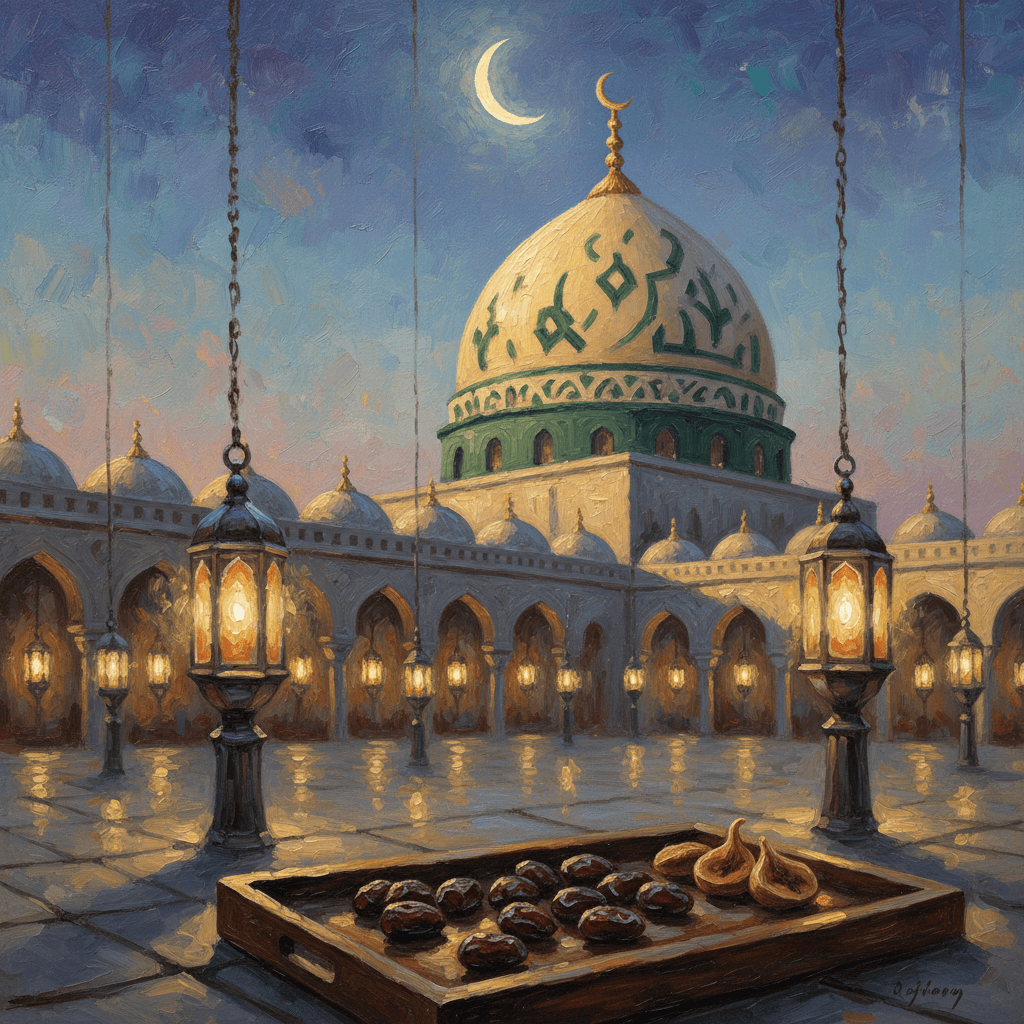
You made it. Thirty days of fasting, extra prayers, Quran, and dhikr. The nights of taraweeh, the discipline of suhoor before dawn, the long days. Ramadan is complete.
Now comes the part that the nafs does not tell you about: the final stretch is the most important stretch for dua. What you ask Allah for as Ramadan closes is as significant as what you did throughout the month.
Because completing Ramadan is not just an ending. It is a threshold — and what you bring across that threshold determines what the coming year looks like.
The Dua for Completion and Acceptance
اللَّهُمَّ تَقَبَّلْ مِنَّا صَلَاتَنَا وَصِيَامَنَا وَقِيَامَنَا وَرُكُوعَنَا وَسُجُودَنَا وَتَخَشُّعَنَا وَتَوَاضُعَنَا
Allahumma taqabbal minna salatana wa siyamana wa qiyamana wa rukuu'ana wa sujoodana wa takhashhu'ana wa tawadu'ana
"O Allah, accept from us our prayer, our fasting, our night standing, our bowing, our prostrating, our humility, and our submission."
This comprehensive dua covers every form of Ramadan worship. Say it in the final nights of Ramadan and on Eid morning. The goal is for nothing to be left unmentioned — every action offered up for acceptance.
The Companion Greeting as Dua
تَقَبَّلَ اللَّهُ مِنَّا وَمِنْكُمْ
Taqabbal Allahu minna wa minkum
"May Allah accept from us and from you."
— (Practice of the Companions, authenticated by Ibn Hajar)
The Companions used this phrase specifically at Eid to greet one another. It is simultaneously a greeting and an active supplication. When you say it to someone, you are making dua for their Ramadan to be accepted. When they respond in kind, they are making dua for yours.
The entire Eid community becomes a collective supplication network.
The Story Behind This Dua
The concept of qabool — acceptance — is central to how the righteous Companions understood worship. The Quran mentions in Surah Al-Maidah: "Allah only accepts from the mutaqeen (the God-conscious)." (5:27). This verse, understood in context, is about the sincerity and taqwa behind the action — not that Allah rejects imperfect worship wholesale.
This created in the Companions a deep fear mixed with hope: fear that their imperfections might affect acceptance, hope that sincere effort would be received. The Imam Ali said: "Worry about the acceptance of your deeds more than you worry about the deeds themselves. Have you not heard Allah say: 'Allah only accepts from the mutaqeen'?"
This is why the dua of acceptance is so important at Ramadan's completion. You have done the actions. Now you ask for the quality of acceptance — for Allah to look at what was behind the deeds, not just the deeds themselves.
The Prophet ﷺ also described Ramadan's final night as a night of completion and reward. Ibn Majah records the hadith about standing in Eid night prayer with seeking reward — indicating the overlap period between Ramadan's end and Eid's beginning as particularly spiritually charged.
How to Make the Most of Ramadan's Closing Duas
The final ten nights of Ramadan contain Laylatul Qadr — the night worth a thousand months. The night of Eid follows immediately. The window for major dua spans roughly the last day of Ramadan through Eid morning.
The last Iftar of Ramadan. When you break the last fast of the month, spend five to ten minutes before eating in dedicated supplication. Use the acceptance dua above. Add personal requests. This is the last iftar moment of the year — and iftar time is specifically mentioned as a time of answered dua (Tirmidhi 3598).
The night between Ramadan and Eid. Stay up for at least a portion of this night. Make the dua for acceptance. Make the dua for continuation: O Allah, do not let me return to who I was before Ramadan. Name specific habits you built — your Fajr on time, your daily Quran, your evening dhikr — and ask for each one by name.
Eid morning, before the prayer. Walk to Eid prayer saying the takbeer. Before entering the prayer, make a focused personal dua. You are at the threshold of a new year with the Ramadan slate behind you. Make it count.
After Eid prayer, before the crowds take over. The period immediately after major prayers is excellent for dua. Before returning home, sit for a few minutes in the masjid or wherever you prayed and make your personal requests for the coming year.
Carry What Ramadan Built Into the Whole Year
DeenBack helps you maintain the prayer, dua, and Quran habits built in Ramadan — tracking your streaks so the month's work becomes year-round transformation.


Free download. Premium features available in-app.
Related Duas for the Ramadan Transition
The dua of the Sunnah fasts of Shawwal — for those maintaining Ramadan's legacy:
اللَّهُمَّ أَعِنِّي عَلَى ذِكْرِكَ وَشُكْرِكَ وَحُسْنِ عِبَادَتِكَ
Allahumma a'inni 'ala dhikrika wa shukrika wa husni 'ibadatika
"O Allah, help me to remember You, to thank You, and to worship You well."
— (Abu Dawud 1522)
This dua — taught by the Prophet ﷺ to Muadh ibn Jabal to say after every prayer — is the ideal post-Ramadan daily anchor. It asks for help with the three things that make worship sustainable: remembrance, gratitude, and quality.
For the Eid celebration itself, the dua for Eid al-Fitr provides the full range of Eid-specific supplications. For the Laylatul Qadr period that precedes Ramadan's end, the dua for laylatul qadr is essential reading. The dua for ramadan covers the broader supplication landscape for the month.
Common Questions
What if my Ramadan was poor — am I asking for acceptance of something that was not worth much?
The dua of acceptance is precisely for this: asking Allah to accept what you offered, whatever its quality. The Companions feared their own imperfections while still seeking acceptance. The sincerity of the ask — "accept from us, even with our flaws" — is itself an act of humility that Allah responds to. Make the dua. Let Allah be the judge of quality.
Is there a specific time on the last day of Ramadan that is best for dua?
The last hour of any fasting day — before Maghrib — is a time when the fasting person's dua is not rejected (Tirmidhi 3598). The last iftar of Ramadan is the single most powerful such window of the entire year. Use it.
Should I make dua for next Ramadan at the end of this one?
Yes. The pious predecessors would make dua during Ramadan to reach the next Ramadan, and after Ramadan to ask for their deeds to be accepted for six months until Sha'ban. Starting the dua for next Ramadan at Eid is a beautiful practice that maintains long-term orientation.
What the Finish Line Is Actually For
Completing Ramadan is not a graduation certificate. It is a launching point. The worship of the month was training — and Eid is the moment to ask Allah for the training to have left a mark.
The nafs will try to celebrate completion by returning to pre-Ramadan habits. This is the test. The dua at the end of Ramadan is specifically a request to pass that test: accept what I did, and help me not undo it.
Say it with the last iftar. Say it on Eid morning. Say it throughout the day. And then live it — by keeping, post-Eid, even one thing that Ramadan built.
Make This the Ramadan That Actually Changes Your Year
DeenBack tracks your daily Islamic habits year-round — so the progress built in Ramadan becomes permanent, not temporary. Start your post-Ramadan streak today.
Free download. Premium features available in-app.
Frequently Asked Questions
What dua should I say after completing Ramadan?
The primary dua after completing Ramadan is for acceptance: Allahumma taqabbal minna salatana wa siyamana wa qiyamana — O Allah, accept from us our prayer, our fasting, and our night standing. The Eid greeting Taqabbal Allahu minna wa minkum (May Allah accept from us and from you) is also a dua, established by the companions' practice.
Is the night of Eid special for dua?
Yes. The Prophet ﷺ said: 'Whoever stands in prayer on the two nights of Eid seeking reward from Allah, their heart will not die on the day hearts die.' (Ibn Majah 1782). The transition night from Ramadan to Eid — known as laylat al-ja'izah, the night of the prize — is considered a high acceptance window for supplication.
What should I ask for specifically at the end of Ramadan?
Ask for: acceptance of everything you did in Ramadan, forgiveness for the shortcomings in your worship, continuation of the habits you built, and that Allah does not let you return to who you were before Ramadan. These four requests cover the full transition from Ramadan to the post-Ramadan period.
How do I not lose Ramadan's spiritual momentum after Eid?
Make dua on Eid specifically for this. Then take one specific habit from Ramadan — even just one — and commit to maintaining it. Scholars say that Allah sees the one who maintains extra worship after Ramadan as someone whose fasting was accepted. The Sunnah fasts of Shawwal (six fasts) and regular nawafil are the bridge.