
- Published on
Dua for Contentment: Finding Qana'ah Through Daily Supplication
- Authors

- Name
- Ahmad
- Role
- Senior Marketing Manager, Islamic education • Deen Back
بِسْمِ اللهِ الرَّحْمٰنِ الرَّحِيْمِ
In the name of God, the Most Gracious, the Most Merciful.
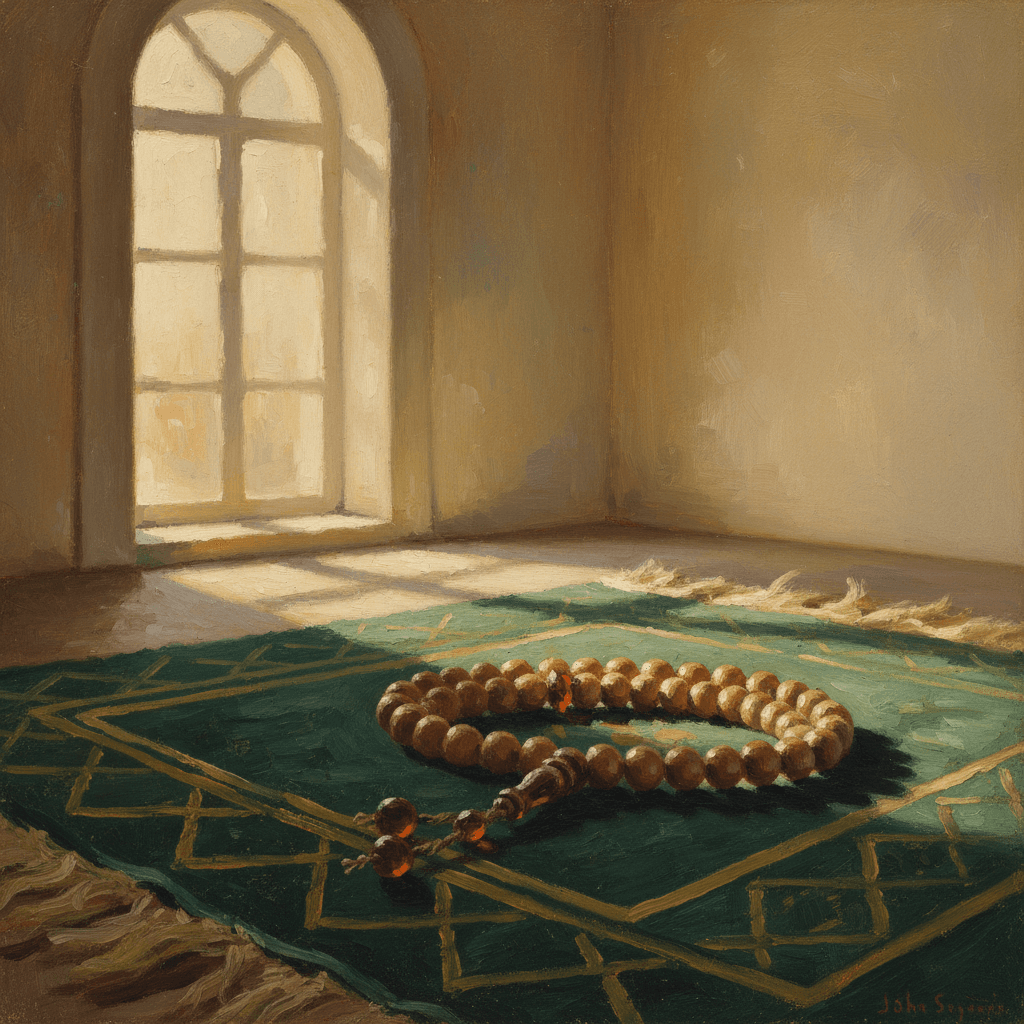
You get what you wanted. And then, almost immediately, you want something else. The raise, the relationship, the apartment — and then a bigger raise, a better relationship, a nicer apartment. The nafs has this extraordinary ability to shift the goalpost the instant you reach it.
This is not a modern problem. The Prophet ﷺ described it precisely: "If the son of Adam had a valley of gold, he would desire another." (Sahih Bukhari 6439)
The antidote is not getting more. It is qana'ah — contentment. And it is something you ask Allah for, not something you manufacture on your own.
The Dua for Contentment
اللَّهُمَّ إِنِّي أَسْأَلُكَ الْهُدَىٰ وَالتُّقَىٰ وَالْعَفَافَ وَالْغِنَىٰ
Allahumma inni as'aluka al-huda wa al-tuqa wa al-'afafa wa al-ghina
"O Allah, I ask You for guidance, piety, chastity, and self-sufficiency."
— (Sahih Muslim 2721)
This four-word supplication is one of the Prophet's most comprehensive daily duas. Each word carries enormous weight.
Al-huda — guidance. Not just knowing the right path but staying on it.
Al-tuqa — piety, or taqwa. A heart that is conscious of Allah in every situation.
Al-'afafa — chastity and restraint. The ability to hold back from what is not yours to take.
Al-ghina — this word is usually translated as "wealth" but its deeper meaning is sufficiency of the heart. Ghina is the feeling of having enough. It is the opposite of the restless wanting that never satisfies.
When you ask for ghina, you are asking for contentment to settle in your chest — not for your circumstances to change, but for your relationship with your circumstances to transform.
When to Say It
This dua is ideal for morning dhikr, right after Fajr or integrated into your morning adhkar. The early hours are when the nafs is most impressionable — what you anchor your morning to shapes how you interpret the rest of the day. Making contentment a morning request sets the lens through which you see everything that follows.
The Story Behind This Dua
The Prophet ﷺ taught this dua to Ibn Masud, one of his closest companions. It appears in Sahih Muslim — a mark of its authenticity — and scholars have noted how comprehensive it is for such a short supplication.
Ibn Masud later became known for his extraordinary zuhd (detachment from the world) and his contentment. When he passed away, he had not accumulated much of this world's goods despite being in close proximity to some of the early caliphs. He understood what he was asking for every morning.
The Quran frames contentment not as passive acceptance but as a spiritual achievement:
وَلَا تَمُدَّنَّ عَيْنَيْكَ إِلَىٰ مَا مَتَّعْنَا بِهِ أَزْوَاجًا مِنْهُمْ
"Do not extend your eyes toward that which We have given some of them to enjoy." — (Quran, Surah Ta-Ha, 20:131)
"Do not extend your eyes" — stop the habit of scanning what others have. Stop comparing. The dua for ghina is the spiritual practice that makes this possible, not just an instruction that you must obey through willpower alone.
How to Make This Dua Part of Your Daily Life
Contentment is not a one-time decision. It is a daily practice. The nafs will return to restlessness regularly — the dua is the daily reset.
Make it your first request of the day. Before checking your phone, before reviewing your to-do list, before thinking about what needs to happen today — say the dua. You are establishing your orientation before the world's demands establish it for you.
Say it again when comparison hits. You are scrolling and you see someone's holiday, someone's salary, someone's relationship. That exact moment is when the dua is most needed. Do not just put the phone down. Say the dua. Al-ghina — Allah, give me the heart that is enough, right now, with what I have.
Connect it to gratitude practice. After making the dua, list three things you already have that you would miss if they were gone. The dua asks for contentment; the gratitude list trains you to notice that you already have things to be content about. Together, they reshape the nafs's default setting.
Track your streak. Habit researchers consistently find that tracking creates consistency. When you can see that you have made this dua every morning for two weeks, you feel invested in continuing. Consistency is the vehicle through which the dua reshapes the heart.
Build the Contentment Habit With Daily Dua Tracking
DeenBack helps you track your morning dhikr and dua streaks — the daily practice that shifts your heart from restlessness to real qana'ah over time.


Free download. Premium features available in-app.
Related Duas for Contentment and Gratitude
When comparison triggers discontentment:
اللَّهُمَّ لَا تَجْعَلِ الدُّنْيَا أَكْبَرَ هَمِّنَا وَلَا مَبْلَغَ عِلْمِنَا
Allahumma la taj'al al-dunya akbara hammina wa la mablagha 'ilmina
"O Allah, do not make this world our greatest concern or the limit of our knowledge."
— (Tirmidhi 3502, hasan)
This dua directly addresses the nafs's tendency to make worldly acquisition the center of everything.
For the broader practice of thankfulness that underpins contentment, the dua for thanks to Allah is a natural companion. When contentment is challenged by financial anxiety, the dua for rizq provides the right framework for asking with trust. The dua for ease addresses the heaviness that often lies behind restlessness.
Common Questions
Is wanting more things always haram?
No. Wanting to improve your situation is natural and permitted. What Islam discourages is the state of the heart where you cannot experience peace, gratitude, or joy until you have more. That state is tama' — greed or insatiable desire — and it is what the dua for ghina specifically addresses.
What if I genuinely do not have enough and am struggling financially?
Contentment does not mean pretending poverty is fine or not seeking change. You can be in genuine hardship and still have qana'ah — the peace that says: Allah has not forgotten me, I am working toward what I need, and I am not going to let this circumstance define my worth or steal my peace. The dua for rizq is appropriate for actively seeking provision while the contentment dua maintains your heart state throughout.
How long before I start feeling more content?
The heart does not change in one supplication. The scholars say: dua is a seed and consistency is the water. Daily practice of this dua over weeks changes what the nafs reaches for automatically. You begin to notice that the wanting is slightly less consuming. That is the seed growing.
Can I combine this dua with the morning adhkar?
Yes — that is actually ideal. The Prophet ﷺ made this dua regularly and it naturally belongs in the cluster of morning supplications. Saying it alongside other morning adhkar creates a coherent morning practice that sets the heart before the world's noise arrives.
The Heart That Has Enough
The Prophet ﷺ said: "Richness is not having many possessions. Richness is being content with oneself." (Sahih Bukhari 6446)
That word — content with oneself — is the ghina of the dua. It is not an external state. It is an interior settlement. The nafs that is always reaching, always measuring, always comparing — that nafs experiences poverty regardless of how much it has.
The dua is the daily request for the nafs to be given its actual antidote. Say it. Mean it. And watch what gradually changes inside you.
Rewire Your Heart Toward Contentment — One Day at a Time
DeenBack tracks your daily dua and dhikr practice, helping you build the consistency that transforms the heart from restless wanting to real Islamic contentment.
Free download. Premium features available in-app.
Frequently Asked Questions
What is qana'ah in Islam?
Qana'ah is contentment — being satisfied with what Allah has given you while still striving. It is not laziness or giving up. It is the state of the heart that says: what I have is enough for now, and I trust Allah's distribution of provision. The Prophet ﷺ called it a treasure that never runs out.
What is the dua for contentment?
Allahumma inni as'aluka al-huda wa al-tuqa wa al-'afafa wa al-ghina — O Allah, I ask You for guidance, piety, chastity, and self-sufficiency (Sahih Muslim 2721). The word ghina here means contentment and self-sufficiency of the heart, not just material wealth.
Can dua change how I feel about what I have?
Yes — and this is one of the most underappreciated functions of dua. You are not just asking for things to change externally. You are asking for your interior relationship with what exists to shift. Contentment is fundamentally a heart state, and the heart is what dua speaks to most directly.
What if I feel content but still want to improve my life?
Contentment and ambition are not opposites in Islam. The Prophet ﷺ encouraged striving while discouraging greed and restlessness. Qana'ah means your joy and peace are not held hostage to outcomes. You work toward better — but you are not miserable while working.