
- Published on
Dua for Abundance: Asking Allah to Expand Your Life
- Authors

- Name
- Ahmad
- Role
- Senior Marketing Manager, Islamic education • Deen Back
بِسْمِ اللهِ الرَّحْمٰنِ الرَّحِيْمِ
In the name of God, the Most Gracious, the Most Merciful.
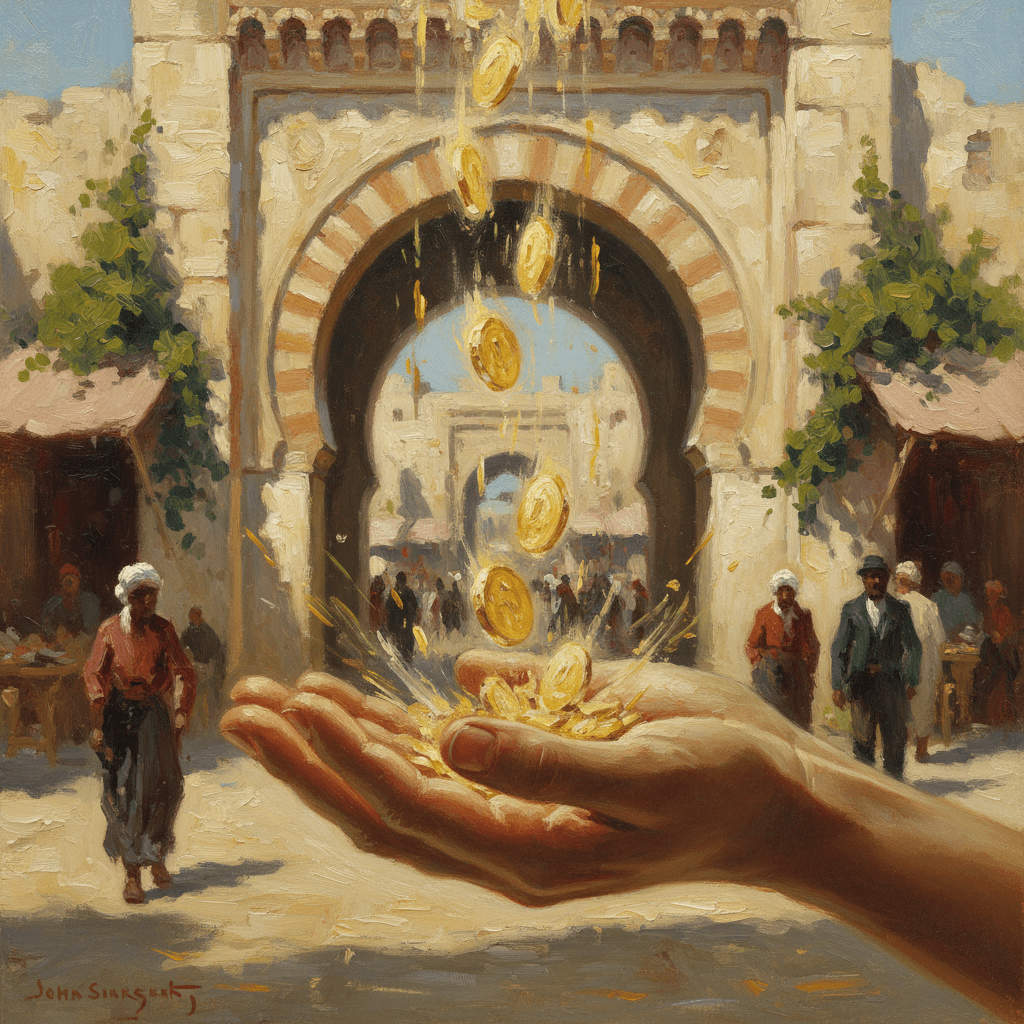
You are probably not praying for enough.
Not in terms of how often or how long — but in terms of scope. The Islamic concept of what you can ask Allah for is vast. You can ask for provision, for health, for time that stretches, for relationships that nourish, for a heart that is open, for ease in this world and the next. You can ask for a life that is genuinely full.
Abundance in Islam is not just about money. It is about barakah — the divine quality of blessedness that makes everything it touches more than it otherwise would have been. A small meal with barakah nourishes more than a large feast without it. A short time with barakah accomplishes more than a full day without it.
The dua for abundance is a request for your life to be filled with this quality. It is one of the most important prayers you can make.
The Dua
The comprehensive dua for sufficiency and independence through what is halal:
اللَّهُمَّ اكْفِنِي بِحَلَالِكَ عَنْ حَرَامِكَ وَأَغْنِنِي بِفَضْلِكَ عَمَّنْ سِوَاكَ
Allahumma-kfini bihalalika 'an haramika wa aghnini bifadlika 'amman siwak.
"O Allah, suffice me with what is halal so I do not need what is haram, and make me independent through Your grace from all others besides You." — (Tirmidhi 3563)
For asking Allah to expand rizq through gratitude:
اللَّهُمَّ إِنِّي أَسْأَلُكَ عِلْمًا نَافِعًا وَرِزْقًا طَيِّبًا وَعَمَلًا مُتَقَبَّلًا
Allahumma inni as'aluka 'ilman nafi'an wa rizqan tayyiban wa 'amalan mutaqabbala.
"O Allah, I ask You for beneficial knowledge, pure provision, and accepted deeds." — (Ibn Majah 925)
The Quranic foundation of gratitude as the path to increase:
لَئِنْ شَكَرْتُمْ لَأَزِيدَنَّكُمْ
La'in shakartum la-azidannakum.
"If you are grateful, I will surely increase you." — (Surah Ibrahim 14:7)
The Story Behind It
The Prophet (peace be upon him) was asked by a man what he could do to have his lifespan extended and his provision increased. He told him: "Maintain your family ties." (Bukhari 5986)
This is the Islamic approach to abundance: it is not won through grinding harder or holding tighter. It flows through right relationships, through gratitude, through giving. When you maintain family ties, when you give sadaqah, when you say Alhamdulillah and mean it — the channels through which Allah's provision flows open wider.
The Prophet also said: "Charity does not decrease wealth." (Muslim 2588). This is a principle that runs counter to the world's logic. In Allah's economy, giving opens the hand to receive. Closing the hand closes the flow. The person who is generous with what they have creates the conditions for more.
How to Pray for Abundance and Build the Habit
The morning provision dua — every day. The most natural time to ask for abundance is at the start of the day, before your hands touch the work of provision. After Fajr or during morning adhkar, say the dua: Allahumma-kfini bihalalika 'an haramika. This primes your heart to seek halal sources and to expect Allah to provide through them.
Gratitude as abundance practice. Surah Ibrahim 14:7 makes the principle explicit: gratitude leads to increase. The daily practice of naming what you are grateful for — three specific things, said to Allah directly — is one of the most practical paths to experiencing more abundance. It does not just improve your mood. It actually opens the metaphysical channels through which barakah flows into your life.
Give sadaqah regularly. The Prophet's teaching that charity does not decrease wealth is not a metaphor — it is a described mechanism of how abundance works in the Islamic worldview. Even small, consistent sadaqah — something daily, however small — creates the habit of a generous hand that does not hold tightly to what it has. That loosening creates space for more to come in.
Maintain family ties actively. Not just "not being in conflict" but actively connecting, calling, visiting, caring. The Prophet linked silat al-rahim directly to expanded provision and extended life. If your rizq feels contracted, ask honestly: are there family connections you have let lapse? Restoring them may restore the barakah.
Build the Daily Habits That Open the Door to Abundance
DeenBack helps you track your dua, dhikr, and sadaqah habits — the daily practices that the Prophet linked directly to expanded provision and barakah.


Free download. Premium features available in-app.
Related Duas
Dua for barakah: The dua for barakah goes deeper into the Islamic concept of barakah — what it is, how to seek it, and the specific supplications for blessing in every area of life.
Dua for rizq: The dua for rizq focuses specifically on provision and wealth — with the Quranic and Prophetic duas for expanded provision and protection from poverty.
Dua for gratitude: The dua for gratitude gives you the specific supplications of shukr (gratitude) — the practice that Surah Ibrahim directly links to increase.
Common Questions
What if I am already materially comfortable — should I still make dua for abundance?
Yes — because abundance in Islam is not a threshold you reach and stop asking for. It includes spiritual abundance, abundance in good deeds, abundance in beneficial knowledge, abundance in the quality of your relationships. Even a person with significant material wealth may be poor in time, in spiritual depth, in meaningful connection. Ask Allah to fill what is genuinely empty, whatever dimension that is.
I feel like my dua for provision is not being answered. What should I do?
First, check the conditions of accepted dua: earning halal income, avoiding haram, performing salah. The Prophet warned that haram consumption blocks dua. Second, consider whether the provision is coming in forms you are not recognizing — health, family peace, avoided difficulties. Third, increase in the practices linked to expanded rizq: sadaqah, family ties, gratitude, early rising. Fourth, have patience. The Prophet said Allah answers all sincere duas — sometimes immediately, sometimes later, sometimes by averting harm equivalent to what was asked for.
Is wanting abundance a sign of love of dunya?
No — unless it is. The line Islam draws is not between wanting provision and not wanting it. It is between provision as a means to live well and serve Allah, versus provision as the end in itself. The Prophet asked for it, the Companions asked for it, and the Quran explicitly asks Allah for "good in this world and good in the next" (Surah Al-Baqarah 2:201). Wanting a full, provided life is not worldliness — it is human and Islamic. What becomes problematic is when provision is pursued in haram ways or prioritized over Allah's commands.
Closing
You deserve a full life. Not in the consumer sense — in the Islamic sense. A life with enough of what you need to worship Allah freely, care for those you love, be generous with those who need, and rest.
Ask for it. Ask for all of it. Ask with the confidence of a person speaking to Al-Ghani — the All-Sufficient, the One who is not diminished by giving you what you need.
Say the dua today. Pair it with gratitude, with sadaqah, with right relationships. And watch how Allah expands a life that is turned toward Him.
Ask Allah for Abundance — and Build the Habits That Invite It
DeenBack helps you track the daily practices — dua, dhikr, sadaqah, gratitude — that the Prophet linked directly to expanded provision and a blessed life.
Free download. Premium features available in-app.
Frequently Asked Questions
What does abundance mean in Islam — is it only financial?
No. In the Islamic framework, abundance (barakah and rizq) includes far more than money. Rizq encompasses health, knowledge, righteous relationships, time, spiritual openness, good children, mental clarity, and every good thing that sustains and enriches life. The dua for abundance in Islam is a request for Allah to expand all of these dimensions — not just the bank account.
Is it acceptable to ask Allah for wealth and material provision?
Yes. The Prophet (peace be upon him) himself prayed for provision and made specific duas for rizq. He taught: 'Allahumma inni as'aluka fi'lal-khayrati wa tarka al-munkarati wa hubbal-masakin' — which includes asking for good in this life as well as the next. Islam does not promote poverty as a virtue — honest, plentiful provision sought through halal means is a blessing. What Islam warns against is loving wealth more than Allah.
What actions bring more abundance according to the Sunnah?
The Prophet taught several practices that increase rizq and barakah: maintaining family ties (silat al-rahim) — he said it expands provision and extends lifespan (Bukhari 5986); giving sadaqah — 'Charity does not decrease wealth' (Muslim 2588); saying Bismillah before eating; expressing gratitude — 'If you are grateful, I will surely increase you' (Surah Ibrahim 14:7); and early rising — the Prophet asked Allah to bless his ummah in their early morning hours (Abu Dawud 2606).
What is the dua for abundance in provision (rizq)?
One of the most frequently cited duas for rizq is: 'Allahumma akfini bihalalika 'an haramika wa aghnini bifadlika 'amman siwak' — O Allah, suffice me with what is halal so I do not need what is haram, and make me independent through Your grace from all others besides You. (Tirmidhi 3563). This asks for both sufficiency and independence — a comprehensive dua for provision.
How is barakah different from abundance?
Barakah is the quality of blessedness that multiplies benefit — it is why a small amount can be more satisfying than a large amount, why limited time can accomplish more than extensive time, why one relationship can nourish more than many. Abundance can exist without barakah (much that gives little), or with barakah (little that gives much). Ideally you ask for both: actual provision and the divine blessing that makes it stretch and satisfy.