
- Published on
Can You Make Dua in English? Yes — Here Is Why It Counts
- Authors

- Name
- Ahmad
- Role
- Senior Marketing Manager, Islamic education • Deen Back
بِسْمِ اللهِ الرَّحْمٰنِ الرَّحِيْمِ
In the name of God, the Most Gracious, the Most Merciful.
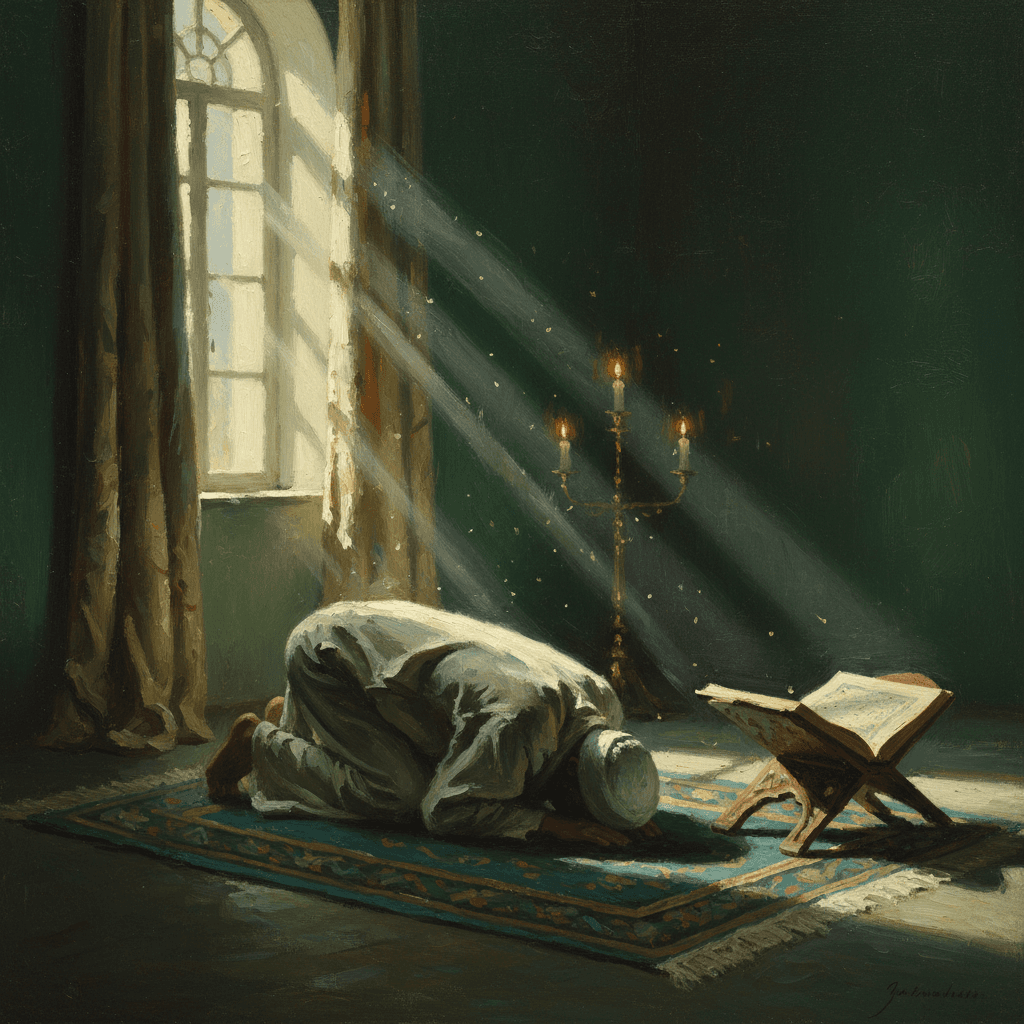
There is a moment many Muslims have felt: hands raised, wanting to ask Allah for something real — something that actually matters to them right now — and then freezing because the Arabic just is not there.
You know the short duas. Bismillah. Alhamdulillah. The ones you memorized as a child. But the thing you actually need to ask for — the job situation, the relationship falling apart, the fear you have not named out loud to anyone — that stays locked inside because you are not sure how to say it in Arabic.
This is one of the most unnecessary barriers in Islam.
The Dua
The Prophet ﷺ taught Muadh ibn Jabal رضي الله عنه a dua that demonstrates the heart of the matter:
اللَّهُمَّ أَعِنِّي عَلَى ذِكْرِكَ وَشُكْرِكَ وَحُسْنِ عِبَادَتِكَ
Allahumma a'inni ala dhikrika wa shukrika wa husni 'ibadatik
"O Allah, help me to remember You, to thank You, and to worship You well."
— (Abu Dawud 1522, authentic)
Say this after every salah in Arabic. Then, after you say it, add your own words in English — your actual situation, your actual need. This is the model: the prophetic dua as your anchor, your own words as the real conversation.
When to say it: After every salah, but also in those quiet moments — driving, waiting, lying awake at night. Dua has no formal time restriction. The Prophet ﷺ said: "Dua is the core of worship." (Tirmidhi 3370) That core is available to you at every moment, in any language.
The Story Behind It
The companions spoke Arabic natively, so the question of language never arose for them the way it does for us. But the principle of sincerity over form runs throughout the Sunnah.
When the Prophet ﷺ described the state of dua, he focused on the heart — not the words. He described a man "on a long journey, disheveled and dusty, raising his hands to the sky: O Lord, O Lord!" (Sahih Muslim 1015). The man was accepted. The description says nothing about language.
Ibn al-Qayyim — one of the greatest scholars in Islamic history — wrote in his monumental work Al-Wabil al-Sayyib that dua in a non-Arabic language is valid when a person does not know Arabic, and many scholars extend this to personal supplication for anyone. The key word in the Quran when Allah describes dua is yad'u — calling. A call in any language is still a call.
The barrier you feel is cultural, not theological. It was created by a conflation of salah (the formal prayer, which has specific Arabic requirements) with dua (personal supplication, which has no language requirement).
How to Make This a Daily Practice
The biggest shift is mental: stop treating dua as a ritual with rules and start treating it as a conversation. You talk to people you trust in the language you think in. Allah deserves at least that much honesty.
Start with the prophetic duas in Arabic. Learn Allahumma a'inni ala dhikrika wa shukrika wa husni 'ibadatik after each prayer. This anchors your Arabic practice to a real habit you already have.
After the Arabic, speak freely. The moment you finish the prophetic dua, keep your hands raised and switch to English. "Ya Allah, I need Your help with this exam. I have been struggling and I am afraid I am going to fail my family." This is not less Islamic. It is more honest.
Use transition moments throughout the day. When you get in the car: "Ya Allah, keep me safe." When you open your laptop: "Ya Allah, help me focus." When you feel anxious: "Ya Allah, I cannot handle this alone." These are real duas. They count.
Write your duas. Keeping a simple dua journal — even in the Notes app on your phone — forces you to articulate what you actually want and helps you see which duas were answered over time. This practice deepens your conviction that dua is a real conversation, not a ritual.
Study the meanings of the prophetic duas slowly. As you learn what Allahumma inni a'udhu bika minal-hammi wal-hazan means, you will naturally feel it more deeply. The goal is to eventually say the Arabic and mean every word — but that takes time, and the journey toward it does not pause your access to Allah.
Build Your Daily Dua Habit, One Language at a Time
DeenBack helps you track your daily supplication practice — Arabic duas and your own personal conversations with Allah — so consistency becomes second nature.


Free download. Premium features available in-app.
Related Duas to Explore
For when you feel lost or far from Allah:
رَبِّ إِنِّي مَسَّنِيَ الضُّرُّ وَأَنتَ أَرْحَمُ الرَّاحِمِينَ
Rabbi inni massaniya al-durru wa anta arhamur-rahimin
"My Lord, indeed adversity has touched me, and You are the Most Merciful of the merciful." — (Quran 21:83 — dua of Prophet Ayyub)
This is one of the most direct duas in the Quran. When you do not know what to say, say this.
For the moments when you feel like your dua is not working:
حَسْبُنَا اللَّهُ وَنِعْمَ الْوَكِيلُ
Hasbunallahu wa ni'mal wakil
"Allah is sufficient for us, and He is the best Disposer of affairs." — (Quran 3:173)
You may find the articles on how to make dua that gets accepted and dua for guidance useful alongside this one. If you are struggling with feeling spiritually empty, the piece on how to feel close to allah again addresses the deeper disconnect.
Common Questions
If dua in English counts, why do we have the Arabic duas from the Prophet? Because those duas are a gift. The Prophet ﷺ was given the most eloquent Arabic ever spoken, and he used it to ask Allah for specific things in specific ways. Learning those duas — and understanding them — is a profound act. But it is a practice to grow into, not a gate you must pass before you can speak to Allah.
Can I mix Arabic and English in one dua? Yes, and this is actually natural as your Arabic grows. You might say Allahumma (O Allah), then switch to English, then end with an Arabic phrase you know. There is no ruling against this.
What if I am embarrassed by how my English dua sounds? You are talking to Allah, not to an audience. The Prophet ﷺ described Allah as "close — He hears the whisper." (Sahih Bukhari 7386) He hears the words you are embarrassed to say out loud. He already knows what you need. The act of asking is for your benefit as much as His response.
Does it matter that I cannot make my dua in Arabic? Your inability is not a failure. It is a starting point. Many of the greatest Muslims in history prayed and supplicated in their mother tongues. What matters is that you turn to Allah at all.
The Conversation That Has Always Been Available
You have been waiting for permission that was never required.
The door to Allah is not written in Arabic. It is written in sincerity. Every time you turn toward Him — in whatever words come out — you are doing exactly what dua is supposed to do.
Start tonight. Put your phone down for two minutes. Hands open or raised. Say what you actually need. In English. In whatever comes out.
That is dua.
Your Dua Practice Starts Today
DeenBack helps you build a daily habit of turning to Allah — prophetic duas, personal conversations, and streak tracking to keep you consistent.
Free download. Premium features available in-app.
Frequently Asked Questions
Can you make dua in English in Islam?
Yes. There is scholarly consensus that dua — personal supplication — can be made in any language. Arabic is recommended for learning the prophetic duas, but Allah hears and responds to sincere supplication in every language.
Is dua in English as accepted as dua in Arabic?
Acceptance depends on sincerity, not language. A heartfelt dua in your own language often carries more presence and understanding than memorized Arabic you do not understand. Scholars like Ibn Taymiyyah and Ibn al-Qayyim confirmed dua is valid in any tongue.
When should I use Arabic versus English for dua?
Use the exact Arabic for the prophetic duas (morning adhkar, after salah, istikhara) because those are preserved with specific wording. For your personal conversations with Allah — your fears, hopes, needs — use whatever language lets you speak most honestly.
Does not knowing Arabic affect my relationship with Allah?
No. Allah created all languages and understands every one. What matters is turning to Him. Learning Arabic is a beautiful goal, but it is not a prerequisite for a real connection. Many great Muslims throughout history made dua in Persian, Turkish, Urdu, and dozens of other languages.
How do I start making dua if I feel awkward talking to Allah?
Start small and honest. Say exactly what you feel — 'Ya Allah, I do not know how to talk to You, but I need You.' That is a dua. Authenticity breaks the awkwardness faster than any rehearsed formula.