
- Published on
Best Dhikr for Anxiety: What the Sunnah Prescribes for a Restless Heart
- Authors

- Name
- Ahmad
- Role
- Senior Marketing Manager, Islamic education • Deen Back
بِسْمِ اللهِ الرَّحْمٰنِ الرَّحِيْمِ
In the name of God, the Most Gracious, the Most Merciful.
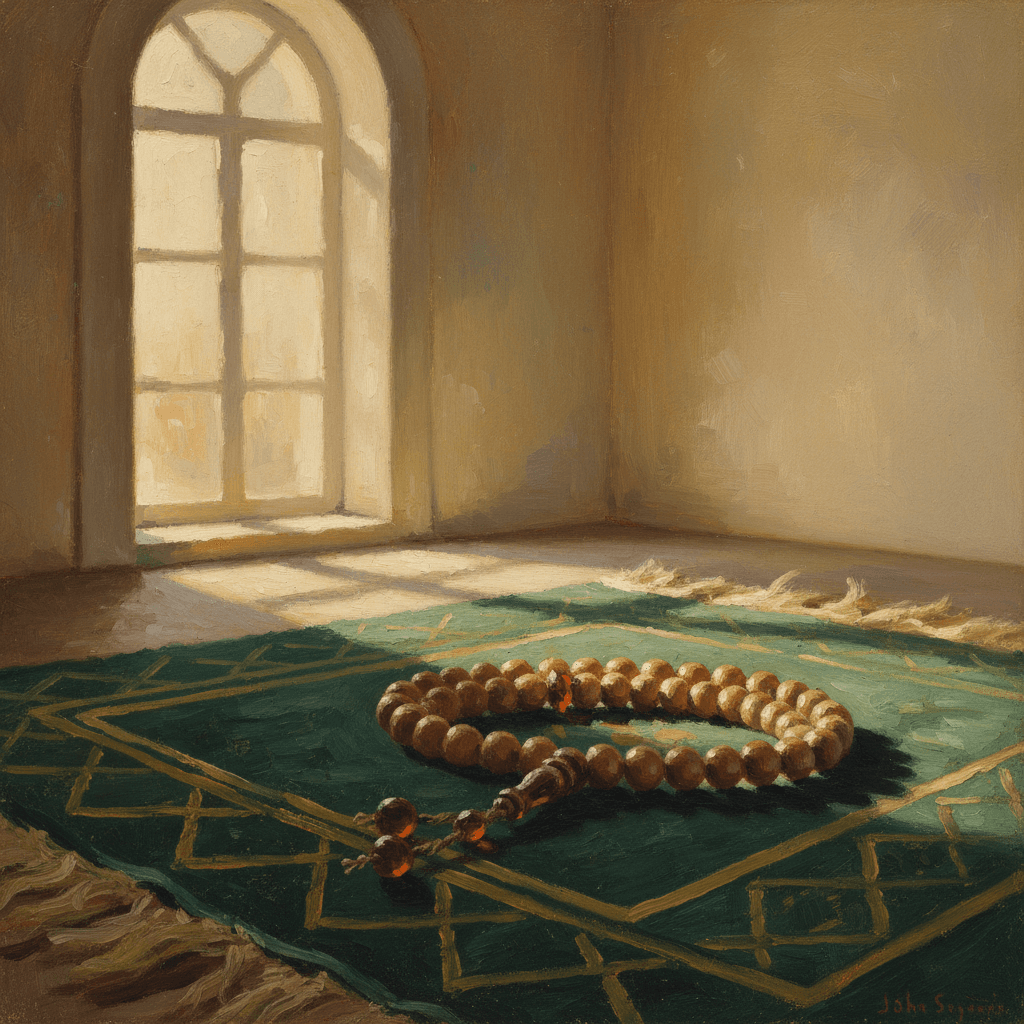
Anxiety has a particular cruelty: it tends to hit hardest when you are alone, when you cannot talk to anyone, and when your own mind feels like the enemy.
The Sunnah did not leave a gap here. The Prophet ﷺ and his companions experienced real anxiety — the pressures of leadership, loss, poverty, persecution — and the dhikr they practiced was not decorative. It was functional. It was the thing they reached for when the weight became unbearable.
This is not a list of phrases to repeat mindlessly. It is a toolkit. Each one targets something specific.
The Dhikr
The greatest statement of relief:
لَا حَوْلَ وَلَا قُوَّةَ إِلَّا بِاللَّهِ
La hawla wa la quwwata illa billah
"There is no power and no strength except through Allah."
— (Sahih Bukhari 7386)
The Prophet ﷺ called this a kanz — a treasure from the treasures of Jannah. Abu Musa al-Ash'ari رضي الله عنه reported that the Prophet told him: "Shall I not guide you to a word that is one of the treasures of Jannah?" He then said this phrase. Scholars have noted it is particularly linked to 69 types of affliction, with worry mentioned specifically.
The statement of the one who trusts:
حَسْبُنَا اللَّهُ وَنِعْمَ الْوَكِيلُ
Hasbunallahu wa ni'mal wakil
"Allah is sufficient for us, and He is the best Disposer of affairs."
— (Quran 3:173 — said by Ibrahim as the fire approached)
This was said by Ibrahim عليه السلام when he was about to be thrown into the fire. It was said by the Prophet ﷺ when told an army was gathering against him at Uhud. The Quran links it directly to Allah turning hardship around.
The comprehensive protection dua:
اللَّهُمَّ إِنِّي أَعُوذُ بِكَ مِنَ الْهَمِّ وَالْحَزَنِ
Allahumma inni a'udhu bika minal-hammi wal-hazan, wal-'ajzi wal-kasal, wal-bukhli wal-jubn, wa dhala'id-dayn, wa ghalabatir-rijal
"O Allah, I seek refuge in You from worry and grief, from helplessness and laziness, from cowardice and miserliness, from the burden of debt and the oppression of people."
— (Sahih Bukhari 6363)
When to say these: La hawla in any moment of sudden anxiety or overwhelm. Hasbunallahu wa ni'mal wakil seven times in the morning and seven times in the evening — scholars like Ibn al-Qayyim described this as particularly protective for the day. The comprehensive dua, three times in the morning.
The Story Behind It
The Prophet ﷺ did not develop these phrases in a time of ease. He was teaching them while living them. Khadijah رضي الله عنها, the person he loved most, died. His children died. He was physically attacked. His close companions were tortured. The political situation of the early Muslims was almost always precarious.
When the Prophet reached for La hawla wa la quwwata illa billah, it was not because he had a calm, comfortable spiritual practice. It was because he needed it. And the companions who learned it from him were equally anchored by it in their darkest moments.
This is what makes these phrases different from generic positive thinking. They are not instructions to pretend everything is fine. They are an honest acknowledgment that everything is beyond your control — and a turning of the heart toward the One who controls it all.
How to Build a Daily Anxiety-Dhikr Practice
The key to using dhikr for anxiety is to do it before you feel anxious, not only when anxiety hits. The heart that has practiced these phrases consistently is different from the heart that reaches for them in a panic.
Morning anchor: Hasbunallahu wa ni'mal wakil, 7 times after Fajr. This takes under a minute. Do it before anything else — before your phone, before breakfast, before the day's concerns arrive. Ibn al-Qayyim described this practice as a form of armor that shields the heart throughout the day.
Real-time interrupt: La hawla wa la quwwata illa billah. Whenever you feel anxiety spike — a message you are dreading to open, a difficult conversation approaching, the chest tightening for no clear reason — say this phrase. Out loud if possible. It is not a magic spell; it is a reorientation. It shifts your focus from the problem to the truth that the problem is not in your hands anyway.
Evening practice: the comprehensive dua. Say Allahumma inni a'udhu bika minal-hammi wal-hazan three times before sleeping. This covers the night and carries into the next morning. It turns anxiety from a final thought of the day into a handed-back burden.
When anxiety wakes you at night: Recite Ayatul Kursi once, then La hawla seven times. If you are lying awake with spiraling thoughts, this interrupts the pattern more effectively than trying to think your way out.
Build the Daily Dhikr Habit That Holds Anxiety at Bay
DeenBack helps you track your morning and evening adhkar — the daily practice that builds the spiritual immune system against anxiety before it strikes.


Free download. Premium features available in-app.
Related Dhikr and Duas
For a broader toolkit, add these:
يَا حَيُّ يَا قَيُّومُ بِرَحْمَتِكَ أَسْتَغِيثُ
Ya Hayyu ya Qayyum, bi rahmatika astaghith
"O the Ever-Living, O the Sustainer, in Your mercy I seek relief." — (Tirmidhi 3524, hasan)
This is a dua specifically connected in the Sunnah to relief from distress. Many scholars recommend repeating it when anxiety feels overwhelming.
For structured approaches to anxiety and worry, the article on dua for anxiety goes deeper on the supplication angle. The piece on dua for social anxiety addresses the specific pressure of social situations. If anxiety is connected to spiritual distance, how to feel close to allah again covers that ground.
Common Questions
Why does dhikr not always feel like it is helping? Because the effect of dhikr is cumulative and often subtle. The heart does not reset in one session. Think of it as building a muscle — the resistance you feel during the first few weeks of consistent practice is normal. After two to four weeks of daily practice, most people report noticeable shifts in their baseline anxiety level.
Is it okay to say dhikr mechanically when I do not feel it? Yes — start with the tongue and the heart follows. This is the documented Islamic principle. The body leads and the heart catches up. Do not wait to feel ready; consistent repetition creates the feeling over time.
What if I forget the Arabic? Write the transliteration on a card and put it on your prayer mat. Or add it to your phone's home screen. The barrier to remembering should be zero. You cannot practice what you cannot access.
Should I use prayer beads to count dhikr for anxiety? If it helps you stay consistent, yes. If counting becomes a distraction from the meaning, use your fingers or just repeat without counting. The goal is presence, not arithmetic.
The Practice That Outwaits the Anxiety
Anxiety tells you that this moment is permanently dangerous. That this feeling is who you are. That there is no way through it.
La hawla wa la quwwata illa billah says: I have no power in this situation, and I never did. Only Allah has power. And that truth — said honestly — begins to dissolve what anxiety has built.
The daily practice is not a cure. It is a reorientation, done consistently enough that the heart begins to default to trust instead of fear. That is the work. And it is available to you right now.
Start Your Daily Anti-Anxiety Dhikr Today
DeenBack tracks your morning and evening adhkar practice — turning the Prophet's prescription for anxiety into a daily habit you can actually see and measure.
Free download. Premium features available in-app.
Frequently Asked Questions
What is the best dhikr for anxiety in Islam?
The Prophet prescribed several: 'La hawla wa la quwwata illa billah' (the treasure from Jannah, linked to relief from 69 afflictions including worry), 'Hasbunallahu wa ni'mal wakil' (what Ibrahim said in the fire), and the comprehensive dua Allahumma inni a'udhu bika minal-hammi wal-hazan. Used daily, these progressively shift how the heart handles pressure.
How does dhikr help with anxiety?
Dhikr interrupts the anxious thought loop by redirecting attention to Allah. Neurologically, it is a form of focused attention that reduces the rumination spiral. Spiritually, it shifts the heart from preoccupation with what is beyond its control to acknowledgment of the One who controls everything.
How many times should I repeat dhikr for anxiety?
There is no fixed therapeutic number. For La hawla, 100 times after Fajr is often cited. For Hasbunallahu wa ni'mal wakil, 7 times morning and evening is recommended by scholars. For the istiadhah dua, say it whenever anxiety rises. Consistency matters more than exact count.
Can dhikr cure anxiety completely?
Dhikr is a powerful spiritual anchor but not a substitute for professional support when anxiety is clinical. The Prophet encouraged treatment — dua and dhikr work alongside, not instead of, appropriate medical or psychological care. Many Muslims find that regular dhikr significantly reduces the intensity and frequency of anxious episodes.
What is the quickest dhikr to say when anxiety hits suddenly?
'La hawla wa la quwwata illa billah' is arguably the most powerful single phrase for an acute moment of anxiety or overwhelm. It acknowledges complete powerlessness outside of Allah and is described in hadith as a treasure from Jannah specifically linked to hardship.