
- Published on
Benefits of Reciting the 99 Names of Allah: A Daily Habit That Changes You
- Authors

- Name
- Ahmad
- Role
- Senior Marketing Manager, Islamic education • Deen Back
بِسْمِ اللهِ الرَّحْمٰنِ الرَّحِيْمِ
In the name of God, the Most Gracious, the Most Merciful.
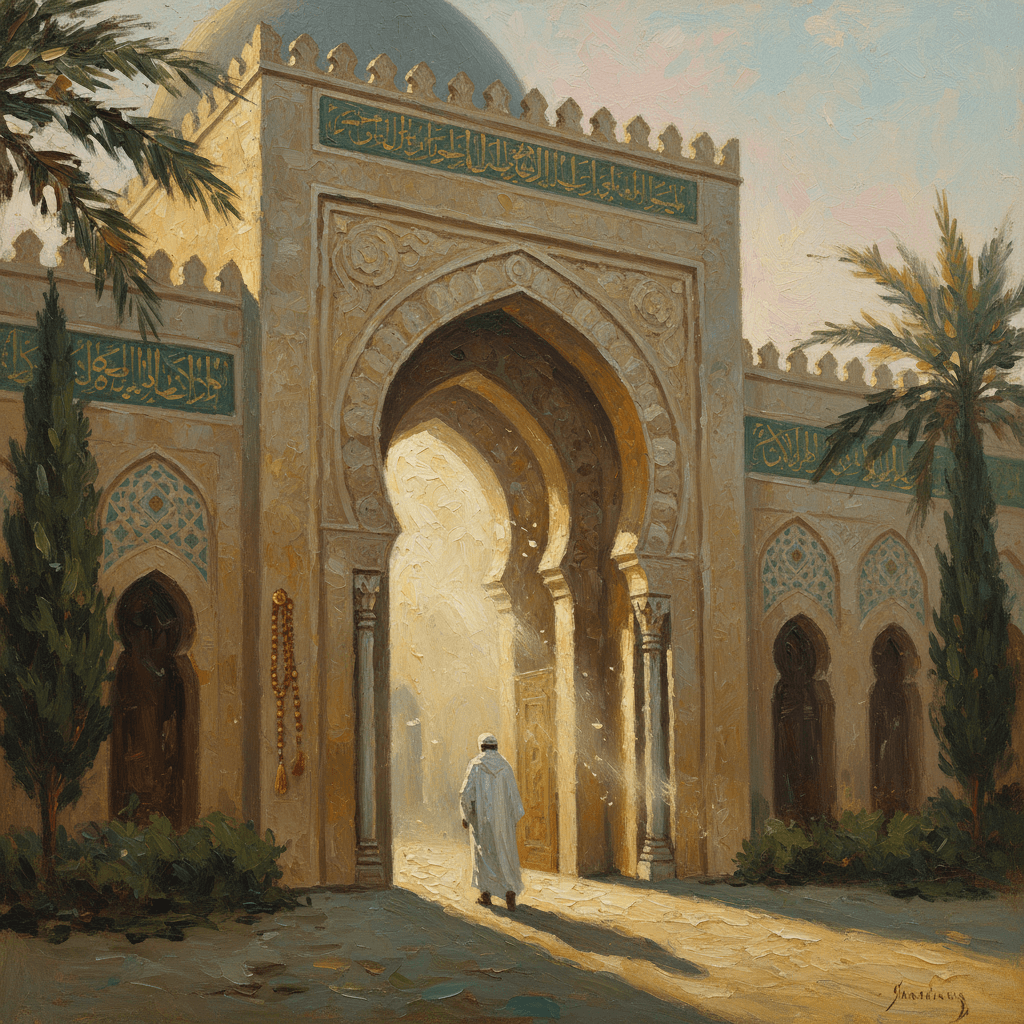
There are ninety-nine ways to call on Allah. Not ninety-nine phrases to memorize for a reward — ninety-nine windows into who He actually is.
Al-Rahman. The Endlessly Merciful. Al-Razzaq. The Provider. Al-Ghaffar. The Repeatedly Forgiving. Al-Wadud. The Loving. Al-Qadir. The All-Powerful.
Each name is a different angle on an infinite reality. And the Prophet ﷺ said that whoever comes to truly know and live them — ahsaha — will enter Paradise.
That is the promise. But the benefits begin long before Paradise.
The Hadith and Its Depth
إِنَّ لِلَّهِ تِسْعَةً وَتِسْعِينَ اسْمًا مِائَةً إِلَّا وَاحِدًا مَنْ أَحْصَاهَا دَخَلَ الْجَنَّةَ
"Allah has ninety-nine names — one hundred minus one. Whoever ahsaha will enter Paradise."
— (Sahih Bukhari 2736, Sahih Muslim 2677)
The word ahsaha (أَحْصَاهَا) is the key. It comes from the root h-s-w, meaning to count and contain. But scholars have consistently explained it means far more than memorization. Al-Nawawi and Ibn al-Qayyim both explain it as: to comprehend the names, understand their meanings, and worship Allah according to what each name implies.
Al-Ghaffar (The Repeatedly Forgiving) should move you to make more istighfar. Al-Razzaq (The Provider) should make you more trusting when income is uncertain. Al-Basir (The All-Seeing) should remind you that your private moments are not private. Al-Wadud (The Loving) should soften how you pray, reminding you that the One you are approaching loves you.
This is what it means to ahsa the names — to let them penetrate and reshape how you live.
The Benefits of a Regular 99 Names Practice
1. Your Duas Become More Specific and Powerful
The Prophet ﷺ would call on Allah by the name most relevant to his request. When asking for forgiveness, he would say Ya Ghaffar or Ya Ghafoor. When asking for provision, Ya Razzaq. When asking for mercy, Ya Rahman.
Allah says: "To Allah belong the best names, so call on Him by them." (Surah Al-A'raf, 7:180)
Calling on Allah by His specific names in dua is not a ritual formula — it is a practice of knowing who you are addressing. The more you know the names, the more precisely you can address your needs and the more present you are in your supplication.
2. Anxiety and Fear Decrease
Knowing that Al-Hafiz (The Protector) watches over you, that Al-Wakeel (The Trustee) handles what you cannot, that Al-Qadir (The All-Powerful) is never limited by circumstances that limit you — this knowledge changes your emotional baseline.
The Prophet ﷺ taught this directly. When Fatimah رضي الله عنها came to him in worry, he did not give her a 10-step plan. He gave her dhikr — including names of Allah — to anchor her at night. The practice of knowing and calling on Allah by His names is itself a form of tawakkul (reliance) therapy.
3. You Stop Seeing Difficulties as Punishments
Knowing Al-Muqaddim (The Advancer) and Al-Mu'akhkhir (The Delayer) — the one who brings forward and the one who delays, both from wisdom — changes how you read the timing of your life. Difficulty is not punishment. Delay is not abandonment. Knowing these names gives you a framework for patience that is not just resigned waiting but active trust.
4. Your Worship Becomes More Personal
There is a difference between praying to "Allah" in an abstract sense and praying to Al-Sami' (The All-Hearing), Al-Mujib (The Responsive), Al-Qarib (The Near). The attributes become lived experience. You begin to feel heard, responded to, close to — because you know these names and have learned to actually rely on them.
How to Build a Daily Practice
Start with the names you already know. Before any memorization plan, identify which of the 99 names you already know. Most Muslims know 10-15. List them. Understand each one's meaning fully. Then build from there.
Learn 2-3 names per week with meanings. Speed-memorizing 99 names without understanding is the least effective approach. Two names per week with genuine comprehension is 50 names in six months — and those 50 will transform your worship far more than rote recitation of all 99.
Group them by theme. Names of mercy: Al-Rahman, Al-Rahim, Al-Wadud, Al-Ghaffar, Al-Ghafoor, Al-Tawwab. Names of power: Al-Aziz, Al-Qadir, Al-Qahhaar, Al-Mutakabbir. Names of knowledge: Al-Aleem, Al-Khabeer, Al-Basir, Al-Sami'. Thematic grouping makes the names easier to remember and more meaningful in context.
Recite daily after Fajr. A consistent time — after Fajr is the most commonly recommended — anchors the practice. Even if you go through only 10-15 names meaningfully, that is more valuable than rushing through all 99 without presence.
Use a name as the lens for your day. Each morning, choose one name of Allah and keep it in mind throughout the day. If you chose Al-Razzaq (The Provider), notice provision all day — your food, your income, your health. If you chose Al-Sami' (The All-Hearing), notice how you speak and what you say. This practice, suggested by various Islamic scholars, is one of the most transformative ways to live the names rather than just recite them.
Build Your Daily 99 Names Practice
DeenBack helps you track your dhikr and daily remembrance streaks — so learning the 99 names of Allah becomes a consistent, growing practice that changes how you know and relate to your Creator.


Free download. Premium features available in-app.
The Names Most Often Mentioned in Quran
While all 99 names carry immense weight, some appear far more frequently in the Quran:
- Al-Rahman (The Endlessly Merciful) — over 170 times
- Al-Rahim (The Especially Merciful) — over 115 times
- Al-Aleem (The All-Knowing) — over 158 times
- Al-Aziz (The Almighty) — over 90 times
These are the names Allah chose to emphasize most to humanity. Begin with these. The mercy-names alone — Al-Rahman, Al-Rahim, Al-Ghaffar, Al-Ghafoor, Al-Tawwab, Al-Wadud — paint an overwhelming picture of a Lord who wants to forgive you far more than you want to be forgiven.
Common Questions
Do I need to memorize all 99 names to get the hadith's promise? The scholars say ahsaha is about comprehension and living by the names, not speed-memorization of a complete list. However, working toward knowing all 99 names is itself a tremendous act of worship. Start wherever you are.
Are there names in the 99 that are more powerful for specific problems? Yes — calling on Allah by the name most relevant to your need is the Sunnah of supplication. See the 99 names of Allah with meaning for the full list with meanings and contexts.
Can women recite the 99 names during their period? Yes. The 99 names are dhikr, not Quran recitation. There is no prohibition on dhikr for women in any state.
Is there a specific order to recite the names in? No order is prescribed in the Sunnah. The order in commonly circulated lists comes from the scholars organizing them for convenience. Feel free to recite in any order.
The Relationship Behind the Names
Ibn al-Qayyim wrote that the goal of ahsa — truly coming to know the names — is that your heart becomes filled with the knowledge of Allah. Not information about Allah. Knowledge of Him. The kind that changes what you love, what you fear, what you hope for.
A believer who has internalized Al-Hayyul-Qayyum (The Ever-Living, Self-Sustaining) relates to every difficulty differently. One who has internalized Al-Wadud (The Loving) prays differently. One who has internalized Al-Shahid (The Witness) lives differently when no one is watching.
This is the deepest benefit of reciting the 99 names — not a reward waiting in the future, but a transformation happening now, in the quality of your knowledge of and closeness to Allah.
For the full names with Arabic, transliteration, and meaning, see 99 names of Allah. For building a broader dhikr practice around the names, how to do morning adhkar and how to increase iman give the practical framework.
Start Knowing Allah — Not Just Knowing About Him
DeenBack helps you track daily dhikr and dua — including the 99 names practice — so the most important relationship in your life grows consistently, one day at a time.
Free download. Premium features available in-app.
Frequently Asked Questions
What are the benefits of reciting the 99 names of Allah?
The Prophet said: 'Allah has ninety-nine names. Whoever memorizes them (ahsaha) will enter Paradise.' (Sahih Bukhari 2736). The word ahsaha means more than memorization — it means comprehending, acting upon, and calling on Allah by His names. Reciting the names builds a relationship with Allah's attributes, transforms how you see difficulty, and infuses daily life with awareness of who you are dealing with.
What does 'ahsaha' mean in the hadith about the 99 names?
Ahsaha comes from the root meaning to count, comprehend, and internalize. Scholars say it encompasses: memorizing the names, understanding their meanings, and worshipping Allah according to what each name implies. So Al-Ghaffar (The Repeatedly Forgiving) should inspire more istighfar; Al-Razzaq (The Provider) should inspire reliance on Allah for sustenance.
Which of the 99 names is best for specific needs?
For provision: Ya Razzaq (O Provider), Ya Fattah (O Opener). For forgiveness: Ya Ghaffar, Ya Ghafoor, Ya Tawwab. For anxiety: Ya Salam (O Peace), Ya Wakeel (O Trustee). For healing: Ya Shafi (O Healer), Ya Hafiz (O Protector). For guidance: Ya Hadi (O Guide), Ya Rashid (O Right-Guide). Call on Allah by the name most relevant to your need.
How should I start memorizing the 99 names of Allah?
Start with the names you already know — Al-Rahman, Al-Rahim, Al-Malik are in every Salah. Then add 2-3 names per week with their meanings. Do not rush memorization without understanding. Group them by theme: names of mercy, names of power, names of knowledge. The goal is not speed — it is building a living relationship with each name.
What is the best time to recite the 99 names of Allah?
After Fajr or before sleeping are commonly recommended times, as these prayer times already anchor daily worship routines. Reciting during dhikr sessions or between the adhan and iqamah is also excellent. The key is consistency — any fixed daily time is better than sporadic recitation at random times.