
- Published on
Al-Qadir Meaning: The Name of Allah That Restores Your Hope
- Authors

- Name
- Ahmad
- Role
- Senior Marketing Manager, Islamic education • Deen Back
بِسْمِ اللهِ الرَّحْمٰنِ الرَّحِيْمِ
In the name of God, the Most Gracious, the Most Merciful.
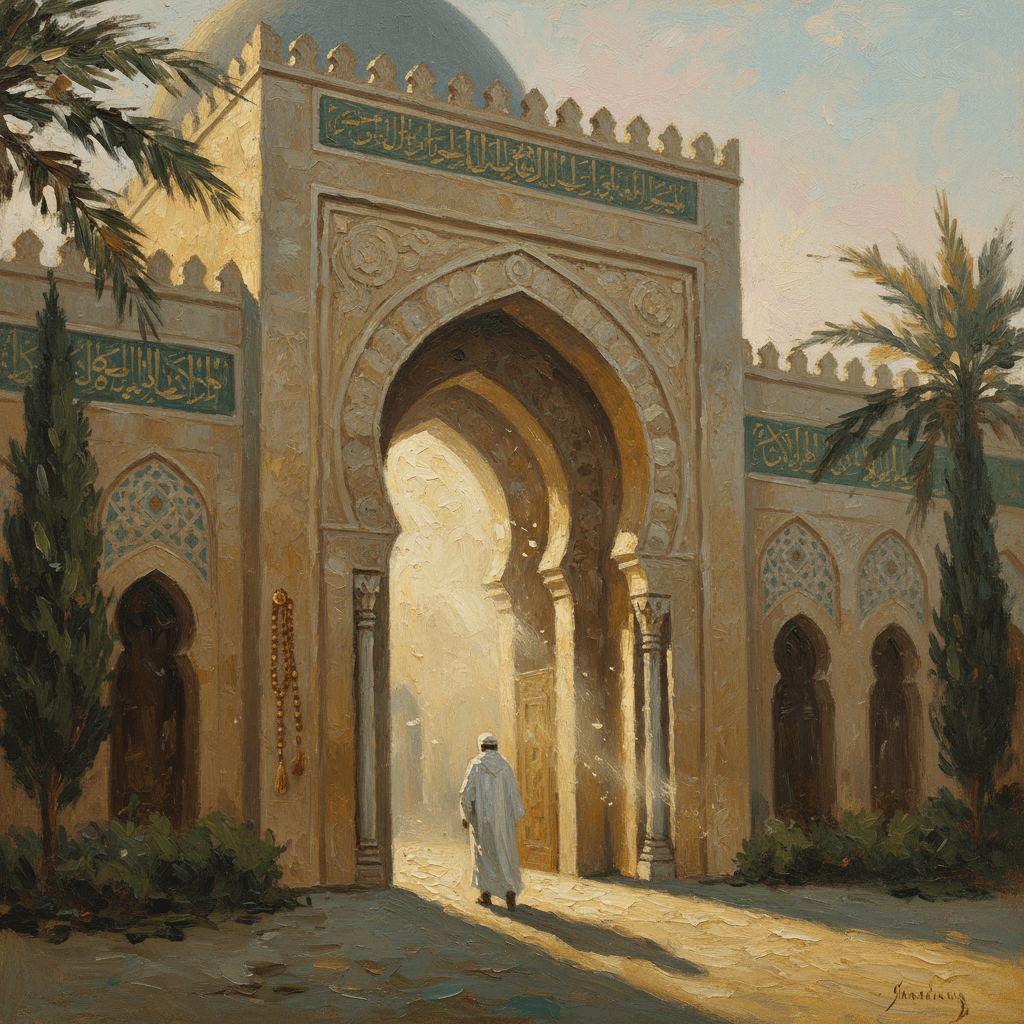
There are prayers that feel hopeless before you even finish making them. The situation is too complicated. The door seems permanently closed. The change you need is too large for any human to bring about.
And then you remember who you are actually talking to.
Al-Qadir. The All-Powerful. The One for whom nothing is complicated, no door is closed, and no change is too large.
What Al-Qadir Actually Means
القادر (Al-Qadir) comes from the Arabic root q-d-r (قدر), which carries meanings of power, ability, decree, and measure. Al-Qadir means the One who possesses complete and perfect power — the One who can do whatever He wills, however He wills, without obstacle, without effort, and without need.
The Quran uses forms of this name more than 130 times:
إِنَّ اللَّهَ عَلَىٰ كُلِّ شَيْءٍ قَدِيرٌ
"Indeed, Allah is over all things competent." — (Surah Al-Baqarah, 2:20)
Kull shay — all things. Not most things. Not easy things. Not the things that make logical sense. All things.
This is the precise meaning of Al-Qadir: there is no category of things that falls outside His power. There is no situation that has cornered Allah. There is no problem that has stumped Him. His capability is not dependent on circumstances, resources, probability, or human understanding.
Three Related Names That Deepen the Understanding
Al-Qadir belongs to a cluster of Divine names all rooted in q-d-r:
Al-Qadeer (القدير) — "The Omnipotent" — emphasizes the quality of power with even greater intensity. Used 45 times in the Quran, often paired with "Aleem" (All-Knowing). Allah does not just have power — He has unlimited power, and He knows exactly when and how to deploy it.
Al-Muqtadir (المقتدر) — "The All-Prevailing" — refers to the actual exercise and manifestation of that power in every moment. This name appears in Surah Al-Qamar (54:42) describing how Allah seized the wrongdoers "with the seizure of One Mighty, All-Powerful." The power is not potential. It is active.
Together, these names tell us: Allah's power is complete (Al-Qadir), unlimited (Al-Qadeer), and actively governing all of creation at every moment (Al-Muqtadir). See also Al-Qayyum meaning — the Self-Sustaining One who upholds all of creation — as a complementary name.
Why Modern Muslims Need This Name
We live in an age of systems. If you want something, you need the right connections, the right resources, the right timing, the right algorithm. The invisible architecture of "how things work" shapes what we believe is possible.
And subtly, that architecture shapes how we make dua.
We make small duas. We make cautious duas. We add hedges: "If it is easy, then make it happen." We preemptively accept failure before Allah has even responded. We apply human logic to a divine conversation.
Al-Qadir dismantles that thinking. When you are speaking to Al-Qadir, "how" is not your problem. "Whether" is the only question — and that question belongs entirely to Him.
The Prophet (peace be upon him) taught us:
سَلُوا اللَّهَ كُلَّ شَيْءٍ حَتَّى الشِّسْعَ
"Ask Allah for everything, even the strap of a sandal." — (Sunan al-Tirmidhi 3604)
The Prophet said to ask for everything — from the trivial to the enormous — because the difference between "easy" and "impossible" does not exist for Allah. Only for us.
How to Live with Al-Qadir — Practically
Make Bold Duas
The Prophet made duas for things that required divine power: for nations, for the dead, for his companions' complete transformation. Your duas can be bolder. Not arrogant — not demanding. But bold. Ask for the thing you actually need, not the toned-down version you think is reasonable.
Stop Second-Guessing What Allah Can Do
The nafs loves to say: "But the situation is too complicated." "But the odds are against you." "But this has never worked before." Al-Qadir answers all of those objections with one reality: He is capable of all things.
Connect Power to Qadr (Divine Decree)
The same root that gives us Al-Qadir also gives us qadr — divine decree. Allah's power and His decree are connected. He does not just have the power to act — He actively decrees all that happens according to His wisdom. This is why trusting Al-Qadir leads naturally to trusting His plan even when the outcome is not what you asked for. For more on this, see 99 names of Allah with meaning and 99 names of Allah.
Dhikr Using This Name
Recite: Ya Qadir, Ya Qadeer, Ya Muqtadir — in the morning, before important duas, when you feel stuck. You are not just reciting words; you are reminding yourself who you are speaking to.
Build a Daily Dhikr Practice — Starting With Allah's Names
Learn the 99 names of Allah, build daily dhikr streaks, and let the names of your Lord reshape how you see every situation in your life.


Free download. Premium features available in-app.
Al-Qadir in the Quran — Key Verses
When things seem impossible:
أَلَيْسَ ذَٰلِكَ بِقَادِرٍ عَلَىٰ أَن يُحْيِيَ الْمَوْتَىٰ
"Is He not then Able to give life to the dead?" — (Surah Al-Qiyamah, 75:40)
If He can give life to the dead, what is it exactly that you think He cannot do?
The connection between power and provision:
اللَّهُ يَبْسُطُ الرِّزْقَ لِمَن يَشَاءُ وَيَقْدِرُ ۚ وَفَرِحُوا بِالْحَيَاةِ الدُّنْيَا
"Allah extends provision for whom He wills and restricts it. And they rejoice in the worldly life..." — (Surah Ar-Ra'd, 13:26)
Al-Qadir controls the expansion and restriction of everything — provision, opportunity, health, time. See names of Allah for protection for names most relevant when seeking His power as a shield.
Signs You Are Internalizing Al-Qadir
You know this name is moving from information to transformation when:
- Your duas become more honest and specific, not more cautious
- You feel less anxious about situations outside your control, because you know Who controls them
- You stop limiting what you ask for
- Trusting Allah's decree feels like relief rather than resignation
- You turn to dua before turning to panic
Common Questions
Can I call on Al-Qadir when making istighfar (seeking forgiveness)?
Yes. Allah's power extends to forgiveness — He is Al-Ghafoor (the Forgiving), but His ability to forgive is rooted in His power as Al-Qadir. Nothing about your past is too heavy for Him to lift.
Is there a specific time or number for repeating this name?
There is no specific narrated practice for repetition of Al-Qadir alone. You can incorporate it into morning and evening dhikr, into dua before salah, or whenever you face a situation that feels beyond your power. See also al-Qawiyy meaning — the Strong — for another power-related divine name.
How is Al-Qadir different from us having free will?
Allah's power does not eliminate human choice. He created free will as part of His design. Al-Qadir means He can do whatever He wills — including creating a world where human beings make genuine choices. The apparent tension between divine power and human agency is one of the deep questions of Islamic theology (kalam), and scholars have written extensively on it. What matters practically: your choices matter, AND Allah's power is total.
Closing
There are duas you stopped making because you decided they were out of reach. There are hopes you quietly let go because the gap between where you are and where you need to be seemed uncrossable.
Al-Qadir invites you to make those duas again. Not because you suddenly have more resources or better odds. But because you are asking the One who is not constrained by resources or odds.
Ya Qadir — make it possible. And He can.
Make Dhikr and Dua a Daily Habit
Build streaks with Allah's names, track your daily dua practice, and let DeenBack help you turn knowledge of Allah into living faith — one day at a time.
Free download. Premium features available in-app.
Frequently Asked Questions
What does Al-Qadir mean in Islam?
Al-Qadir (القادر) is one of the 99 names of Allah, meaning 'The All-Powerful' or 'The Able.' It refers to Allah's absolute power and capability — He can do anything He wills, without effort, without limitation, without needing any means or tools. Nothing is beyond His power, whether it seems impossible to us or not.
What is the difference between Al-Qadir, Al-Qadeer, and Al-Muqtadir?
These are related names with the same root (q-d-r) but different intensities. Al-Qadir means 'The Capable' — possessing power. Al-Qadeer means 'The Omnipotent' — power with greater emphasis (used 45 times in the Quran). Al-Muqtadir means 'The Prevailing Omnipotent' — exercising and manifesting that power in all things (Surah Al-Kahf, 18:45). Together they convey that Allah's power is not just theoretical — it is actively deployed in every moment of creation.
How do I use the name Al-Qadir in my dua?
Call upon Allah by this name when making dua for things that seem impossible or very difficult. Say: 'Ya Qadir, You are capable of everything — if this is good for me, make it easy for me.' Recognizing His power removes the doubt that limits our dua. Do not make small duas; make the duas that actually require divine power.
What can Al-Qadir teach me about my own limitations?
Al-Qadir teaches you that your limitations are real but not final — because the One you are asking has no limitations. Where your strength ends, His begins. This is why tawakkul (reliance on Allah) is not passivity — it is the most rational response to recognizing the gap between our power and His.