
- Published on
Al-Qayyum Meaning: The Self-Sustaining Name That Holds Everything
- Authors

- Name
- Ahmad
- Role
- Senior Marketing Manager, Islamic education • Deen Back
بِسْمِ اللهِ الرَّحْمٰنِ الرَّحِيْمِ
In the name of God, the Most Gracious, the Most Merciful.
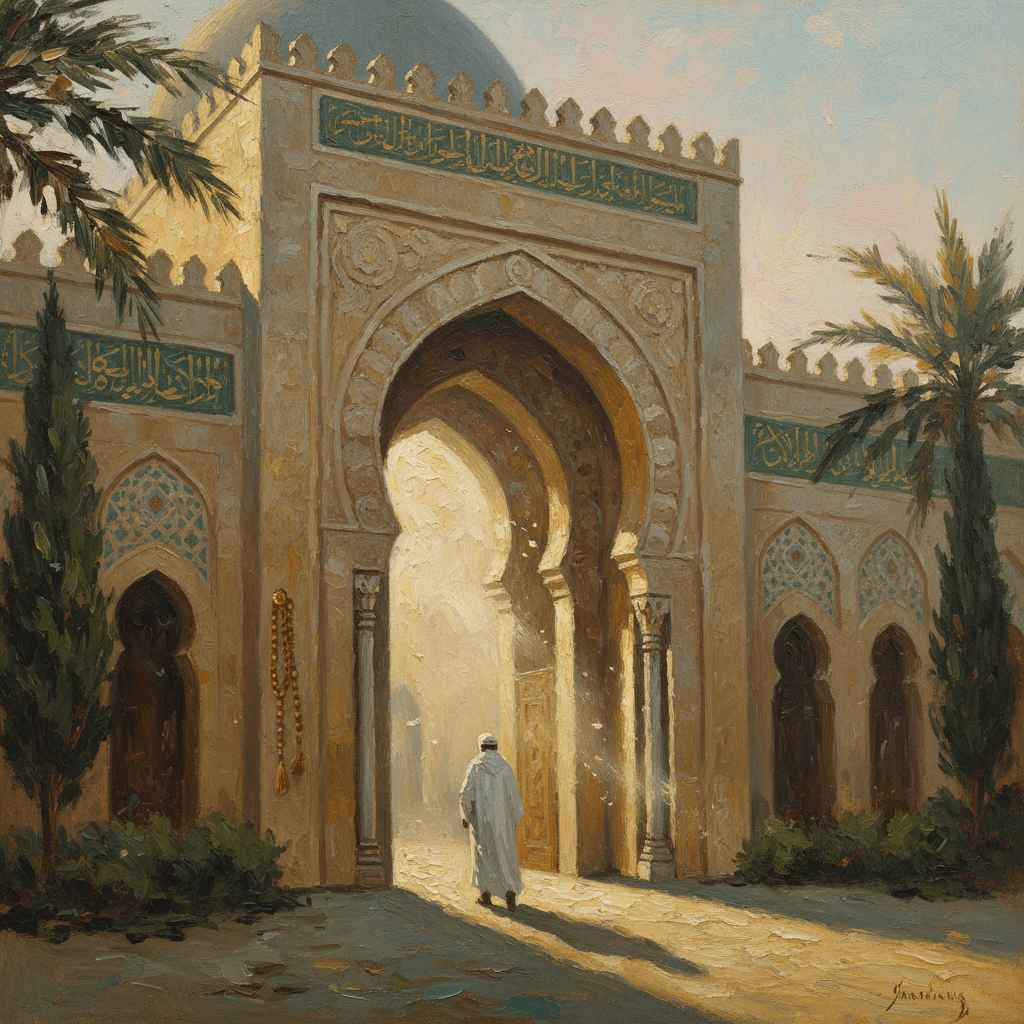
There is a name of Allah that appears in the most widely recited verse in the Quran — Ayatul Kursi — and most people have heard it hundreds of times without stopping to think about what it actually means.
Al-Qayyum.
Not because it is complicated, but because when you understand it, it changes how you stand in relation to everything in your life.
What Al-Qayyum Actually Means
Al-Qayyum (الْقَيُّومُ) comes from the Arabic root qāma — to stand, to establish, to be upright. But in the form Qayyum, it carries an intensive meaning: the One who stands perfectly by Himself, and upon whom everything else stands.
He needs nothing. Everything needs Him.
اللَّهُ لَا إِلَٰهَ إِلَّا هُوَ الْحَيُّ الْقَيُّومُ ۚ لَا تَأْخُذُهُ سِنَةٌ وَلَا نَوْمٌ
Allahu la ilaha illa huwa, al-Hayyu al-Qayyum, la ta'khuduhu sinatun wa la nawm
"Allah — there is no deity except Him, the Ever-Living, the Self-Sustaining. Neither drowsiness overtakes Him nor sleep." — (Surah Al-Baqarah, 2:255)
Al-Hayy: the Ever-Living. Al-Qayyum: the Self-Sustaining Sustainer of all existence. These two names are inseparable throughout the Quran — they describe the two most foundational truths about Allah. He is alive, and He is the ground upon which all other existence rests.
The scholars explained Al-Qayyum in two dimensions:
Self-subsistence: Allah does not depend on anything for His existence. He was before time. He will be after the end of everything. He is not maintained by anything.
Universal sustenance: Everything else subsists through Him. The galaxies, the oceans, your heartbeat, your next breath — all of it is continuously maintained by Al-Qayyum. Not created once and left to run. Maintained. This moment. Right now.
That is what the name means. The One who holds it all up without holding anything.
Why Modern Muslims Struggle to Feel This
The modern world teaches you to trust systems. Your salary comes from an employer. Your health depends on your genes and your gym membership. Your security comes from your savings account and your lock on the door.
None of these things are wrong to use. But the nafs — the lower self — takes them and turns them into the actual objects of your trust. The employer becomes the one who provides. The savings account becomes the real safety net. And without realizing it, you start to feel that your wellbeing rests on these fragile, contingent things.
Then one of them fails. And it feels like the floor has dropped out.
Al-Qayyum is the correction. Not an abstraction. A direct challenge to where your tawakkul (reliance) actually lives. Because every single thing you have placed your trust in is itself maintained by Al-Qayyum. Your employer's company exists only because Al-Qayyum has not withdrawn the sustenance of its existence. Your heartbeat continues only because Al-Qayyum has not said: stop.
This is not a reason to stop working or stop planning. It is a reason to stop being afraid of the systems failing — because the systems were never what held you up to begin with.
How to Reflect on Al-Qayyum Daily
Understanding is the beginning. The goal is that this name changes your inner posture — the way you move through your day, the thing you return to when anxiety rises.
In the morning: When you recite Ayatul Kursi after Fajr, pause at Al-Qayyum. Say it slowly. Think: He is sustaining my existence right now. This breath is not self-generated. This heartbeat is not automatic in the ultimate sense. This grounds you before the day begins pulling you into the illusion that you are self-sufficient.
When anxious about provision: The specific dua taught by the Prophet ﷺ calls on this name directly:
يَا حَيُّ يَا قَيُّومُ بِرَحْمَتِكَ أَسْتَغِيثُ
Ya Hayyu Ya Qayyum, bi rahmatika astaghith
"O Ever-Living, O Self-Sustaining, by Your mercy I seek help." — (Tirmidhi 3524)
The Prophet ﷺ taught this to Fatimah when she was overwhelmed. It is specifically for the moments when you feel like everything is on your shoulders and none of it is working.
When distracted in salah: Returning to Al-Hayy Al-Qayyum is a way back. You are standing in front of the One who is maintaining your existence in this moment. That is not a small thing.
Before sleep: The 99 names of Allah practice — going through the names with reflection — is most powerful when done slowly, one name per night, rather than speed-running all ninety-nine.
Make the Names of Allah Your Daily Anchor
DeenBack helps you build a daily dhikr and reflection practice around the names of Allah — turning knowledge of Al-Qayyum into a felt sense of His sustaining presence.


Free to download. A paid plan is required to use the app’s tools.
Signs You Are Growing in Understanding Al-Qayyum
Progress in asma ul husna reflection is not measured in knowledge tests. It shows up in your emotional life:
- Anxiety about the future decreases not because your circumstances are better, but because your reference point has shifted
- When systems fail — a job loss, a health scare, a relationship difficulty — your first internal move is toward Allah, not toward panic
- The dua for tawakkul becomes something you mean, not just recite
- You notice a growing sense of stability that does not come from your bank balance or your social relationships
This is the fruit of al-Qayyum becoming real for you — not just a name you know, but a reality you stand in.
Common Questions
Is Al-Qayyum one of the greatest names of Allah? Several hadith indicate that the greatest name of Allah (Ism al-A'zam) includes Al-Hayy and Al-Qayyum together. Ibn Majah and other scholars recorded that the Prophet ﷺ confirmed a supplication using these names was calling on Allah by His greatest name. The ayatul kursi meaning and explanation goes deeper into this verse and its significance.
How is Al-Qayyum different from Ar-Razzaq? Ar-Razzaq is Allah as the Sustainer in the specific sense of provision — rizq, sustenance, the things that nourish you. Al-Qayyum is broader and more fundamental: He sustains the very existence of everything, including Ar-Razzaq's activity. One is the provision; the other is the ground upon which the provision and the recipient both stand.
Can reflecting on names of Allah actually change your mental state? Yes, and this is not a claim without basis. The Prophet ﷺ specifically prescribed certain divine names for specific emotional states. The names of Allah for anxiety covers this directly. The mechanism is tawakkul: genuine reliance on Allah restructures your threat-response system, because the thing you fear losing no longer appears as your ultimate security.
How do I memorize the names of Allah? The how to memorize 99 names of Allah guide covers practical methods. For Al-Qayyum specifically: pair it with Ayatul Kursi, which you likely already recite daily. Each time you reach that word, pause briefly on its meaning. Familiarity through daily encounter is more durable than memorization drills.
The Name That Holds You Up
You do not hold your life together. You try. You plan. You work. But what actually holds it together is Al-Qayyum.
This is not a resignation from effort. It is freedom from the exhausting illusion that you are ultimately responsible for maintaining your own existence. He is. He always has been. He is doing it right now.
That is what the name means. Let it change how you stand.
Build a Daily Reflection Practice
Start reflecting on the names of Allah daily with DeenBack — track your dhikr, build the habit, and let Al-Qayyum become more than a word you know.
Free to download. A paid plan is required to use the app’s tools.
Frequently Asked Questions
What does Al-Qayyum mean in Islam?
Al-Qayyum (الْقَيُّومُ) means the Self-Sustaining, the Sustainer of all existence. It comes from the root qāma (to stand) — Allah is the One who stands by Himself, needing nothing, while everything else subsists through Him. It appears paired with Al-Hayy (the Ever-Living) in Ayatul Kursi and in the greatest name of Allah according to some hadith.
What is the greatest name of Allah?
Several hadith indicate that the greatest name of Allah (Ism al-A'zam) includes Al-Hayy and Al-Qayyum. The Prophet ﷺ heard a man supplicating with 'Allahumma inni as'aluka bi anna laka al-hamda, la ilaha illa anta, al-mannanu, badee'us-samawati wal-ard, ya dhal jalali wal-ikrami, ya hayyu ya qayyum' and said: 'You have called upon Allah by His greatest name.' (Sunan Ibn Majah 3858)
Where does Al-Qayyum appear in the Quran?
Al-Qayyum appears three times in the Quran — in Ayatul Kursi (2:255), in Surah Al-Imran (3:2), and in Surah Ta-Ha (20:111). Each occurrence pairs it with Al-Hayy: 'Al-Hayy Al-Qayyum.' The pairing is significant — Ever-Living and Self-Sustaining — suggesting these two names together describe the most fundamental reality about Allah.
How do I use Ya Hayyu Ya Qayyum in dua?
The Prophet ﷺ taught Fatimah (ra) to say 'Ya Hayyu Ya Qayyum, bi rahmatika astaghith' (O Ever-Living, O Self-Sustaining, by Your mercy I seek help) when she complained of fatigue. It is used in distress, in times of hardship, and as a general call on Allah in any situation where you feel helpless or overwhelmed. It can be repeated as a dhikr.
What is the practical benefit of reflecting on Al-Qayyum?
Al-Qayyum reminds you that everything you depend on — your job, your health, your family — is itself dependent on Allah. This is liberating, not frightening. It means your ultimate security does not rest on these contingent things. When they fail (and they will), Al-Qayyum has not changed. Your reliance shifts from created things to the Creator — which is the definition of tawakkul.