
- Published on
Names of Allah for Protection — Call on Him by These Names
- Authors

- Name
- Ahmad
- Role
- Senior Marketing Manager, Islamic education • Deen Back
بِسْمِ اللهِ الرَّحْمٰنِ الرَّحِيْمِ
In the name of God, the Most Gracious, the Most Merciful.
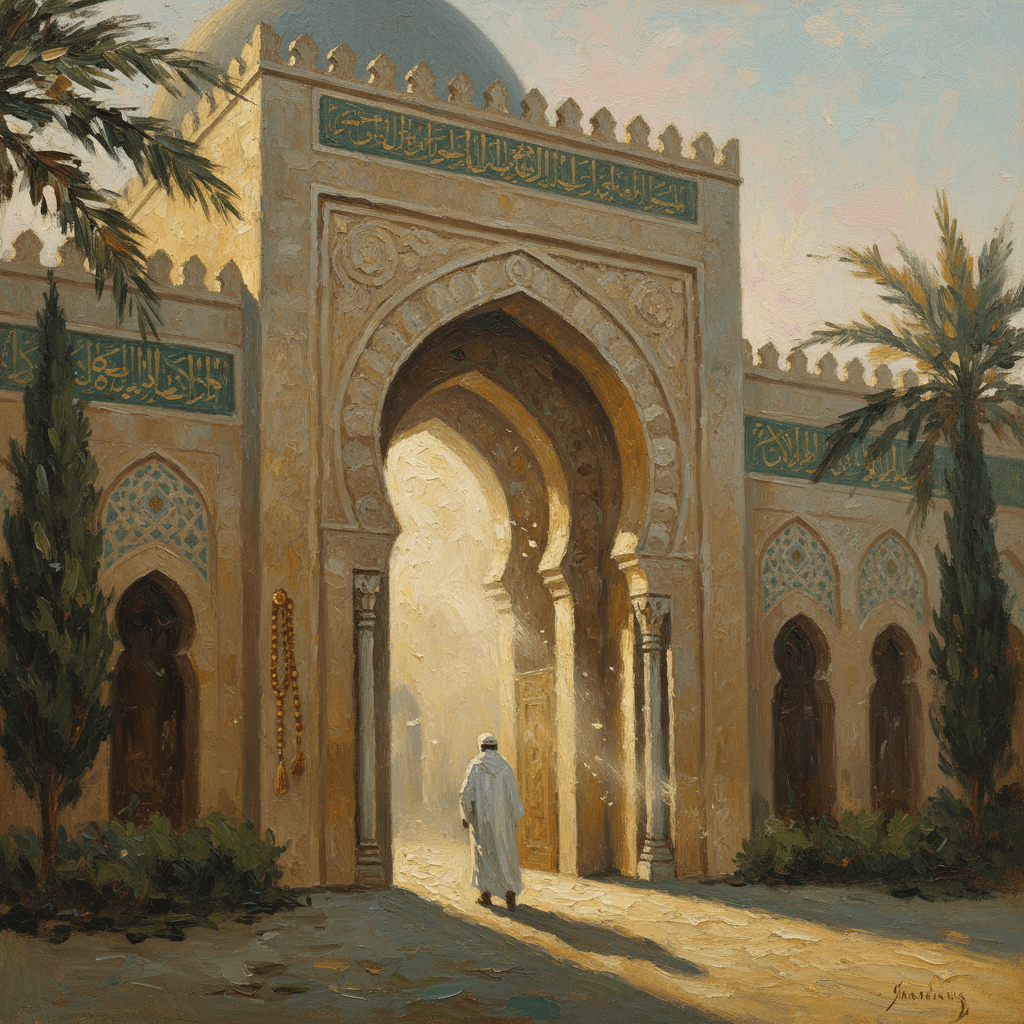
There is a specific anxiety that comes with feeling unprotected. The kind that shows up when something bad almost happened, or when you sense danger you cannot name, or when you lie awake at three in the morning certain that things are about to go wrong.
Every human being — believer or not — reaches for protection in those moments. The Muslim has something specific to reach for: the names of Allah that describe His protection over creation. Not generic hope, not wishful thinking, but the specific names through which divine protection is invoked.
Why Names Matter
The Quran says:
وَلِلَّهِ الْأَسْمَاءُ الْحُسْنَى فَادْعُوهُ بِهَا
"And to Allah belong the best names, so call upon Him by them."
— (Surah Al-A'raf, 7:180)
This is a command — not a suggestion. Call on Allah using His names. And this implies knowing which names carry which meanings, so you can call on the right one for the right situation. A person calling on Ar-Razzaq for provision is using the language of the Quran correctly. A person calling on Al-Hafiz for protection is doing the same.
The names of Allah are not magic words. They are descriptions of who He actually is. When you call on Al-Hafiz, you are addressing the One who is genuinely, inherently, and infinitely the Guardian of all things. You are not convincing Him to be something He is not. You are appealing to Him as the thing He already is.
The Key Names for Protection
Al-Hafiz — الحفيظ — The Guardian
Al-Hafiz comes from the Arabic root h-f-z, meaning to protect, to preserve, to guard. Allah is Al-Hafiz in multiple dimensions: He preserves and records every deed, He protects His creation from destruction, and He specifically guards those who entrust themselves to Him.
The Prophet Ya'qub (Jacob) used this name in the Quran when sending his sons to Egypt:
فَاللَّهُ خَيْرٌ حَافِظًا وَهُوَ أَرْحَمُ الرَّاحِمِينَ
"But Allah is the best guardian, and He is the most merciful of the merciful."
— (Surah Yusuf, 12:64)
Ya'qub had already lost one son (as he believed). He was now sending another beloved son into uncertainty. And his response was not despair — it was to appeal to Allah as the ultimate Protector, while doing what was in his power.
That is the model. Take your reasonable precautions, then invoke Al-Hafiz for the rest.
Al-Muhaymin — المهيمن — The Overseer and Guardian
Al-Muhaymin carries the meaning of watching over, overseeing, and safeguarding. It appears in Surah Al-Hashr (59:23) in a series of Allah's names. The root suggests a bird spreading its wings over its chicks — a protective, overarching presence.
Al-Muhaymin is the name to call on when you feel spiritually exposed: when waswas is loud, when you feel your faith weakening, when you are in an environment that threatens your deen. He is the One who watches over the faith of the believer as they navigate a world full of trial.
Al-Wali — الولي — The Protecting Friend
Al-Wali means the protector, the patron, the close friend and ally. Allah describes Himself as Al-Wali in multiple places in the Quran:
اللَّهُ وَلِيُّ الَّذِينَ آمَنُوا
"Allah is the ally of those who believe."
— (Surah Al-Baqarah, 2:257)
The protection of Al-Wali is personal. It is not the protection of a distant guard — it is the protection of a close ally who is with you, who knows you, who acts on your behalf. When you feel lonely in your struggle, when you feel that no one understands your situation, call on Al-Wali.
Al-Wakeel — الوكيل — The Trustee and Disposer
Al-Wakeel is the one to whom you entrust your affairs — and who is fully capable of managing them. When the Prophet ﷺ and his Companions were told that a large army was gathering against them, their response was:
حَسْبُنَا اللَّهُ وَنِعْمَ الْوَكِيلُ
"Allah is sufficient for us, and He is the best disposer of affairs."
— (Surah Al Imran, 3:173; Sahih Bukhari 4563)
This was not passive acceptance. It was a statement of strategy: we have placed our full trust in the one who is Al-Wakeel — the best one to manage what we cannot manage ourselves.
As-Salam — السلام — The Source of Peace and Protection
As-Salam means both peace and protection. It is the name of Allah that every Muslim invokes when ending prayer: As-Salaamu Alaykum wa Rahmatullah. The greeting of peace that comes from the Source of Peace.
When anxiety about safety reaches the point where it disturbs sleep and disrupts life, it is As-Salam that is being needed. Not just protection from external harm, but the internal peace that comes from knowing the Protector is real and is present.
Build Your Daily Dhikr Habit — Including the Names of Allah
DeenBack helps you track your morning and evening adhkar streaks — making the invocation of Allah's protective names a daily practice rather than an occasional panic response.


Free download. Premium features available in-app.
How to Invoke These Names Daily
The Prophet ﷺ taught a specific supplication for morning and evening protection:
بِسْمِ اللَّهِ الَّذِي لَا يَضُرُّ مَعَ اسْمِهِ شَيْءٌ فِي الْأَرْضِ وَلَا فِي السَّمَاءِ وَهُوَ السَّمِيعُ الْعَلِيمُ
Bismillahil-ladhi la yadurru ma'asmihi shay'un fil-ardi wa la fis-sama'i wa huwas-Sami'ul-Alim
"In the name of Allah, with whose name nothing can cause harm on earth or in heaven, and He is the All-Hearing, the All-Knowing."
— (Abu Dawud 5088, Tirmidhi 3388, sunnah.com)
The Prophet ﷺ said that whoever says this three times in the morning and three times in the evening will not be harmed by anything until the next time. This is the most powerful daily protection formula in the Sunnah — not because of the words alone, but because of Who those words are addressed to.
The practical system:
After Fajr and after Maghrib, perform your morning and evening adhkar. Within those adhkar, the protection names and supplications are embedded. Build this habit using the morning adhkar and evening adhkar guides — and you will be invoking Allah's protective names twice every single day without having to remember to do so.
For moments of specific fear or danger, call out directly:
- Ya Hafiz, ihfazni — O Guardian, guard me
- Hasbiyallahu la ilaha illa huwa — Allah is sufficient for me; there is no deity except Him (Quran 9:129)
- A'udhu bikalimatillahit-tammati min sharri ma khalaq — I seek refuge in the perfect words of Allah from the evil of what He has created (Sahih Muslim 2709)
See the collection of duas for protection and dua for protection from shaytan for specific supplications for specific threats.
Common Questions
"Do I have to use the Arabic names or can I call on Allah in English?" Allah knows every language and hears every sincere call. You can say "O Allah, protect me" in any language. Using the Arabic names — Al-Hafiz, Al-Muhaymin — is preferable when possible because you are using the names as Allah revealed them, and there is specific evidence for calling on Allah by His names in Arabic. But sincere dua in your own language is always heard.
"Can I wear an amulet or talisman for protection?" The Prophet ﷺ clearly prohibited amulets and talismans (Abu Dawud 3883). Putting your trust for protection in objects rather than in Allah is a form of shirk (associating partners with Allah). The protection of Al-Hafiz requires trusting Al-Hafiz — not objects, symbols, or rituals not established in the Sunnah. See what is shirk for a full understanding of why this matters.
"I feel like my duas for protection are not being answered — what should I do?" Protection is sometimes shown not in the absence of difficulty, but in the way you are carried through it. The Companions faced tremendous harm while being deeply under Allah's protection. What the names of Allah promise is not a bubble of no-difficulty — it is a Protector whose plan for you is ultimately good, and whose presence with you is real even in the difficulty. Continue making dua. Trust Al-Hafiz. Read the story of Ya'qub: he called on Al-Hafiz when in the worst situation, and Allah fulfilled His protection — just not in the timing or way Ya'qub expected.
"Is it permissible to memorize and use names of Allah that are not in the 99 names lists?" The 99 names counted in the famous hadith (Bukhari 2736) are not necessarily exhaustive. Scholars agree Allah has names beyond the commonly listed 99. Stick to names that appear in the Quran or authentic hadith, and you are on solid ground.
Closing — You Are Never Without a Protector
The most honest thing that can be said to someone who feels unsafe is not "nothing will happen to you." It is this: you are never alone, and you are never without a Protector who is infinitely capable of handling what threatens you.
Al-Hafiz. Al-Muhaymin. Al-Wali. Al-Wakeel. As-Salam.
These are not titles invented to comfort people. They are descriptions of what Allah actually is. And He told us: call on Me by these names.
Make the morning and evening adhkar non-negotiable. Learn these names and their meanings. And the next time anxiety about safety creeps in, address it where it needs to be addressed — by turning to the One whose name is sufficient to protect against everything on earth and in heaven.
Invoke Allah by His Names — Daily, Consistently
DeenBack helps you build your morning and evening adhkar habit — so you start and end every day with the protective names of Allah, not as a panic response but as a grounded daily practice.
Free download. Premium features available in-app.
Frequently Asked Questions
Which names of Allah are for protection?
The primary names of Allah associated with protection include: Al-Hafiz (The Protector/Guardian), Al-Muhaymin (The Overseer/Guardian), Al-Wali (The Protecting Friend), Al-Mani (The Withholder/Preventer), Al-Wakeel (The Trustee/Disposer of Affairs), and As-Salam (The Source of Peace). Each describes a different dimension of divine protection.
How do I use the names of Allah in dua for protection?
Call on Allah using His name directly in dua. For example: 'Ya Hafiz, ihfazni' (O Protector, protect me), or 'Ya Muhaymin, haymini' (O Guardian, guard me). You can also recite morning and evening adhkar which incorporate these names, and make intention that specific names apply to specific situations you face.
What is the meaning of Al-Hafiz?
Al-Hafiz means The Guardian, The Preserver, The Protector. It comes from the root h-f-z (to guard, to memorize, to protect). Allah is Al-Hafiz in that He preserves all of creation, records every deed, and specifically guards those who place their trust in Him. It appears in the Quran in verses like Surah Hud 11:57 and Surah Yusuf 12:64.
Is there a specific dua for protection from harm?
Yes. The Prophet ﷺ taught: 'Bismillahil-ladhi la yadurru ma'asmihi shay'un fil-ardi wa la fis-sama'i wa huwas-Sami'ul-Alim' — to be recited three times in the morning and evening. (Abu Dawud 5088, Tirmidhi 3388) Whoever says it three times in the morning and three times in the evening will not be harmed by anything until the next time.
Should I use all the protection names together or focus on one?
Both approaches work. The morning and evening adhkar use various names together in comprehensive supplications. You can also focus on a specific name when facing a specific type of threat — Al-Hafiz when you fear an accident or loss, Al-Muhaymin when you feel spiritually vulnerable, Al-Wali when you feel alone. The Prophet ﷺ taught specific duas for specific situations, suggesting intentional use of the right appeal for each need.