
- Published on
Al-Baqi Meaning — The Everlasting, One of Allah's 99 Names
- Authors

- Name
- Ahmad
- Role
- Senior Marketing Manager, Islamic education • Deen Back
بِسْمِ اللهِ الرَّحْمٰنِ الرَّحِيْمِ
In the name of God, the Most Gracious, the Most Merciful.
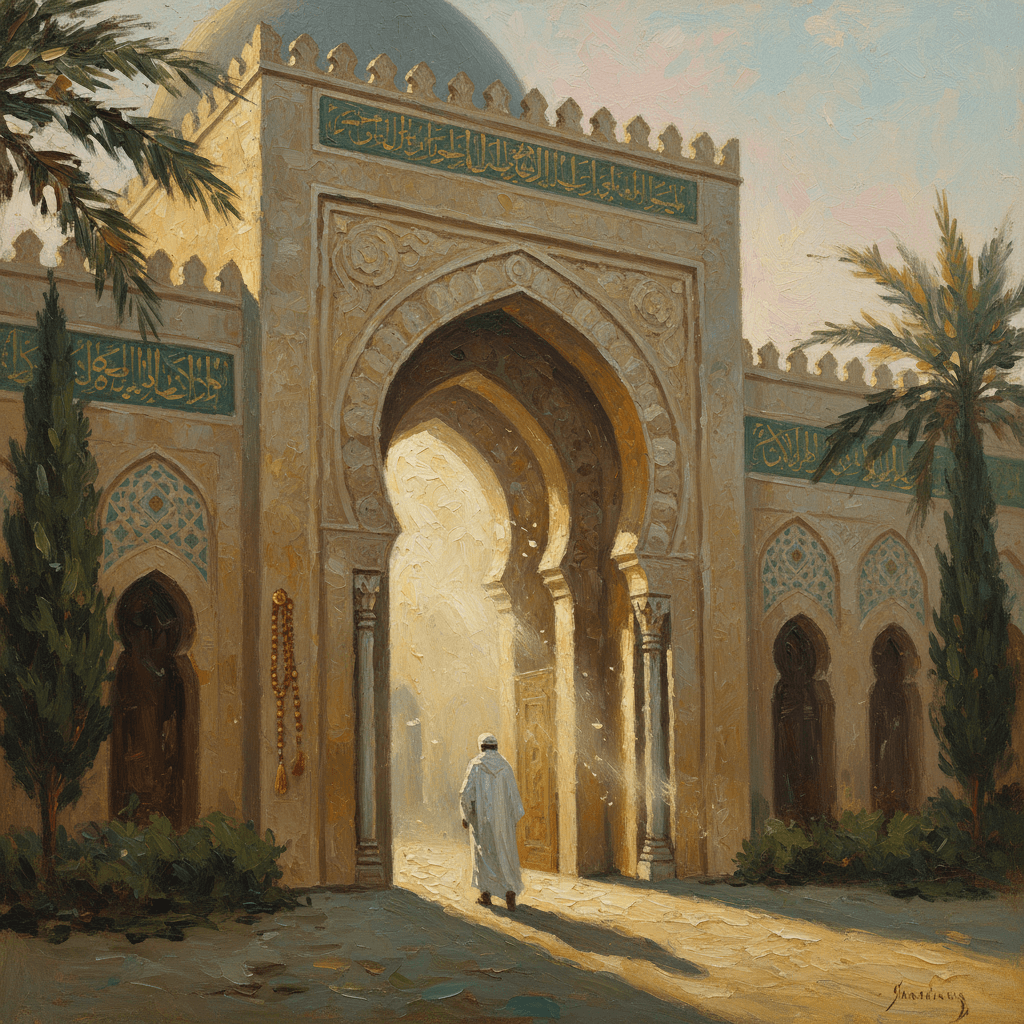
Everything you are holding onto right now — every possession, relationship, achievement, and role — has an expiration date.
This is not a sad thought. It is a precise one. And Islam does not ask you to be at peace with it through denial or distraction. It asks you to be at peace with it by understanding who is not temporary.
Al-Baqi — الباقي — is the one who remains when everything else is gone.
What Al-Baqi Means
الباقي — Al-Baqi — comes from the Arabic root b-q-y (بقي), which means to remain, to endure, to stay. The name in the context of Allah means The Everlasting or The Ever-Enduring — the One whose existence has no end.
Allah is Al-Awwal: He was before the first thing. He is Al-Akhir: He will be after the last thing. He is Al-Baqi: He endures through everything and beyond everything. Time is something Allah created, not something Allah is subject to.
The Quran states this contrast directly:
كُلُّ مَنْ عَلَيْهَا فَانٍ. وَيَبْقَىٰ وَجْهُ رَبِّكَ ذُو الْجَلَالِ وَالْإِكْرَامِ
Kullu man 'alayha fan. Wa yabqa wajhu rabbika dhul-jalali wal-ikram
"Every soul upon the earth will perish; and there will remain the Face of your Lord, Owner of Majesty and Honor."
— (Surah Ar-Rahman, 55:26-27)
Everything on earth — fading. Allah — remaining. The universe is not a permanent structure with temporary inhabitants. It is a temporary structure and only Allah is permanent.
This name appears alongside Dhul Jalali Wal Ikram — the Owner of Majesty and Honor. Al-Baqi is not simply "the thing that doesn't run out." He is the One who endures with majesty, with active presence, with care for what He created.
Why This Name Matters for Daily Life
Here is the practical problem: we live as if things are more permanent than they are.
We chase status that will be forgotten within a generation. We grieve the end of things as if permanence was our right. We attach our sense of security to jobs, people, and health — all of which are borrowed. The nafs treats these things as fixed points to orbit around, and then is shocked when they move.
Al-Baqi reminds you that there is only one fixed point. Everything else orbits around that fixed point, including you.
The Quran says:
مَا عِندَكُمْ يَنفَدُ ۖ وَمَا عِندَ اللَّهِ بَاقٍ
Ma 'indakum yanfadu wa ma 'indallahi baqin
"Whatever you have will end; what Allah has is lasting."
— (Surah An-Nahl, 16:96)
This is why the Companions were relatively undisturbed by loss. Not because they did not feel it — they did — but because they had correctly categorized everything in their lives as temporary from the start. Loss was the expected outcome. Baqa — permanence — was reserved for Allah alone.
Understanding this name sits alongside understanding taqwa — both are about calibrating your relationship to what is actually real versus what only seems real.
How to Reflect on Al-Baqi in Daily Practice
1. Notice what you treat as permanent
Spend one day noticing everything you feel anxious about losing: a friendship, a career opportunity, your reputation in someone's eyes, your health. For each one, acknowledge: ma 'indakum yanfadu — this will end. It was never permanent. Only Allah is permanent.
This is not nihilism. You can love and care for temporary things. But you can love them properly when you hold them properly — as gifts on loan rather than possessions you are owed.
2. Use Al-Baqi in dua
The Prophet ﷺ said that Allah's greatest name (Al-Ism Al-A'dham) — the name by which duas are most readily answered — is found in supplications that include the names of Allah. You can say:
يَا بَاقِي أَنْتَ الدَّائِمُ الْبَاقِي وَنَحْنُ الزَّائِلُونَ، فَاغْفِرْ لَنَا وَارْحَمْنَا
Ya Baqi, anta ad-da'imul-baqi wa nahnuz-za'ilun, faghfir lana warhamna
"O Everlasting, You are the Permanent Enduring and we are the perishing — so forgive us and have mercy on us."
The full guide to using the 99 names of Allah shows how these names function in spiritual practice. The asma ul husna benefits article covers the broader framework.
3. Shift where you invest your energy
Whatever you invest in Al-Baqi — in what is permanent — is safe. Deeds recorded by Allah last. Knowledge you spread that benefits others becomes sadaqah jariyah. Character built in this life shapes who you are in the next. Connection with Allah, built prayer by prayer and dua by dua, is the only investment that goes with you.
Whatever you invest only in what is faniy — perishing — stays here when you leave.
Build What Lasts — One Day at a Time
DeenBack helps you track the deeds that go with you — salah, dhikr, dua, and Quran — building the only investment portfolio that outlasts this dunya.


Free download. Premium features available in-app.
4. Find comfort in His permanence during your loss
When something precious ends — a relationship, a phase of life, a person — Al-Baqi is the anchor. The thing that ended was always going to end. But He who gave it to you has not ended. He is still here. He is still Al-Mujeeb — the Answerer of prayer. He is still Al-Wadud — the Loving. He is still Al-Baqi.
The dua for guidance is one way to stay connected to Al-Baqi even in moments of complete uncertainty. And the guide to finding contentment goes deeper into this practice.
Signs of Progress
You know this name is changing you when:
- Losses hurt but do not shatter you, because you knew they were temporary
- You find yourself making decisions based on what will last beyond this life
- Comparison with others becomes less compelling — why compete for what will vanish anyway
- Your dua becomes more consistent because you are talking to the One who does not go away
Common Questions
Is Al-Baqi one of the 99 names? Yes. Al-Baqi is counted among the Asma ul Husna — the Most Beautiful Names of Allah. Some classical scholars list it in their compilations while others list related names differently, but the attribute of eternal endurance is definitively established in the Quran and Sunnah.
Does Al-Baqi mean Allah will eventually end too, but much later? No. Baqa for Allah is without end — it is not "very long duration" but genuinely endless. He is beyond time, not at the far end of time. There is no "after" that does not include Him.
How is this different from Al-Hayy (The Ever-Living)? Al-Hayy (الحي) refers to Allah's perfect, self-sustaining life. Al-Baqi refers specifically to His persistence — His remaining after everything perishes. They describe related but distinct aspects of His existence. Together they establish that Allah is not just currently alive but permanently, endlessly alive.
Closing
Everything you are carrying today is temporary. The worry, the success, the loss, the joy — all of it is passing through.
What is not passing through is Al-Baqi — the One who was before your first breath and will be long after your last. Attaching yourself to Him — through dua, through salah, through building your character — is the only attachment that never becomes a loss.
Invest in What Remains
Use DeenBack to build daily habits that connect you to Al-Baqi — the only permanent reality — through consistent prayer, dhikr, and dua that outlast every fleeting dunya concern.
Free download. Premium features available in-app.
Frequently Asked Questions
What does Al-Baqi mean?
Al-Baqi (الباقي) means The Everlasting, The Ever-Enduring, or The Remaining. It refers to Allah's attribute of being eternal without end — while everything in creation has a fixed term and will perish, Allah alone endures forever. He was before everything and will remain after everything ceases.
Where does Al-Baqi appear in the Quran?
The root word of Al-Baqi — baqa — appears extensively in the Quran. Surah Ar-Rahman (55:26-27) contains the most direct contrast: 'Every soul upon the earth will perish; and there will remain the Face of your Lord.' The concept underlies the entire Quranic worldview that only Allah is permanent.
How is Al-Baqi different from Al-Awwal and Al-Akhir?
Al-Awwal (The First) means Allah existed before everything. Al-Akhir (The Last) means He will remain after everything ends. Al-Baqi means He is The Everlasting — continuously enduring through all of creation's existence and after its end. They are complementary names that together describe Allah's relationship with time.
How do I use Al-Baqi in dua?
You can say: Ya Baqi, thabbit qalbi — O Everlasting, make my heart firm. Or: Ya Baqi, anta al-baqi wa nahnu fani'un — O Everlasting, You are the Permanent and we are the perishing. Using the name in dua connects you to its meaning and builds awareness of your dependence on Allah.
What is the spiritual benefit of reflecting on Al-Baqi?
Reflecting on Al-Baqi naturally loosens your grip on things you cannot keep. When you know that only Allah is truly permanent, the things you are anxiously trying to hold onto — status, wealth, relationships, youth — are placed in proper perspective. This is not pessimism; it is the freedom that comes from attaching yourself to what is real.