
- Published on
What Is the Kaaba? The Sacred House at the Heart of Islam
- Authors

- Name
- Ahmad
- Role
- Senior Marketing Manager, Islamic education • Deen Back
بِسْمِ اللهِ الرَّحْمٰنِ الرَّحِيْمِ
In the name of God, the Most Gracious, the Most Merciful.
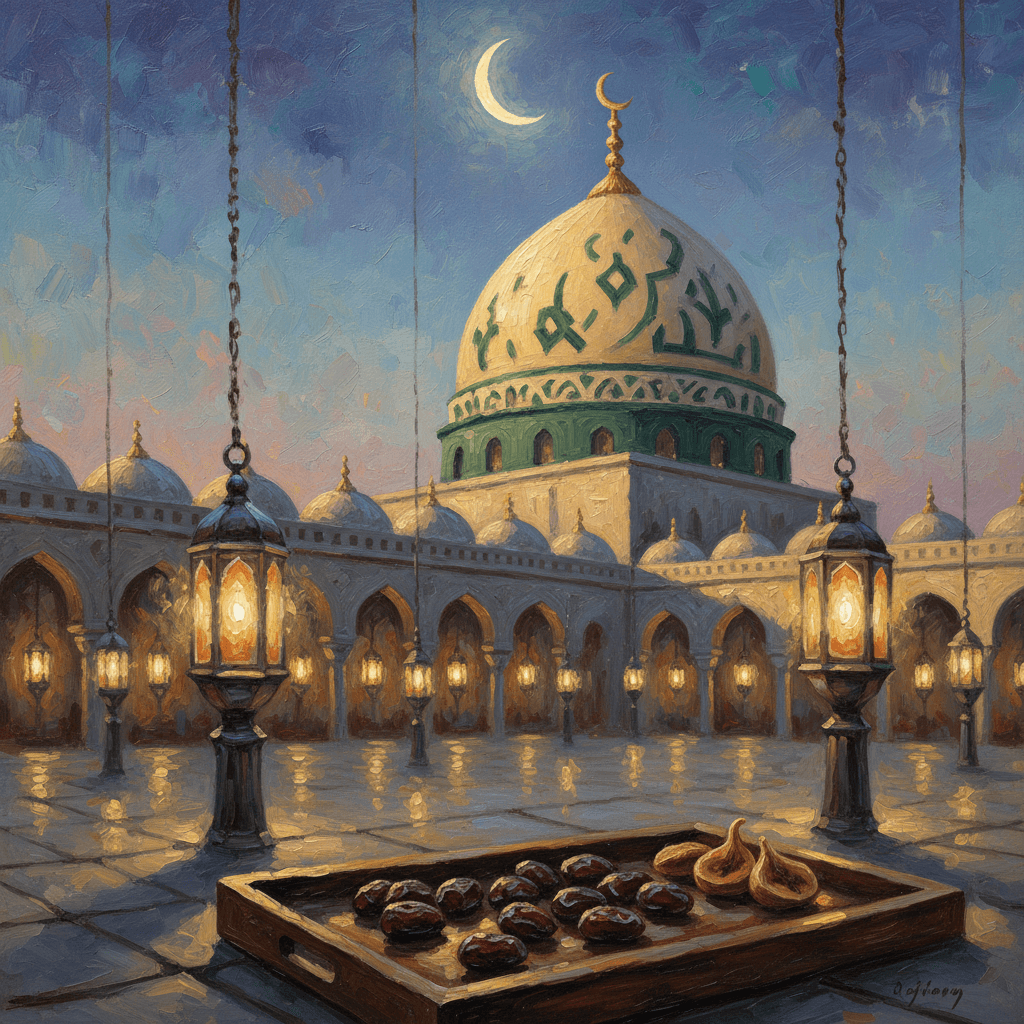
Every salah you pray, you turn toward it. Every Muslim on earth — north, south, east, west — orients themselves in its direction at the same five moments each day. During Hajj, millions of people walk around it in circles, tears on their faces, lips moving in dua.
The Kaaba is the physical center of Islamic worship. But do you know its actual story?
What the Kaaba Actually Is
الكعبة — Al-Ka'bah — literally means "cube" in Arabic. It is a nearly cubic stone structure standing approximately 13.1 meters tall, with a roughly 11 by 12-meter base. It sits in the center of Masjid al-Haram, the largest mosque in the world, in Makkah, Saudi Arabia.
The Kaaba is covered in black silk embroidered with gold thread — the Kiswah — which is replaced every year. The door is on the northeast side, about 2 meters above the ground. The interior is a chamber of marble floors and gold lamp fixtures, opened only a few times per year.
But its physical appearance tells only a fraction of its significance.
The Quran describes the Kaaba with a title that locates it within the entire history of human worship:
إِنَّ أَوَّلَ بَيْتٍ وُضِعَ لِلنَّاسِ لَلَّذِي بِبَكَّةَ مُبَارَكًا وَهُدًى لِّلْعَالَمِينَ
"Indeed, the first House established for the people is that at Makkah — blessed and a guidance for the worlds."
— (Surah Ali Imran, 3:96)
The first house. Not the first mosque in Islamic history — the first house of worship for all of humanity. The site predates Ibrahim, predates recorded human civilization.
The Story Behind It — Ibrahim and Ismail
The Kaaba as we know it was built — or rebuilt — by the Prophet Ibrahim and his son Ismail. This is recorded in the Quran:
وَإِذْ يَرْفَعُ إِبْرَاهِيمُ الْقَوَاعِدَ مِنَ الْبَيْتِ وَإِسْمَاعِيلُ رَبَّنَا تَقَبَّلْ مِنَّا إِنَّكَ أَنتَ السَّمِيعُ الْعَلِيمُ
"And when Ibrahim was raising the foundations of the House, and Ismail with him, [they prayed]: 'Our Lord, accept this from us. Indeed, You are the Hearing, the Knowing.'"
— (Surah Al-Baqarah, 2:127)
Father and son, building together, raising stones from the valley of Makkah, and making dua that their work would be accepted. That dua — made in the earliest foundations of the Kaaba — is one of the most moving scenes in the Quran.
After Ibrahim completed the structure, Allah commanded him to call all of humanity to pilgrimage:
وَأَذِّن فِي النَّاسِ بِالْحَجِّ يَأْتُوكَ رِجَالًا وَعَلَىٰ كُلِّ ضَامِرٍ يَأْتِينَ مِن كُلِّ فَجٍّ عَمِيقٍ
"And proclaim to the people the Hajj; they will come to you on foot and on every lean camel; they will come from every distant pass."
— (Surah Al-Hajj, 22:27)
Over time, the Kaaba was renovated multiple times. By the time of the Prophet Muhammad ﷺ, the Quraysh had rebuilt parts of it on a smaller foundation than Ibrahim's original structure. This is why there is a curved enclosure (Hateem) beside the Kaaba — the area that was part of Ibrahim's original Kaaba but was left outside the rebuilt structure. Pilgrims often pray inside the Hateem to connect with the original dimensions.
Why Modern Muslims Misunderstand the Kaaba
There is a persistent misunderstanding — both among some non-Muslims and, frankly, some Muslims who have not thought it through — that Muslims worship the Kaaba.
This is wrong, and understanding why it is wrong is important for your own clarity and for your ability to explain your faith.
Umar ibn al-Khattab, the second Caliph, made this explicit when he walked up to kiss the Black Stone during tawaf:
"I know that you are only a stone that can neither benefit nor harm. Had I not seen the Prophet kiss you, I would not have kissed you."
— (Bukhari 1597)
This statement, preserved in Bukhari, is the most direct refutation of the idea that Muslims revere the Kaaba as a divine object. We face it because Allah commanded it. We circle it because the Prophet demonstrated it. We kiss the Black Stone because the Prophet kissed it. These are all acts of obedience to Allah — the Kaaba is the means, not the destination.
What the Kaaba IS is the focal point of the ummah's worship — a unifying direction that has pointed every Muslim heart toward the same location for fourteen centuries. And understanding the Kaaba's actual nature protects a Muslim from the kind of thinking that slides toward shirk — associating partners with Allah or attributing divine power to objects.
How to Practice This Daily
1. Pray With the Kaaba in Mind
When you face the qibla for salah, occasionally pause before saying the opening takbir and actually think: you are facing the first house established for the worship of Allah. Ibrahim built it. The Prophet purified it. Millions of people are facing it simultaneously right now.
This is not a daily contemplation requirement — it is an occasional anchor that transforms routine prayer into something more.
2. Make Dua to Visit
The Prophet ﷺ is reported to have said that Hajj is incumbent on whoever is able — and the desire to visit is the beginning of ability. Make it a regular dua:
اللَّهُمَّ ارْزُقْنِي زِيَارَةَ بَيْتِكَ الْحَرَامِ
Allahumma arzuqni ziyarata baytikal-haram
"O Allah, grant me a visit to Your Sacred House."
Keep learning about Hajj and Umrah so that when the opportunity comes, you are prepared. The Kaaba should be a goal you actively work toward, not a distant concept.
Make the Sacred a Daily Habit
DeenBack helps you build the daily spiritual practices — dua, dhikr, consistent prayer — that prepare your heart for the journey to the Sacred House.


Free download. Premium features available in-app.
3. Understand Tawaf — Circumambulating the Kaaba
During Hajj and Umrah, Muslims perform tawaf — walking around the Kaaba seven times in a counterclockwise direction. This act of worship was also performed by the Prophet, the Companions, and by thousands of years of pilgrims before them.
Tawaf is not worship of the structure. It is worship performed in the direction of and around the structure — like salah is worship performed toward it. The distinction matters. You are worshipping Allah while using the Kaaba as a focal point of orientation.
4. Let the Kaaba Be a Source of Tawakkul
One of the most moving realities about the Kaaba is that it has survived intact through centuries of conflict, drought, flood, political upheaval, and war. The Kaaba was not destroyed when armies surrounded Makkah. It was not erased when rulers tried to alter its history.
For a Muslim struggling with uncertainty about the future, this history is a statement of tawakkul: what Allah protects endures. What He has placed at the center of Muslim worship will remain there until the Day of Judgment. This is a source of confidence and peace, not just historical trivia.
Signs of Progress
You know the Kaaba has moved from abstract knowledge to living meaning when:
- You find yourself making dua to visit it with genuine longing, not just a vague "one day"
- Prayer feels slightly different since you started thinking consciously about what direction you face
- You can explain clearly to someone what the Kaaba is — and what it is not
- The idea of Hajj no longer feels foreign or far away; it feels like something you are actively preparing for, spiritually and practically
Common Questions
Is the Kaaba always in the same place?
Yes. The Kaaba has stood in the same location in Makkah since Ibrahim and Ismail built it. The surrounding structure — Masjid al-Haram — has been expanded many times to accommodate the growing number of pilgrims, but the Kaaba itself remains in its original location.
What is inside the Kaaba?
The interior contains marble floors, three pillars, incense burners, gold lamps, and verses from the Quran. The door is made of gold-plated material. Non-Muslims are not permitted inside Masjid al-Haram, and only very few individuals enter the interior of the Kaaba — usually for cleaning and maintenance.
Why is the Kaaba covered in black cloth?
The black Kiswah has been the standard since at least the Abbasid period. Before that, various colors were used. Black conveys dignity and solemnity in Arab tradition. The verses embroidered in gold serve as a continuous recitation of Allah's words surrounding the sacred house.
Can a Muslim face any direction and pray if the Kaaba's direction is genuinely unknown?
The scholars say yes — when the direction of Makkah is genuinely impossible to determine (e.g., you are at sea with no instruments, no stars, and no landmarks), you face your best estimate and pray. The prayer is valid. Allah does not burden a soul beyond what it can bear.
Closing — Face It. Love It. Visit It.
The Kaaba is where Islamic history converges — Ibrahim's prayer, the Prophet's purification, millions of pilgrims across the centuries, and every Muslim who has faced its direction in prayer since the day it was established as the qibla.
You face it every day. You just needed to know the full story of what you are facing.
Build the Daily Habits That Lead to Hajj
DeenBack helps you stay consistent in worship, build your dua practice, and prepare your heart for the journey to the House of Allah — one day at a time.
Free download. Premium features available in-app.
Frequently Asked Questions
What is the Kaaba in Islam?
The Kaaba (الكعبة) is a cubic stone structure located in the courtyard of Masjid al-Haram in Makkah, Saudi Arabia. It is the most sacred site in Islam — described in the Quran as the first house established for humanity's worship of Allah. Muslims face it during prayer (the qibla) and circumambulate around it (tawaf) during Hajj and Umrah.
Who built the Kaaba?
The Quran states that Ibrahim (Abraham) and his son Ismail (Ishmael) built the Kaaba, or rebuilt it, on an original sacred site established before them. The Quran records this construction in Surah Al-Baqarah 2:127: 'And when Ibrahim was raising the foundations of the House and Ismail with him.' The structure has been rebuilt, renovated, and maintained multiple times since.
Do Muslims worship the Kaaba?
No. Muslims do not worship the Kaaba — they worship Allah, the Creator. The Kaaba is the direction of prayer (qibla) and the focal point of circumambulation during Hajj — it is a means of unified focus and worship, not an object of worship. Umar ibn al-Khattab said to the Black Stone: 'I know that you are only a stone that can neither benefit nor harm. Had I not seen the Prophet kiss you, I would not have kissed you.' (Bukhari 1597)
What is the Black Stone in the Kaaba?
Al-Hajar al-Aswad (the Black Stone) is embedded in the eastern corner of the Kaaba, about 1.5 meters from the ground. It is touched or kissed by pilgrims as they begin each circuit of tawaf, following the Prophet's Sunnah. Its origin is debated — some hadith describe it as having descended from paradise. The stone is not worshipped; touching it is an act of following the Prophet's example.
What is the Kiswah — the black cloth covering the Kaaba?
The Kiswah is the black cloth that covers the Kaaba, embroidered with Quranic verses in gold thread. A new Kiswah is made every year in Saudi Arabia and replaced on the 9th of Dhul Hijjah (Arafah day). The cloth is made of silk and cotton. Pieces of old Kiswah are sometimes given as gifts to dignitaries.