
- Published on
What Is the Barzakh — The Realm Between Death and Resurrection
- Authors

- Name
- Ahmad
- Role
- Senior Marketing Manager, Islamic education • Deen Back
بِسْمِ اللهِ الرَّحْمٰنِ الرَّحِيْمِ
In the name of God, the Most Gracious, the Most Merciful.
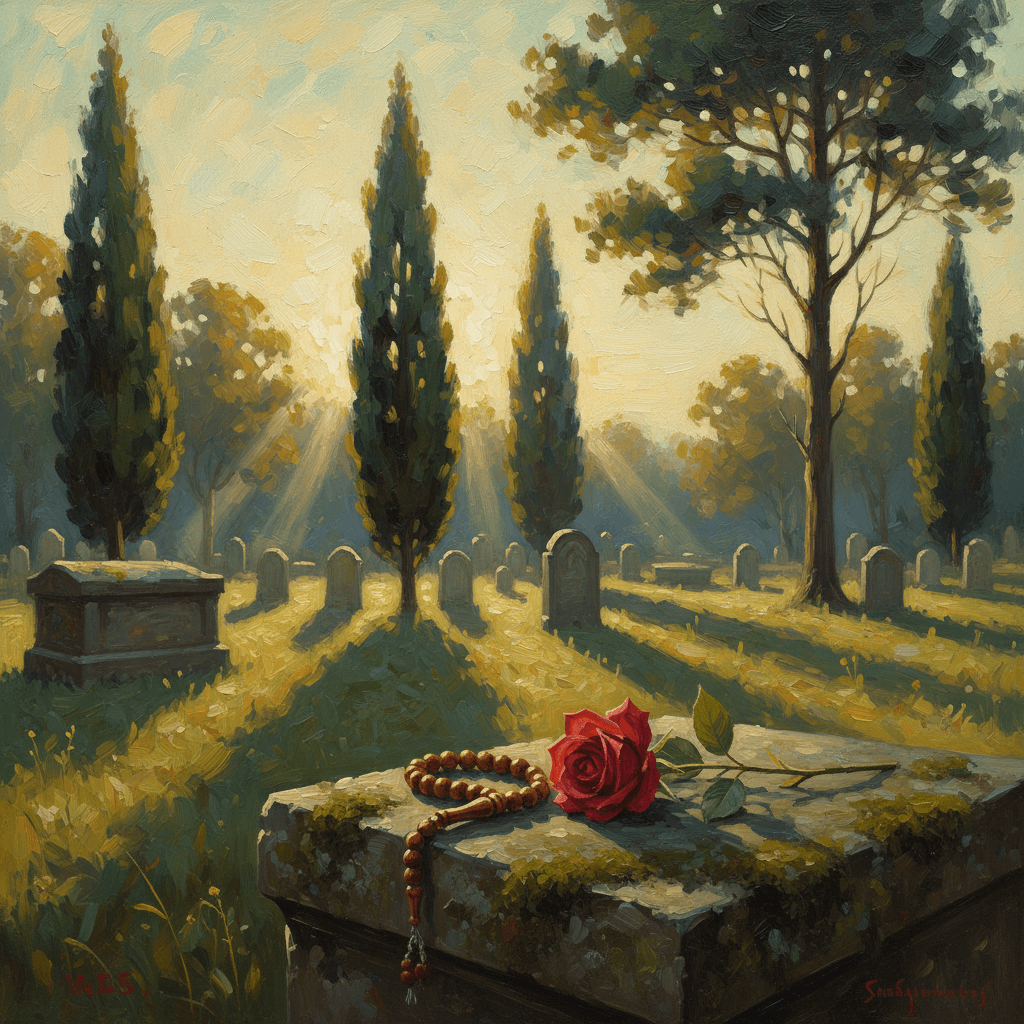
Have you ever wondered what happens the moment after the burial ends? The family walks away. The last handful of soil settles. And then — what?
Most Muslims can talk about Jannah, Jahannam, and the Day of Judgment. But the long stretch between the closing of the grave and the blowing of the trumpet — a period that could last centuries — barely enters the conversation.
That period has a name. It is called the barzakh. And what the Quran and Sunnah say about it is not abstract theology. It is a lens that, if you take it seriously, quietly reorganizes how you spend your days.
What the Barzakh Actually Is
The word barzakh (بَرْزَخ) in Arabic literally means a barrier or partition — something that stands between two things and keeps them separate. In the Quran, it is used to describe the barrier between fresh and salt water that do not mix, and it is used for the state the soul enters after death.
The clearest reference is in Surah Al-Mu'minun:
وَمِن وَرَائِهِم بَرْزَخٌ إِلَىٰ يَوْمِ يُبْعَثُونَ
Wa min wara'ihim barzakhun ila yawmi yub'athun.
"And behind them is a barrier until the Day they are resurrected." — (Quran 23:100)
This verse comes at the end of a passage about people who, at the moment of death, beg to be sent back to fix what they wasted. Allah answers with a wall. There is no going back. What lies ahead is the barzakh — a real, conscious state that continues until resurrection.
The barzakh is not annihilation. The soul does not blink out of existence. It is also not the final Paradise or the final Fire — those come after the Day of Judgment. The barzakh is an in-between realm where the soul experiences something of what is coming while the world it left keeps turning without it.
Ibn al-Qayyim and other scholars stress that the barzakh is closer to us than we imagine. It begins the moment the soul leaves the body. One breath you are here. The next, you are there.
What Islamic Sources Say Happens
The traditions describing the barzakh are detailed and consistent. Two angels, Munkar and Nakir, come to the soul in the grave and ask three questions: Who is your Lord? What is your religion? Who is your Prophet?
The believer answers with certainty: My Lord is Allah, my religion is Islam, my Prophet is Muhammad. The hypocrite or disbeliever mumbles, I do not know — I heard people saying something so I said it too. (Sunan Abi Dawud 4753)
For the believer, a caller from the heavens announces: Furnish him from Paradise, clothe him from Paradise, and open for him a door to Paradise. The grave is expanded as far as the eye can see, and the person's own good deeds appear as a beautiful figure that sits with him. For the one who denied, the grave constricts until his ribs interlock, and a door to the Fire is opened. The deceased is shown their future dwelling morning and evening. (Sahih al-Bukhari 1379)
Scholars often connect the barzakh to the world of dreams. In sleep, the soul is partially detached — you feel joy, fear, pain, and comfort without a body moving. The barzakh works on that same order of reality, only with far greater clarity. What happens there is not less real than what happens here. If anything, it is more.
Why Modern Muslims Struggle to Take This Seriously
The problem is not disbelief. Most Muslims nod when the barzakh is mentioned and move on. The problem is that dunya is loud, and the barzakh is silent.
You wake up to notifications. You spend twelve hours reacting to work, messages, prices, news. You end the day tired and scroll something to numb yourself before sleep. In that entire cycle, nothing forces you to think about your soul standing before two angels one day.
The scientific worldview we all breathe in makes the unseen feel abstract — even for people who believe in it. If you cannot measure it, it feels like poetry. And the nafs prefers what it can touch, taste, and buy. Out of sight, out of mind is the operating system of a distracted heart. A believer who never thinks about death does not disbelieve in it. They just live as if it is not coming.
Keep the Barzakh in View, Every Day
DeenBack helps you build small daily habits — muhasabah, istighfar, Surah Al-Mulk before sleep — that keep the reality of the grave close without letting it overwhelm you.


Free download. Premium features available in-app.
How the Barzakh Should Change Your Daily Life
Belief in the barzakh is not meant to make you anxious. It is meant to make you deliberate. Here is what that looks like in practice.
Daily muhasabah. Before sleep, take two minutes and honestly review the day. What would you want on your record when the angels ask? What would you not? This is the practice Umar ibn al-Khattab (may Allah be pleased with him) is famous for — hold yourselves to account before you are held to account.
Regular istighfar. The Prophet (peace be upon him) sought forgiveness more than seventy times a day, despite being forgiven. Istighfar is the reset button for the soul, and one of the acts most explicitly tied to easing the grave. If you carry major sins that still weigh on you, begin the return through sincere repentance.
Prepare sadaqah jariyah. Ongoing charity — a well, a masjid contribution, a book, a scholarship — continues to earn for you after you can no longer earn for yourself. Even a small automated monthly donation counts.
Teach beneficial knowledge. A child you raised on Quran and character becomes a continuous source of reward. So is sharing knowledge with anyone — a colleague, a friend, a stranger online — who benefits from it after you.
Visit the graves. The Prophet (peace be upon him) commanded regular grave visits because they soften the heart in a way nothing else does. Learn the greeting and the dua for the graveyard, and make it a monthly habit. If your parents have passed, make time for the specific dua for deceased parents.
Recite Surah Al-Mulk before sleep. The Prophet (peace be upon him) said this surah intercedes for its reciter until they are forgiven. It has been called al-Munjiyah — the Rescuer — because of its protection from the punishment of the grave. Learn the sunnah of reciting Surah Al-Mulk before sleeping.
Ask for a good ending. The Prophet (peace be upon him) taught duas specifically for dying upon la ilaha illa Allah. Add the dua for a good death to your regular supplications.
The Prophet (peace be upon him) also named the three things that keep working for a person after they die:
إِذَا مَاتَ الإِنْسَانُ انْقَطَعَ عَنْهُ عَمَلُهُ إِلَّا مِنْ ثَلاَثَةٍ: صَدَقَةٍ جَارِيَةٍ، أَوْ عِلْمٍ يُنْتَفَعُ بِهِ، أَوْ وَلَدٍ صَالِحٍ يَدْعُو لَهُ
Idha mata al-insanu inqata'a 'anhu 'amaluhu illa min thalathah: sadaqatin jariyah, aw 'ilmin yuntafa'u bih, aw waladin salihin yad'u lah.
"When a person dies, all his deeds cease except three: ongoing charity, beneficial knowledge, or a righteous child who prays for him." — (Sahih Muslim 1631)
Every one of these is something you can begin building today.
Common Questions
Does the deceased hear us?
The Prophet (peace be upon him) said the person in the grave hears the footsteps of those who buried him as they walk away. Beyond that moment, scholars differ, but the majority hold that the deceased is aware of visitors and duas by Allah's permission.
Can duas from the living reach them?
Yes. Sincere dua for forgiveness and mercy is one of the greatest gifts you can give a Muslim who has died. Make it a habit for parents, teachers, and anyone whose good you carry.
What about people who die in accidents or at sea?
The barzakh is about the soul, not the body. Allah reaches every soul wherever it ends up. The circumstances of death do not change what happens after it.
Is the punishment of the grave literal?
It is real, and described in terms we can partly grasp — constriction, heat, darkness — but it operates on the order of the unseen. The Prophet (peace be upon him) sought refuge from it in every prayer.
Can we dedicate the reward of Quran recitation to the deceased?
The majority of scholars permit this. Dua, sadaqah, and Hajj on their behalf are agreed upon. The dead cannot earn any more, but you can earn for them.
Live With the Grave in View
Living with the barzakh in view is not about being afraid of death. It is about being clear-eyed about where you are going, and letting that clarity shape a life you would be glad to hand in.
The people who lived most fully in this world were the ones who never forgot they were leaving it. They gave more freely because they knew wealth was not theirs to keep. They repented more quickly because they knew the door does not stay open forever.
The barzakh is not something that might happen. It is something you are walking toward every day. Let that make you gentler, more generous, and more deliberate — starting tonight.
Build the Habits Your Future Self Will Thank You For
DeenBack helps you turn remembrance of the akhirah into daily actions — dhikr, istighfar, Surah Al-Mulk, and self-accounting — so the barzakh finds you prepared.
Free download. Premium features available in-app.
Frequently Asked Questions
Does the deceased hear us when we speak or make dua at their grave?
The Prophet (peace be upon him) said that when a person is buried and their companions leave, they hear the sound of the sandals as they walk away (Bukhari 1338). Scholars differ on whether the deceased hears every visitor, but there is broad agreement that dua for the deceased reaches them and benefits them. Speak to them with the greeting the Prophet taught, and then speak to Allah about them.
Can the duas of the living reach someone who has already died?
Yes. This is one of the clearest gifts a living Muslim can give the dead. Sincere dua for forgiveness, mercy, and expansion of the grave reaches the deceased by Allah's permission. The Prophet (peace be upon him) mentioned that a righteous child who prays for their parent is one of the three things that continues to benefit them after death (Sahih Muslim 1631).
What happens to people who die in accidents, drowning, or whose bodies are lost?
The barzakh is a matter of the soul, not the physical body. Allah gathers, questions, and either comforts or holds accountable every soul regardless of what happens to the body — whether it was buried, burned, lost at sea, or never recovered. Nothing about the circumstances of death exempts a person from the barzakh, and nothing prevents Allah from reaching them there.
Is the punishment of the grave literal or symbolic?
Ahl al-Sunnah affirm that the punishment and comfort of the grave are real, though they occur in a realm we cannot fully perceive. It is not merely symbolic. The Prophet (peace be upon him) sought refuge from the punishment of the grave in his daily prayers, which shows how real he treated it. What it feels like is not identical to physical pain in this world — it is of a different order — but it is not imaginary.
Can we send the reward of Quran recitation to a deceased relative?
The majority of scholars in the Hanafi, Maliki, and Hanbali schools permit dedicating the reward of good deeds — including Quran recitation, sadaqah, and Hajj — to a deceased Muslim. Even scholars who are more cautious about recitation agree unanimously that dua and sadaqah on behalf of the dead reach them. The safest and most beneficial acts remain sincere dua and ongoing charity in their name.