
- Published on
What Is Laylatul Qadr — The Night That Changes Everything
- Authors

- Name
- Ahmad
- Role
- Senior Marketing Manager, Islamic education • Deen Back
بِسْمِ اللهِ الرَّحْمٰنِ الرَّحِيْمِ
In the name of God, the Most Gracious, the Most Merciful.
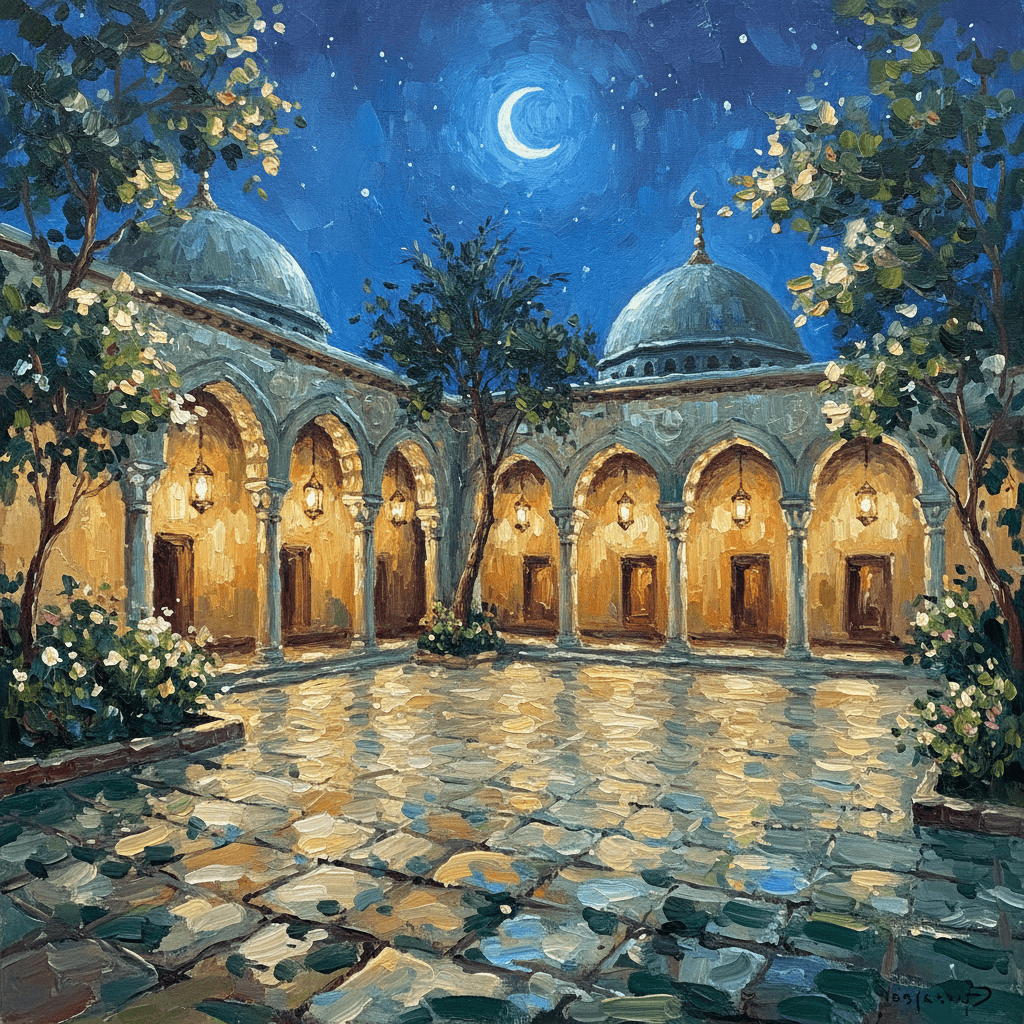
There is a night in Ramadan that could change everything. Not metaphorically — literally. A single night of sincere worship on Laylatul Qadr carries a reward greater than eighty-three years of unbroken worship. Most of us will live for less than that.
And yet, for many Muslims, it passes without them realising what it was.
Understanding what Laylatul Qadr actually is — not just in theory, but in a way that changes how you prepare and how you show up — is one of the most important investments you can make as a Muslim seeking to grow.
What It Actually Means
Laylatul Qadr (لَيْلَةُ الْقَدْرِ) translates as "the Night of Power" or "the Night of Decree." Both meanings are accurate.
It is the night on which the Quran was first revealed — not just a single verse, but the beginning of the divine communication that would continue for twenty-three years. It is also the night on which Allah decrees the affairs of creation for the coming year: provisions, births, deaths, and events are all written on this night.
Allah devoted an entire surah to this night:
إِنَّا أَنزَلْنَاهُ فِي لَيْلَةِ الْقَدْرِ وَمَا أَدْرَاكَ مَا لَيْلَةُ الْقَدْرِ لَيْلَةُ الْقَدْرِ خَيْرٌ مِّنْ أَلْفِ شَهْرٍ
"Indeed, We sent it down during the Night of Decree. And what can make you know what is the Night of Decree? The Night of Decree is better than a thousand months." — (Surah Al-Qadr, 97:1-3)
A thousand months is approximately eighty-three years. If you worship on Laylatul Qadr, the reward of that single night exceeds what most people could accumulate in an entire lifetime of worship.
The angels descend on this night. Peace — salam — prevails until the break of dawn. The gates of mercy are wide open.
Why Modern Muslims Struggle With This
Here is the honest challenge: Laylatul Qadr falls in the last ten nights of Ramadan — which coincide with the last ten days of a month that has already been physically and spiritually demanding.
By the time the last ten nights arrive, many Muslims are exhausted. Ramadan has been a marathon of early mornings for suhoor, long fasts, nightly tarawih prayers, and the accumulated weight of a month of discipline. The nafs says: you have done enough. You deserve rest. You can catch it next year.
This is exactly what the nafs does — it offers you rest precisely when the reward is greatest.
The other challenge is uncertainty. The Prophet ﷺ did not reveal which specific night it falls on, which means you cannot simply mark your calendar for the 27th and coast through the rest. The wisdom in this is profound: uncertainty forces engagement. You cannot opt in for one night and opt out for the others.
Modern life compounds this. Work does not stop for Ramadan. Children do not sleep early because it is the last ten nights. The social pressure to attend family events does not pause. The struggle to carve out real time for worship in the last ten nights is genuine — not a sign of weak faith, but a challenge that every serious Muslim faces.
How to Prepare and Practice Daily
Start with intention before Ramadan
The last ten nights do not arrive in isolation. They are the culmination of the month. Muslims who have been consistent in salah, dhikr, and Quran throughout Ramadan find the last ten nights far more accessible spiritually. The person who has been coasting finds it almost impossible to suddenly shift into deep worship mode.
Make the intention before Ramadan begins: "I will use this Ramadan to build real habits, so that the last ten nights are not a shock to my system."
Protect your sleep schedule in the final ten days
This is practical and often ignored. If you are going to pray qiyam al-layl (night prayer) every night in the last ten days, you need to sleep early. Cut social engagements. Skip the post-tarawih gatherings. Protect your energy for the part of the night when it matters most.
Make the specific dua for Laylatul Qadr
Aisha (may Allah be pleased with her) asked the Prophet ﷺ: "If I know which night is Laylatul Qadr, what should I say?" He taught her:
اللَّهُمَّ إِنَّكَ عَفُوٌّ تُحِبُّ الْعَفْوَ فَاعْفُ عَنِّي
"Allahumma innaka afuwwun tuhibbul afwa fa'fu anni"
"O Allah, You are the Pardoner and You love to pardon, so pardon me." — (Tirmidhi 3513)
Say this dua repeatedly throughout the night — especially in sujood, between the adhan and iqamah, and in the last third of the night.
Seek it every night, not just the 27th
The popular focus on the 27th night is understandable — many scholars consider it the most likely night — but it carries a risk. If you rest on the 26th and 28th, you might miss it entirely. The Prophet said: "Seek Laylatul Qadr in the last ten nights of Ramadan." (Sahih al-Bukhari 2020) All ten nights, not just one.
For the signs to watch for and how to identify the night, see our guide on how to spot Laylatul Qadr.
Set up your environment
Clear your room of distractions. Log off social media the night before. Have your Quran open, your prayer mat clean, your dhikr ready. Make the physical environment support the spiritual work.
Track your last ten nights and build toward Laylatul Qadr
Deen Back helps you maintain your Quran, dhikr, and dua streaks through the final stretch of Ramadan so you arrive at the last ten nights ready.


Free download. Premium features available in-app.
Signs of Progress
You will know that Laylatul Qadr awareness is changing you when:
- You begin making changes earlier in Ramadan, not just scrambling in the last ten nights
- The quality of your dhikr and dua deepens — not just in quantity but in presence and sincerity
- You feel a genuine hunger for the night rather than just obligation
- Small daily worship habits become easier to maintain, because your relationship with Allah is warmer
Real spiritual progress is subtle. It is not always a dramatic experience on the night itself. Sometimes it is simply that you showed up, consistently, when your nafs told you to rest.
Common Questions
Do I have to stay up all night on Laylatul Qadr?
No — and attempting to stay up all night when you are not prepared can backfire, leaving you exhausted and spiritually unfocused. The Prophet would revive the last ten nights but he also slept. The goal is quality worship, not a sleep-deprivation contest. Even two focused hours of qiyam, dua, and Quran on each of the last ten nights is more valuable than an unfocused all-nighter.
What if I have to work the next morning?
Plan around it. Sleep early, pray qiyam in the middle of the night (the Prophet's preferred time for tahajjud), then sleep again before work. Use vacation days if you have them. The sacrifice is real — but so is the reward. For more on making tahajjud a consistent habit, see how to make tahajjud a habit.
Is there a sign that I was present on Laylatul Qadr?
Many scholars note that you may feel an unusual peace or lightness in your heart. Some report their duas on that night having a different quality — more focused, more tearful, more present. But there is no guaranteed external sign, and chasing signs can distract from the worship itself. See our guide on Laylatul Qadr signs for a fuller discussion.
What happens to my decree if I miss Laylatul Qadr?
Your decree is written by Allah regardless of your worship on that night. Missing the night does not mean your life is cursed. But maximising your worship on Laylatul Qadr is an opportunity to place yourself in the stream of Allah's mercy and decree in a way that nothing else can replicate.
Closing
Laylatul Qadr is not just a night to chase. It is a goal that reshapes the entire month of Ramadan and, when taken seriously, reshapes you. The Muslim who genuinely prepares for these ten nights — through consistent daily habits, a protected sleep schedule, sincere dua, and the specific supplication the Prophet taught — is not just hoping for a reward. They are actively placing themselves in the way of Allah's mercy.
Use the signs guide at when is Laylatul Qadr to understand the timing better. Then stop waiting and start preparing — tonight.
Build the daily Ramadan habits that lead to Laylatul Qadr
Deen Back helps you maintain consistency with dhikr, Quran, and dua throughout Ramadan — so the last ten nights are a crescendo, not a sprint from zero.
Free download. Premium features available in-app.
Frequently Asked Questions
What is Laylatul Qadr and why is it so important?
Laylatul Qadr — the Night of Power or Night of Decree — is described in the Quran as better than a thousand months (approximately 83 years) of worship. It is the night on which the Quran was first revealed, and the night on which Allah decrees the affairs of creation for the coming year. Worship on this night carries the reward of more than 80 years of continuous worship.
When exactly is Laylatul Qadr?
Laylatul Qadr falls in the last ten nights of Ramadan, most likely on one of the odd-numbered nights — 21st, 23rd, 25th, 27th, or 29th. The Prophet did not give a fixed date, and scholars consider this a mercy — so that Muslims would seek it throughout the last ten nights rather than being complacent on other nights.
What should I do on Laylatul Qadr?
Increase every form of worship: Quran recitation, qiyam ul-layl (night prayer), dhikr, sadaqah, istighfar, and especially dua. The Prophet taught a specific dua for Laylatul Qadr: Allahumma innaka afuwwun tuhibbul afwa fa'fu anni (O Allah, You are the Pardoner and You love to pardon, so pardon me). Seeking forgiveness and making heartfelt dua are the most emphasized acts.
What dua should I recite on Laylatul Qadr?
Aisha (may Allah be pleased with her) asked the Prophet what dua to make if she recognised Laylatul Qadr. He taught her: Allahumma innaka afuwwun tuhibbul afwa fa'fu anni — O Allah, You are the Pardoner who loves to pardon, so pardon me. This dua combines humility, trust in Allah's mercy, and a specific request — making it perfect for this night.
What are the signs of Laylatul Qadr?
Scholars have noted several signs: the night feels peaceful and serene; the temperature is mild — not too hot or cold; the sun rises the following morning without strong rays (described as white and without sharp light). None of these signs are certain indicators, but they are consistent with prophetic descriptions. The best approach is to seek the night through worship, not through sign-watching.