
- Published on
What Is Eid Al-Adha? The Festival of Sacrifice Explained
- Authors

- Name
- Ahmad
- Role
- Senior Marketing Manager, Islamic education • Deen Back
بِسْمِ اللهِ الرَّحْمٰنِ الرَّحِيْمِ
In the name of God, the Most Gracious, the Most Merciful.
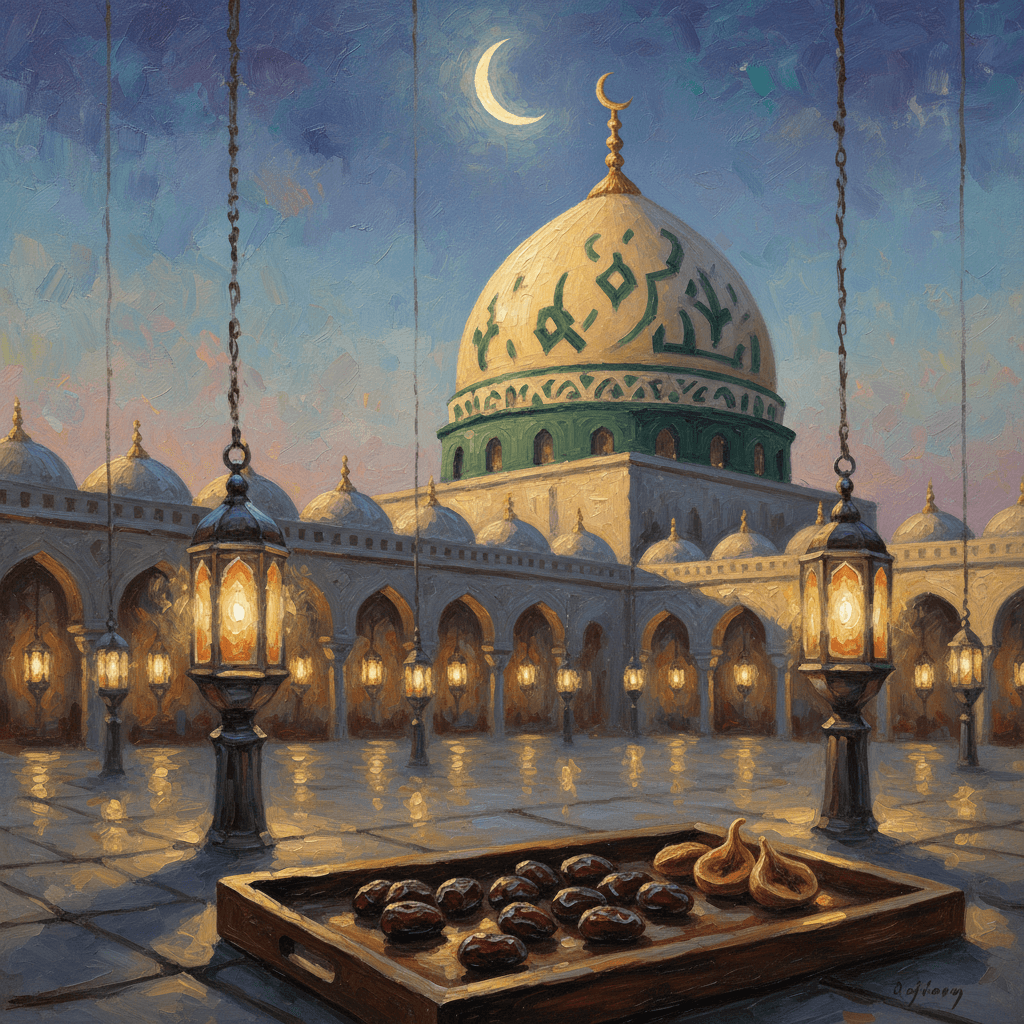
Once a year, Muslims around the world wake up before dawn, put on their best clothes, and gather in open fields and mosques to say Allahu Akbar. Children hold their parents' hands. Old men who have not seen each other in years embrace. The smell of food fills homes.
This is Eid Al-Adha. But for many Muslims — especially converts or those who grew up without much Islamic education — the deeper meaning gets lost in the celebration. What exactly are we commemorating? And why does it involve an animal sacrifice?
The answers take you straight to the heart of what it means to be a Muslim.
What Eid Al-Adha Commemorates
Eid Al-Adha (عيدُ الأضحى) means the Festival of Sacrifice. It falls on the 10th of Dhul Hijjah — the last month of the Islamic calendar — and commemorates one of the most profound moments in prophetic history.
Allah tested Prophet Ibrahim (peace be upon him) — the father of monotheism, the close friend of Allah (Khalilullah) — with the greatest imaginable test: a command to sacrifice his own son, Ismail (peace be upon him).
Ibrahim obeyed. Without hesitation, without bargaining, without making excuses. He told his son, who also submitted willingly:
قَالَ يَا بُنَيَّ إِنِّي أَرَى فِي الْمَنَامِ أَنِّي أَذْبَحُكَ فَانظُرْ مَاذَا تَرَى قَالَ يَا أَبَتِ افْعَلْ مَا تُؤْمَرُ سَتَجِدُنِي إِن شَاءَ اللَّهُ مِنَ الصَّابِرِينَ
Qala ya bunayya inni ara fi al-manami anni adhabuhuka fanzur matha tara. Qala ya abati if'al ma tu'mar, satajiduni in sha'a Allahu min al-sabirin.
"He said: 'O my son, I have seen in a dream that I am sacrificing you, so look what you think.' He said: 'O my father, do what you are commanded. You will find me, if Allah wills, of the patient.'" — (Surah As-Saffat, 37:102)
When Ibrahim and Ismail both submitted — the knife poised — Allah intervened. He sent a ram to be sacrificed in Ismail's place and declared that Ibrahim had fulfilled the vision:
"Indeed, this was the clear trial." (Surah As-Saffat, 37:106)
This moment — the ultimate submission of a father and son to Allah's will — is what every Muslim commemorates on Eid Al-Adha.
The Three Pillars of Eid Al-Adha
1. Eid Prayer
The day begins with a congregational prayer (salat al-Eid) performed in an open field or mosque after sunrise. It has no adhan. It consists of two rakats with extra takbiraat (additional "Allahu Akbars"). The imam delivers a khutbah (sermon) afterward.
Attending Eid prayer is considered an emphasized sunnah — or by some scholars, a communal obligation. The Prophet (peace be upon him) specifically instructed that women, children, and the elderly should all attend.
2. Qurbani (The Animal Sacrifice)
Qurbani (قُرْبَانِي) — or udhiyyah in Arabic — is the act of sacrificing a halal animal (sheep, goat, cow, or camel) in remembrance of Ibrahim's sacrifice. One-third of the meat goes to your family, one-third to neighbors and friends, and one-third to those in need.
The Prophet (peace be upon him) said: "There is nothing dearer to Allah during the days of sacrifice than the sacrificing of animals. The sacrificed animal shall come on the Day of Resurrection with its horns, hair, and hooves. The blood reaches Allah before it falls on the ground. So make yourselves purified therewith." (Tirmidhi 1493)
Qurbani is not about the blood or the animal itself. It is about the sincere intention behind the act — as Allah says: "Their meat will not reach Allah, nor will their blood, but what reaches Him is piety from you." (Surah Al-Hajj, 22:37)
3. Takbeer and Celebration
From the Fajr of the Day of Arafah (9th Dhul Hijjah) through the 13th of Dhul Hijjah, Muslims say the takbeer al-tashriq after each fard prayer:
اللَّهُ أَكْبَرُ اللَّهُ أَكْبَرُ لَا إِلَهَ إِلَّا اللَّهُ وَاللَّهُ أَكْبَرُ اللَّهُ أَكْبَرُ وَلِلَّهِ الْحَمْدُ
Allahu Akbar, Allahu Akbar, la ilaha illallah, wallahu Akbar, Allahu Akbar, wa lillahi al-hamd.
"Allah is the Greatest, Allah is the Greatest. There is no god but Allah. Allah is the Greatest, Allah is the Greatest. And to Allah belongs all praise."
The Connection to Hajj
Eid Al-Adha does not stand alone. It is inextricably linked to Hajj — the pilgrimage that millions complete at this exact time in Mecca.
The day before Eid Al-Adha is the Day of Arafah (9th Dhul Hijjah) — when Hajj pilgrims stand on the plain of Arafah making dua and seeking Allah's forgiveness. The Prophet (peace be upon him) called Arafah the essence of Hajj: "Hajj is Arafah."
Muslims who are not performing Hajj are encouraged to fast on the Day of Arafah — the Prophet said it expiates the sins of the past and coming year. (Sahih Muslim 1162)
For the full guide to making the most of this sacred time, see: Virtues of Dhul Hijjah and First 10 Days of Dhul Hijjah.
Make Eid Al-Adha Spiritually Meaningful, Not Just Social
Use DeenBack to track your dhikr, dua, and acts of worship during the blessed days of Dhul Hijjah — so your Eid reflects genuine sacrifice and submission, not just celebration.


Free download. Premium features available in-app.
What Eid Al-Adha Really Teaches
The story of Ibrahim and Ismail is not primarily about physical sacrifice. It is about tawakkul (complete trust in Allah), ikhlas (sincerity), and the willingness to surrender what you love most to the One who gave it to you.
Your nafs tells you: "I have built this. I have earned this. This is mine." Eid Al-Adha is the annual reminder that everything — your children, your health, your wealth, your very life — belongs to Allah. You are the steward, not the owner.
When you perform qurbani, you are not just following a ritual. You are making a statement: "I submit to You. What You have given, I return to Your cause when You ask."
This is the character of Ibrahim. This is what Allah called him for:
وَاتَّخَذَ اللَّهُ إِبْرَاهِيمَ خَلِيلًا
"And Allah took Ibrahim as a close friend (khalil)." — (Surah An-Nisa, 4:125)
Not just a prophet. A khalil — an intimate friend. Earned through the kind of submission that left nothing held back.
How to Make Eid Al-Adha Meaningful
Prepare your heart before the day. The Days of Dhul Hijjah leading up to Eid are some of the most blessed days of the year. Use them for extra dhikr, fasting (especially the Day of Arafah), and increasing good deeds.
Make the dua of Eid genuinely. When you say Taqabbalallahu minna wa minkum — "May Allah accept from us and from you" — mean it. Ask Allah to accept your submission, your prayer, your sacrifice.
Give generously. The meat of qurbani must be distributed. If you can give more beyond your obligatory portion, do so. Eid Al-Adha is one of the greatest days to practice sadaqah and connect with those in need in your community.
Make dua for the pilgrims. Millions are at Arafah while you celebrate. Make dua for them, and ask Allah to grant you Hajj if you have not yet gone. For the specific supplications of this day, see: Dua for Eid Al-Adha and Dua for Arafah.
Common Questions
Why do we not fast on the days of Eid? Eid Al-Adha (and its three following days, Ayyam al-Tashriq) are days of eating, drinking, and remembrance of Allah. The Prophet (peace be upon him) explicitly forbade fasting on these days. Eid is not a solemn fast — it is a celebration of submission and gratitude.
Can I perform qurbani in another country on my behalf? Yes. Many Muslims donate to organizations that perform qurbani in lower-income countries, where the meat reaches those who need it most. This is valid and counts as your qurbani, provided the animal is slaughtered according to Islamic guidelines and within the correct time window (10th-13th Dhul Hijjah).
What if I cannot afford qurbani? Qurbani is only obligatory (in the Hanafi view) or recommended (in other madhabs) for those who have sufficient means — typically those above the nisab threshold. If you cannot afford it, you are not sinful. Increase your dhikr and dua on Eid instead, and give whatever sadaqah you can.
How is Eid Al-Adha different from Eid Al-Fitr? Eid Al-Fitr marks the end of Ramadan's fasting — it is a celebration of completing a month of worship. Eid Al-Adha marks the conclusion of the Hajj season and Ibrahim's sacrifice — it is a celebration of submission and gratitude for Allah's mercy. Both involve Eid prayer and celebration, but Eid Al-Adha includes qurbani and lasts longer (four days vs. one).
Build the Habits That Make Every Day an Act of Submission
Eid Al-Adha is once a year. DeenBack helps you live the spirit of Ibrahim's submission daily — through consistent worship, dhikr, and building the nafs-defeating habits that last.
Free download. Premium features available in-app.
Frequently Asked Questions
What is Eid Al-Adha?
Eid Al-Adha (عيد الأضحى) means the Festival of Sacrifice. It is one of Islam's two major celebrations, falling on the 10th of Dhul Hijjah (the 12th Islamic month). It commemorates the story of Prophet Ibrahim's willingness to sacrifice his son Ismail in obedience to Allah, and Allah's mercy in replacing the sacrifice with a ram. Muslims worldwide mark it with Eid prayer, animal sacrifice (qurbani), and celebration.
When is Eid Al-Adha?
Eid Al-Adha falls on the 10th of Dhul Hijjah — the final month of the Islamic (Hijri) calendar — and the celebrations continue for three more days (the 11th, 12th, and 13th of Dhul Hijjah, known as Ayyam al-Tashriq). The Gregorian calendar date shifts each year because the Islamic calendar is lunar.
Is Eid Al-Adha or Eid Al-Fitr the more important Eid?
Many scholars consider Eid Al-Adha the greater of the two Eids. It coincides with Hajj — the pilgrimage that fulfills one of Islam's five pillars — and its central act of qurbani (sacrifice) connects every Muslim to Prophet Ibrahim's ultimate test of submission. The day before it (the Day of Arafah) is called the greatest day of the year.
Is the qurbani (sacrifice) obligatory?
Scholars differ. The Hanafi school holds it is wajib (obligatory) for every adult Muslim with the means. The majority view (Shafi'i, Maliki, Hanbali) holds it is a confirmed sunnah (sunnah muakkadah) — highly recommended but not strictly obligatory. Either way, it is a significant act of worship that should not be missed by those who are able.
What is the dua for Eid Al-Adha?
The Companions would say 'Taqabbalallahu minna wa minkum' (May Allah accept from us and from you) when meeting each other on Eid. There are also specific duas for the day of Arafah (the day before Eid Al-Adha), and the dua said while performing the qurbani. The general spirit of Eid Al-Adha is dua, dhikr, and gratitude.