
- Published on
What Is Dhikr? The Islamic Practice of Remembering Allah Daily
- Authors

- Name
- Ahmad
- Role
- Senior Marketing Manager, Islamic education • Deen Back
بِسْمِ اللهِ الرَّحْمٰنِ الرَّحِيْمِ
In the name of God, the Most Gracious, the Most Merciful.
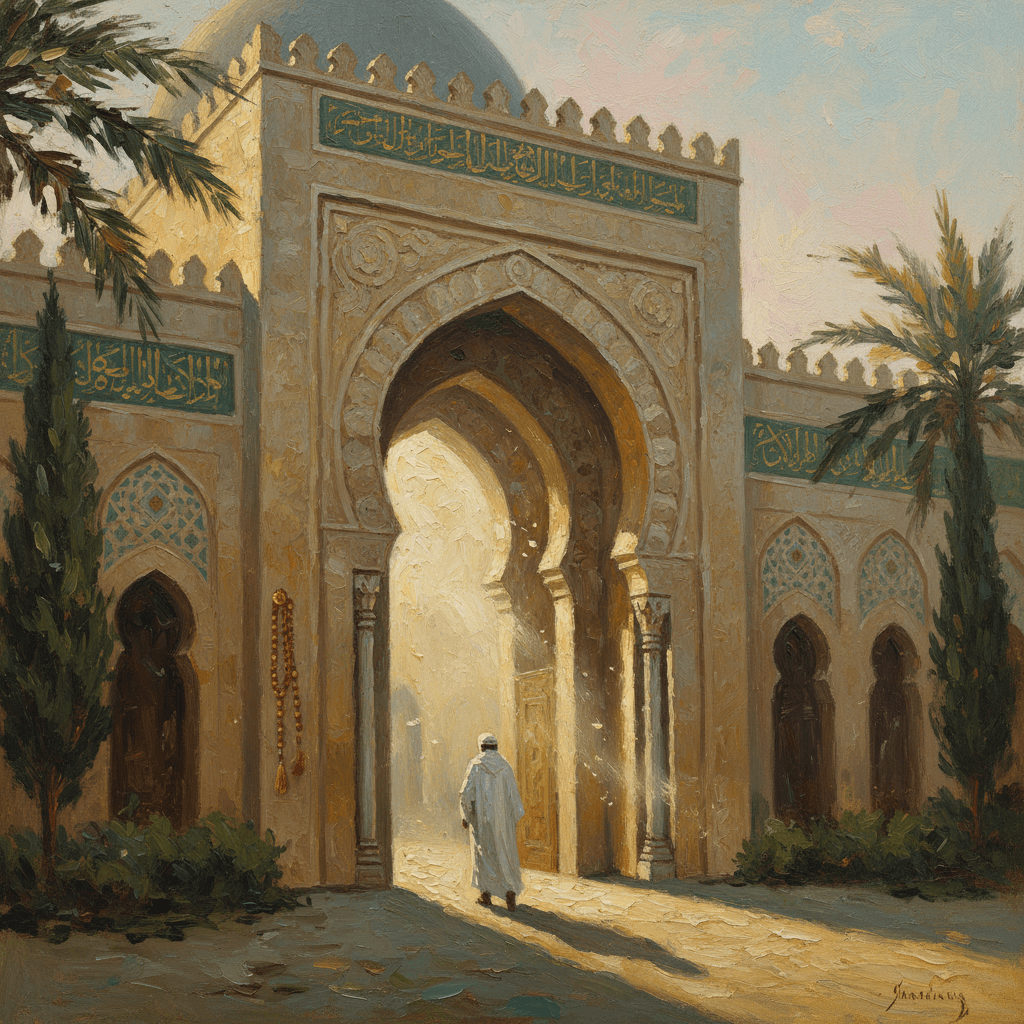
In the middle of a busy day — the commute, the meeting, the shopping, the argument — there is a practice that can be happening simultaneously inside you. Not a ritual that requires stopping everything. A continuous thread of remembrance woven through ordinary life.
That practice is dhikr.
It is one of the most consistently commanded practices in the Quran, one of the most documented in the Sunnah, and one of the least understood in practice by contemporary Muslims. Most people know the word. Very few could explain what it actually is, what it includes, or how to build a genuine daily practice.
What Dhikr Actually Is
Dhikr (ذِكْر) comes from the Arabic root meaning to remember, to mention, or to recall. In Islamic practice it refers to the conscious remembrance of Allah — acknowledging His existence, His attributes, and His presence through specific words, phrases, or actions.
The Quran's most direct statement about dhikr:
أَلَا بِذِكْرِ اللَّهِ تَطْمَئِنُّ الْقُلُوبُ
Ala bidhikrillahi tatma'innul-qulub
"Verily, in the remembrance of Allah do hearts find rest."
— (Quran, Surah Ar-Ra'd, 13:28)
This is not a metaphor. The Quran is making a claim about the nature of the human heart: it is designed to find rest specifically in Allah's remembrance. Not in achievement, not in entertainment, not in relationships — in dhikr.
Allah also says: "Remember Me, and I will remember you." (Quran 2:152). This is an exchange. When you remember Allah through dhikr, Allah responds with His remembrance of you — a concept the scholars describe as the most profound transaction available to a created being.
The forms of dhikr include:
- Tasbih: SubhanAllah (glorification)
- Tahmid: Alhamdulillah (praise)
- Takbir: Allahu Akbar (magnification)
- Tahlil: La ilaha illallah (affirmation of oneness)
- Istighfar: Astaghfirullah (seeking forgiveness)
- Salah: prayer performed with consciousness of Allah
- Quran recitation: with reflection
- The morning and evening adhkar: the comprehensive daily practice
The Story Behind This Practice
The command to practice dhikr abundantly runs throughout the Quran. In Surah Al-Ahzab, Allah says:
يَا أَيُّهَا الَّذِينَ آمَنُوا اذْكُرُوا اللَّهَ ذِكْرًا كَثِيرًا وَسَبِّحُوهُ بُكْرَةً وَأَصِيلًا
"O you who believe, remember Allah much, and glorify Him morning and evening."
— (Quran 33:41-42)
Dhikran kathiran — abundant remembrance. The Quran does not specify a minimum. Scholars interpreted this as a call to make remembrance a continuous state, not a scheduled ritual.
The Prophet ﷺ embodied this. Abu Musa al-Ash'ari رضي الله عنه reported: "The difference between one who remembers his Lord and one who does not is like the difference between the living and the dead." (Sahih Bukhari 6407) This statement — comparing the person without dhikr to a dead person — reflects the severity with which the Prophet viewed the loss of this practice.
Ibn al-Qayyim wrote in Al-Wabil al-Sayyib that dhikr is the spiritual food of the heart. Without it, the heart does not die — it weakens, loses sensitivity, becomes susceptible to spiritual illness. The restlessness, the spiritual emptiness, the feeling that worship has become hollow: these are the symptoms of a heart that has been cut off from its primary nourishment.
How to Build a Daily Dhikr Practice
Understanding dhikr is one thing. The challenge is building it into a life that already feels full.
Start with the post-salah tasbih. This is the most documented, most practical entry point into daily dhikr. After every prayer, before you stand up: SubhanAllah 33 times, Alhamdulillah 33 times, Allahu Akbar 33 times, then the long La ilaha illallah formula once. You already pray five times a day. Adding three minutes to each prayer costs almost nothing in time.
Use idle time for dhikr. The average person spends hours per week in low-attention situations — commuting, waiting, doing routine tasks. This is built-in dhikr time. Replace some of the mental static with SubhanAllah wa bihamdihi or Astaghfirullah.
Build morning adhkar as a system. The morning adhkar (after Fajr) is the most complete daily practice. It includes Ayatul Kursi, the protection duas, Sayyid al-Istighfar, the 3 Quls, and the La ilaha illallah formula. Done consistently after Fajr, it takes ten minutes and covers the most important dhikr of the entire day.
Track your consistency. Dhikr is a habit, and habits respond to tracking. Knowing whether you did your morning adhkar today is the difference between building consistency and constantly restarting from zero.
Build Your Dhikr Practice One Day at a Time
DeenBack tracks your morning adhkar, post-salah dhikr, and daily dhikr practice — helping you build the consistent remembrance of Allah that the Quran and Sunnah prescribe.


Free download. Premium features available in-app.
Types of Dhikr and Their Benefits
The heavy phrases (thaqilan fil-mizan):
سُبْحَانَ اللَّهِ وَبِحَمْدِهِ، سُبْحَانَ اللَّهِ الْعَظِيمِ
SubhanAllah wa bihamdihi, SubhanAllah al-'azim
"Glory be to Allah and by His praise; glory be to Allah the Magnificent."
The Prophet ﷺ said: "Two phrases are beloved to the Most Merciful, light on the tongue, and heavy on the Scale of Deeds." (Sahih Bukhari 6406) Say these throughout the day.
Dhikr specifically tied to forgiveness:
Regular istighfar (Astaghfirullah) is dhikr that simultaneously serves as tawbah. The Prophet described it as a practice that opens provisions, relieves difficulty, and cleans the heart.
For practical guidance on the specific phrases and counts, see dhikr after salah and dhikr to say 100 times a day. For building the broader daily practice, best dhikr to say daily provides the complete schedule. For understanding how dua fits alongside dhikr, what is dua is the companion article.
Common Questions
Is listening to dhikr the same as saying it? Listening to recitations of Quran and dhikr has its own benefit. But the prophetic practice — and the reward attached to specific phrases — is tied to actively saying them. Listening is a support, not a replacement.
Can women say dhikr during their period? Yes. Dhikr, as distinct from salah and Quran recitation, has no purity conditions. Women continue their morning and evening adhkar, tasbih, and other dhikr during menstruation.
Does dhikr have to be in Arabic? The specific prophetic phrases with their specific rewards are in Arabic. But the practice of remembering Allah — its spirit — extends to any language. Saying "Glory be to God" in English while working is a form of dhikr. Learning the Arabic formulas and understanding their meaning is the higher practice.
How do I make dhikr more meaningful rather than mechanical? Slow down. Say ten with full presence rather than one hundred mechanically. Learn the meanings of the phrases. Periodically stop on a phrase and think about what it means — "SubhanAllah" is not just a phrase, it is an assertion that Allah is utterly free from every imperfection you could possibly imagine.
The Practice That Holds Everything Together
Prayer is the pillar of the religion. But dhikr is the atmosphere in which the whole practice breathes.
It is what happens between the prayers. It is the continuous thread that connects the formal moments of worship into a lived, consistent awareness of Allah. Without it, the prayers can become islands in an ocean of forgetfulness.
The Quran promises rest to the hearts that practice it. The Prophet said the person without it is like the living dead. These are serious claims — more serious than most of us treat them.
Start with two minutes. Post-salah tasbih after Fajr tomorrow morning. And let the practice grow from there.
Make Dhikr a Daily Reality, Not an Occasional Intention
DeenBack helps you track your daily dhikr practice — morning adhkar, post-salah tasbih, and everything in between — so the remembrance of Allah becomes your daily baseline.
Free download. Premium features available in-app.
Frequently Asked Questions
What is dhikr in Islam?
Dhikr (ذِكْر) literally means remembrance or mention. In Islamic practice it refers to the act of consciously remembering Allah through prescribed phrases (SubhanAllah, Alhamdulillah, Allahu Akbar, La ilaha illallah), Quran recitation, adhkar from the Sunnah, or any act of worship performed with conscious awareness of Allah.
What is the difference between dhikr and dua?
Dhikr is remembrance — glorifying, praising, and acknowledging Allah. Dua is supplication — asking Allah for something. The two often overlap. Many duas contain dhikr elements, and dhikr can shade into dua. The morning and evening adhkar include both. Dhikr is generally considered the broader category; dua is a subset of turning to Allah.
Is dhikr only the specific phrases, or does it include salah and Quran?
Scholars agree that dhikr includes salah, Quran recitation, and all acts of worship performed with awareness of Allah. The specific phrases (SubhanAllah, etc.) are called tasbih and are a form of dhikr. Everything done while conscious of Allah is, in a broader sense, dhikr — the remembrance of Allah through action.
What does the Quran say about dhikr?
Allah says: 'Verily, in the remembrance of Allah do hearts find rest.' (Quran 13:28). He also says: 'Remember Me, and I will remember you.' (Quran 2:152). The Quran commands believers to remember Allah 'abundantly' (33:41) and 'morning and evening' (33:42). These commands form the foundation of the Sunnah dhikr practice.
How do I start a daily dhikr practice?
Start after one prayer — ideally Fajr. Say SubhanAllah 33 times, Alhamdulillah 33 times, Allahu Akbar 33 times, then La ilaha illallah wahdahu la sharika lah once. That is the post-salah tasbih, takes under 2 minutes, and is the most documented daily dhikr in the Sunnah. Add more elements gradually over weeks.