
- Published on
What Is Sawm? The Islamic Meaning and Practice of Fasting
- Authors

- Name
- Ahmad
- Role
- Senior Marketing Manager, Islamic education • Deen Back
بِسْمِ اللهِ الرَّحْمٰنِ الرَّحِيْمِ
In the name of God, the Most Gracious, the Most Merciful.
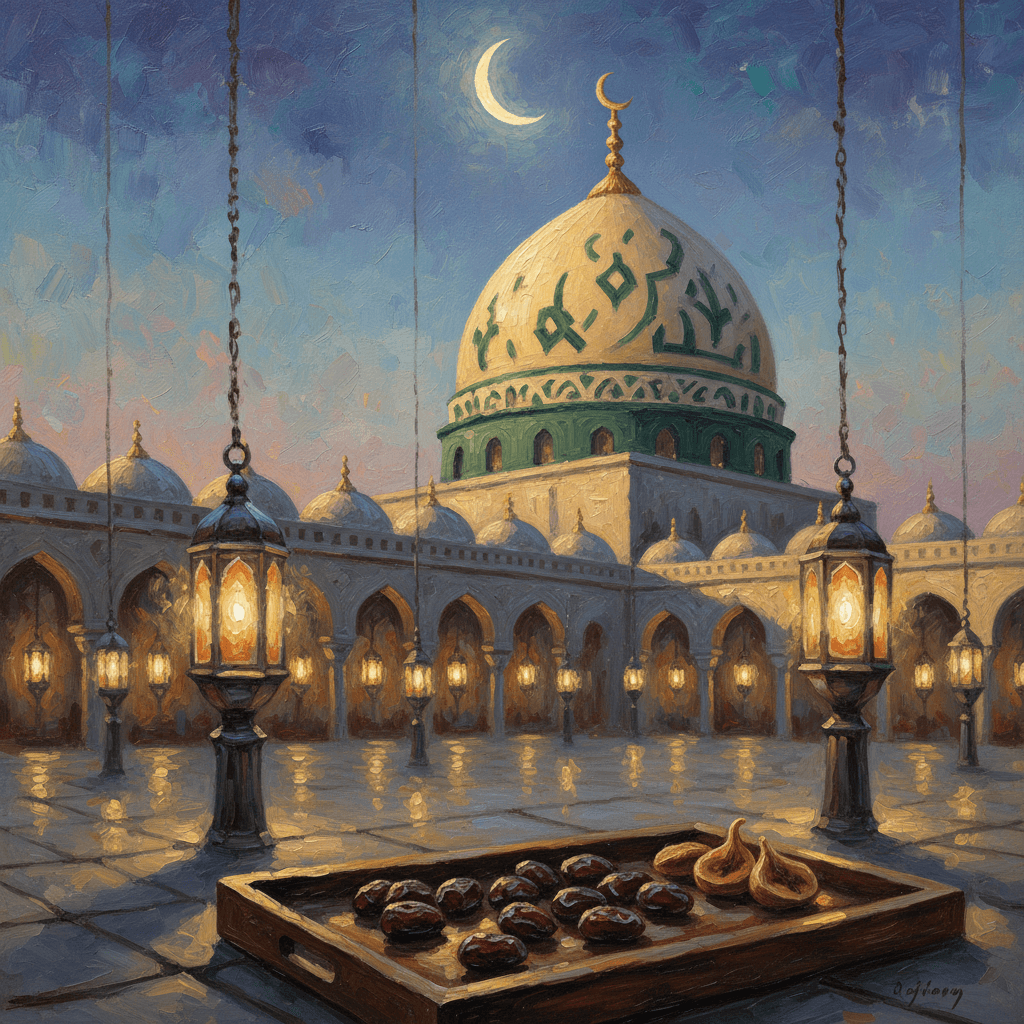
Sawm is one of those words you may have heard many times without anyone stopping to explain what it actually means — not just as a definition, but as a complete Islamic concept. The word gets used for Ramadan, for Monday fasts, for expiation — but the full picture of what sawm is and why Allah prescribed it is worth understanding clearly.
This is not a technical fiqh breakdown. This is the foundational explanation every Muslim deserves to have in plain terms.
What Sawm Means
Sawm (صَوْم) is the Arabic word for fasting. Its root conveys the meaning of restraint and stopping — the nafs held back from what it normally reaches for.
In Islamic practice, sawm specifically refers to abstaining from three things from the time of Fajr (the true dawn) until the time of Maghrib (sunset):
- Food and drink — including water
- Sexual relations
- Anything else that breaks the fast in specific scenarios (intentional vomiting, etc.)
But sawm is not simply not eating. The Prophet ﷺ defined its full scope: "Whoever does not give up false speech and acting upon it, Allah has no need of him giving up his food and drink." (Sahih Bukhari 1903)
The fast is meant to be a complete withdrawal — not just of the stomach, but of the tongue, the eyes, and the heart.
The Quranic Command
The obligation of fasting was revealed in Surah Al-Baqarah:
يَا أَيُّهَا الَّذِينَ آمَنُوا كُتِبَ عَلَيْكُمُ الصِّيَامُ كَمَا كُتِبَ عَلَى الَّذِينَ مِن قَبْلِكُمْ لَعَلَّكُمْ تَتَّقُونَ
Ya ayyuhal-ladhina amanu kutiba 'alaykumus-siyamu kama kutiba 'alal-ladhina min qablikum la'allakum tattaqun
"O you who believe, fasting has been prescribed for you as it was prescribed for those before you, so that you may attain taqwa."
— (Quran, Surah Al-Baqarah, 2:183)
The verse ends with la'allakum tattaqun — "so that you may attain taqwa." That ending is the purpose statement. The purpose of sawm is not caloric restriction. It is the cultivation of taqwa — God-consciousness, awareness of Allah, the internal compass that makes the believer choose right even when no one is watching.
Sawm as the Fourth Pillar of Islam
The five pillars of Islam are the foundational obligations on which the deen stands:
- Shahada (testimony of faith)
- Salah (five daily prayers)
- Zakat (obligatory charity)
- Sawm (fasting, particularly in Ramadan)
- Hajj (pilgrimage to Mecca)
Sawm is positioned fourth — between Zakat (which disciplines the relationship with wealth) and Hajj (the most complete act of submission). It is the only pillar that is entirely invisible to others. You can observe someone praying. You cannot see if someone is genuinely fasting. The sawm exists between the believer and Allah alone.
The Prophet ﷺ highlighted this secret nature: "Allah said: 'Every deed of the son of Adam is for himself, except fasting — it is for Me, and I will reward it accordingly.'" (Sahih Bukhari 1904)
The Full Practice of Sawm in Ramadan
During Ramadan, the sawm is obligatory for every adult Muslim who meets the conditions. See Ramadan rules for the full breakdown of what is required, what is permitted, and what situations allow exceptions.
The daily structure of sawm in Ramadan:
Suhoor — the pre-dawn meal, taken before Fajr. The Prophet ﷺ said: "Eat suhoor, for there is a blessing in suhoor." (Sahih Muslim 1095). It is sunnah, not obligatory, but missing it without reason sacrifices a blessing the Prophet ﷺ specifically mentioned.
The fast itself — from the first light of true dawn (not astronomical dawn) until sunset. The intention (niyyah) for each Ramadan fast should be made before Fajr.
Iftar — breaking the fast at Maghrib. The Prophet ﷺ said: "The people will remain in good condition as long as they hasten to break the fast." (Sahih Bukhari 1957) The sunnah is to break with dates and water, then pray Maghrib.
Tarawih — the night prayer of Ramadan. Not obligatory, but the Prophet ﷺ prayed it and it is among the most recommended acts of Ramadan.
Why Sawm Is So Spiritually Powerful
Sawm works on the nafs at a fundamental level. Most sins are enabled by one of three gateways: the desire for food, the desire for drink, or the desire for physical pleasure. Sawm closes all three for an extended period.
What fills that space? Awareness of Allah. Every time the nafs says "eat" and you say no — not because food is bad, but because Allah commanded restraint — you are practising taqwa in real time. Every hour of the fast is a repeated act of submission.
The Prophet ﷺ described the spiritual stakes clearly: "Whoever fasts Ramadan with faith and hoping for reward, his past sins will be forgiven." (Sahih Bukhari 2014)
For deeper understanding of the spiritual dimensions, see virtues of fasting in Islam.
Types of Sawm Beyond Ramadan
Ramadan is the obligatory sawm. But Islam recognises several other categories:
Sawm al-Qada — Making up missed Ramadan fasts. If you missed days due to illness, travel, or menstruation, you are obligated to make them up before the next Ramadan.
Sawm al-Kaffarah — Expiation fasts required after certain violations (such as breaking an oath, or breaking a Ramadan fast intentionally with sexual intercourse). The rules differ by scenario.
Nafl (Voluntary) Fasting — The Prophet ﷺ recommended several regular voluntary fasts:
- Mondays and Thursdays: "Deeds are presented to Allah on Mondays and Thursdays, and I like for my deeds to be presented while I am fasting." (Tirmidhi 747)
- The White Days: The 13th, 14th, and 15th of each lunar month. See white days fasting for why these three days carry special recommendation.
- Day of Arafah (9 Dhul Hijjah): "Fasting the day of Arafah, I hope it will expiate the sins of the previous and the coming year." (Sahih Muslim 1162)
- Day of Ashura (10 Muharram): "Fasting the day of Ashura, I hope it will expiate the sins of the previous year." (Sahih Muslim 1162)
- Six days of Shawwal: "Whoever fasts Ramadan and follows it with six days of Shawwal, it is as if he fasted the whole year." (Sahih Muslim 1164)
For a practical breakdown of how to incorporate these into a regular habit, see fasting on Monday and Thursday.
Track Your Fasting Streak Across Ramadan and Voluntary Fasts
DeenBack helps you build consistent fasting habits — tracking your Ramadan fasts, voluntary fasts, and missed days so you always know where you stand before Allah.


Free download. Premium features available in-app.
What Does and Does Not Break the Fast
A few common questions about what invalidates sawm:
Things that break the fast:
- Eating or drinking intentionally
- Sexual intercourse
- Intentional vomiting (bringing food back up deliberately)
- For some schools: injections or IV fluids entering the bloodstream
Things that do NOT break the fast:
- Eating or drinking accidentally, having forgotten you were fasting (majority position)
- Rinsing your mouth without swallowing
- Eye drops, ear drops (majority position)
- Using miswak (tooth stick)
- Blood tests (taking blood out, majority position)
- Smelling food or perfume
For a complete breakdown, see how to fast correctly.
The Inner Dimension of Sawm
The scholars have always distinguished between two levels of fasting:
The fast of the body — abstaining from food, drink, and intercourse. This is the minimum obligation.
The fast of the heart — protecting the tongue from lying, backbiting, and idle speech; protecting the eyes from what is forbidden; protecting the heart from heedlessness; increasing in Quran, dhikr, and dua. This is the fasting that builds the taqwa the Quran points to.
Al-Ghazali wrote that the fast of the elite goes further still — refraining from everything other than Allah. That level is not an obligation. But it shows that sawm is not a ceiling to reach; it is a door into progressively deeper consciousness.
Common Questions
What is the intention (niyyah) for sawm?
For Ramadan fasting, the intention must be made before Fajr each night. You can make it for the whole month at the beginning, though renewing it nightly is the more precise practice. The intention is in the heart — saying it aloud is not required.
Can a traveller fast during Ramadan?
Yes. The concession exists to break the fast during travel, but the obligation does not disappear — days missed must be made up. If a traveller fasts, the fast is valid.
What if I ate thinking Fajr had not entered yet?
If you genuinely had reasonable cause to believe Fajr had not yet entered (e.g., your alarm had not gone off), the majority of scholars hold that the fast remains valid. If you were careless or knew Fajr was near and delayed, you should consider making up the fast.
What is the dua for breaking the fast?
The most authentic narration: "Dhahaba al-zam'u wabt-allatil-'uruqu wa thabata al-ajru in sha'Allah" — "The thirst is gone, the veins are moistened, and the reward is established, if Allah wills." (Abu Dawud 2357)
Sawm Is Not Deprivation — It Is Liberation
The nafs frames every restriction as a loss. Sawm reframes it: you are not losing food. You are gaining hours of uninterrupted taqwa. You are exercising the most fundamental proof of faith — that when Allah says stop, you stop, even when the desire is strong and no one is watching.
Begin with Ramadan. Make it real. Then, when Ramadan ends, do not lose the muscle. Two days a week, the white days, one fast a month — the consistent fasting practice keeps the nafs trained and the heart oriented.
The Prophet ﷺ said: "The most beloved deeds to Allah are the most consistent, even if small." (Sahih Bukhari 6464)
A single day of fasting each week, maintained for years, builds more taqwa than an intense Ramadan followed by months of spiritual drift.
Make Every Fast Count — Track Them All in DeenBack
DeenBack helps you build the fasting habit from Ramadan to voluntary fasts — tracking each day, sending reminders, and keeping your streak visible so you never lose momentum.
Free download. Premium features available in-app.
Frequently Asked Questions
What does sawm mean in Islam?
Sawm (صَوْم) means fasting in Arabic — the act of abstaining from food, drink, and sexual relations from the true dawn (Fajr) until sunset. It is the fourth pillar of Islam and an act of worship that involves the whole body, not just the stomach.
What are the types of fasting in Islam?
There are several types: Sawm Ramadan (obligatory fasting for the entire month of Ramadan), sawm al-qada (making up missed Ramadan fasts), sawm al-kaffarah (expiation fasts), and nafl (voluntary) fasts such as Mondays and Thursdays, the white days (13th, 14th, 15th of each lunar month), Arafah, and Ashura.
Who is required to fast in Islam?
Every adult Muslim who is sane, not travelling, not ill, not menstruating or in post-partum bleeding, is obligated to fast during Ramadan. Children are not obligated, though many are encouraged to practice. Those who are ill or travelling may break the fast and make up the days later.
What breaks the fast (sawm)?
The fast is broken by intentionally eating, drinking, or engaging in sexual intercourse from Fajr to Maghrib. Unintentional acts (forgetting, genuinely not knowing the time) do not break the fast in most schools. Vomiting intentionally breaks it; involuntary vomiting does not according to the majority.
Is sawm only for Ramadan?
No. While Ramadan fasting is the obligatory obligation, Islam strongly encourages voluntary fasting throughout the year — Mondays and Thursdays, the white days of each lunar month, six days of Shawwal, the day of Arafah, and Ashura are among the most recommended.