
- Published on
The Sunnah of Using the Right Hand — and Why It Changes Everything
- Authors

- Name
- Ahmad
- Role
- Senior Marketing Manager, Islamic education • Deen Back
بِسْمِ اللهِ الرَّحْمٰنِ الرَّحِيْمِ
In the name of God, the Most Gracious, the Most Merciful.
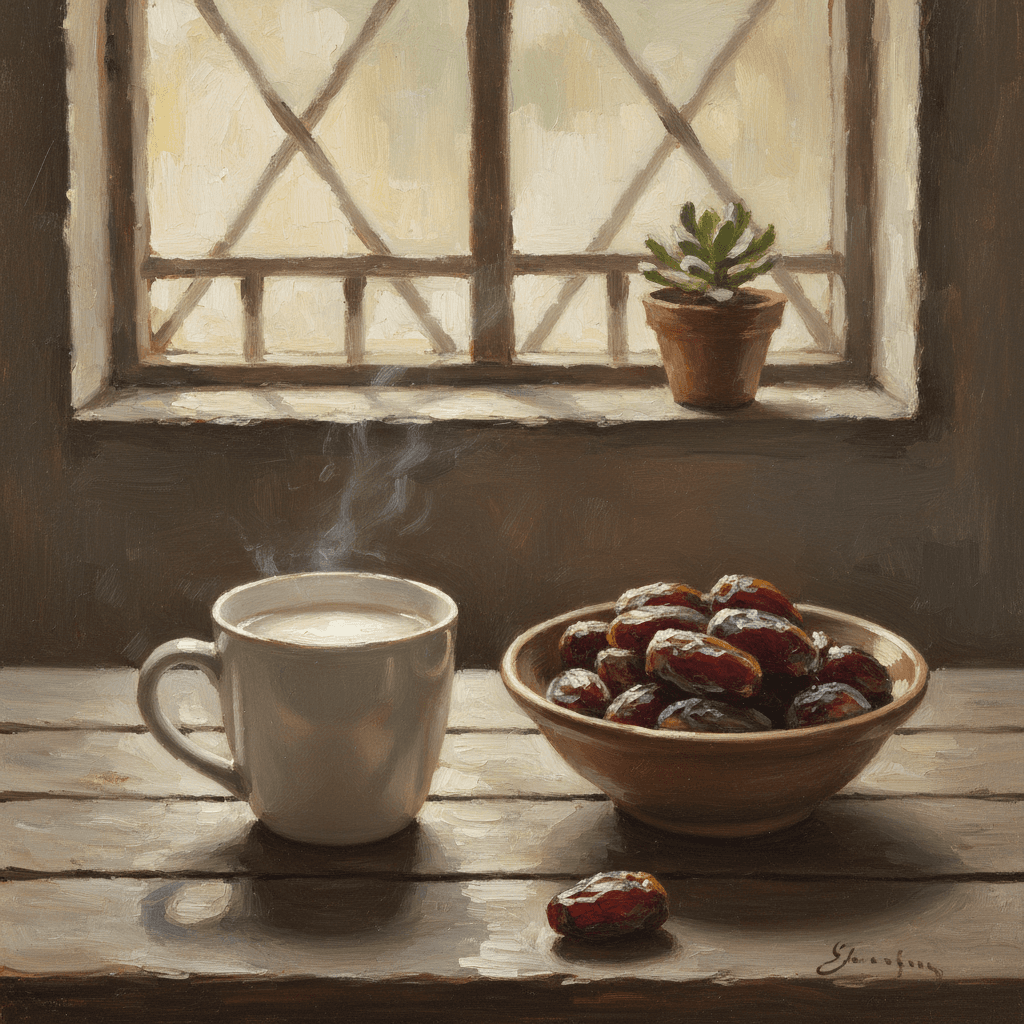
Your hands do dozens of things today without a single conscious thought.
You reach for a glass. You pass someone their change. You pull on a shirt. You pick up your phone. Each of these moments passes unnoticed, unmemorable, and spiritually neutral — unless you know the sunnah of the right hand.
The Prophet ﷺ made ordinary human actions into acts of worship. Not by changing what he did, but by how he did it. One of the most consistent and overlooked of his practices was using the right hand — not occasionally, not when convenient, but as a constant, conscious orientation toward Allah in the middle of ordinary life.
What the Sunnah of the Right Hand Actually Means
At-tayammun (التَّيَمُّنُ) — starting from the right — was one of the Prophet's ﷺ most consistent practices.
Aisha (RA) reported:
كَانَ النَّبِيُّ ﷺ يُعْجِبُهُ التَّيَمُّنُ فِي تَنَعُّلِهِ وَتَرَجُّلِهِ وَطُهُورِهِ وَفِي شَأْنِهِ كُلِّهِ
"The Prophet liked to start from the right in all of his affairs: putting on his shoes, combing his hair, purifying himself — in all his matters." — (Sahih Bukhari 168)
In all his matters. This is not a narrow ruling about one specific act. It is a comprehensive orientation: the right side, the right hand, the right first — for everything that is an act of honor, generosity, or beginning.
The specific acts he ﷺ explicitly commanded:
- Eating: "When you eat, eat with your right hand." (Sahih Muslim 2019)
- Drinking: "When you drink, drink with your right hand." (Sahih Muslim 2020)
- Entering: He would enter the mosque with his right foot first, and leave with his left.
- Dressing: He would put on his right shoe first, and take off his left shoe first.
- Wudu: Washing the right arm before the left is an established sunnah of purification.
- Giving and receiving: Passing things to people with the right hand is the noble way.
The left hand, by contrast, was used for matters of cleanliness — removing filth, cleaning after the bathroom. This is not a statement that the left hand is inherently inferior. It is a system: the right is for honor, the left is for necessity.
The Prophet ﷺ was explicit about why:
"Shaytan eats with his left hand and drinks with his left hand." — (Sahih Muslim 2019)
This is not superstition. It is an active choice to align your habits with the sunnah and differentiate them from what is associated with opposition to good.
Why Modern Muslims Struggle With This
This is not a complicated sunnah. It does not require knowledge, wealth, or opportunity. You eat every day. You drink every day. The sunnah is right there, every meal, every glass of water.
And yet most Muslims — including practicing ones — eat and drink without thinking about which hand they are using. Why?
Because habit runs on autopilot. You have been picking up food with your dominant hand since you were a toddler. The groove is so deep that consciousness barely enters the action. You do not think about which hand you use to open a door, pick up a pen, or reach for your phone.
This is where the nafs and shaytan do their quietest work: not in dramatic temptations, but in small, unconscious acts that drift from the sunnah without anyone noticing. The right-hand sunnah is an invitation to bring consciousness back into the ordinary. It is a micro-moment of awareness: "This hand, this act, right now, is sunnah."
Another layer is cultural. In some parts of the world, left-handed children were trained to use their right hand. In other places, the opposite occurred. And in secular, multicultural environments, the Islamic practice of specifically favoring the right hand can feel awkward or noticed. The nafs uses this social discomfort as a reason not to bother.
How to Practice the Sunnah of the Right Hand Daily
1. Make one meal per day a conscious sunnah practice
Pick one meal — breakfast, lunch, or dinner — and during that meal, pay full attention to which hand you are using. This is not about being obsessive for the entire day. It is about building the memory in one context until it becomes automatic.
2. Pair it with bismillah
The Prophet ﷺ said: "When one of you eats, let him say bismillah." (Abu Dawud 3767). Bismillah before eating is a natural cue to use the right hand. The two sunnahs reinforce each other: bismillah + right hand. Say one, do the other. Over time, the pairing becomes automatic.
See sunnah of eating for the full prophetic etiquette of meals, and sunnah of drinking water for the complete drinking etiquette.
3. Put on clothes right side first
When you get dressed each morning, consciously put on your right sleeve, right shoe, and right side first. This is a simple trigger: getting dressed is something you do every day. Making it right-first costs nothing and adds a moment of sunnah-consciousness to your morning before it begins.
4. Give and receive with your right hand
When you pass something to someone — food, money, a document — use your right hand. When you receive something from someone, receive with your right. This one practice, done consistently, is a visible expression of the sunnah in social settings. It also keeps you conscious in situations where most sunnah awareness tends to disappear.
5. Track it as a daily sunnah alongside your other ibadah
The daily sunnahs of the Prophet and your general daily ibadah routine are strengthened when the right-hand sunnah is practiced alongside them. Each micro-sunnah you add to your day builds a cumulative sense of living by the Prophet's model — and that cumulative effect is more powerful than any single practice alone.
Track your daily sunnahs and build the habits of the Prophet
DeenBack helps you log your daily sunnahs, morning adhkar, and ibadah in one place. Build streaks that show you how consistently you are living the prophetic model — one small act at a time.


Free download. Premium features available in-app.
Signs That This Sunnah Is Becoming Habit
You will notice it is working when:
- You reach for food with your right hand without thinking about it.
- You catch yourself using the left hand mid-meal and switch.
- The right shoe goes on first automatically when you get dressed.
- You feel a brief moment of consciousness when you hand something to someone — "right hand" — and then do it.
- The practice of bismillah and right hand have merged into a single moment.
These are small moments. But each one is a conscious alignment with the Prophet ﷺ. And the Prophet said that the most beloved deeds to Allah are those done consistently, even if they are small (Bukhari 6464). This is what that looks like in practice.
Common Questions
I am genuinely left-handed. Do I still have to eat with my right hand?
Yes, for eating and drinking specifically. The hadith is not a preference — it is an explicit prophetic instruction: "When you eat, eat with your right hand." Scholars are consistent on this. Left-handedness is a dominant preference for skilled tasks; the eating and drinking sunnah is a separate matter. The inconvenience is the point — it brings consciousness into what would otherwise be pure habit.
What about when I am eating and need both hands?
Foods that require cutting, shelling, or assembling may naturally involve both hands. Use your right hand to bring food to your mouth. Use your left for the supporting role. The rule applies to what you actually eat with, not to every motion at the table.
Does this apply to using my phone or writing?
No. The right-hand sunnah applies to eating, drinking, giving, receiving, and beginning honored actions. Writing, typing, and using tools are governed by practical necessity and dominant-hand capability. The sunnah does not require you to write with your non-dominant hand.
If I forget at the beginning of a meal, should I say bismillah when I remember?
Yes. The Prophet ﷺ instructed: "If one of you forgets to say bismillah at the beginning of his meal, let him say: 'Bismillahi awwalihi wa akhirihi' — In the name of Allah at the beginning and end of it." (Abu Dawud 3767). The same spirit applies to the right hand — if you forget, switch and continue. Do not let the forgetting become an excuse to abandon the practice for the rest of the meal.
Closing — Conscious Hands, Conscious Life
The Prophet ﷺ did not compartmentalize his worship. His prayer was worship. His eating was worship. His rising and sleeping were worship. He did not achieve this through effort alone — he achieved it through habits so ingrained that every moment carried the possibility of conscious alignment with Allah.
The sunnah of the right hand is one entry point into this way of living. It is small enough to be practical and frequent enough to be formative. Start with your next meal. Right hand, bismillah. Let the sunnah begin there.
Make every moment a sunnah moment
The DeenBack app helps you build the small daily habits of the Prophet — dhikr, adhkar, sunnahs. One practice at a time, your ordinary day becomes a day of worship.
Free download. Premium features available in-app.
Frequently Asked Questions
What is the sunnah of using the right hand?
The Prophet used his right hand for all honored activities: eating, drinking, giving and receiving things, shaking hands, entering places, and beginning any positive action. He used his left hand for matters of cleanliness and less honored tasks.
Is it haram to eat with the left hand?
Eating with the left hand intentionally without a valid reason is strongly discouraged (makruh or in some scholarly views closer to haram), because the Prophet said: 'Do not eat with your left hand, for Shaytan eats with his left hand.' (Sahih Muslim 2019). It is not a minor preference — it is an active sunnah.
What if I am naturally left-handed?
Left-handed people are encouraged to use their right hand for eating and drinking specifically, as these are explicit prophetic instructions. For tasks requiring dexterity and skill — writing, crafting — scholars generally allow using the dominant hand. The eating and drinking ruling is not about dominance; it is about the sunnah.
What other activities should I use my right hand for?
Shaking hands, giving and receiving items, entering the mosque and home, beginning wudu, wearing clothes and shoes (right first), and any act of honor or generosity. The principle: the right hand is for noble acts.
Is there a hadith about the right hand specifically?
Yes. Aisha (RA) reported: 'The Prophet used to like starting from the right side in all of his affairs: putting on his shoes, combing his hair, and purifying himself.' (Bukhari 168). And the Prophet said: 'When you eat, eat with your right hand, and when you drink, drink with your right hand.' (Muslim 2020).