
- Published on
Mashallah Meaning — What You Are Really Saying and How to Mean It
- Authors

- Name
- Ahmad
- Role
- Senior Marketing Manager, Islamic education • Deen Back
بِسْمِ اللهِ الرَّحْمٰنِ الرَّحِيْمِ
In the name of God, the Most Gracious, the Most Merciful.
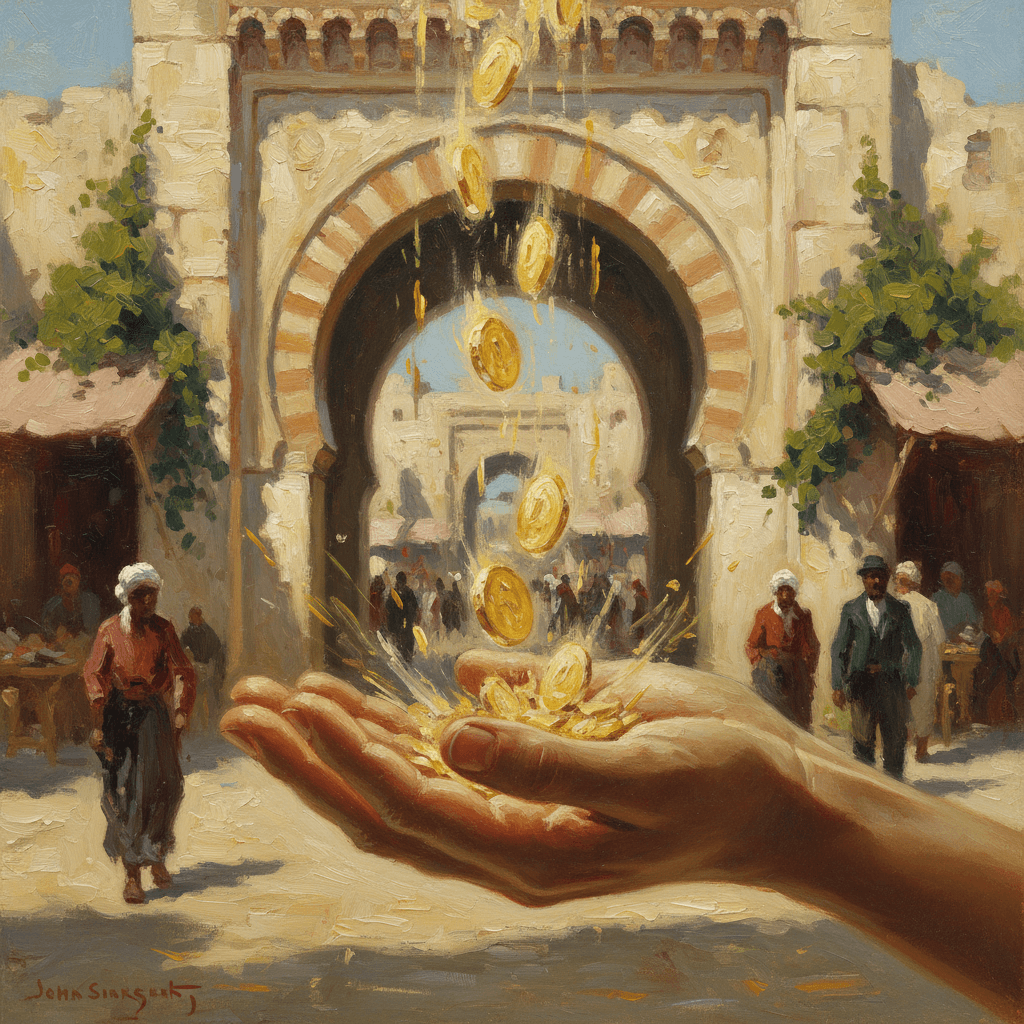
There is a word that Muslims say dozens of times a day, often without thinking about it. Mashallah. Your friend's new apartment: mashallah. Your nephew's exam results: mashallah. A stranger's impressive beard: mashallah. The word flows from the tongue so naturally that it can become as automatic as "wow" — expressing admiration without any real consciousness of what is being said.
That is worth pausing on. Because what mashallah actually means, rooted in a Quranic command, is one of the most profound acknowledgments a person can make. When you say it with attention, it changes the way you see the world.
What Mashallah Actually Means
Ma sha Allah (ما شاء الله) translates most accurately as "what Allah has willed has come to pass" or "it is as Allah has willed." It is a declaration that whatever beautiful, impressive, or good thing you are witnessing exists because Allah willed it — not because of luck, human effort alone, or chance.
The Quranic origin of the phrase is in Surah Al-Kahf:
وَلَوْلَا إِذْ دَخَلْتَ جَنَّتَكَ قُلْتَ مَا شَاءَ اللَّهُ لَا قُوَّةَ إِلَّا بِاللَّهِ
"And why did you not say, when you entered your garden, 'What Allah has willed [has occurred]; there is no power except in Allah?'"
— (Surah Al-Kahf, 18:39)
This verse comes in the middle of a parable about a man who had two gardens — a wealthy, proud man who admired his own property and forgot where it came from. His believing friend corrects him: you should have walked into this garden saying mashallah. Acknowledging that it was Allah who gave it. Acknowledging that your own effort was only one instrument of His will.
The full phrase in the Quranic verse continues with la quwwata illa billah — "there is no power except through Allah." This companion phrase (hawqalah) pairs naturally with mashallah: what exists is because Allah willed it, and everything that sustains it comes from His power alone.
The Connection to the Evil Eye
One of the reasons mashallah is so emphasized in Muslim communities is its protective function. The evil eye ('ayn) is real — the Prophet ﷺ affirmed it clearly:
الْعَيْنُ حَقٌّ
"The evil eye is true."
— (Sahih Muslim 2188, sunnah.com)
When someone looks at something beautiful or impressive with intense admiration, their gaze can carry harm — even without intent. The protection lies in attributing the blessing to Allah. By saying mashallah, you are acknowledging that whatever you see that is admirable was given by Allah and belongs to Him. This redirects the energy of the moment from the created thing to the Creator, and the protection follows.
This is why families say mashallah when someone compliments a child. Why Muslims say it when entering a new home or seeing someone's business success. It is not superstition — it is a practical spiritual habit of constantly returning credit to its source.
Why Modern Muslims Struggle to Mean It
The challenge with mashallah is not understanding it — it is saying it with genuine presence rather than reflexive habit. Many of us say it the way a non-Muslim says "oh wow" — as a social filler, not a theological statement.
The nafs is comfortable with formulas. It can say mashallah a hundred times a day while the heart remains entirely unaffected by what the words actually mean. The result is a life where Islamic phrases are spoken constantly but the consciousness behind them has faded.
The second challenge is consistency in the right direction. We say mashallah easily when we see someone else's blessings. But do we say it when we look at our own? When you get good news about your health, do you say mashallah? When your business does well this month, do you stop and say the word that acknowledges it was Allah who gave it? This inward application of mashallah is where it becomes a genuine practice rather than a social habit.
How to Say Mashallah Like You Mean It
Pause before you say it. This is the simplest practice. Instead of letting mashallah fly out automatically, take one breath and let the actual meaning settle. What you are seeing exists because Allah willed it. His will produced this.
Pair it with the full phrase. The Quranic verse does not just say mashallah — it says mashallah la quwwata illa billah. Adding this completion makes it a more substantial acknowledgment. Even a few times a week, saying the full phrase instead of just the shortened version reconnects it to its origin.
Apply it to your own blessings. When you wake up healthy, when a worry resolves, when you receive unexpected good news — practice saying mashallah as an internal acknowledgment. This is the deepest application: recognizing Allah's will in your own life, not just in what you observe in others.
Connect it to shukr. Mashallah and alhamdulillah work together. Mashallah acknowledges the source of a blessing; alhamdulillah expresses gratitude for it. Saying them together — mashallah, alhamdulillah — is a complete spiritual response to witnessing goodness. For a deeper practice, see how to be more grateful Islamically.
Build the Habit of Conscious Dhikr — Every Mashallah With Meaning
DeenBack helps you track daily dhikr and remembrance habits so words like Mashallah become genuine acknowledgments of Allah's presence, not just reflex.


Free download. Premium features available in-app.
Signs That Mashallah Is Working in Your Life
You know mashallah has moved from habit to practice when:
- You feel a genuine sense of reconnection with Allah when you say it, even briefly
- You start noticing blessings that you used to overlook entirely — small things that carry the fingerprints of divine will
- The phrase slows down your reaction to good news, inserting a beat of gratitude before the excitement
- You say it privately, not just socially — in your car, in your thoughts, when no one is watching
This gradual shift in awareness is one of the fruits of taking Islamic phrases seriously. They are not decoration on the surface of a secular life — they are reorientation tools pointing the heart toward its proper direction.
Common Questions
Is it Mashallah or Masha Allah — how should it be spelled?
Both are correct romanizations of the same Arabic phrase: ما شاء الله. Some write it as one word, others with spaces. Neither spelling changes the meaning. The Arabic pronunciation is Ma sha Allah, with a long "a" in sha and a clear "h" sound at the end.
Should I say Mashallah before or after complimenting someone?
Either works, but saying it with the compliment — "Mashallah, your child is so bright" — is the traditional pattern. This ensures that the praise and the acknowledgment of Allah's role are joined in the same moment.
Do non-Muslims say Mashallah?
In many Arabic-speaking and Muslim-majority cultures, the phrase has become part of everyday speech even among non-Muslims. While this cultural usage carries social meaning, the theological weight of the phrase is specific to acknowledging Allah's will as the ultimate source of blessing.
Can I say Mashallah in English?
Saying the meaning — "it is as Allah willed" or "this is Allah's blessing" — carries the same spirit. The Arabic phrase is preferred because of its Quranic origin and specificity, but the heart of the practice is the acknowledgment, not the language.
A Small Phrase That Holds a Large Truth
Mashallah is one of those Islamic phrases that contains a worldview. It places every beautiful thing — health, children, wealth, talent, good days — back in its proper context: not as things we produced or earned on our own, but as expressions of divine will. Saying it with awareness is a small act of tawadu (humility) that the Prophet ﷺ modeled constantly.
Read what is tawadu in Islam for the broader virtue that mashallah expresses. And read dua for protection from the evil eye for the complete practice of protecting yourself and those you love.
Say Mashallah With Meaning — Track Your Daily Remembrance of Allah
DeenBack makes it easy to build consistent dhikr habits. Turn phrases like Mashallah from reflex into recognition — and watch how your relationship with Allah deepens.
Free download. Premium features available in-app.
Frequently Asked Questions
What does Mashallah mean in English?
Mashallah (ما شاء الله) means 'What Allah has willed has come to pass' or 'It is as Allah has willed.' It is an expression of appreciation and acknowledgment that all good things come from Allah's will — not our own effort or luck.
Does saying Mashallah protect from the evil eye?
Yes. The Quran establishes this in Surah Al-Kahf (18:39) when the believer tells the unbeliever to say Mashallah. Acknowledging Allah's role in blessing protects against the evil eye by redirecting credit away from the created thing and toward Allah.
When should I say Mashallah?
Say Mashallah when you see something beautiful, successful, or admirable — your child's achievement, someone's health, a good meal, a new car, anything you find impressive. It is appropriate whenever you are expressing appreciation or admiration for something Allah has blessed.
Is Mashallah in the Quran?
Yes. The phrase appears in Surah Al-Kahf (18:39): 'And why did you not say, when you entered your garden, What Allah willed [has occurred]; there is no power except in Allah.' This verse is the Quranic basis for using the phrase.
What is the difference between Mashallah and Subhanallah?
Mashallah (what Allah has willed) is said when appreciating something specific that exists or has happened — a blessing you see. Subhanallah (glory be to Allah) is a broader praise expressing Allah's perfection and transcendence, appropriate when witnessing something that reflects His power or beauty.