
- Published on
Maalik Al-Mulk Meaning — The Master of All Sovereignty
- Authors

- Name
- Ahmad
- Role
- Senior Marketing Manager, Islamic education • Deen Back
بِسْمِ اللهِ الرَّحْمٰنِ الرَّحِيْمِ
In the name of God, the Most Gracious, the Most Merciful.
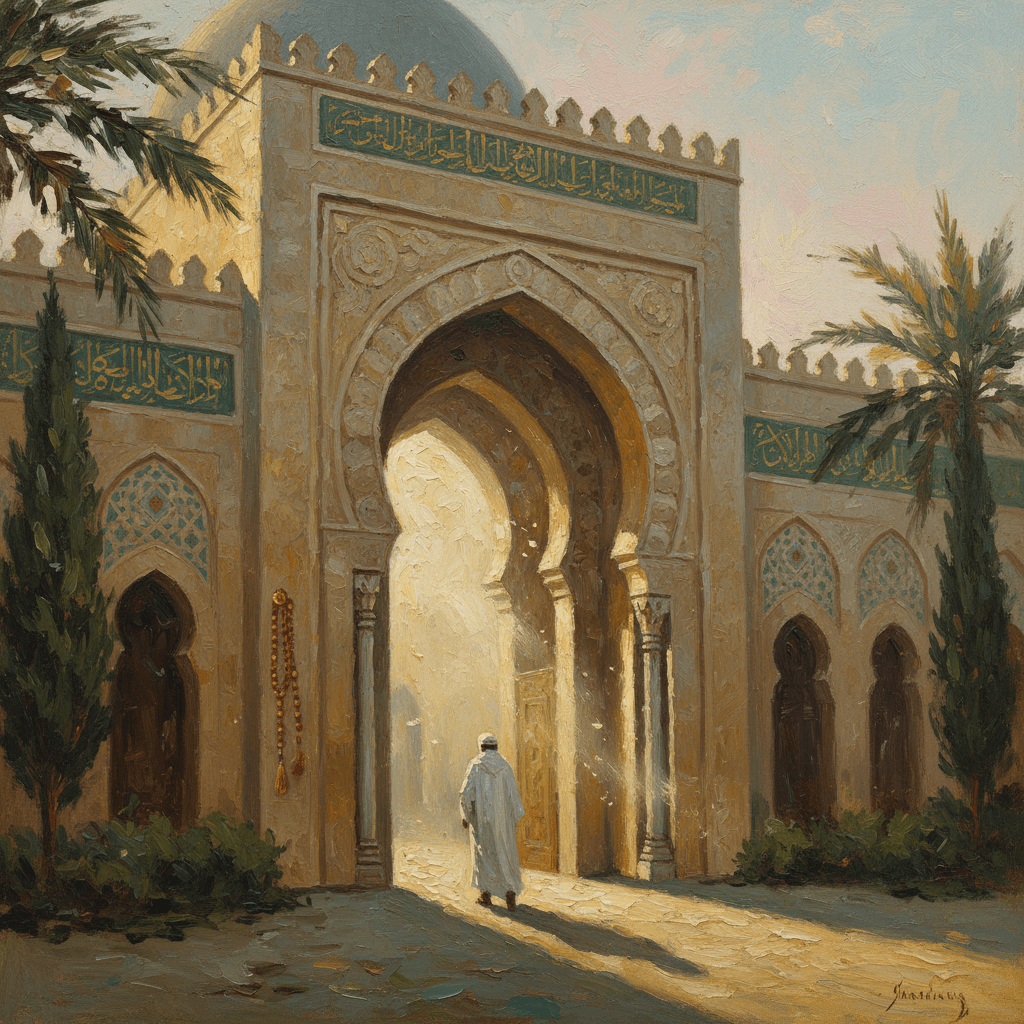
There are moments when you feel entirely powerless. A decision has been made about you — a job, a visa, a place in university, a relationship — and you had no say. Someone with authority over your life said no, and there was nothing you could do about it.
Islam has a name for those moments. It is the name مَالِكُ الْمُلْكِ — Maalik Al-Mulk — The Master of All Sovereignty. And understanding it does not just offer comfort. It restructures everything you thought you knew about power.
What Maalik Al-Mulk Actually Means
Maalik (مَالِك) comes from the Arabic root m-l-k (م-ل-ك), which carries the meanings of ownership, possession, and mastery. Al-Mulk (الْمُلْك) refers to sovereignty, dominion, and the kingdom of all creation.
Maalik Al-Mulk therefore means: The Owner and Possessor of All Sovereignty — the One to whom all power, authority, and dominion ultimately belong, without exception, without transfer, without expiration.
It is related to but distinct from another divine name: Malik (مَلِك) meaning King. A king has authority by position. Maalik has ownership by nature. The difference is significant: earthly kings rule but do not own; Allah both owns and rules. No one lent Him sovereignty, and no one can take it back.
Where This Name Appears in the Quran
The name appears explicitly in one of the most striking verses in the Quran — Surah Al-Imran, 3:26:
قُلِ اللَّهُمَّ مَالِكَ الْمُلْكِ تُؤْتِي الْمُلْكَ مَن تَشَاءُ وَتَنزِعُ الْمُلْكَ مِمَّن تَشَاءُ وَتُعِزُّ مَن تَشَاءُ وَتُذِلُّ مَن تَشَاءُ ۖ بِيَدِكَ الْخَيْرُ ۖ إِنَّكَ عَلَىٰ كُلِّ شَيْءٍ قَدِيرٌ
"Say: O Allah, Master of Sovereignty — You give sovereignty to whom You will and take sovereignty from whom You will. You honor whom You will and humble whom You will. All good is in Your hand. Surely You are over all things competent."
— (Surah Al-Imran, 3:26)
This verse was revealed in a context of power — the early Muslims were numerically weak, politically vulnerable, and surrounded by empires. The verse teaches them: the shifting of worldly power is entirely in Allah's hands. Kingdoms rise and fall not because of superior armies or diplomacy alone — but because Maalik Al-Mulk decides.
The related name Maalik Yawm Al-Deen — Master of the Day of Judgment — appears in Surah Al-Fatiha (1:4), which every Muslim recites at least seventeen times a day. From the very beginning of the Quran's most recited chapter, sovereignty belongs to Allah.
Why Modern Muslims Struggle With This Name
We live inside structures built around human power. Your employer can fire you. A government can deny your application. A landlord can refuse you. An algorithm can shadow-ban your account. A doctor can deliver a diagnosis that feels like a sentence.
The nafs, lacking certainty about divine sovereignty, treats these human decisions as final. It catastrophizes: This person destroyed my future. There is nothing more I can do.
Maalik Al-Mulk is the direct theological antidote. Not as wishful thinking — but as reality. Every human authority operates within a domain that was leased to them temporarily by the actual Maalik. They can withhold what they were given the power to withhold. But they cannot withhold what Maalik Al-Mulk has written for you.
The Prophet ﷺ taught: "Know that if the entire nation were to gather to harm you, they could not harm you except with what Allah has written for you. And if they were to gather to benefit you, they could not benefit you except with what Allah has written for you." (Tirmidhi 2516)
This is not fatalism. It is freedom.
How to Practice Maalik Al-Mulk Daily
1. Call on Him by this name in specific duas When you face a situation where human gatekeepers hold apparent power over your outcome, make dua using Ya Maalik Al-Mulk. "O Master of All Sovereignty — you gave them their authority; you can move my situation in ways they cannot prevent." This is not bypassing effort; it is correctly locating the source of outcomes.
2. Recite Surah Al-Imran, 3:26-27 after Fajr These two verses are a complete teaching on divine sovereignty. Reciting them in the morning reorients your heart before the day's challenges begin.
3. Reflect on rises and falls of power in history Empires have come and gone. Pharaoh, who declared himself divine, drowned in the sea. Nimrod, who claimed to give and withhold life, was defeated by a gnat. Studying how Allah treats those who forget their created status is a form of contemplating Maalik Al-Mulk.
4. Use it to release resentment toward those with authority When someone in a position of power treats you unjustly, Maalik Al-Mulk is the theological framework for release. They did not write your provision or your future. The One who does is just. Pair this with the dua for facing injustice and the dua for guidance.
Internalize the Names of Allah Daily
DeenBack helps you study and reflect on Allah's names as part of a daily worship habit — transforming knowledge of Maalik Al-Mulk from head to heart.


Free download. Premium features available in-app.
The Spiritual Power of This Name
Understanding Maalik Al-Mulk builds what psychologists might call "locus of control" but in its correct theological form: not the belief that you control outcomes, but the belief that the One who does is infinitely wiser and more merciful than any human ruler.
This is why the Quran pairs sovereignty with mercy so often. A king who owns everything could theoretically rule harshly. But Maalik Al-Mulk rules with His names of mercy as its context: Ar-Rahman, Ar-Raheem, Al-Wadud (The Loving). The Sovereign is also the Merciful. The Most Powerful is also the Most Caring.
For a complete study of Allah's names and their transformative power, start with the 99 names of Allah and explore related names like Al-Malik meaning and Al-Qadir meaning.
Signs of Progress With This Name
- Receiving bad news from people in authority no longer feels like a final verdict
- You find yourself making dua to Allah before and after appealing to human gatekeepers
- Resentment toward those who blocked you begins to soften — because you understand they are not the last word
- You give charity and feel less anxious, because you know provision comes from the actual Maalik
Common Questions
Can I say "Ya Maalik Al-Mulk" as a standalone dhikr? Yes. Calling on Allah by His beautiful names is an act of worship. "Ya Maalik Al-Mulk, give me what is written for me" is a complete and valid supplication.
Is there a special time to recite the verse from Surah Al-Imran about Maalik Al-Mulk? There is no specific time designated in hadith for this particular verse. Morning and evening are always powerful times for Quranic reflection. Some scholars recommend it after Fajr as a way to begin the day from the correct frame of mind.
How is Maalik Al-Mulk different from Dhul Jalali Wal Ikram? Dhul Jalali Wal Ikram (The Possessor of Majesty and Honor) emphasizes Allah's supreme magnificence and dignity. Maalik Al-Mulk emphasizes His outright ownership of all sovereignty and dominion. They overlap — a Being of such majesty is naturally the sovereign — but the emphases differ.
Closing
The next time a door closes in your face, before you collapse into despair or bitterness, try saying — with intention — Ya Maalik Al-Mulk. Not as a magic phrase. As a theological reorientation: this person did not own the outcome. The One who does is watching, and He gives and withholds sovereignty according to a wisdom you cannot yet fully see.
That is not resignation. It is the most powerful position you can stand in.
Let the Names of Allah Shape Your Daily Life
Explore Allah's 99 names with DeenBack and build the spiritual grounding that turns knowledge into genuine peace — one name at a time.
Free download. Premium features available in-app.
Frequently Asked Questions
What does Maalik Al-Mulk mean?
Maalik Al-Mulk (مَالِكُ الْمُلْكِ) means 'The Master of All Sovereignty' or 'The Possessor of All Dominion.' Maalik means owner, master, or possessor; Al-Mulk means the kingdom, sovereignty, or dominion over all creation. Together, the name affirms that all authority — political, cosmic, and spiritual — belongs exclusively to Allah, permanently and without transfer.
Where does Maalik Al-Mulk appear in the Quran?
Maalik Al-Mulk appears explicitly in Surah Al-Imran (3:26): 'Say: O Allah, Master of Sovereignty, You give sovereignty to whom You will and take sovereignty from whom You will.' The name is also closely linked to 'Maalik Yawm Al-Deen' (Master of the Day of Judgment) in Surah Al-Fatiha (1:4).
What is the difference between Maalik and Malik?
These are two related but distinct names. Maalik (مَالِك) means possessor or owner — one who has complete ownership. Malik (مَلِك) means king or ruler — one who holds authority. Maalik Al-Mulk combines both concepts: Allah is not just a king who rules; He is the outright possessor and owner of all sovereignty itself.
How should I use the name Maalik Al-Mulk in my dua?
You can address Allah as 'Ya Maalik Al-Mulk' (O Master of All Sovereignty) especially when asking for something that seems beyond human ability to provide — a job, a visa, a relationship, a status change. It is also powerful when you feel that a door has been closed by people in authority, reminding yourself and acknowledging to Allah that all authority is ultimately His.
Does knowing Maalik Al-Mulk help with feelings of powerlessness?
Deeply so. When you feel that bosses, governments, or circumstances control your fate, internalising Maalik Al-Mulk shifts the frame entirely. No human has ultimate sovereignty. The One who does is infinitely more merciful than any human ruler. This name is a direct antidote to learned helplessness and despair about worldly outcomes.