
- Published on
Is Mindfulness Haram? The Muslim Guide to Inner Peace
- Authors

- Name
- Ahmad
- Role
- Senior Marketing Manager, Islamic education • Deen Back
بِسْمِ اللهِ الرَّحْمٰنِ الرَّحِيْمِ
In the name of God, the Most Gracious, the Most Merciful.
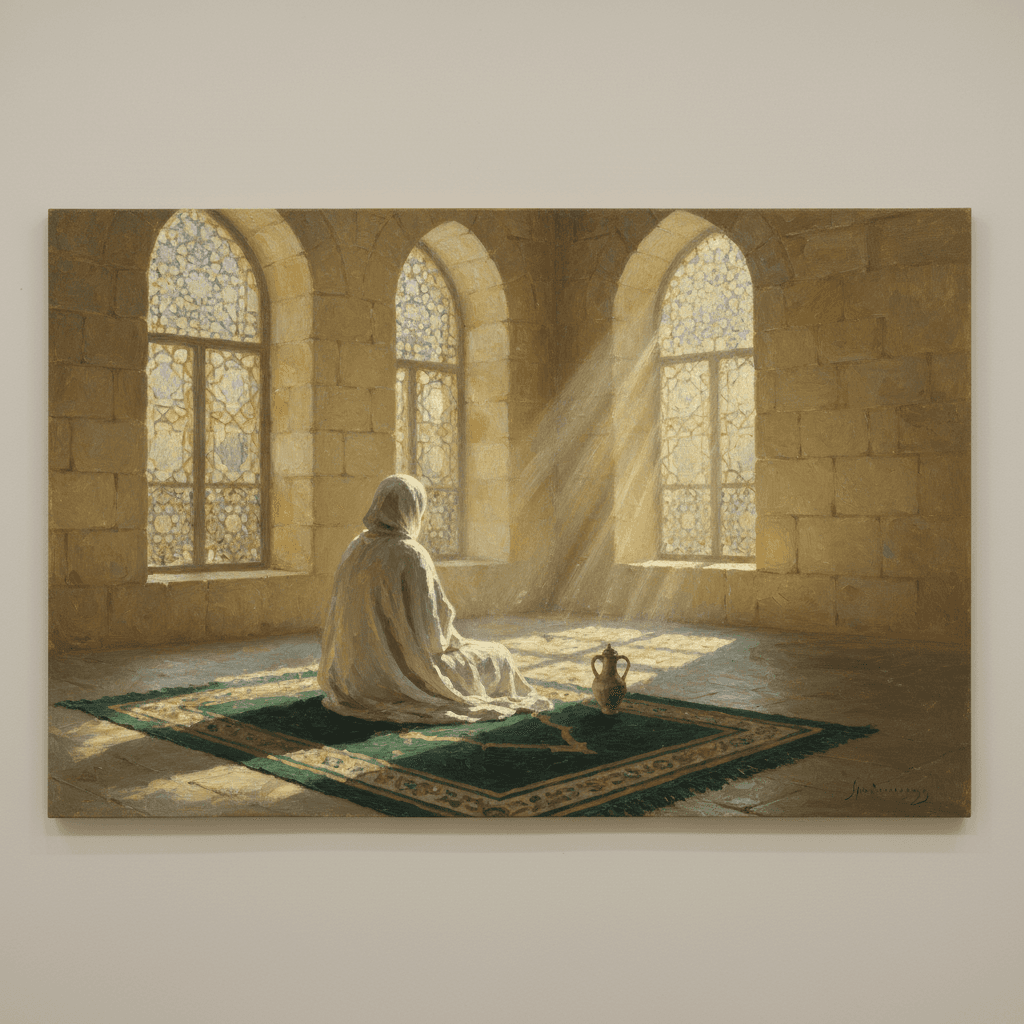
You are overwhelmed. Your mind races between tasks, anxiety building with every notification, every unread message, every undone item on your list. Someone suggests mindfulness — ten minutes of quiet breathing, focusing on the present. And you pause to wonder: is this something a Muslim can do? Or does its Buddhist background put it off-limits?
It is a more nuanced question than people usually expect. And the answer is more practical than either "yes, it's fine" or "no, it's haram" on its own.
The Quick Answer
Secular mindfulness — practiced as a mental focus technique without Buddhist rituals or spiritual framework — is generally permissible for Muslims. The technique of observing your thoughts and anchoring to the present moment is not inherently Buddhist or prohibited. The concern arises when mindfulness includes Buddhist religious practices, mantras from other traditions, or is used as a substitute for Islamic worship as your primary source of inner peace.
أَلَا بِذِكْرِ اللَّهِ تَطْمَئِنُّ الْقُلُوبُ
"Verily, in the remembrance of Allah do hearts find rest."
This verse is the Islamic answer to the restlessness that mindfulness tries to address. The question is not whether a Muslim needs peace of mind — we do. The question is which means of achieving that peace are permissible, and which are even better than what is merely permissible.
What the Quran and Sunnah Say
Islam already has its own rich tradition of present-moment awareness. The Prophet ﷺ emphasized khushu in prayer — a state of mindful presence, heart-focus, and attentiveness that any practitioner of mindfulness would recognize as the same mental quality being trained. Khushu IS Islamic mindfulness, performed five times daily with the added dimension of standing before Allah.
The Quran calls believers repeatedly to dhikr — the active, conscious remembrance of Allah. Not casual mentioning of Allah's name, but deliberate, present-focused awareness:
فَاذْكُرُونِي أَذْكُرْكُمْ وَاشْكُرُوا لِي وَلَا تَكْفُرُونِ
Fadhkuruni adhkurkum washkuru li wa la takfurun
"Remember Me — I will remember you. And be grateful to Me and do not deny Me."
The Prophet ﷺ also said:
مَثَلُ الَّذِي يَذْكُرُ رَبَّهُ وَالَّذِي لاَ يَذْكُرُ رَبَّهُ مَثَلُ الْحَيِّ وَالْمَيِّتِ
"The example of one who remembers his Lord and one who does not is like the example of the living and the dead."
The Islamic framework for inner peace is not absent — it is complete. The question with mindfulness is whether you are adding a permissible tool or replacing a superior one.
Why This Is Actually Hard
The difficulty is that mindfulness exists on a spectrum. At one end: clinical programs like MBSR (Mindfulness-Based Stress Reduction) that are rigorously secular — breathing exercises, body awareness, observing thoughts without judgment. At the other end: explicitly Buddhist meditation programs with mantras, devotional practices, and spiritual frameworks from another religion entirely. In between: a vast range of apps, teachers, retreats, and programs that are somewhere in the middle.
Your nafs knows you are struggling. It says: "Just try it — it is just breathing, it is not actually Buddhism." And in many clinical contexts, that is true. But the boundary is unclear enough that you need to actually look at what a specific practice involves rather than assuming.
The other risk is subtler: using mindfulness as a substitute for salah and dhikr. If ten minutes of secular breathing becomes your go-to when you are stressed, and you skip or rush through your prayers, the permissible thing has pushed out the obligatory one. That is a real pattern for Muslims who adopt wellness practices without an intentional Islamic framework.
What to Do About It — Practical Steps
Step 1: Identify exactly what you are considering. Secular breathing and body awareness exercises: permissible. Programs that include Buddhist mantras, visualizations of Buddhist figures, or explicit spiritual beliefs from Buddhist tradition: not permissible. Check the actual content of what you plan to do — not just what the label says.
Step 2: Replace or supplement with Islamic alternatives. The five to ten minutes you would spend in secular mindfulness can be spent in dhikr — SubhanAllah, Alhamdulillah, Allahu Akbar — with focused attention on the meaning of each phrase. This gives the same mental stillness with the spiritual reward added. See dua for anxiety for the supplications specifically for anxious moments.
Step 3: Use salah as structured mindfulness. Each prayer is designed to bring you into the present moment — facing the qibla, standing before Allah, reciting with attention. Khushu in salah IS Islamic mindfulness. If your salah is rushed and mindless, the better investment is not adding a mindfulness practice — it is improving your salah. See dua for prayer for supplications to enhance your focus.
Step 4: Check secular apps carefully. Many mindfulness apps offer simple breathing exercises and body scans with no religious content — these are permissible to use. Others include guided meditations with explicitly Buddhist or Hindu content. Evaluate each session on its actual content rather than trusting the app brand as a whole.
Step 5: Never let mindfulness replace prayer. If you find yourself reaching for a mindfulness app before reaching for your prayer mat, that is a signal to recalibrate. Salah is the Islamic prescription for the restless soul. Mindfulness, at most, is a supplementary tool — never the foundation. If you struggle with depression or consistent anxiety, there is both Islamic guidance and professional support available.
Find Peace the Islamic Way — Build Daily Dhikr and Prayer Habits
DeenBack helps you build the dhikr and salah habits that bring genuine peace of mind — the kind the Quran promises when you remember Allah consistently.


Free download. Premium features available in-app.
Dua for Anxiety and Mental Peace
اللَّهُمَّ إِنِّي أَعُوذُ بِكَ مِنَ الْهَمِّ وَالْحَزَنِ وَأَعُوذُ بِكَ مِنَ الْعَجْزِ وَالْكَسَلِ
Allahumma inni a'udhu bika min al-hammi wal-hazani, wa a'udhu bika min al-'ajzi wal-kasali
"O Allah, I seek refuge in You from worry and grief, and I seek refuge in You from incapacity and laziness."
This dua addresses worry (hamm), grief (hazan), incapacity, and laziness — the full emotional weight that mindfulness practitioners typically seek relief from. Recite it morning and evening, and in moments of particular overwhelm.
Common Questions
Is mindfulness the same as meditation? Are both haram?
They overlap but are not identical. Secular breathing-based mindfulness is generally permissible. Transcendental Meditation uses Hindu mantras and is not permissible. Loving-kindness meditation can be practiced secularly or in Buddhist form. Each practice must be evaluated based on its actual content — not just its label. See is meditation haram for a full analysis.
What about yoga and mindfulness combined?
Yoga with mindfulness elements is a combination that raises the same questions as each practice individually. See is yoga haram for the detailed Islamic analysis of yoga specifically. The general principle holds: physical and secular elements are permissible, spiritual elements from other religious traditions are not.
My therapist uses mindfulness techniques — should I refuse?
Clinical mindfulness used by therapists is generally secular — breathing regulation, cognitive defusion, body awareness for anxiety management. These are physical techniques, not religious ones. You do not need to refuse them. Simply maintain your Islamic understanding: these are means for managing the body's physiological stress response, not spiritual practices from another tradition.
Can mindfulness help with my Islamic practice?
Yes — if approached correctly. The skill of paying attention without being swept away by thoughts, developed through any permissible means, directly supports khushu in salah. If secular mindfulness training helps you focus in prayer, it has served an Islamic purpose. The goal is always the Islamic spiritual outcome — use whatever permissible tools support it.
The Heart Already Knows Where Peace Is
The Quran told us where peace lives before anyone invented mindfulness as a practice: in the remembrance of Allah. That is not a vague spiritual claim — it is a precise psychological truth about where the restless mind finds its anchor.
Use permissible tools for managing stress. But invest the most in what was designed for you: the five prayers, the morning and evening adhkar, the dua for every moment. Those are the habits that rewire not just your nervous system, but your heart. That is the peace that does not depend on an app.
Build the Dhikr Habit That Actually Calms Your Heart
DeenBack tracks your daily adhkar, prayer consistency, and dua habits — so the peace Allah promised becomes your daily reality, not just a good intention.
Free download. Premium features available in-app.
Frequently Asked Questions
Is mindfulness haram in Islam?
Secular mindfulness — practiced as a mental focus technique without Buddhist rituals, beliefs, or spiritual frameworks — is generally permissible for Muslims. The concern arises when mindfulness involves Buddhist religious practices, mantras from other traditions, or is used as a replacement for Islamic worship.
What makes mindfulness potentially problematic?
Mindfulness becomes problematic when it includes Buddhist religious practices, visualizations of non-Islamic spiritual figures, mantras or invocations from other religions, or when it is used as a substitute for salah and dhikr as the Muslim's primary source of inner peace.
What is the Islamic alternative to mindfulness?
Islam already has its own tradition of present-moment awareness: khushu in salah (focused presence in prayer) and dhikr (remembrance of Allah). The Quran states that hearts find rest in the remembrance of Allah. Dhikr, done with focus and intention, provides the same mental stillness mindfulness promises — with spiritual reward added.
Can Muslims use mindfulness apps like Headspace or Calm?
Many secular mindfulness apps offer breathing exercises and body scan meditations with no religious content — these are permissible. Others include guided meditations with Buddhist mantras, visualizations, or spiritual content from other traditions. Check the specific content of each session rather than the app as a whole.
Is mindfulness the same as meditation? Are both haram or halal?
Mindfulness and meditation overlap but are not identical. Secular breathing-based mindfulness is generally permissible. Transcendental Meditation (TM) uses Hindu mantras and is problematic. Loving-kindness meditation can be practiced secularly or in Buddhist form. Each practice must be evaluated based on its actual content, not just its label.