
- Published on
Is Coloring Your Hair Haram? What Islam Says About Hair Color
- Authors

- Name
- Ahmad
- Role
- Senior Marketing Manager, Islamic education • Deen Back
بِسْمِ اللهِ الرَّحْمٰنِ الرَّحِيْمِ
In the name of God, the Most Gracious, the Most Merciful.
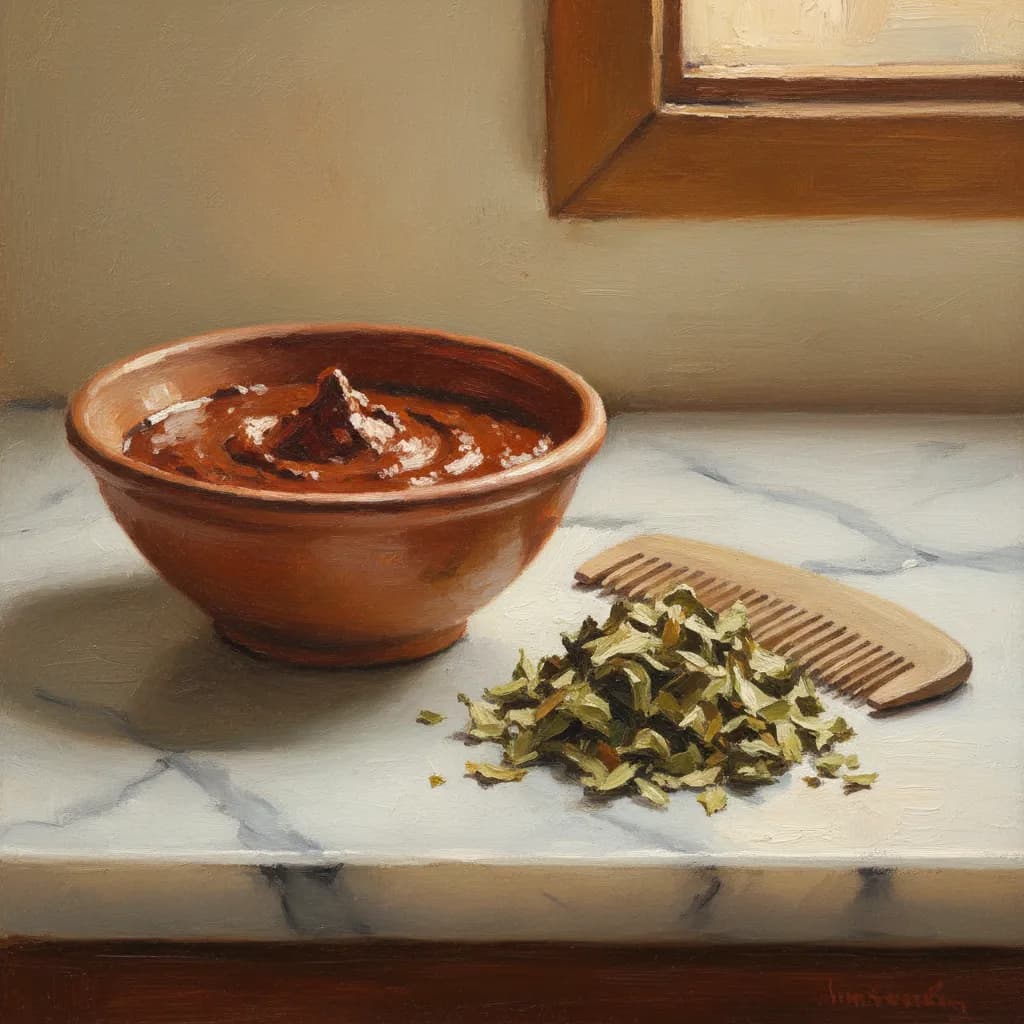
You want to change your hair color. Maybe you have been eyeing a warm auburn for months. Maybe the grey is coming in faster than you expected and you want to do something about it. Or maybe you just want something different — a small change that makes you feel more like yourself.
But the question creeps in: is coloring your hair haram? Someone told you it was. Or you saw a post that made it sound like all hair dye is forbidden. Now you are second-guessing something that felt straightforward five minutes ago.
You deserve clarity on this. And the good news is that Islamic guidance on hair coloring is actually more specific — and more permissive — than most people think.
The Quick Answer
Coloring your hair is permissible in Islam, with one clear exception: pure black dye used to cover grey or white hair is prohibited.
The Prophet ﷺ directly addressed this:
"Change this grey hair, but avoid black." — Sahih Muslim 2102
Every other color — brown, red, auburn, burgundy, blonde, henna — is permitted. Covering grey hair with a non-black color is not just allowed; it is a sunnah practice that the Prophet ﷺ actively encouraged.
What the Quran and Sunnah Say
The primary evidence comes straight from the Prophet ﷺ. When Companions like Abu Bakr came to him with whitening hair, he did not tell them to leave it alone. He told them to change it — with one restriction.
"Change this white hair, but avoid black." — (Sahih Muslim 2102)
The prohibition on black is reinforced by a second hadith that carries a severe warning:
"At the end of time there will be people who dye their hair black like the crop of pigeons. They will not even smell the fragrance of Paradise." — (Sunan Abu Dawud 4212)
Scholars understand this as specifically addressing people who cover grey or white hair with jet black to deceive others about their age. It is about creating a false impression — a form of deception that Islam takes seriously.
On the positive side, the Prophet ﷺ praised specific natural dyes by name:
"The best things with which you can change grey hair are henna and katam." — (Sunan al-Tirmidhi 1753)
الحِنَّاء وَالكَتَمُ (al-hinna' wal-katam) — henna and katam (a plant that produces a dark reddish-brown). These were singled out as the best options, making them among the most clearly endorsed grooming choices in the sunnah.
The Quran supports the broader principle of beautification:
"O children of Adam, take your adornment at every place of worship." — (Quran 7:31)
And the Prophet ﷺ said:
"Allah is beautiful and loves beauty." — (Sahih Muslim 91)
Islam is not a religion that asks you to neglect your appearance. The restriction on black dye is a specific exception within a general culture of self-care and grooming.
Why This Is Actually Hard
The ruling sounds simple in theory. But when you are actually choosing a color, the questions multiply.
What counts as "pure black"? Is a very dark espresso brown the same thing? What about temporary black dye that washes out? What about someone whose natural hair color is black — can they maintain it? These are edge cases that scholars have discussed, and the answers are not always unanimous.
Then there is the cultural layer. Beauty standards push certain looks. Social media makes it feel like everyone is getting highlights, balayage, or bold fashion colors. The nafs gets involved — sometimes the desire to color your hair is genuinely about self-care, and sometimes it is about chasing validation from people whose opinion should not matter to you.
This tension between caring for yourself and chasing beauty standards is the same tension that runs through questions about whether makeup is haram or the broader halal vs haram framework. The surface question is about an action. The deeper question is about intention.
What to Do About It — Practical Steps
1. Anchor yourself in the baseline ruling.
Non-black hair color is permitted. Pure black dye on grey or white hair is prohibited. This is your anchor point. Most of the confusion in this topic dissolves once this baseline is clear. If you are considering brown, auburn, red, blonde, copper, henna, or any shade that is not pure black, you are in permissible territory.
2. Address the black dye question honestly.
If you have been using black dye — or planning to — ask yourself the real question: is this about covering grey in a way that looks deceptively young? The hadith is addressing the nafs that wants to project a false image. Very dark brown shades that are distinguishable from jet black are considered permissible by many scholars. The line is pure black used to fake youthfulness, not simply wanting a darker shade.
This same kind of self-honesty matters in other body-related Islamic questions too, whether it is about tattoos or gold jewelry. The outward act is only half the equation.
3. Embrace henna as a sunnah practice, not a compromise.
Many people see henna as the "boring" option when it is actually the most praised one. The Prophet ﷺ called henna one of the best things to change grey hair. Using it is not settling — it is following a prophetic recommendation. Henna comes in a range of shades depending on processing and mixing. Explore what works for your hair.
4. Make the act worship, not vanity.
Before coloring your hair, say بِسْمِ اللَّهِ (Bismillah). Thank Allah for your health and the ability to care for yourself. The same grooming act done with niyyah (intention) becomes connected to your deen. The Prophet ﷺ modeled this — every act of self-care was done with awareness that the body is an amanah (trust) from Allah.
Turn everyday grooming into sunnah practice
Deen Back helps you build daily habits rooted in dhikr and sunnah — including the small acts of worship woven into your everyday routine.


Free download. Premium features available in-app.
5. Consult a scholar for specific edge cases.
If your situation involves professional requirements, medical conditions, or a specific product you are unsure about, take the question to a qualified scholar rather than relying on general advice. IslamQA has a detailed discussion on hair dyeing rulings that is a good starting point. For a deeper look at the closely related topic of hair dyeing specifically, see our article on is dying your hair haram.
Dua for Strength
When you are caring for your appearance and want to keep your heart in the right place, carry this dua:
اللَّهُمَّ كَمَا حَسَّنْتَ خَلْقِي فَحَسِّنْ خُلُقِي
Allahumma kama hassanta khalqi fa-hassin khuluqi.
"O Allah, just as You have made my outward form beautiful, make my character beautiful too." — (Musnad Ahmad / Mishkat al-Masabih 2387)
This dua ties the act of caring for your outer self to the work that matters most: refining your inner character.
Common Questions
Is it haram to color your hair an unnatural color like blue or pink?
The color itself is not haram — the prohibition is specifically on pure black. However, bold fashion colors worn in public may attract attention in ways that conflict with haya' (modesty). Context matters. Wearing a bright color at home or among women is different from wearing it specifically to draw attention in mixed settings. The principle is the same one that applies to makeup and public display.
Can I color my hair during Ramadan?
Yes. There is no prohibition on coloring your hair while fasting. Hair dye is applied externally and does not break the fast. You can color your hair at any time during Ramadan, day or night, without affecting the validity of your fast.
Is permanent hair dye different from temporary dye in terms of ruling?
The ruling is based on the color produced, not whether the dye is permanent, semi-permanent, or temporary. A temporary black rinse on grey hair falls under the same prohibition as a permanent black dye. And a permanent auburn color is just as permissible as a temporary one. What matters is the resulting shade and the intention behind it.
Should I stick to only natural dyes?
Natural dyes like henna and katam are specifically praised in the sunnah, which gives them a special status. But synthetic dyes in permitted colors are not prohibited. Most scholars hold that the ruling is about the color outcome rather than the chemical composition. That said, choosing natural options has both a spiritual connection to the sunnah and potential health benefits that are worth considering.
Your Journey Starts Now
Is coloring your hair haram? For the vast majority of colors and intentions, no. Islam encourages you to care for your appearance. The sunnah specifically recommends covering grey hair with henna or other non-black colors. The one firm line — pure black dye on grey hair — is clearly drawn in authentic hadith.
The real work is not about memorizing a ruling. It is about aligning your grooming habits with your deen so that even something as routine as coloring your hair becomes an act done with awareness, gratitude, and intention. That is the version of self-care Islam calls you toward.
Start with the baseline. Check your intention. And let the small acts of sunnah grooming become part of how you walk through your day with purpose.
Daily sunnah habits that transform your routine
Deen Back helps you build a consistent daily practice — dhikr, salah tracking, and reflection — so the small sunnah acts stay present in your life.
Free download. Premium features available in-app.
Frequently Asked Questions
Is coloring your hair haram in Islam?
Coloring your hair is generally permissible in Islam. The Prophet (peace be upon him) encouraged changing grey hair with dye. The only clear prohibition is using pure black dye to cover grey or white hair, based on Sahih Muslim 2102. All other colors — brown, red, henna, auburn — are allowed.
Is it haram for men to color their hair?
No. Men coloring their hair is permitted and even encouraged as a sunnah practice when covering grey hair. The same prohibition on pure black dye applies to men. The Companions like Abu Bakr used henna to color their grey hair on the advice of the Prophet (peace be upon him).
Can I use highlights or balayage as a Muslim?
Highlights and balayage using non-black colors are permissible. The ruling focuses on the color used, not the technique. However, if the style is intended to attract non-mahram attention in ways that conflict with modesty, scholars advise caution about the intention behind it.
Is henna hair dye sunnah?
Yes. The Prophet (peace be upon him) specifically praised henna and katam as the best substances for changing grey hair (Sunan al-Tirmidhi 1753). Using henna to color your hair is not just permissible — it is a recommended sunnah practice.
Does hair dye affect wudu or prayer?
Most hair dyes do not affect wudu since the head is wiped, not washed. However, some dyes create a thick coating that may prevent water from reaching the hair during ghusl. If your dye forms a waterproof barrier, ensure ghusl is valid by checking that water can still penetrate to the hair.