
- Published on
Are Tattoos Haram? What to Do If You Already Have One
- Authors

- Name
- Ahmad
- Role
- Senior Marketing Manager, Islamic education • Deen Back
بِسْمِ اللهِ الرَّحْمٰنِ الرَّحِيْمِ
In the name of God, the Most Gracious, the Most Merciful.
Maybe you got it years ago, before you started taking your deen seriously. Maybe you are thinking about getting one now and want to know where Islam stands. Or maybe you already know the answer but are looking for someone to tell you it is okay.
Wherever you are, this article is not here to shame you. It is here to give you the truth — and then help you figure out what to actually do with it. Because the ruling is only half the story. The other half is how you respond to it.
The Quick Answer
Tattoos are haram in Islam. The Prophet ﷺ was explicit about this:
"Allah has cursed the one who does tattoos and the one who has them done." — (Sahih al-Bukhari 5937)
This hadith is clear and agreed upon by scholars across all four madhabs. The prohibition covers both getting a tattoo and giving one. But if you already have a tattoo, keep reading — your situation is not hopeless. Far from it.
What the Quran and Sunnah Say
The prohibition of tattoos is rooted in a broader Quranic principle. Allah tells us about Shaytan's plan:
وَلَأُضِلَّنَّهُمْ وَلَأُمَنِّيَنَّهُمْ وَلَآمُرَنَّهُمْ فَلَيُبَتِّكُنَّ آذَانَ الْأَنْعَامِ وَلَآمُرَنَّهُمْ فَلَيُغَيِّرُنَّ خَلْقَ اللَّهِ
"And I will mislead them, and I will arouse in them false desires, and I will command them so they will slit the ears of cattle, and I will command them so they will change the creation of Allah." — (Surah An-Nisa, 4:119)
Scholars cite this verse as the foundation for why permanently altering the body — including tattoos — is forbidden. Allah created you in the best form (ahsan al-taqwim), and changing that creation permanently is a response to Shaytan's whisper, not to Allah's guidance.
The hadith evidence is even more direct. In addition to the narration in Bukhari, Ibn Umar reported:
"The Messenger of Allah ﷺ cursed the one who adds hair extensions and the one who has them done, and the one who does tattoos and the one who has them done." — (Sahih al-Bukhari 5937, Sahih Muslim 2124)
The word used in Arabic is al-washimah (the tattooer) and al-mustawshimah (the one who gets tattooed). Both are included in the curse — the person giving the tattoo and the person receiving it. This is not a grey area in Islamic jurisprudence. The ruling is well-established.
That said, understanding why something is haram is just as important as knowing that it is. If you are exploring other rulings that affect daily life, the same principle of body care applies to questions like whether smoking is haram and whether hookah is permissible.
Why This Is Actually Hard
If you already have tattoos, you cannot just undo them like deleting a playlist. They are on your skin. Every time you look in the mirror, every time someone asks about them, you are reminded. And that can bring up one of two reactions: guilt that paralyzes you, or defensiveness that hardens you.
Your nafs will push you toward both extremes:
- "I am too far gone — what is the point of even trying?"
- "It is just ink — Allah cares about what is in my heart"
- "Everyone has tattoos now, it cannot be that serious"
- "I will deal with it later"
The truth is somewhere more honest. Yes, tattoos are haram. No, having one does not make you a bad Muslim. And no, you do not get to dismiss the ruling because it is uncomfortable. The real question is not whether tattoos are haram — it is what you do next that defines your relationship with Allah.
If you are someone considering a tattoo, the social pressure is real. Tattoos are everywhere — on athletes, influencers, friends. They are presented as self-expression. Your nafs will frame it as identity. But your identity as a Muslim is already the most beautiful thing you carry.
What to Do About It — Practical Steps
If You Already Have a Tattoo
This is the part most articles skip. You have the tattoo. It is there. Here is what to do:
Step 1: Make sincere tawbah
Repentance in Islam requires three things: stopping the sin, regretting it, and resolving not to return to it. Since the tattoo is already done, you have stopped. Now bring genuine regret — not self-hatred, but honest recognition that this was not pleasing to Allah. And commit to not getting another one.
The Prophet ﷺ said:
"The one who repents from sin is like one who has no sin." — (Sunan Ibn Majah 4250)
That is your clean slate. Take it.
Step 2: You do not need to remove it
The majority of scholars agree that tattoo removal is not required for repentance. Removal is painful, expensive, and can leave scarring. The sin was in the act of getting the tattoo, not in having ink under your skin. Your tawbah is between you and Allah — not between you and a laser clinic.
Step 3: Do not let it stop your worship
This is critical. Some Muslims feel so guilty about their tattoos that they stop praying or avoid the masjid. That is Shaytan's trap. Your prayers are valid. Your wudu is valid. A tattoo does not create a barrier between you and Allah — only you can do that by walking away from salah.
Step 4: Channel the energy into something better
The same desire for self-expression that led to the tattoo can be redirected. Build a daily Islamic habit that actually marks your soul, not just your skin. Start a dhikr streak. Memorize a new surah. Let your identity be shaped by what you do every day, not what is inked on your body.
Deen Back was built for exactly this kind of turning point — when you know the ruling and need help building the habits that follow.
Turn your tawbah into daily action
Deen Back helps you build consistent dhikr, track your streaks, and replace old habits with worship that transforms your heart — not just your skin.


Free download. Premium features available in-app.
If You Are Considering a Tattoo
Stop and ask yourself one question: In ten years, when your relationship with Allah is deeper, will you wish you had this tattoo — or wish you did not?
Here is what to do instead:
- Wait 30 days. If the desire passes, it was nafs. If it stays, it is still nafs — but now you know it is persistent and needs real work.
- Identify what you are actually looking for. Is it identity? Belonging? Self-expression? Islam offers all of these in ways that are permanent in the truest sense — they stay with you into the akhirah.
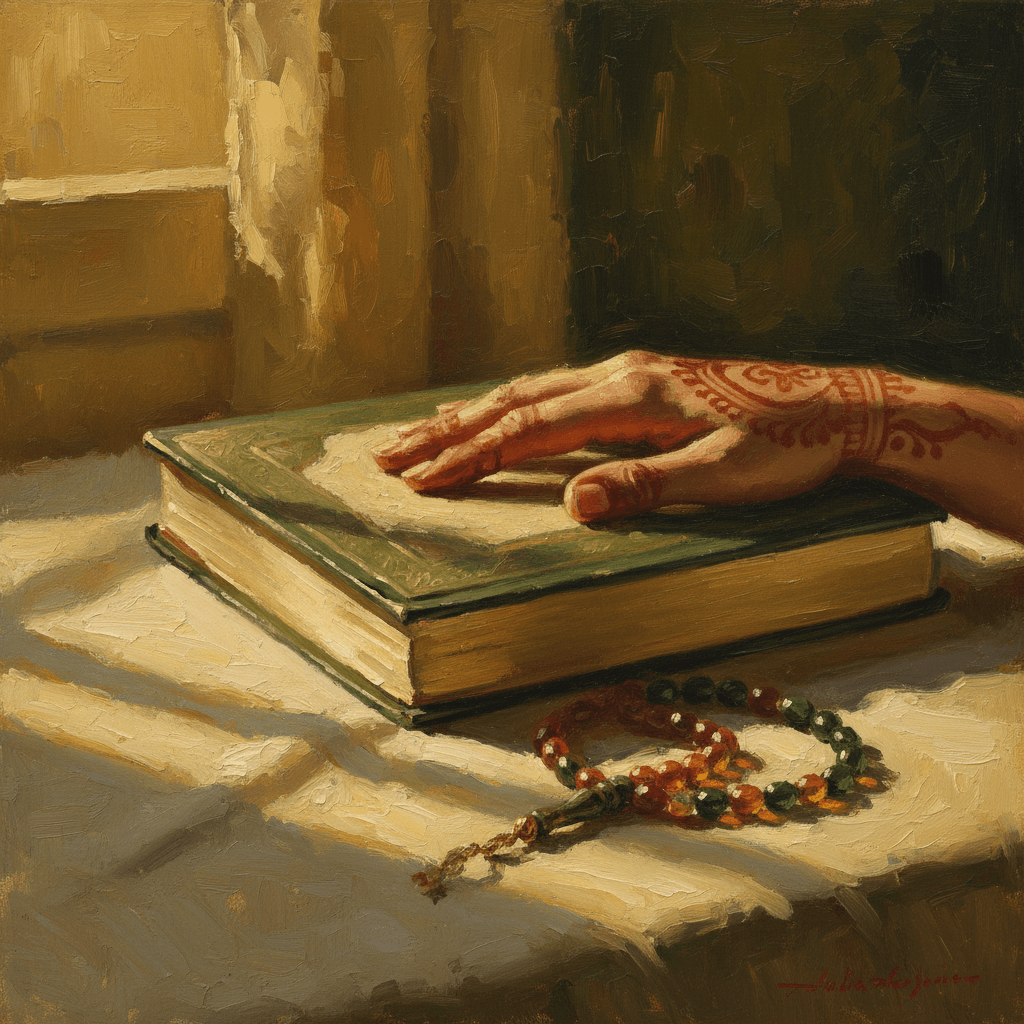
- Try henna instead. Henna is Sunnah, beautiful, and temporary. It lets you express yourself without crossing the line. The Prophet ﷺ recommended it, and it has been part of Muslim culture for centuries.
- Talk to someone you trust. Not someone who will validate the decision, but someone who will be honest with you. A friend who fears Allah on your behalf is worth more than a hundred who tell you what you want to hear.
Dua for Strength
When the desire for something haram feels overwhelming — whether it is a tattoo, or anything else your nafs is pulling you toward — ground yourself with this dua:
اللَّهُمَّ إِنِّي أَعُوذُ بِكَ مِنْ شَرِّ نَفْسِي وَمِنْ شَرِّ كُلِّ دَابَّةٍ أَنْتَ آخِذٌ بِنَاصِيَتِهَا
"O Allah, I seek refuge in You from the evil of my own self and from the evil of every creature that You hold by its forelock." — (Sunan Abu Dawud 5074)
And for those carrying the weight of past mistakes:
رَبَّنَا ظَلَمْنَا أَنفُسَنَا وَإِن لَّمْ تَغْفِرْ لَنَا وَتَرْحَمْنَا لَنَكُونَنَّ مِنَ الْخَاسِرِينَ
"Our Lord, we have wronged ourselves, and if You do not forgive us and have mercy upon us, we will surely be among the losers." — (Surah Al-A'raf, 7:23)
This was the dua of Adam and Hawwa (peace be upon them) — the first humans to make a mistake and the first to be forgiven. You are in good company.
Common Questions
Are my prayers still valid if I have a tattoo?
Yes. Your prayers are absolutely valid. A tattoo does not break your wudu or invalidate your salah. The sin was in the act of getting the tattoo, and that is addressed through tawbah. Abandoning prayer because of a tattoo would be adding a far greater sin on top of a lesser one. Pray, and never stop praying.
What about henna — is that the same?
Not at all. Henna is permissible and even part of the Sunnah. It sits on the surface of the skin, fades naturally, and does not involve needles or permanent alteration. The Prophet ﷺ recommended henna for women, and it was common among the companions. If you want body art, henna is the halal path. For more on understanding Islamic boundaries around substances and the body, you may also want to read about whether vaping is haram.
Do I need to remove my tattoo for Allah to forgive me?
No. Sincere tawbah does not require tattoo removal. The scholars of IslamQA and others have clarified that removal is not a condition of repentance. If it is easy and affordable for you, some scholars recommend it, but it is not obligatory. Allah's mercy is bigger than any mistake on your skin.
What if I feel judged at the masjid?
That says more about the people judging than about you. The masjid is the house of Allah, and you have every right to be there. The Prophet ﷺ welcomed sinners, hypocrites, and strangers into his masjid — because the masjid is where hearts change. If someone looks at your tattoo and judges you, that is their test, not yours. Walk in, pray, and let Allah handle the rest.
Are tattoos haram even if the design is Islamic?
Yes. The prohibition is on the act of tattooing — permanently piercing the skin and injecting ink — not on the content of the design. In fact, tattooing Quran verses or the name of Allah on the body is considered more problematic by scholars, as it exposes sacred text to impure situations like using the bathroom. Good intentions do not override a clear prohibition.
Your Skin Is Temporary — Your Soul Is Not
Whether you have tattoos or are thinking about getting one, the fact that you are here reading this means something. It means your fitrah — that natural inclination toward Allah — is still speaking. Listen to it.
If you already have a tattoo, do not let it become a wall between you and your Creator. Make tawbah, keep praying, and pour your energy into building the kind of habits that leave marks on your heart — the kind that Allah sees and rewards.
Allah says:
إِنَّ اللَّهَ يُحِبُّ التَّوَّابِينَ وَيُحِبُّ الْمُتَطَهِّرِينَ
"Indeed, Allah loves those who are constantly repentant and loves those who purify themselves." — (Surah Al-Baqarah, 2:222)
You are not defined by the ink on your skin. You are defined by what you do next.
Start building habits that mark your soul
Track your dhikr, build streaks, set prayer-time reminders, and turn your tawbah into daily transformation. Your nafs does not stand a chance.
Free download. Premium features available in-app.
Frequently Asked Questions
Are my prayers still valid if I have a tattoo?
Yes. Your prayers are valid. A tattoo does not invalidate wudu or salah. The sin is in the act of getting the tattoo, not in having it on your body afterward. Scholars are clear that a person with tattoos should continue praying without hesitation — abandoning prayer would be a far greater sin than the tattoo itself.
Is henna the same as a tattoo in Islam?
No. Henna is permissible and even encouraged in the Sunnah. The Prophet ﷺ recommended henna for women, and it was widely used among the companions. Unlike tattoos, henna is temporary, sits on the surface of the skin, and does not involve needles or permanent alteration of the body.
Do I need to get my tattoo removed to repent?
The majority of scholars say removal is not required for your repentance to be accepted. Tattoo removal is painful, expensive, and can cause scarring. Since the sin was in getting the tattoo — not in having it — sincere tawbah is sufficient. If removal is easy and affordable for you, some scholars recommend it, but it is not a condition of repentance.
What about temporary tattoos or tattoo stickers?
Temporary tattoos that wash off are generally permissible as long as they do not depict anything haram, do not imitate non-Muslim religious symbols, and do not prevent water from reaching the skin during wudu. They are closer to henna than to actual tattoos.
Are tattoos haram even if they have Islamic content like Quran verses?
Yes. The prohibition is on the act of tattooing itself — permanently altering the body with needles and ink — regardless of the content. Tattooing Quran verses or Islamic phrases on the body is actually considered more problematic by scholars, as it exposes sacred text to impure situations.