
- Published on
How to Stop Being Arrogant in Islam: A Practical Guide to Tawadu
- Authors

- Name
- Ahmad
- Role
- Senior Marketing Manager, Islamic education • Deen Back
بِسْمِ اللهِ الرَّحْمٰنِ الرَّحِيْمِ
In the name of God, the Most Gracious, the Most Merciful.
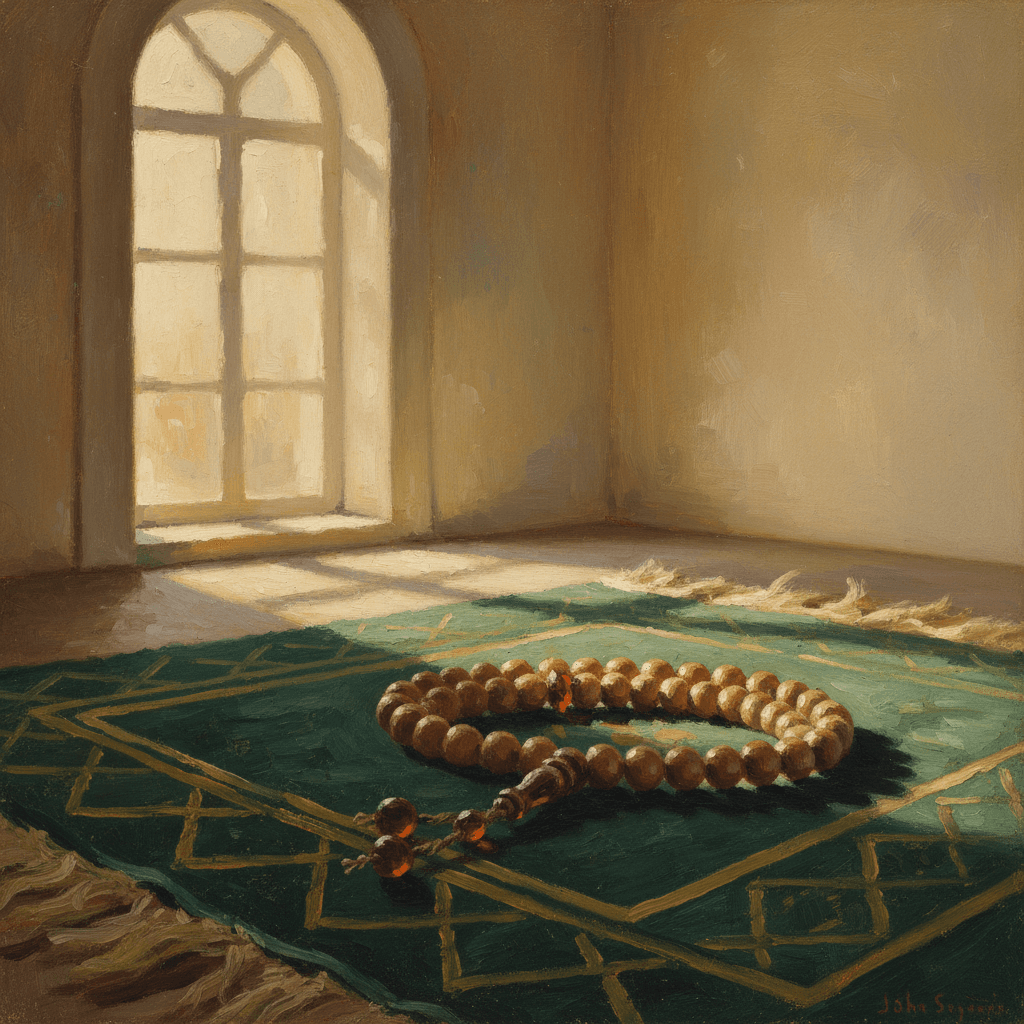
Most of us would not describe ourselves as arrogant. We know the hadith. We have heard the warnings. We nod along when the imam mentions kibr.
And then someone corrects us in front of others and something tightens in the chest. Or a friend gets the promotion we wanted and we cannot quite celebrate for them. Or we help someone and notice, quietly, how much better we are at this than they are.
The nafs is subtle. It does not announce itself as pride. It presents itself as self-awareness, high standards, or just honesty.
That is why overcoming arrogance requires more than knowing it is wrong. It requires a systematic practice of confronting, identifying, and replacing it — one habit at a time.
Why This Matters
The Prophet ﷺ was direct about where arrogance leads:
"No one who has a mustard seed's weight of arrogance in his heart will enter Jannah."
— (Sahih Muslim 91)
A companion asked: "But a man loves for his clothes to be nice and his shoes to be nice." The Prophet clarified: kibr (arrogance) is "rejecting the truth and looking down on people." It is not about enjoying nice things. It is the internal posture — the belief that you are above correction, above others, above need.
This was the sin of Iblis. He was asked to bow and he said: I am better. Sound knowledge, years of worship, even genuine talent — none of it matters if kibr sits quietly underneath it. Allah says: "Indeed, He does not love the arrogant." (Surah An-Nahl, 16:23)
What is at stake is not just reward or punishment. It is the most fundamental relationship in a believer's life: the relationship of humility before Allah.
Step-by-Step Guide to Building Tawadu
Step 1: Do daily muhasabah on your pride triggers.
For one week, keep a mental (or written) note of every moment you felt superior to someone, defensive when corrected, or resentful of someone else's praise. Do not judge yourself — just observe. You cannot treat what you cannot see. Muhasabah — honest self-accounting — is the starting point for any real change in character.
Step 2: Learn the reality of your origin.
The Quran says: "We created the human from clay, from molded mud." (Surah Al-Hijr, 15:26) And: "From what thing did He create him? From a sperm-drop He created him and proportioned him." (Surah Abasa, 80:18-19)
This is not self-deprecation. It is orientation. The person who knows they came from a drop and will return to dust cannot sustain the architecture of pride — at least not without great effort. Revisit your origin regularly.
Step 3: Serve someone beneath your perceived station.
The Prophet ﷺ mended his own sandals. He sat with the poor. He accepted invitations from enslaved people. He visited the sick regardless of their status. These were not incidental acts — they were deliberate breaks in the logic of hierarchy.
Pick one act each week: help someone who cannot help you back, sit with someone you might normally overlook, ask for advice from someone younger or less experienced. These specific acts chisel pride off in ways that inner knowledge alone cannot.
Step 4: Practice receiving correction graciously.
Arrogance defends. Tawadu listens. The next time someone corrects you, try saying: "Jazakallah khair — I had not considered that." Mean it. Even if you disagree, start with the genuine attempt to hear.
The Prophet ﷺ was praised by Allah: "And if you had been rude in speech and harsh in heart, they would have disbanded from about you." (Surah Al-Imran, 3:159). Softness in correction — both giving and receiving — is the mark of the humble.
Step 5: Make gratitude structural, not occasional.
Pride attributes achievement to the self. Gratitude returns it to Allah. After any success — a good result, praise from a colleague, an achievement — say:
مَا شَاءَ اللَّهُ لَا قُوَّةَ إِلَّا بِاللَّهِ
Ma sha Allah, la quwwata illa billah
"This is what Allah has willed; there is no power except with Allah." — (Surah Al-Kahf, 18:39)
Make this an automatic response to anything that could inflate the ego. It keeps the attribution correct.
Step 6: Seek the company of the humble.
Environment shapes character more than willpower. If the people around you constantly compare, compete, and celebrate status, your nafs will follow. Seek the company of people who speak less about themselves and more about their need for Allah. Their company is medicine for pride.
Track Your Daily Tawadu Practice
DeenBack helps you build the daily habits that replace kibr with humility — from muhasabah to gratitude dhikr — one consistent day at a time.


Free to download. A paid plan is required to use the app’s tools.
Making Tawadu Stick — The Habit Science
The Prophet ﷺ said: "The most beloved deeds to Allah are the most consistent, even if they are small." (Sahih Bukhari 6464)
The temptation is to fight arrogance with a grand internal decision: "From today, I will be humble." That almost never works, because kibr does not live in declarations — it lives in reflexes.
What works is small, repeated acts of deliberate humility that rewire the reflex over time. Serving someone weekly. Saying the gratitude formula after every praise. Sitting with muhasabah for five minutes each night.
Track these acts. Not to feel good about yourself — that would be ironic — but to make the practice visible and consistent. What gets measured gets done.
The how to be humble in Islam post goes deeper into the Prophetic practices of tawadu. And the how to control your nafs in Islam guide gives the broader framework for all nafs diseases, of which kibr is the root.
Common Mistakes to Avoid
Confusing suppression with elimination. Forcing yourself to be quiet when arrogance rises is not the same as losing the arrogance. Real tawadu changes the internal assessment — the person genuinely stops feeling superior, not just stops expressing it. The internal work (muhasabah, origin-awareness, service) is what changes the root.
Fighting arrogance with more arrogance. "At least I am working on my pride unlike those people." The nafs will use your very effort to cure it as new material for comparison. Watch for this. The cure for arrogance is not self-congratulation about being on the cure — it is returning to Allah in helplessness.
Waiting for the feeling to come before acting humble. You will not feel humble before you act humble. You act humble — you serve, you listen, you acknowledge — and the feeling gradually follows. Action before feeling, not the other way around.
Skipping the purification of heart work. Kibr is not just a behavioral problem. It is a disease of the heart that requires purification. External habits help, but they need to be paired with sincere dua, istighfar, and Quran recitation that soften the heart.
Common Questions
How long does it take to stop being arrogant? There is no fixed timeline. Scholars say the diseases of the heart take as long to cure as they took to form — and kibr often forms over years. Give yourself a year of consistent practice before expecting dramatic change. What you will notice sooner is the ability to catch pride before it fully expresses — that gap between impulse and action is where tawadu grows.
Is self-confidence haram? No. Feeling capable and taking pride in your work is not kibr. The distinction is in the attribution (Allah gave me this) and in the relationship with others (I do not consider myself above them). Read what is kibr in Islam for the full scholarly discussion of where confidence ends and arrogance begins.
What if my arrogance comes from knowledge — I genuinely know more than others about something? Knowledge is one of the most common sources of kibr. The scholars — the people who knew the most — were often the most humble, precisely because they saw how vast what they did not know was. Ibn Mas'ud said: "True knowledge is to say 'I do not know' when you do not know." Whenever your knowledge makes you dismissive of others, that is the nafs exploiting your learning. The sincere tawbah guide has specific sections on repenting from sins of the heart.
The Long Road Back to the Ground
Arrogance is Iblis's sin. Humility is the posture of the Prophets. Every prophet — Ibrahim, Musa, Isa, Muhammad ﷺ — combined extraordinary status with complete submission to Allah.
That is not a coincidence. It is the formula. The higher you are lifted, the more dangerous it is to forget you were created from clay. The person who keeps that reality alive — not as performance but as genuine orientation — is the one whose status with Allah actually rises.
Start with one small act of deliberate tawadu today. Service, silence when you want to be heard, a genuine thank-you when you are corrected. The mustard seed of pride is real. So is the mustard seed of tawadu.
Replace Kibr With Daily Tawadu Habits
DeenBack helps you build consistent self-improvement habits grounded in the Sunnah — tracking your muhasabah, dhikr, and service practices that slowly replace pride with genuine humility.
Free to download. A paid plan is required to use the app’s tools.
Frequently Asked Questions
What does Islam say about arrogance?
The Prophet said: 'No one who has even a mustard seed's weight of arrogance in his heart will enter Jannah.' (Sahih Muslim 91). Kibr (arrogance) is one of the most serious diseases of the heart in Islam because it was the very sin of Iblis — the refusal to submit.
What is the difference between confidence and arrogance in Islam?
Confidence recognizes your abilities as gifts from Allah and acts accordingly. Arrogance attributes those abilities to yourself and looks down on others. The test: does your strength make you more grateful to Allah and more generous to people, or does it make you dismissive of others? That internal posture is the dividing line.
How do I know if I am arrogant?
Signs of kibr include: disliking being corrected, comparing yourself favorably to others, finding it difficult to apologize, feeling superior based on knowledge, wealth, or lineage, and discomfort when others receive praise you feel you deserve. The heart knows. Muhasabah (self-accounting) reveals what we prefer not to see.
What is the Islamic cure for arrogance?
The cure for kibr has two parts: knowledge and practice. Knowing the reality of your origin (a drop of fluid), your end (dust), and your complete dependence on Allah destroys the logical basis for pride. Practicing humility through specific daily acts — serving others, sitting with the poor, seeking forgiveness — builds tawadu into the character.
Why is arrogance so hard to overcome?
Because the nafs feeds on status, comparison, and recognition. Arrogance often disguises itself as justified confidence, righteous anger, or high standards. The person who is arrogant often believes they are simply being realistic about their own excellence. This is exactly why the Prophet warned that arrogance can be present in a heart the size of a mustard seed — small, hidden, but deadly.