
- Published on
How to Revive Your Iman After a Setback
- Authors

- Name
- Ahmad
- Role
- Senior Marketing Manager, Islamic education • Deen Back
بِسْمِ اللهِ الرَّحْمٰنِ الرَّحِيْمِ
In the name of God, the Most Gracious, the Most Merciful.
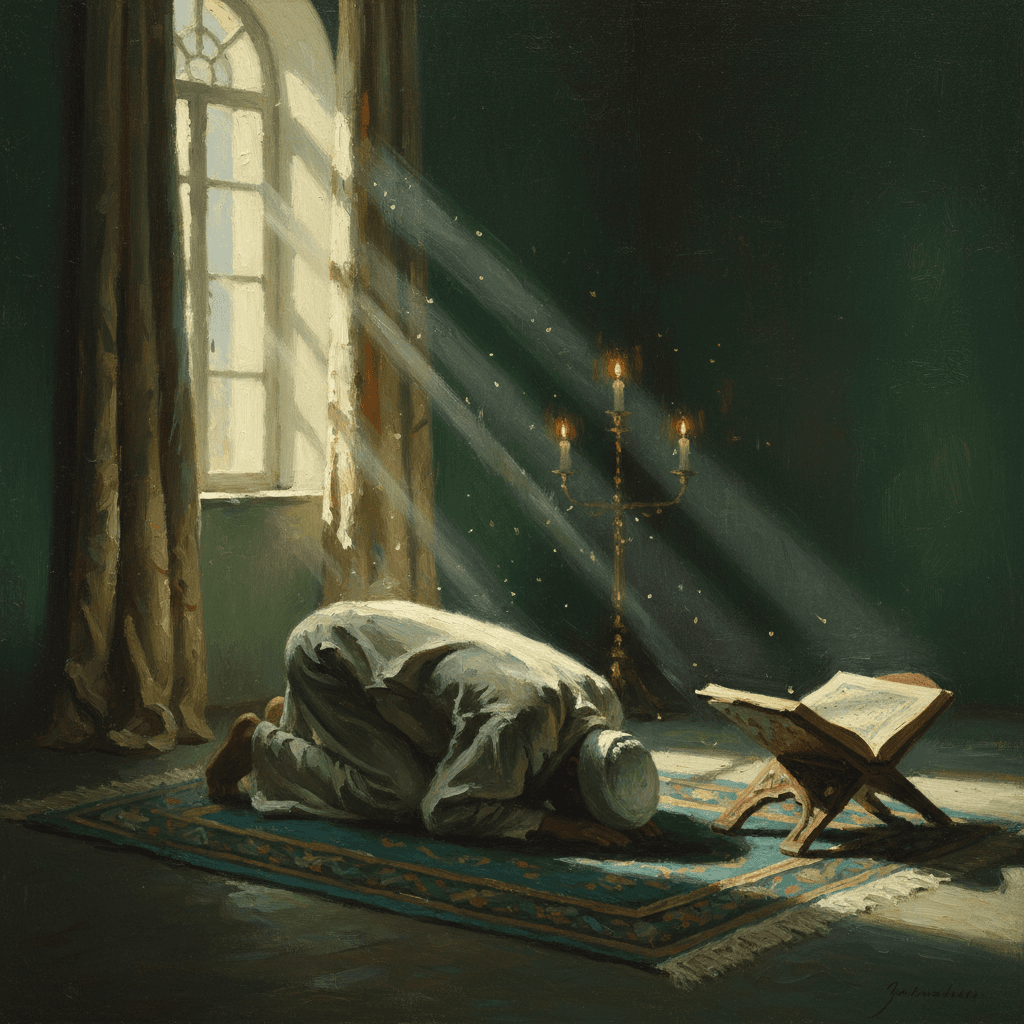
You've been through something. Maybe it was a sin you kept repeating until it stopped feeling like a sin. Maybe it was a heartbreak or loss that left you asking questions you don't know how to ask Allah. Maybe it was just drift — no dramatic event, just weeks and months of slowly not showing up for your deen until the distance became a canyon.
You are not alone. And more importantly: you are not lost.
The Prophet ﷺ told us that iman increases and decreases — that is its nature, not your failure. But he also gave us the map back. This article is that map.
Why This Is Hard — The Gap Between Knowing and Doing
Most Muslims in an iman slump don't lack knowledge. They know what they should do: pray, make tawbah, read Quran, make dhikr. They've known this since childhood.
The problem is the gap between knowing and doing, and that gap is guarded by the nafs.
The nafs after a setback becomes your worst companion. It whispers: "Your sins are too many." "You've been away too long." "You're a hypocrite to pray now when you weren't praying before." "Start on Monday." "Start in Ramadan." "Start when you feel ready."
None of this is from Allah. The nafs manufactures shame as a tool of paralysis. Recognising this is the first step.
Why It Matters — The Islamic Foundation
Allah says in the Quran:
قُلْ يَا عِبَادِيَ الَّذِينَ أَسْرَفُوا عَلَىٰ أَنفُسِهِمْ لَا تَقْنَطُوا مِن رَّحْمَةِ اللَّهِ
Qul ya 'ibadiyalladhina asrafu 'ala anfusihim la taqnatu min rahmatillah
"Say, O My servants who have transgressed against themselves — do not despair of the mercy of Allah."
This verse was not revealed for people who had minor lapses. It was revealed for people who had truly transgressed — and it still tells them: do not despair. That despair is itself the trap.
The Prophet ﷺ confirmed: "Indeed faith wears out in your heart as clothes wear out, so ask Allah to renew the faith in your hearts." ([Musnad Ahmad, Hakim — authenticated])
Iman renewal is a legitimate Islamic need, not a mark of weakness.
Step-by-Step Guide: Reviving Your Iman
Step 1: Name the Setback Without Minimising It
Before you can move forward, you have to be honest about what happened. Not to punish yourself — to diagnose accurately.
Was it a specific sin you kept repeating? Name it. Was it a theological crisis — questions about Islam you never processed? Name it. Was it purely environmental — bad company, a move, a breakup? Name it.
The nafs either minimises ("it wasn't that bad") or catastrophises ("there's no coming back"). Neither is accurate. Name the thing clearly and move on.
Step 2: Make Tawbah — Once, Sincerely
Tawbah is not a multi-step bureaucratic process. It is a turning — of the heart, away from the thing and toward Allah. The conditions are:
- Sincere regret for what happened
- Stopping the sin immediately
- Firm intention not to return
- Restoring the rights of others if a person was harmed
إِنَّ اللَّهَ يَقْبَلُ تَوْبَةَ الْعَبْدِ مَا لَمْ يُغَرْغِرْ
"Indeed Allah accepts the repentance of a servant as long as the death rattle has not reached his throat."
— (Tirmidhi 3537)
Make tawbah tonight. Not a perfect tawbah — a real one. Say the words, feel the weight, and move.
Step 3: One Small Act, Right Now
Do not wait to feel spiritual before you act. The feeling follows the action, not the reverse. This is perhaps the most important practical insight in iman revival.
Choose one small act you can do right now:
- Pray two rakats with full presence
- Read five ayahs of the Quran slowly
- Say Astaghfirullah 100 times
- Make wudu simply for the feeling of cleanliness
One act. Not a complete reformation of your life. One act that tells your heart: I am choosing Allah.
Step 4: Protect the Following 72 Hours
The first three days after a major tawbah or iman revival attempt are the most vulnerable. The nafs regroups. Shaytan tests the resolve. Old habits call.
During these 72 hours: attend Jumu'ah if it falls in this window, avoid the environment or people that caused the setback, increase your dhikr significantly, and tell one trustworthy person about your intention.
Step 5: Build One Anchor Habit
One sustainable daily habit is worth more than a burst of activity that collapses by week two. Choose one practice to anchor your revival:
- Fajr on time: Starting the day with prayer sets the tone of the whole day
- 10 minutes of Quran daily: Non-negotiable, same time, same place
- Morning adhkar: A structured 5-minute dhikr practice after Fajr
Do not try to restart everything at once. The Prophet ﷺ said: "The most beloved of actions to Allah are those which are most consistent, even if small." (Sahih Bukhari 6465)
Track Your Iman Revival — One Day at a Time
DeenBack is built for exactly this moment — helping you build consistent daily worship habits that turn a one-time return into a lasting recovery.


Free download. Premium features available in-app.
Step 6: After the Habit, Add Good Company
You cannot fully revive in isolation. The Prophet ﷺ said: "A person is upon the religion of his close friend, so let each one of you look at who he takes as a close friend." (Abu Dawud 4833)
Find at least one person with whom you can be honest about where you are in your deen. Not to perform spirituality for them — to have someone who will ask, every few days: "How are you doing?"
Common Mistakes to Avoid
Starting too big. Committing to praying all five prayers perfectly, fasting Monday and Thursday, reciting Quran daily, and attending the mosque four times a week — all on week one — almost always results in collapse by week two. Start with one.
All-or-nothing thinking. If you miss your new habit one day, the nafs will tell you it's over and to start fresh "next week." This is a lie. A missed day is one missed day. Recover immediately.
Waiting for the feeling. Iman is built through action, not felt into existence. Act as if you already have the iman you want, and the feeling will follow the deeds.
Comparing to your peak. If your strongest iman was in your second year of university or during a particular Ramadan, stop comparing. You were a different person in a different season. Build for who you are now.
Common Questions
What if I don't feel anything when I pray or make dua?
This is normal in the early stages of iman revival. The heart has been hardened by distance and sin, and it takes time to soften. Continue anyway. The Prophet ﷺ described the Quran as the cure — and you apply a cure even before you feel better. See how to feel close to Allah again for specific practices that address spiritual numbness.
I've "revived" before and it didn't last — why would this time be different?
Because this time you know something you may not have known before: sustainability requires small, consistent actions, not intensity. Design your revival around what you can do every day for the rest of your life, not what you can do for one month.
Do I need to confess my sins to anyone?
No. In Islam, tawbah is between you and Allah. There is no confession to an imam or scholar required. You may want to speak to a trustworthy person about your spiritual state — for support, not confession.
The Path Forward
Iman revival is not a destination — it is a direction. The goal is not to reach some peak state and stay there. The goal is to be on the path, moving, however slowly, toward Allah.
See how to stay consistent in deen and how to increase iman for the longer game of maintaining what you're building now.
Your Revival Starts With a Single Consistent Day
DeenBack helps you track your daily worship, dhikr, and self-improvement habits — so the day you started coming back becomes the first day of a lasting new chapter.
Free download. Premium features available in-app.
Frequently Asked Questions
What does it mean when your iman feels low?
Low iman — known in Islamic tradition as wahn al-iman — is a natural fluctuation, not a sign of being forsaken. The Prophet ﷺ confirmed that iman increases and decreases. It decreases with sin, heedlessness, and neglect of worship, and increases with obedience and dhikr.
How long does it take to revive iman after a setback?
There is no fixed timeline. For some, a single night of sincere tawbah and tahajjud shifts everything. For others, rebuilding takes weeks of consistent small actions. The key is to stop waiting for the feeling to return before you act — act first, and the feeling follows.
What is the most effective first step to revive iman?
The single most effective first step is sincere tawbah (repentance) if a sin caused the setback, followed immediately by a simple act of worship. The return to Allah is a door He guarantees to keep open: 'Turn back to your Lord.' (Surah Az-Zumar, 39:54)
Can I revive my iman if I have been away from deen for years?
Yes — completely. The story of the man who killed 100 people and still found Allah's mercy is narrated in authentic hadith (Sahih Muslim 2766). Allah's mercy is not depleted by absence. The longer the setback, the more significant the return — it does not close the door.
What should I avoid when trying to revive my iman?
Avoid: comparing your current state to your past peak, expecting to feel spiritually high immediately, trying to do everything at once, using guilt as a motivator (it exhausts rather than propels), and isolating yourself from the Muslim community during the process.