
- Published on
How to Reply to Mashallah: The Sunnah Response
- Authors

- Name
- Ahmad
- Role
- Senior Marketing Manager, Islamic education • Deen Back
بِسْمِ اللهِ الرَّحْمٰنِ الرَّحِيْمِ
In the name of God, the Most Gracious, the Most Merciful.
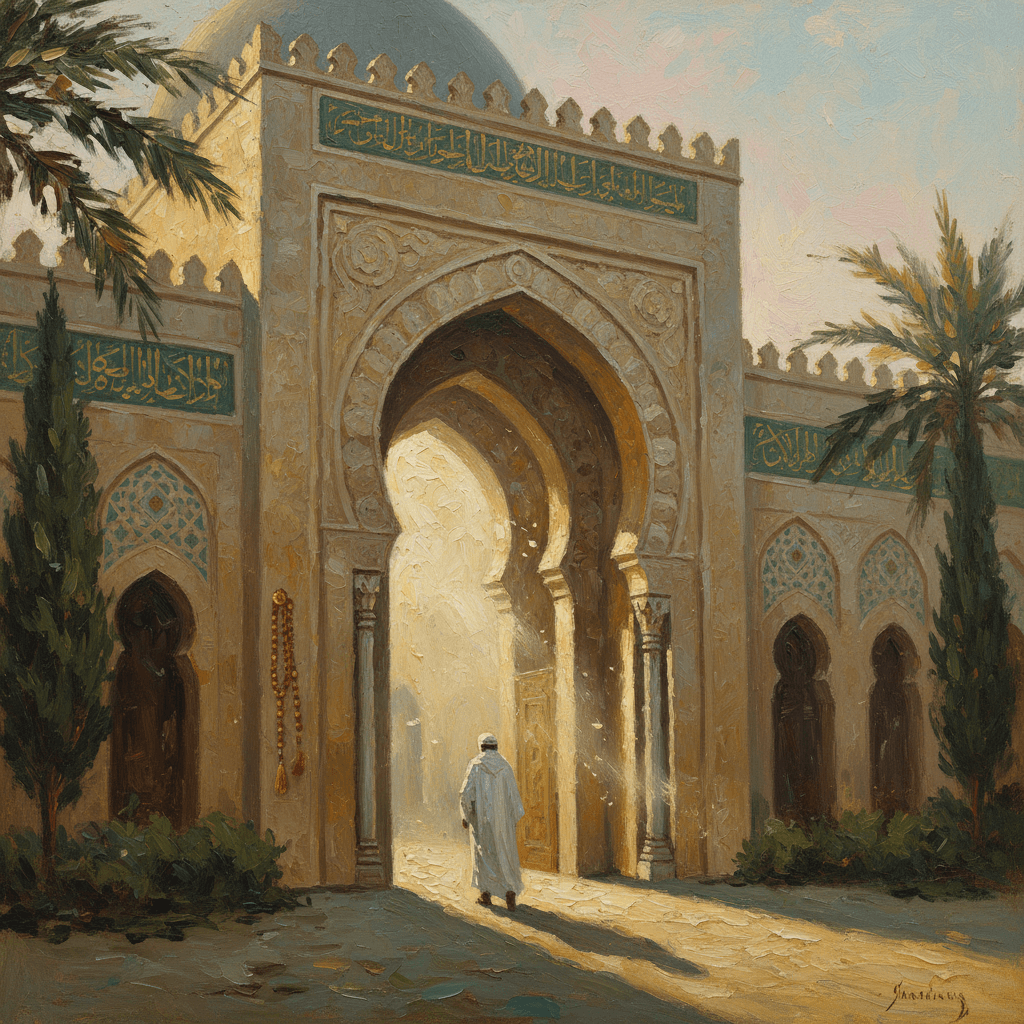
Someone sees your new home, your healthy baby, your business success, your examination results — and they say "Mashallah." You smile and say... what exactly?
For many Muslims, this moment is followed by a mumbled "thank you" or an awkward silence. Which is strange when you think about it — Mashallah is itself a deeply Islamic expression, and it deserves an Islamic response. Yet most of us were never taught what that response actually is.
Why This Matters Beyond Politeness
Mashallah (مَا شَاءَ اللَّهُ) is not just a compliment. It is a declaration: "what Allah has willed has come to pass." When someone says it to you, they are acknowledging that your blessing comes from Allah, not from luck or your own effort alone.
The response to Mashallah should honor that recognition — returning blessing for blessing, dua for dua. This is not a small thing. How we speak shapes how we think, and our speech is either dhikr (remembrance of Allah) or heedlessness. Learning the right response turns every interaction into a small act of worship.
There is also the protective dimension. Mashallah is related to warding off the evil eye ('ayn). When something good is mentioned without attributing it to Allah's will, envy can harm the blessed thing. Responding with the correct phrases continues that spiritual protection.
The Sunnah Reply — Step by Step
Step 1: Receive the Mashallah graciously
Do not deflect ("oh it's nothing") or inflate ("yes, isn't it amazing"). Simply receive it with dignity and respond with a dua.
Step 2: Say one of these replies:
Option A: Barakallahu feek (to the person who said Mashallah)
بَارَكَ اللَّهُ فِيكَ
Barakallahu feek (to a male) / Barakallahu feeki (to a female)
"May Allah bless you."
This is the most widely recommended reply. It returns the dua back to the speaker, acknowledging their good words and asking Allah to bless them for it. It is covered in detail at how to reply to barakallahu feek.
Option B: Allahumma barik (for the blessed thing itself)
اللَّهُمَّ بَارِكْ
Allahumma barik
"O Allah, bless it."
If someone says Mashallah about your child, your home, or your business, saying Allahumma barik is a dua asking Allah to bless and protect that very thing. You are asking for the continuation of what they just admired.
Option C: TabarakAllah
تَبَارَكَ اللَّهُ
TabarakAllah
"Blessed is Allah."
This can be both a reply to Mashallah and something you say when admiring something yourself. It emphasizes that the source of all blessing is Allah alone.
Option D: Wa feekum barakallah
وَفِيكُمْ بَارَكَ اللَّهُ
Wa feekum barakallah
"And may Allah bless you too."
This is a mirror response — returning the blessing to the speaker.
Step 3: Add a silent protective dua if the blessed thing is yours
Especially if someone has admired your child, health, or property, privately say:
بِاسْمِ اللَّهِ لَا يَضُرُّ مَعَ اسْمِهِ شَيْءٌ
Bismillahi la yadurru ma'a ismihi shay'un
"In the name of Allah, with Whose name nothing can cause harm."
This is a hadith-based formula for protection (Abu Dawud 5088).
Make Islamic Speech a Daily Habit
DeenBack helps you track your daily adhkar and Islamic speech habits — so phrases like Barakallahu feek and Allahumma barik become your automatic language.


Free download. Premium features available in-app.
Making This a Genuine Habit, Not Just a Formula
The gap between knowing the correct reply and actually using it consistently is the gap the nafs exploits. We know we should say Barakallahu feek but we say "thanks" because it is faster, more familiar, and requires less presence of mind.
Here is how to close that gap:
Practice the phrase out loud. Say "Barakallahu feek" ten times tonight. Say it to yourself in front of a mirror. The muscle memory of the mouth matters — Islamic phrases that feel awkward at first feel natural after repetition. Within a week of conscious use, it becomes your default.
Attach it to Islamic greetings generally. If you are already saying Assalamu alaikum reflexively, Barakallahu feek can follow the same path. The Prophet ﷺ encouraged spreading salam — spreading dua is the same spirit.
Understand the meaning every time. When you say "Barakallahu feek," it should feel like you are actually asking Allah to bless this person right now. This presence transforms it from a formula into worship.
Teach it at home. Correct your children and family gently — not punitively — when they respond to Mashallah with "thanks." One family evening where you practice Islamic speech can shift the household norm permanently.
Common Mistakes to Avoid
Replying "Ameen" only. Ameen is for dua, not typically used as a standalone reply to Mashallah. While not incorrect in spirit, it misses the opportunity to return a specific dua.
Saying nothing. Silence in response to someone's good words can feel dismissive. Even if you are unsure of the "right" phrase, saying Alhamdulillah (praise be to Allah) acknowledges the Islamic tone of the exchange.
Deflecting the praise to avoid "showing off." Humility is good but deflecting Mashallah with "no no it's nothing" can actually undermine the speaker's recognition of Allah's blessing. Receive it gracefully and return the dua.
Forgetting the spiritual dimension. Mashallah is not just courtesy language. Every time you respond correctly, you are part of a culture of attributing all good to Allah. That is the deep purpose of the entire exchange.
For more on Islamic greetings and expressions, see mashallah meaning, barakallahu feek meaning, and allahumma barik meaning.
Common Questions
What if a non-Muslim says Mashallah to me — they have learned it culturally? Respond with the same warmth. You can say "Barakallahu feek, thank you" — the non-Muslim context does not change your response. If anything, it is a dawah opportunity to demonstrate the beauty of Islamic speech.
Can I say JazakAllahu khayran instead? Yes. JazakAllahu khayran (may Allah reward you with goodness) is also an appropriate response to kind words, including Mashallah. It shifts the thanks from social reciprocity to a dua directed at Allah.
What if someone says Mashallah sarcastically or mockingly? Respond with the correct Islamic phrase regardless of their tone. Your response is for Allah, not for them.
Is there a hadith specifically about replying to Mashallah? The specific phrase Mashallah as a statement is mentioned in Surah Al-Kahf (18:39), where a believer says to his companion: "Why, when you entered your garden, did you not say: Mashallah, la quwwata illa billah?" The Quranic injunction is to say it before admiring something — the response phrases (Barakallahu feek etc.) come from the general hadith literature on Islamic speech and dua.
Speak the Way the Prophet Spoke
The Prophet ﷺ was known for the barakah in his words. His speech was deliberate, meaningful, and full of remembrance of Allah. Every compliment he received or gave was wrapped in acknowledgment of Allah's role.
You can live that way too. It starts with small choices — the words you choose when someone praises something in your life. Next time someone says Mashallah, pause for half a second and say the words that return the blessing to its source.
Barakallahu feek. May Allah bless you.
Build the Language of the Prophet
DeenBack tracks your daily Islamic habits and dhikr — helping you build a life where Islamic expressions are not occasional formalities but your natural way of speaking.
Free download. Premium features available in-app.
Frequently Asked Questions
How do you reply when someone says Mashallah to you?
The recommended replies include: Barakallahu feek (may Allah bless you), Allahumma barik (O Allah bless it), or TabarakAllah. Some scholars also say you can reply Wa feekum barakallah (and in you too be Allah's blessing). The key is responding with a dua for the blessing to continue.
What is the difference between Mashallah and Tabarak Allah?
Both express amazement and gratitude for what Allah has willed and blessed. Mashallah (what Allah has willed) is typically said when you see or hear something impressive belonging to someone else. TabarakAllah (blessed is Allah) similarly expresses admiration. They can often be used interchangeably.
What do you say when someone says Mashallah about your child?
Reply with Barakallahu feek (may Allah bless you) or Allahumma barik (O Allah bless it/them). You can also say JazakAllahu khayran (may Allah reward you with goodness). Adding a silent prayer for the evil eye protection — Bismillah, A'udhu billahi min al-shaytan al-rajim — is also recommended.
Is it obligatory to reply to Mashallah?
There is no obligatory ruling on replying to Mashallah the way there is for returning salam. However, it is good manners (adab) and in the spirit of the Sunnah to acknowledge the good words with gratitude.
Why do Muslims say Mashallah when they see something nice?
Mashallah attributes the blessing to Allah's will rather than chance or the person's own merit. It also serves as protection against the evil eye — by reminding speaker and listener alike that all good comes from Allah, it breaks the chain of envy that could harm the blessed thing.