
- Published on
Allahumma Barik Meaning: The Dua That Protects With Praise
- Authors

- Name
- Ahmad
- Role
- Senior Marketing Manager, Islamic education • Deen Back
بِسْمِ اللهِ الرَّحْمٰنِ الرَّحِيْمِ
In the name of God, the Most Gracious, the Most Merciful.
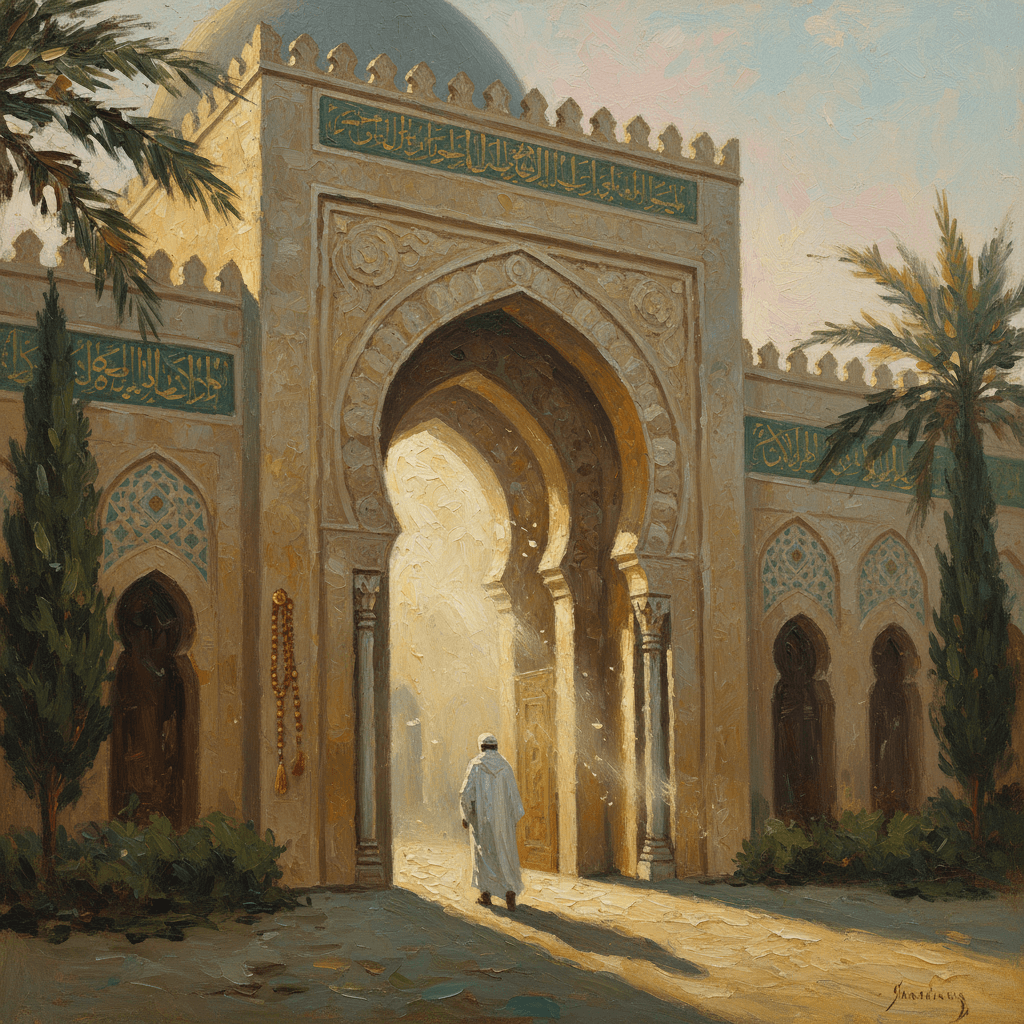
You see a friend's newborn baby and feel that rush of warmth and admiration. You see someone's hard-earned success and feel genuinely happy for them. You look at something beautiful — a home, a child, a person — and feel the impulse to say so.
In the Islamic tradition, that impulse has a proper channel: Allahumma Barik. O Allah, bless.
It is two words in Arabic. It takes under a second to say. And it connects a moment of ordinary human admiration to a direct act of worship — a dua asking Allah to place blessing in what you see, and to protect it from any harm that unsaid admiration might cause.
What Allahumma Barik Actually Means
Breaking down the Arabic:
Allahumma (اللهم): This is the vocative form of Allah, used to directly address Allah in supplication. It translates as "O Allah" — a calling out, a turning toward. Every authentic dua that begins with Allahumma is addressed directly to Allah, making it a form of worship from its very first syllable.
Barik (بارك): From the root baraka (ب-ر-ك), meaning to bless, to increase, to cause goodness to grow and remain. The same root gives us barakah — the divine blessing that causes things to be more than they appear: more beneficial, more sufficient, more lasting.
Together: "O Allah, place barakah in this." Not just "O Allah, keep this nice" — but a request that the goodness in what you see be made larger, more beneficial, and more protected by divine will.
For a deeper understanding of barakah itself, see what is barakah in Islam and dua for barakah.
The Prophetic Evidence and Why This Matters
The Prophet ﷺ explicitly connected admiration without dua to the real possibility of unintentional harm:
"The evil eye is real, and if anything were to precede the divine decree, it would be the evil eye."
And he taught the remedy for when you feel impressed:
"When one of you sees something in himself, his wealth, or his brother that impresses him, let him supplicate for barakah in it, for the evil eye is real."
— ([Ibn As-Sunni, referenced in multiple collections])
The practice is not superstition — it is prophetic instruction. The mechanism is not fully explained to us, but the command is clear: when you admire, ask Allah to bless. Do not leave admiration without a dua attached.
The formula that scholars consistently recommend is:
اللَّهُمَّ بَارِكْ فِيهِ
Allahumma baarik fiihi
"O Allah, bless it/him/her."
Or for a person specifically:
اللَّهُمَّ بَارِكْ عَلَيْهِ
Allahumma baarik 'alayhi (for a male) / 'alayhaa (for a female)
"O Allah, bless him/her."
Or paired with MashaAllah:
مَا شَاءَ اللَّهُ، لَا قُوَّةَ إِلَّا بِاللَّهِ
Maa shaa Allaahu laa quwwata illaa billaah
"What Allah has willed — there is no power except through Allah." — (Surah Al-Kahf, 18:39)
This verse from Surah Kahf is specifically cited in the context of admiration and protection from the evil eye.
How This Differs From Barakallahu Feek
Many Muslims use Barakallahu Feek and Allahumma Barik interchangeably. They share the same root but function differently.
Barakallahu Feek (بَارَكَ اللَّهُ فِيكَ) — "May Allah bless you" — is a statement directed at a person, typically used as a thank-you. When someone helps you, completes a task for you, or gives you something, you respond with Barakallahu Feek. It is an expression of gratitude that invokes blessing on the recipient. See barakallahu feek meaning for a full exploration.
Allahumma Barik is a dua directed at Allah, typically used in protective contexts — when you see something impressive and want to ask Allah to bless and protect it. You are not speaking to the person; you are speaking to Allah about what you see.
In practice:
- Someone brings you food → Barakallahu Feek
- You see someone's beautiful new home → Allahumma Barik
- A colleague helps you with a project → Barakallahu Feek
- You hold a newborn baby → Allahumma Barik
Why Modern Muslims Often Skip This
The default modern response to something impressive is one of two things: a compliment directed at the person ("wow, your kid is so cute!") or a social media reaction (a heart, a like, a flame). Neither involves Allah.
This is not a moral failure — it is the linguistic gravity of the surrounding culture. The words you use most easily are the ones your environment provides. And secular environments do not provide Allahumma Barik.
The nafs is not malicious here — it simply uses the most available language. The work is replacing the default. When the rush of admiration comes — for someone's child, their achievement, their appearance — the challenge is to redirect the impulse through its proper Islamic channel before the secular default fills the space.
This is what Islamic self-development means in practical, daily terms: replacing secular reflexes with prophetic ones, one situation at a time. For related expressions and how they transform daily consciousness, see bismillah meaning and 99 names of Allah with meaning.
How to Build Allahumma Barik as a Daily Habit
Say it out loud when admiring children. This is the most common situation where the evil eye is discussed in hadith — people admiring beautiful children. Make a firm habit: whenever you see a child that impresses you (your own or others'), say Allahumma Barik before anything else.
Use it when you look in the mirror. Looking at yourself with satisfaction is a common moment that goes unaddressed. Say Allahumma Barik about yourself — it is not narcissism, it is gratitude. "O Allah, place blessing in this body and face you gave me."
Apply it when seeing others' achievements. When a friend announces something good — a promotion, a marriage, a home purchase, a new baby — the first words out of your mouth should be Allahumma Barik, not just "congratulations." Both are appropriate; the Islamic one should come first.
Pair it with MashaAllah in writing and speech. When you text a friend about their child or accomplishment, type "MashaAllah Allahumma Barik" rather than just "aww so cute." It takes one second longer and carries infinitely more weight.
Teach your children to say it. Children who grow up hearing Allahumma Barik around them develop the prophetic reflex naturally. The best time to establish this habit is early.
Build Islamic Language Into Every Daily Moment
DeenBack helps you track daily dhikr and Islamic habits — including the small prophetic expressions that transform ordinary moments into acts of worship and remembrance of Allah.


Free download. Premium features available in-app.
Signs Allahumma Barik Is Becoming Your Default
You know the phrase has taken root when the impulse to admire something and the impulse to say Allahumma Barik become the same impulse. You see something beautiful and your first internal movement is toward Allah — not toward the thing, and not toward worry about the evil eye, but simply toward asking for barakah.
This shift has a secondary effect: it changes what admiration feels like. When admiration is channelled through dua, it becomes generosity rather than coveting. You are not just noticing something good — you are asking Allah to keep it good and protected. That is an act of care for the person you are looking at, not just a self-protective measure.
The person receiving your Allahumma Barik — even if they do not hear it — is being prayed for.
Common Questions
Should I say Allahumma Barik for things I own myself? Yes. The Prophet ﷺ said "when one of you sees something in himself" — the ruling applies to admiring your own wealth, children, or appearance. Say Allahumma Barik about things you yourself are pleased with. It is both protection and gratitude.
Is the evil eye real in Islam? Yes. The Prophet ﷺ explicitly confirmed it in Sahih Muslim 2188 (quoted above): "The evil eye is real." This is an article of the Islamic worldview — not folklore. The mechanism is not fully explained, but the reality is affirmed by the Prophet ﷺ and the protection (Allahumma Barik, the three Quls, ruqyah) is taught.
What if I forgot to say Allahumma Barik and something bad happened afterward? Do not spiral into guilt or superstition. If something difficult happens, it is from Allah's decree — not necessarily from a forgotten dua. The practice of Allahumma Barik is a protective measure and an act of worship. Its absence does not guarantee harm; its presence invites blessing. Make the habit from now, without anxiety about the past.
Can I say Allahumma Barik in a text message or social media comment? Yes. The dua remains valid regardless of its medium. Typing it as a reply to someone's post about their new baby or achievement is a genuine dua, not just social decoration. In fact, it may introduce the phrase to people who have never heard it used this way.
Two Words That Do Everything
Allahumma Barik calls Allah by name, asks for His blessing, protects against harm, expresses gratitude, and transforms an ordinary moment of admiration into an act of worship — in two words, in under a second.
This is what the Islamic tradition calls living in a state of dhikr: not reserving remembrance of Allah for formal prayer times, but weaving it into the texture of every moment that ordinary life provides.
The next time you feel that pulse of genuine admiration — for a person, a child, an achievement, anything good — let it become Allahumma Barik. Let the admiration become a dua. Let the ordinary moment become an act of worship.
Make Every Moment of Admiration a Dua
DeenBack helps you build the daily Islamic habits that bring Allah into every moment — from formal prayers to the small prophetic expressions like Allahumma Barik that transform how you see and respond to the world.
Free download. Premium features available in-app.
Frequently Asked Questions
What does Allahumma Barik mean?
Allahumma Barik (اللهم بارك) means 'O Allah, bless' or 'O Allah, place blessing in this.' It is a dua — an active supplication — asking Allah to bless something or someone. It is commonly said when you see something that impresses you (a person's wealth, children, appearance, or achievement) as protection against the evil eye.
What is the difference between Allahumma Barik and Barakallahu Feek?
Both express blessing, but differently. Allahumma Barik is a dua addressed to Allah: 'O Allah, bless [this].' Barakallahu Feek is a statement directed at a person: 'May Allah bless you' — typically said in response to receiving help or a compliment. Allahumma Barik is more often used in contexts of protection (against the evil eye), while Barakallahu Feek is more often used as an expression of gratitude.
Is Allahumma Barik the same as MashaAllah?
No, though they are often used together or interchangeably. MashaAllah (what Allah has willed) is an expression of acknowledging that something is from Allah's will — it is an exclamation, not a dua. Allahumma Barik is an active supplication asking for blessing and protection. Scholars recommend saying both together: 'MashaAllah, Allahumma Barik' when admiring something or someone.
Does saying Allahumma Barik protect against the evil eye?
Yes. The Prophet ﷺ taught that when you see something that impresses you about a person, saying a dua asking Allah to bless them protects against unintentional harm from the evil eye (ayn). The authenticated teaching is that the evil eye is real — and the prescribed protection when admiring someone is to ask Allah's blessing for them rather than leaving the admiration unsaid or unprotected.
When should I say Allahumma Barik?
Say it when you are impressed by something or someone — their appearance, their children, their home, their achievement. Say it when you complete a task or project. Say it when looking at a newborn. Say it at a wedding or engagement. In every situation where something good is present and you want that goodness to be protected and increased, Allahumma Barik is the appropriate response.