
- Published on
How Many Rakats Is Tahajjud? Complete Guide to Night Prayer
- Authors

- Name
- Ahmad
- Role
- Senior Marketing Manager, Islamic education • Deen Back
بِسْمِ اللهِ الرَّحْمٰنِ الرَّحِيْمِ
In the name of God, the Most Gracious, the Most Merciful.
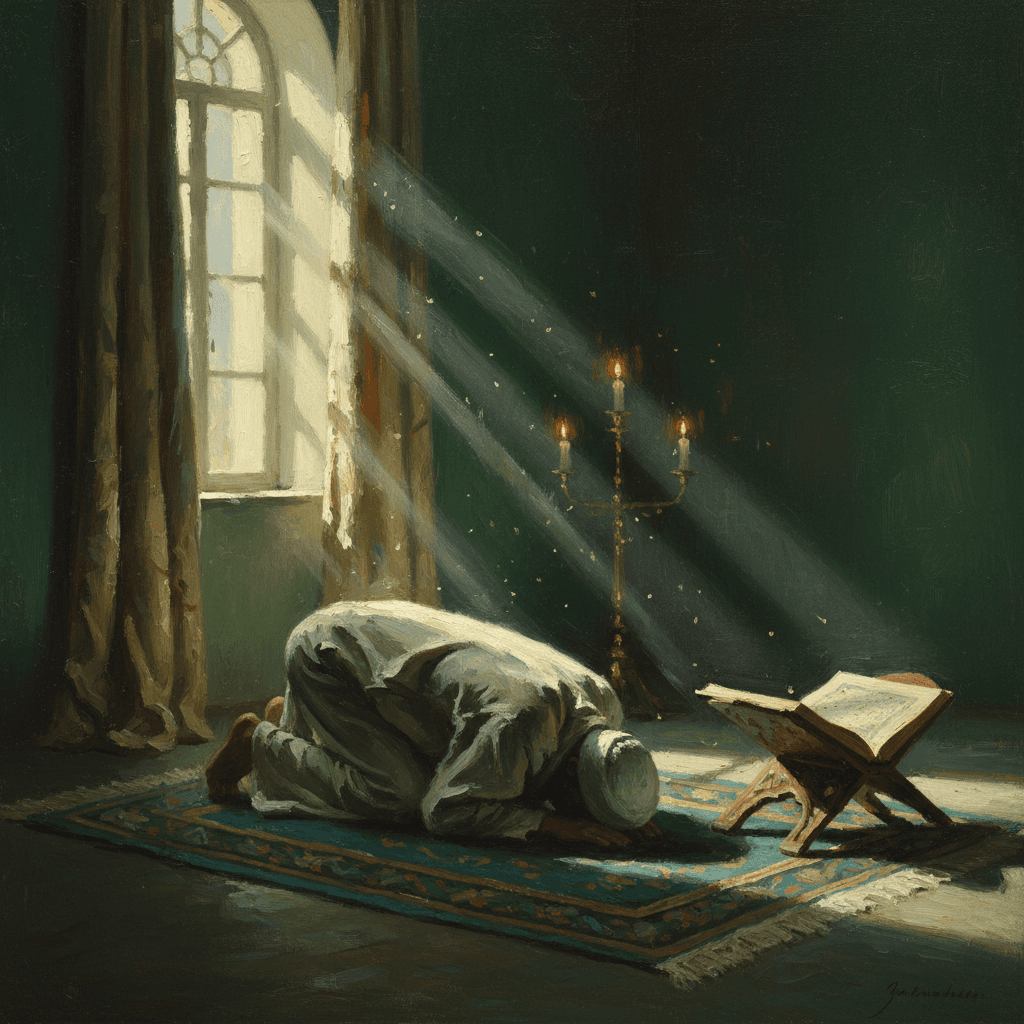
Tahajjud is one of those prayers that draws people in precisely because of what the Prophet ﷺ said about it. The last third of the night. Allah descending. Doors of mercy open. Every Muslim who learns this wants to join in.
And then: how many rakats? How do I structure it? Is there a correct amount?
Here is the direct answer, and then everything you need to do it with confidence.
The Short Answer
Minimum: 2 rakats. Sunnah amount: 8 rakats of tahajjud (prayed in sets of 2), followed by 3 rakats of witr — 11 total. Maximum: No fixed limit — pray as many sets of 2 as you can manage.
The Prophet ﷺ said:
"Night prayer is in sets of two, two. If one of you fears that dawn is approaching, he should pray one rakat as witr for what he has prayed."
— (Muslim 749)
Every 2 rakats is a complete unit. Add as many units as you like before closing with witr.
The Evidence — What the Prophet Actually Prayed
The clearest account comes from Aisha, who was asked about the Prophet's night prayer:
"He used to pray eleven rakats at night. He would prostrate so long that one of you could recite fifty verses before he raised his head. Then he would pray two rakats before Fajr and lie down on his right side until the caller to prayer came to him."
— (Bukhari 1123)
Eleven rakats: 8 tahajjud + 3 witr. This is the most documented Sunnah amount.
Some narrations mention 13 rakats — including 2 brief opening rakats that established the beginning of the night prayer. Both 11 and 13 have strong hadith support. Neither is more correct than the other.
The deeper point: the Prophet's night prayer was characterized by extreme quality — long, slow recitations, deep prostrations, full presence — not by large quantities of rakats. When he prayed fewer rakats, he was often in sujud for extended periods. This is the spirit of tahajjud, not just the number.
The Details — Common Rakat Combinations
2 Rakats (Beginner)
The minimum. If you are just starting tahajjud — or if tonight is a struggle and you are exhausted — 2 rakats of tahajjud is a complete night prayer. End it with 1 rakat of witr.
Total: 3 rakats
4 Rakats
Two units of 2 rakats. A manageable amount for regular practice. End with 1 or 3 rakats of witr.
Total: 5 or 7 rakats
8 Rakats (Sunnah)
Four units of 2 rakats. This matches the most common Sunnah. Follow with 3 rakats of witr.
Total: 11 rakats
12 Rakats
Six units of 2 rakats. For nights when you have time and energy — during Ramadan's last 10 nights, or on a weekend. Follow with 1 or 3 rakats of witr.
Total: 13 or 15 rakats
How to Pray Each Set
Each 2-rakat unit of tahajjud is prayed like a regular 2-rakat voluntary prayer:
- Intention (niyyah) in your heart
- Opening takbir
- Recite Al-Fatiha + another surah in each rakat
- Ruku, sujud (both), then the second rakat
- Tashahhud + salaam at the end of each 2-rakat unit
The Prophet ﷺ used to recite long surahs in tahajjud — sometimes an entire juz in one prayer. But shorter recitation is completely valid, especially when learning.
Don't Let Doubt Win
The biggest enemy of tahajjud is not exhaustion. It is the all-or-nothing thinking that says: "I can only pray 2 rakats tonight, so I might as well not bother."
This is the nafs at work. It would rather you sleep than pray 2 sincere rakats.
The Prophet ﷺ said:
"The most beloved deeds to Allah are those done consistently, even if they are small."
— (Bukhari 6464)
Two rakats of tahajjud prayed every night for a year is worth infinitely more than 11 rakats prayed once and then abandoned. Start where you are. Stay consistent. Let the habit build.
Track Your Tahajjud Streak Starting Tonight
DeenBack helps you build the night prayer habit with daily tracking and reminders — so one rakat tonight becomes eleven rakats next month.


Free download. Premium features available in-app.
Quick Reference
| Rakats of Tahajjud | Witr | Total |
|---|---|---|
| 2 (minimum) | 1 | 3 |
| 4 | 1 or 3 | 5 or 7 |
| 6 | 1 or 3 | 7 or 9 |
| 8 (Sunnah) | 3 | 11 |
| 10 | 1 or 3 | 11 or 13 |
| 12 | 1 or 3 | 13 or 15 |
Always end with witr (odd number). Never pray witr twice in one night — if you already prayed witr and wake for tahajjud, pray your tahajjud without repeating witr at the end, according to the hadith: "There is no two witrs in one night." (Abu Dawud)
Common Questions
Can I pray tahajjud before midnight?
Tahajjud is specifically prayer after sleeping and before Fajr. The preferred time is the last third of the night. However, if waking in the last third is genuinely impossible, many scholars allow any time after Isha (after sleeping) up until dawn. Learn more about what tahajjud is for the full ruling on timing.
What if I wake up very close to Fajr?
Pray what you can — even 2 rakats. The Prophet said if dawn is approaching, close your prayer with 1 witr. A short tahajjud is better than none. If you truly have no time, some scholars say you can make it up as qada after Fajr.
Do I have to pray all rakats at once?
Yes — each night's tahajjud is prayed in one session, not broken across the night. But you can rest between units (sitting in reflection, making dua) without invalidating the prayer.
How do I wake up for tahajjud consistently?
Start by sleeping after Isha with the intention to wake. Sleep with wudu. Set an alarm for the last third of the night. Check our guides on how to wake up for tahajjud and how to make tahajjud a habit for practical strategies.
Is tahajjud compulsory?
No. It is a highly recommended voluntary prayer (nafl). The Prophet never commanded it as obligatory on the ummah after the early period of his prophethood. It is a gift — an extra door of closeness to Allah that you can choose to walk through.
Closing — Even Two Rakats Changes Things
You now know the numbers. The minimum is 2. The Sunnah is 8. The limit is your capacity on any given night.
What matters more than the number is that you show up. Allah descends to the lowest heaven in the last third of the night asking: "Is there anyone making dua, that I may answer them? Is there anyone seeking forgiveness, that I may forgive them?" (Bukhari 1145).
Two rakats puts you in that conversation.
Make the dua for tahajjud after your prayer. Stay in sujud a moment longer. Let tonight be the night the habit begins.
Set Your Tahajjud Reminder for Tonight
DeenBack tracks your consistency in night prayer — even 2 rakats counts. Start tonight and build the streak one night at a time.
Free download. Premium features available in-app.
Frequently Asked Questions
How many rakats is tahajjud prayer?
There is no fixed maximum. The minimum is 2 rakats. The Prophet most commonly prayed 8 rakats of tahajjud followed by 3 rakats of witr, totalling 11 rakats. You may pray 2, 4, 6, 8, 10, or 12 rakats — all in sets of 2 — based on your capacity. The Prophet said night prayer is in sets of two, ending with one witr.
What is the difference between tahajjud and witr?
Tahajjud is the voluntary night prayer prayed after sleeping and before Fajr. Witr is the odd-rakat concluding prayer (1, 3, 5, 7, or more) that closes the night prayers. The Prophet always concluded his night prayer with witr. If you pray tahajjud, you should end with witr — though witr can also be prayed before sleeping on nights you do not intend to wake for tahajjud.
Can I pray just 2 rakats of tahajjud?
Yes. Two rakats of sincere tahajjud are better than no tahajjud at all. The Prophet said the night prayer is in sets of two, which means 2 rakats is the smallest complete unit. If you are new to tahajjud, 2 rakats is an excellent starting point — the goal is consistency, not quantity.
Is tahajjud the same as qiyam al-layl?
They overlap but have a technical distinction. Qiyam al-layl means standing in prayer at night and includes all voluntary night prayers. Tahajjud specifically refers to night prayer after waking from sleep. In common usage, especially in English, the terms are used interchangeably — both refer to the voluntary late-night prayer.
Do I need to perform a fresh wudu for tahajjud?
If your wudu from Isha is still valid (unbroken by sleep in some positions, passing gas, etc.), some scholars say you may use it. However, many scholars and the common practice is to perform fresh wudu when waking for tahajjud — it helps establish the alertness and intention needed for the prayer.