
- Published on
Dua When Starting a New Project: Ask Before You Begin
- Authors

- Name
- Ahmad
- Role
- Senior Marketing Manager, Islamic education • Deen Back
بِسْمِ اللهِ الرَّحْمٰنِ الرَّحِيْمِ
In the name of God, the Most Gracious, the Most Merciful.
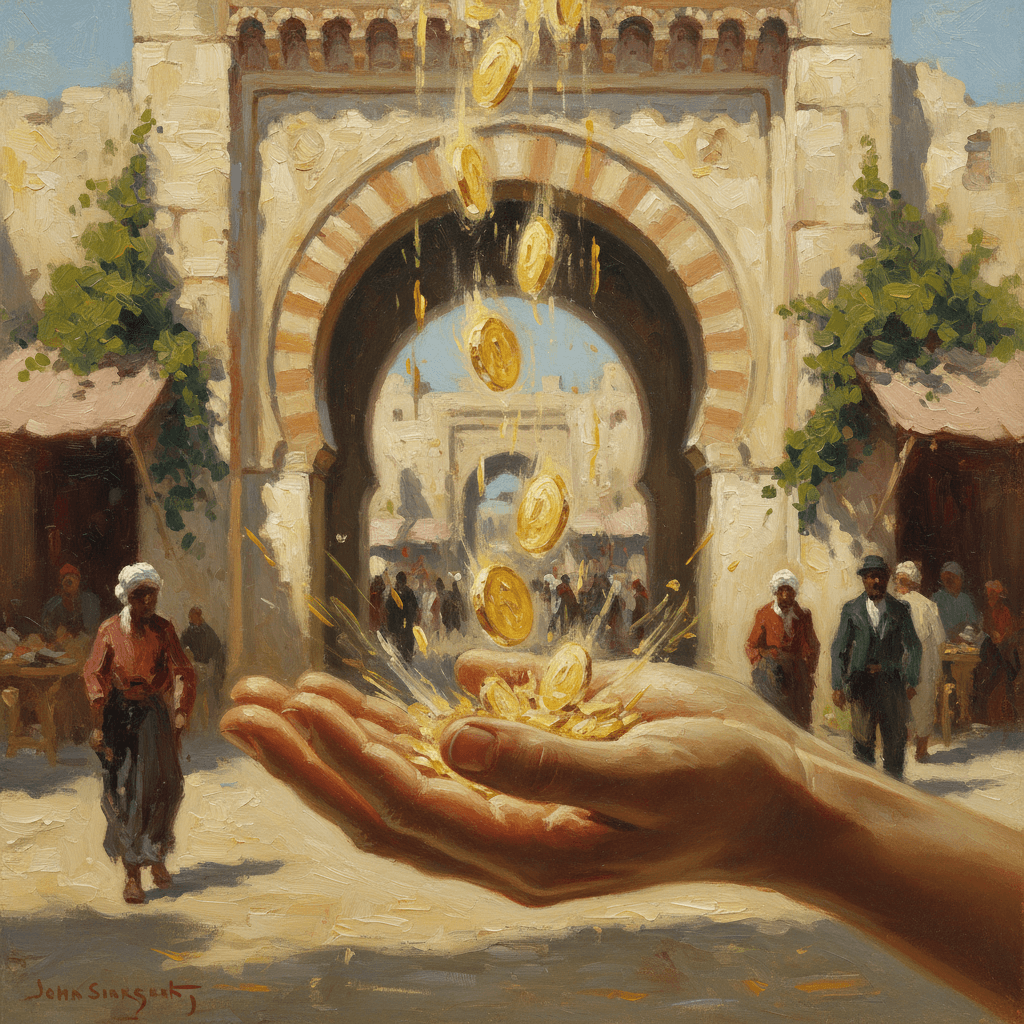
You have a new project ahead of you. Maybe it is a business idea you have been sitting on for months. Maybe it is a degree, a creative work, a career change, or simply a commitment to build a better habit. Whatever it is — the beginning is the moment that sets the tone for everything that follows.
Most people begin projects with a plan. Muslims begin with a prayer.
Not because planning is unimportant — the Prophet (peace be upon him) was the most strategically capable person who ever lived. But because a plan without Allah in the picture is just an arrangement of your own limited capabilities. The dua when starting a new project is how you invite something larger than yourself into the work.
The Dua for Starting Something New
Bismillah — The foundational opening
بِسْمِ اللَّهِ
Bismillah
"In the name of Allah."
The Prophet (peace be upon him) said: "Any important matter that does not begin with the remembrance of Allah (Bismillah) is cut off from blessing." (Abu Dawud 4840)
Say this before you open your laptop, before you pick up the pen, before you make the first call. It is a one-second act that reorients the entire endeavor.
The dua for ease
اللَّهُمَّ لَا سَهْلَ إِلَّا مَا جَعَلْتَهُ سَهْلًا، وَأَنْتَ تَجْعَلُ الْحَزْنَ إِذَا شِئْتَ سَهْلًا
Allahumma la sahla illa ma ja'altahu sahlan, wa anta taj'alul hazna idha shi'ta sahlan
"O Allah, nothing is easy except what You make easy, and You can make the difficult easy if You will." — (Ibn Hibban 974)
This is the dua to carry into every stage of a new project. It acknowledges two things at once: that ease is not guaranteed, and that it is entirely within Allah's power to grant. It strips away the arrogance of "I've got this" and replaces it with honest reliance.
Dua for tawakkul at the outset
حَسْبُنَا اللَّهُ وَنِعْمَ الْوَكِيلُ
Hasbunallahu wa ni'mal wakeel
"Allah is sufficient for us, and He is the best disposer of affairs." — (Quran, Surah Al-Imran, 3:173)
The Companions said this when faced with the news that an army was gathering against them. It is the statement of a person who has done everything they can and now places the outcome in Allah's hands. Say it when you launch — and again when things feel uncertain.
The Story Behind Beginning with Allah's Name
The practice of beginning with Bismillah is traced directly to the Prophet ﷺ, who taught it across every domain of life: eating, sleeping, entering the home, and beginning significant work. It was not a ritual for religious activities only.
Umar ibn al-Khattab (may Allah be pleased with him) reported that whenever he began a letter or a matter of importance, he would write Bismillah first. The early Muslim traders, scholars, and builders understood that invoking Allah's name was not superstition — it was a recognition that all causes ultimately trace back to the One who created causation itself.
There is also the famous narration about Sulayman (peace be upon him), whose letters to kings began with "Bismillahir-Rahmanir-Raheem" — mentioned in the Quran (Surah An-Naml, 27:30) as a sign of his wisdom and God-consciousness. Beginning with Allah's name is not just etiquette; it is the posture of the truly capable.
How to Make This Dua Part of Your Project Routine
The biggest mistake people make with new projects is treating the dua as a one-time launch ritual. Say it once at the start and then rely on hustle for the rest. That is not how the Prophet's approach worked.
Here is how to weave these duas into the actual workflow of any project:
At the project kickoff: Say Bismillah out loud before the first real action — before writing the first line, sending the first email, or making the first decision. Not silently in your head. Out loud, even if quietly.
When you hit a wall: Obstacles are not signs that you should quit. They are checkpoints where you return to the dua for ease. When a task feels impossible, slow down and say Allahumma la sahla illa ma ja'altahu sahla. Then continue. You are not bypassing the difficulty — you are acknowledging who can lift it.
Before each new phase: Long projects have phases. Each phase is effectively a new beginning. Treat the start of each new stage the way you treated the start of the project: with Bismillah and a conscious return to reliance on Allah.
After completing it: The dua bookends the work. Just as you began with Bismillah, close with Alhamdulillah — and mean it. Whether it succeeded as you hoped or not, the project was completed with Allah's name and by His permission.
Track your project milestones alongside your worship. Keeping a log of where you asked for help and where doors opened builds a tangible record of tawakkul in action.
Bring Your Projects and Your Deen Together
DeenBack helps you track your daily duas and dhikr alongside your work — so reliance on Allah becomes a habit, not just a thought you have at the beginning.


Free download. Premium features available in-app.
Related Duas
Dua for tawakkul: Going deeper into placing reliance on Allah is essential for anyone who tends toward anxiety about outcomes. See dua for tawakkul for the complete supplications on entrusting your affairs to Allah.
Dua for success: If the project is career or life-goals related, pair the opening dua with the dua for success — specifically the dua that asks for benefit in this life and the next.
Dua for new business: If your project is specifically entrepreneurial, the dua for new business covers the Islamic context around seeking provision and barakah in a new commercial venture.
Dua before an important meeting: Many projects have high-stakes moments — presentations, pitches, launch meetings. The dua before an important meeting is specifically for those moments.
Common Questions
Do I need to make formal dua or is Bismillah enough?
Bismillah is sufficient as a beginning. The formal dua for ease (Allahumma la sahla...) is additional and deeply valuable, but not required. What matters is that you consciously invoke Allah before you start rather than beginning in your own name alone.
What if I forget to say it before I start?
Say it when you remember. The ruling in fiqh for eating without Bismillah is to say Bismillah fi awwalihi wa akhirihi — "in the name of Allah at its beginning and end." The same principle applies here: it is better to say it mid-project than not at all.
Can I make this dua in English?
Yes. Personal duas can be in any language. The narrations with specific Arabic text are worth learning because they carry prophetic authority, but Allah hears and responds to sincere supplication in every tongue.
Does making dua mean I should not plan carefully?
The opposite. The Prophet (peace be upon him) said: "Tie your camel, then rely on Allah." (Tirmidhi 2517) Dua and planning work together. Dua without effort is laziness dressed as piety. Effort without dua is arrogance. Both together is the Muslim way.
Is there a specific dua for creative projects like writing or art?
There is no specific prophetic dua for creative work specifically, but the dua of Musa (peace be upon him) for eloquence — Rabbish rahli sadri wa yassir li amri — is widely used before speaking or writing. See the dua for opening of chest for this supplication in full.
Closing
Every worthwhile project begins before the first action. It begins in the intention, in the heart that decides this is worth doing, and in the moment you turn toward Allah before turning to your work.
The great projects of Islamic history — the libraries, the mosques, the treatises, the trade routes — were not built with hustle alone. They were built by people who knew that barakah is not self-generated. It comes from Allah, and it is invited through the right beginning.
Say Bismillah. Mean it. Begin.
Track Your Duas and Your Progress Together
DeenBack helps you stay consistent in your daily worship alongside your worldly ambitions — so your projects and your deen grow at the same time.
Free download. Premium features available in-app.
Frequently Asked Questions
What dua do you say when starting a new project?
Begin with Bismillah and then say the dua: Allahumma la sahla illa ma ja'altahu sahlan, wa anta taj'alul hazna idha shi'ta sahlan — O Allah, nothing is easy except what You make easy, and You can make the difficult easy if You will. This covers both the intention and the acknowledgment that success depends on Allah.
Is it sunnah to say Bismillah before starting work?
Yes. The Prophet (peace be upon him) said: Any important matter that does not begin with Bismillah is cut off from barakah. (Abu Dawud 4840) Saying Bismillah transforms ordinary work into an act of worship and invites divine blessing into what you do.
What if my project fails after making dua?
Dua is not a guarantee of a specific outcome — it is a connection with Allah. The Prophet taught us that every dua is answered: either you get what you asked for, something better is given instead, or a harm is averted. Sometimes the project failing IS the mercy, steering you toward something that would have been worse.
Should I make dua for worldly projects like work or business?
Absolutely. The Prophet asked Allah for help in all aspects of life — provision, protection, health, and daily affairs. Making dua for your work is not mixing deen with dunya; it is recognizing that all good comes from Allah and that your effort alone is not enough.
How many times should I repeat the dua when starting something new?
There is no fixed number for this particular dua. Say it sincerely once before you begin. What matters is presence of heart, not mechanical repetition. You can also repeat it when you hit a difficult stage in the project.