
- Published on
Dua for Tawakkul: Trusting Allah When You Can't Control the Outcome
- Authors

- Name
- Ahmad
- Role
- Senior Marketing Manager, Islamic education • Deen Back
بِسْمِ اللهِ الرَّحْمٰنِ الرَّحِيْمِ
In the name of God, the Most Gracious, the Most Merciful.
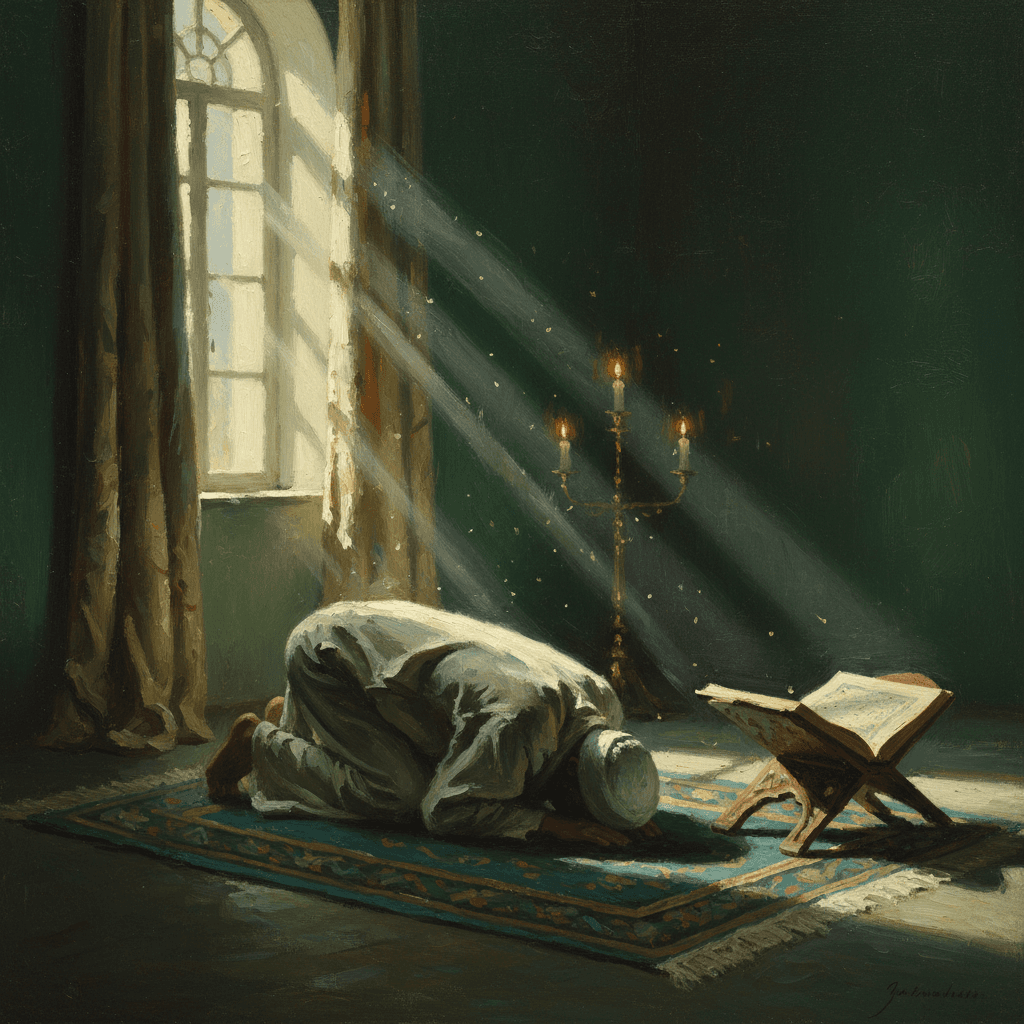
You did your part. You prepared, planned, and worked hard. And now all you can do is wait — and that waiting is its own kind of test.
This is exactly where tawakkul lives. Not before the effort, and not in place of it — but in the space between doing your best and receiving whatever Allah has decreed. It is the art of holding the outcome loosely while still giving everything to the process.
Most of us know we should trust Allah. The struggle is actually feeling it when the stakes are high — when you are waiting for a job offer, a medical result, a relationship decision, or any moment where your future rests outside your hands. That gap between knowing and feeling is where the dua for tawakkul becomes a tool, not just a concept.
The Dua for Tawakkul
When leaving the home — said every morning:
بِسْمِ اللهِ، تَوَكَّلْتُ عَلَى اللهِ، وَلاَ حَوْلَ وَلاَ قُوَّةَ إِلاَّ بِاللهِ
Bismillah, tawakkaltu 'ala Allah, wa la hawla wa la quwwata illa billah.
"In the name of Allah, I place my trust in Allah, and there is no might or power except with Allah." — (Abu Dawud 5095, Tirmidhi 3426)
The Prophet (peace be upon him) said that whoever says this dua when leaving the home will be told: "You are guided, you are cared for, and you are protected." Shaytan turns away from that person.
For moments of acute uncertainty:
حَسْبُنَا اللَّهُ وَنِعْمَ الْوَكِيلُ
Hasbunallahu wa ni'mal wakil.
"Allah is sufficient for us, and He is the best Trustee." — (Quran 3:173)
These are the words Ibrahim (peace be upon him) said when threatened with fire, and what the Companions said when warned that a great army was coming. It is the dua of people who have run out of options and have found the only option that matters.
The Story Behind It
A man came to the Prophet (peace be upon him) and asked about his camel. He said: "Shall I tie it and put my trust in Allah, or shall I leave it untied and put my trust in Allah?"
The Prophet's answer was immediate: "Tie it, then put your trust in Allah." (Tirmidhi 2517)
This one exchange contains the entire Islamic understanding of tawakkul. It is not a rejection of effort. It is not spiritual passivity dressed up in pious language. The man was confused — he thought trust in Allah meant skipping the means. The Prophet corrected him clearly: your responsibility is the camel. Allah's responsibility is everything after that.
The Companions understood this. They farmed, traded, fought battles, and made plans. Their tawakkul was not shown in inaction — it was shown in the calmness with which they worked, and the complete release they had after giving their best. That combination is one of the most difficult and most powerful things a Muslim can cultivate.
How to Make This Dua Part of Your Daily Life
The dua for tawakkul when leaving the home is one of the easiest habits to build because it is attached to something you already do every single day — walk out the door.
Attach it to your exit ritual. Before you reach for your keys or open the door, pause for three seconds and say Bismillah, tawakkaltu 'ala Allah, wa la hawla wa la quwwata illa billah. That pause is the whole practice. Within two weeks, it becomes automatic.
Extend it to your inner world. The physical dua is the trigger. What it builds over time is an internal posture — the habit of genuinely releasing outcomes to Allah rather than compulsively trying to control them. Each time you say it, you are training your heart to distinguish between your domain (effort) and Allah's domain (results).
Say hasbunallahu wa ni'mal wakil in moments of anxiety. When a worry comes — a text you are waiting for, a decision you cannot control, news you dread — say these words deliberately. Not as a distraction from the worry, but as a direct address to it: this outcome is in Allah's hands, and that is actually the best place it can be.
Track your consistency. Tawakkul is not a feeling that appears suddenly — it is a disposition built through repeated practice. Keeping a small streak of saying the morning dua builds the habit before the hard moments come. The time to build tawakkul is during the easy days, so it is available when you really need it.
Pair it with dua for istikhara for major decisions. Istikhara is tawakkul made specific — a structured practice of asking Allah to guide you and trusting whatever He opens for you. If you have a big decision pending, combine the daily tawakkul dua with Salat al-Istikhara.
Build Your Tawakkul Habit One Morning at a Time
DeenBack helps you track your daily duas, including the tawakkul dua you say leaving the house. Start your streak and let the habit of trusting Allah grow day by day.


Free download. Premium features available in-app.
Related Duas
Dua for ease: When what you are trusting Allah with feels genuinely hard, the dua for ease is its companion. It asks Allah to make difficult matters easy — which is what tawakkul is waiting for.
Dua for guidance: Tawakkul works best when it is pointed in the right direction. The dua for guidance asks Allah to show you the right path before you need to trust Him with the outcome of walking it.
Understanding tawakkul deeply: If you want to understand the concept itself — not just the dua but the entire station — the article on what is tawakkul in Islam covers the practical and spiritual dimensions in full.
Common Questions
What if I say the tawakkul dua but still feel anxious?
This is completely normal, and it does not mean your tawakkul is failing. The dua is not an anxiety eraser — it is a repositioning. You are consciously directing your trust toward Allah, which is the correct action. The feeling of anxiety may remain for a while; what the dua changes over time is what you do with that anxiety. Instead of spiraling, you return to the dua. That pattern, repeated, reshapes how your heart responds.
Does tawakkul mean I should not plan for the future?
No. Planning is an Islamic obligation, not a contradiction of tawakkul. The Prophet (peace be upon him) planned military campaigns, crop seasons, and trade routes. He made preparations and took precautions. Tawakkul is the state of your heart as you plan — releasing attachment to a specific outcome while doing everything in your power to pursue a good one.
Is it wrong to feel disappointed when things do not go the way I hoped?
No. Feeling disappointment is human and does not indicate weak tawakkul. What tawakkul shapes is not the absence of feeling but the direction you take those feelings. A person with genuine tawakkul feels the disappointment, then returns to Alhamdulillah — understanding that Allah's decree is wiser than their preference. This is not forced positivity. It is a deeply earned peace that grows through consistent practice.
Closing
You cannot control what Allah has written. You can only do your part, say this dua, and trust the One who wrote it.
That is tawakkul. Not the absence of effort, not the absence of feeling — but the presence of a heart that has genuinely placed itself in Allah's hands. Say the dua tomorrow morning when you walk out the door. Then the morning after. Let the habit grow until trusting Allah becomes your first response, not your last resort.
Trust Allah — and Track the Habit That Builds That Trust
Consistency in dua is what turns intellectual tawakkul into a felt reality. Use DeenBack to build the daily streak that makes trust in Allah your default state.
Free download. Premium features available in-app.
Frequently Asked Questions
What is the dua for tawakkul?
The most well-known dua for tawakkul is said when leaving the home: Bismillah, tawakkaltu 'ala Allah, wa la hawla wa la quwwata illa billah — In the name of Allah, I place my trust in Allah, and there is no might or power except with Allah. (Abu Dawud 5095, Tirmidhi 3426)
What does tawakkul mean in Islam?
Tawakkul means placing your complete reliance and trust in Allah after taking the means available to you. It is not passivity — it is working hard, then releasing the outcome to Allah. The Prophet (peace be upon him) taught: 'Tie your camel, then put your trust in Allah.' (Tirmidhi 2517)
How do I practice tawakkul when I am anxious about the future?
Say the tawakkul dua when leaving the house each morning. When anxiety hits, add: Hasbunallahu wa ni'mal wakil — Allah is sufficient for us, and He is the best Trustee (Quran 3:173). Then take whatever practical action is in your power, and consciously hand the rest to Allah.
Can tawakkul and taking action coexist?
Yes — this is the essence of tawakkul. The Prophet explicitly corrected the man who left his camel untied in the name of trust. Tawakkul begins after you have done what you can. Taking action is not a lack of trust; it is fulfilling your role so that Allah can fulfill His.
When should I say the tawakkul dua?
The dua Bismillah, tawakkaltu 'ala Allah is specifically taught for leaving the home. But the spirit of tawakkul can be expressed in any moment of uncertainty: before a big decision, after submitting something important, when waiting for news, or whenever you feel the pull of anxiety about things outside your control.