
- Published on
Dua When Entering Cemetery: The Sunnah Greeting at the Gate
- Authors

- Name
- Ahmad
- Role
- Senior Marketing Manager, Islamic education • Deen Back
بِسْمِ اللهِ الرَّحْمٰنِ الرَّحِيْمِ
In the name of God, the Most Gracious, the Most Merciful.
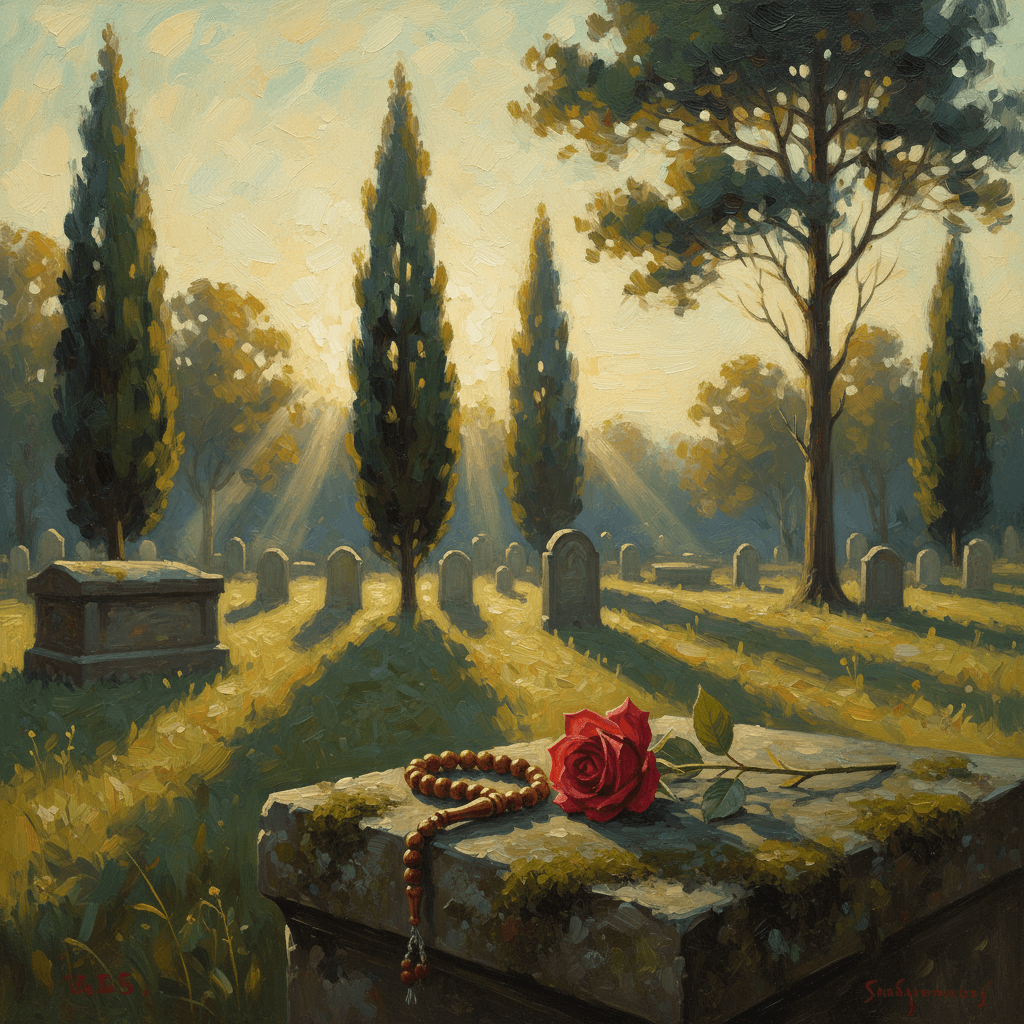
There is a specific moment — the step across the threshold of a cemetery gate — when everything ordinary in your life recedes. The list of things you need to do today. The conversation you are replaying in your head. The low-level anxiety about everything and nothing. All of it goes quiet.
The Prophet (peace be upon him) knew this moment. He taught his Companions — and through them, every Muslim after them — exactly what to say at that threshold. Not a long recitation. Not a complex ritual. A greeting, an acknowledgment, and a shared request. Seventeen words of Arabic that orient your entire being toward the reality that most of us spend our days running from.
The dua when entering a cemetery is not a formality. It is an act of witness — to the people who have gone ahead, to the path you are walking toward, and to the mercy of Allah that connects both.
The Dua When Entering
Upon stepping through the cemetery gate, say:
السَّلَامُ عَلَيْكُمْ أَهْلَ الدِّيَارِ مِنَ الْمُؤْمِنِينَ وَالْمُسْلِمِينَ، وَإِنَّا إِنْ شَاءَ اللهُ بِكُمْ لَاحِقُونَ، نَسْأَلُ اللهَ لَنَا وَلَكُمُ الْعَافِيَةَ
Assalamu alaykum ahl al-diyar min al-mu'minin wal-muslimin, wa inna insha-Allahu bikum lahiqun, nas'alu Allaha lana wa lakum al-afiyah.
"Peace be upon you, O inhabitants of these dwellings, from the believers and the Muslims. We will join you, insha-Allah. We ask Allah for well-being for us and for you." — (Sahih Muslim 975)
Say it aloud but quietly, directed toward the graves as a whole — the way you would greet a gathering of people whose faces you cannot see but whose community you share.
Look at the structure of this dua. It opens with salam — peace — which is not a casual hello but a prayer for safety and wholeness. It names them as ahl al-diyar: the people of these dwellings. The graves are their homes now. Then comes the line that is easy to rush past: wa inna insha-Allahu bikum lahiqun — we will join you, if Allah wills. Not "we will probably die someday." A direct, personal acknowledgment: I am coming here too. And it ends with a request on behalf of both the living and the dead — al-afiyah, comprehensive well-being and safety from all harm.
You are not just greeting the dead. You are placing yourself in the same story they are part of.
The Story Behind This Dua
The Prophet (peace be upon him) initially prohibited his Companions from visiting graves. The reason was protective: the early Muslim community had come from a culture where tombs were centers of worship — places where the line between honoring the dead and venerating them had dissolved. The prohibition was a quarantine against those practices re-entering through the back door.
But the Prophet later lifted it entirely. He said: "I used to prohibit you from visiting graves, but now visit them — for indeed they remind you of the Hereafter." (Muslim 977)
The permission was not incidental. It was a deliberate restoration of a spiritual tool. And with it came the teaching of what to say.
'A'ishah (may Allah be pleased with her) — the Prophet's wife and one of the greatest transmitters of his sunnah — asked him directly: "What should I say when I visit them, O Messenger of Allah?" He taught her this greeting. She used it throughout her life and visited graves regularly, including the grave of her brother 'Abdur-Rahman. Her example became a reference for Muslims across generations.
The dua was not improvised. It was carefully crafted and personally taught. That matters. When you say these words at a cemetery gate, you are repeating something that passed from the Prophet's lips to 'A'ishah's, and from her to everyone who came after.
How to Build This Into Your Practice
The honest truth is that most Muslims only enter a cemetery when attending a funeral. The visit becomes associated with loss and grief, rather than with the regular spiritual discipline the Prophet intended. This means most Muslims are not using one of the most powerful tools in the Islamic tradition for softening the heart and remembering what is real.
Set a monthly visit as a default. Once a month — perhaps on a Friday, as some narrations point to special blessing for Friday visits — is realistic and manageable. It does not require a family member to have recently passed. It requires a decision: I will go, and I will say the dua, and I will make it count.
Use the entrance as a trigger. The moment you reach the gate is the trigger for the dua. Not after you walk in and find a spot. At the threshold, before your feet move through. This is the sunnah sequence. Build the association: cemetery gate → these words.
Slow down inside. Once you have said the entrance greeting, walk calmly. Do not step on graves. At the grave of a family member or any believer, say salam again, make personal dua — asking Allah to forgive them, expand their grave, illuminate it — and sit with the silence. The nafs wants to rush. Let it wait.
Let the discomfort work on you. The cemetery is uncomfortable because death is uncomfortable. The Prophet said: "Remember often the destroyer of pleasures" — death. (Tirmidhi 2307) That discomfort is not a side effect. It is the active ingredient. The heart that has spent fifteen minutes in a graveyard approaches dunya differently for the rest of that day.
Track it, just like any other worship. Graveyard visits disappear from practice not because people forget the dua but because nothing reminds them to go. Treating it as a trackable habit — something you plan and log — is what keeps it alive across weeks and months.
Track Every Sunnah That Matters
DeenBack helps you build and maintain the Islamic habits most people let slip — from daily dhikr to the monthly grave visit. Build the practice the Prophet restored.


Free download. Premium features available in-app.
Related Duas
Dua for the graveyard (full visit etiquette): For a deeper look at the spiritual practice of visiting graves from arrival to departure, including etiquette and additional supplications, see dua for the graveyard.
Dua for the deceased: Inside the cemetery, your personal supplication for those buried there matters greatly. The dua for the deceased covers authentic prayers for all the dead.
Dua for deceased parents: If you are visiting the graves of your parents, the dua for deceased parents includes specific supplications for a mother or father who has passed — some of them drawn from the Quran itself.
Dua for a good death: The cemetery visit and the dua for a good death are natural companions. Asking Allah for a good end for yourself is one of the most fitting reflections to carry home from the graveyard.
Common Questions
Does this dua change depending on who is buried there?
The entrance greeting is general — directed to all the believers and Muslims in the cemetery as a whole. It does not change based on who is buried there. When you then approach a specific grave, your personal dua becomes more specific: you address that person by name (if you know them) and make supplication tailored to them. The two levels work together.
What if there is no Islamic cemetery nearby?
Say the entrance dua when entering any cemetery where there are Muslim graves, even if it is a shared public cemetery. If you have no cemetery nearby, the practice of dhikr al-mawt — remembering death — can be cultivated in other ways. But if there is any cemetery accessible, even a passing visit is valuable.
Is there anything to recite at the graves themselves?
Yes. Many scholars recommend reciting Surah Al-Fatiha and Surah Al-Ikhlas at the grave, with the intention that their reward reach the deceased. This is practiced across the Hanafi, Maliki, and Hanbali schools. The key is sincerity — the recitation is for the deceased, not for performance.
Can children come to the cemetery?
There is no prohibition. Some scholars actually recommend bringing older children occasionally, as an early exposure to the remembrance of death is valuable for their spiritual formation. The Prophet brought children to cemeteries and used those moments to teach. The cemetery is not a place to hide from children — it is a place to teach them that death is part of life, and that Muslims greet even the dead with peace.
Closing
The dua when entering a cemetery is seventeen words that hold an entire worldview: that the people resting there are still our community, that we are on our way to join them, and that both the living and the dead need Allah's mercy and well-being.
The Prophet gave this to us not as a ceremony to perform at funerals, but as a living practice to return to regularly — because a Muslim who visits graves often is a Muslim who lives differently, who holds dunya more lightly, and who brings the akhirah into view before it is too late to act.
Go when you can. Say the words at the gate. And let the visit remind you of everything that actually matters.
Start the Habits That Last Beyond This Life
DeenBack is for Muslims building the daily and monthly practices that shape their hearts and deeds. Track the remembrance of death alongside your dhikr and dua.
Free download. Premium features available in-app.
Frequently Asked Questions
What do you say when entering a cemetery in Islam?
The Prophet (peace be upon him) taught: Assalamu alaykum ahl al-diyar min al-mu'minin wal-muslimin, wa inna insha-Allahu bikum lahiqun, nas'alu Allaha lana wa lakum al-afiyah. (Muslim 975) — Peace be upon you, O inhabitants of these dwellings, from the believers and Muslims. We will join you, insha-Allah. We ask Allah for well-being for us and for you.
Is visiting graves a sunnah?
Yes. The Prophet said: I used to prohibit you from visiting graves, but now visit them — for indeed they remind you of the Hereafter. (Muslim 977) Regular grave visits are a confirmed recommended act. Scholars suggest visiting at least occasionally, with Friday visits carrying particular blessing based on several narrations.
Can I visit the cemetery without attending a funeral?
Absolutely — that is in fact the deeper sunnah. Visiting graves as a spiritual discipline, separate from any funeral occasion, is what the Prophet encouraged. You go to remember death, make dua for all the believers buried there, and let the experience reset your relationship with dunya.
What if I feel emotionally overwhelmed when entering a cemetery?
That weight is part of the design. The Prophet called remembrance of death the destroyer of pleasures — meaning it cuts through the distractions of dunya and forces honest perspective. Feeling the heaviness is not a problem to escape; it is the practice working. Stay, say the dua, make your supplications, and let the visit do its job.
Should I say anything when leaving the cemetery?
There is no specific narration for a leaving dua, but saying salaam again as you depart is appropriate. Many scholars recommend sealing the visit with a personal supplication for the deceased and for yourself — asking Allah to grant you a good end as He gave the believers buried there the gift of dying upon Islam.