
- Published on
Dua of Prophet Dawud: The Supplication of the Weeping King
- Authors

- Name
- Ahmad
- Role
- Senior Marketing Manager, Islamic education • Deen Back
بِسْمِ اللهِ الرَّحْمٰنِ الرَّحِيْمِ
In the name of God, the Most Gracious, the Most Merciful.
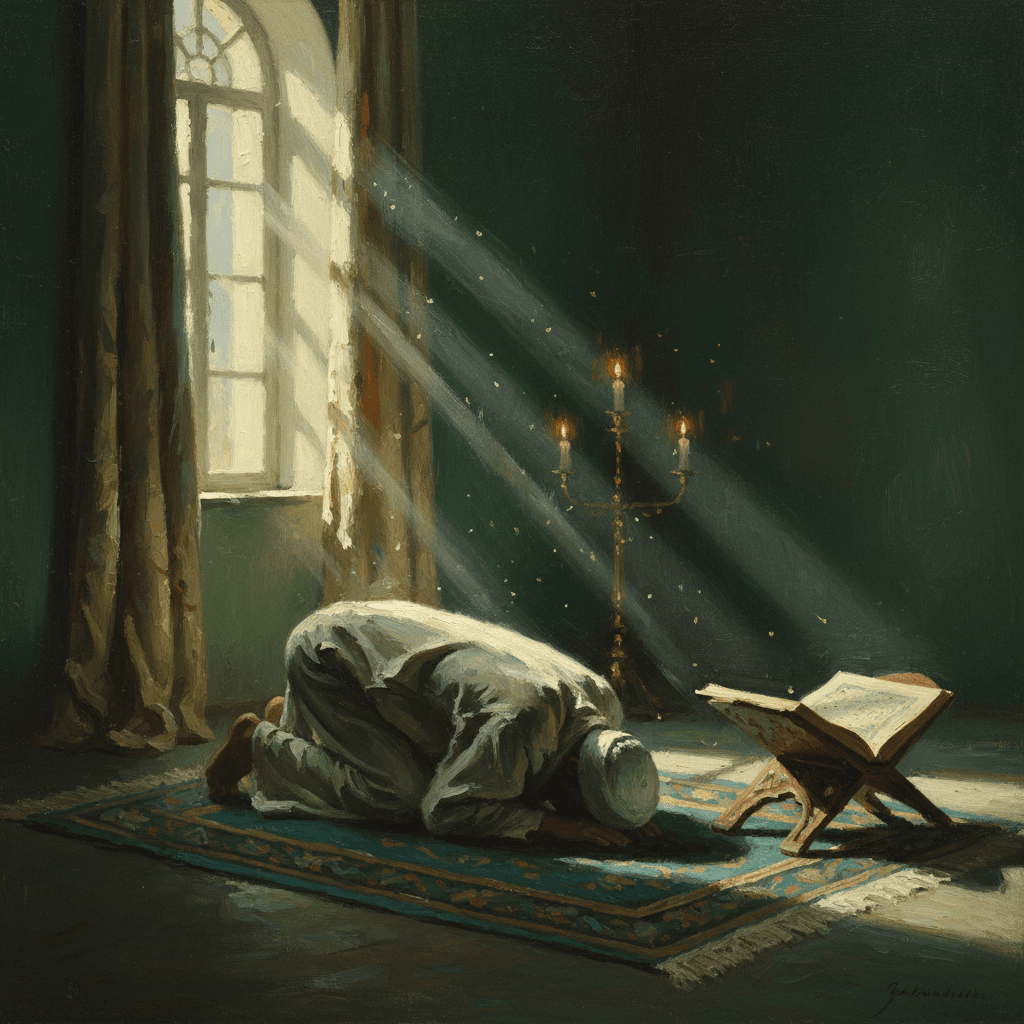
He was a king with an army, a psalm-writer with a voice that moved mountains — and he wept in prostration when he recognized his own failure.
Prophet Dawud ﷺ — known in the biblical tradition as King David — holds a unique place among the prophets of Islam. He was given the Zabur (Psalms), given sovereignty over a kingdom, and given an extraordinary gift: his tasbeeh (glorification of Allah) was so profound that the mountains and birds were commanded to join him in it. The wind carried his praise. The creation echoed his worship.
And yet, when he erred, the Quran records him falling in prostration immediately. Not debating. Not explaining. Prostrating.
The Prophet ﷺ described Dawud's prayer as the most beloved to Allah. Not the most intense, not the most complicated — the most beloved. There is a lesson in that distinction worth understanding fully.
The Duas and Worship of Prophet Dawud
The Quran records Dawud's glorification as a continuous act — not occasional but constant, the defining rhythm of his life:
سُبْحَانَ اللَّهِ — Subhan Allah — Glory be to Allah.
The mountains glorified with him. The birds praised alongside him. (Quran 38:18-19). His tasbeeh was his defining practice — so consistent, so sincere, so woven into his daily life that it became part of the natural world around him.
When he recognized his error in the judgment case — the details of which are mentioned in Quran 38:21-25 — his response was immediate:
فَاسْتَغْفَرَ رَبَّهُ وَخَرَّ رَاكِعًا وَأَنَابَ
Fastaghfara rabbahu wa-kharra raki'an wa-anab.
"He sought forgiveness of his Lord and fell down bowing, and turned in repentance." — (Quran 38:24)
Three acts in immediate succession: istaghfar (seeking forgiveness), khurur (falling in prostration), inabah (turning back to Allah). Not one, not two — all three, without pause for deliberation or self-justification.
Allah's response: "So We forgave him that; and indeed, for him is nearness to Us and a good place of return." (Quran 38:25)
Nearness (zulfa) and a good place of return (husna ma'ab) — these are the rewards of immediate, complete repentance.
The Story Behind His Worship
The Prophet ﷺ was asked by his companion Abdullah ibn Amr about the best way to observe night prayer and fasting. The Prophet said:
"The most beloved prayer to Allah is the prayer of Dawud, and the most beloved fasting to Allah is the fasting of Dawud. He would sleep half the night, then pray a third of it, then sleep a sixth. And he would fast one day and break his fast the next." (Bukhari 1131)
When Abdullah ibn Amr committed to a more intensive schedule — fasting every day, praying all night — the Prophet expressed concern. Over years, he came to understand what the Prophet had meant: the schedule Dawud observed was sustainable. Sustainable worship maintained over decades is superior to intense worship that burns out and stops.
Dawud's night: sleep → pray → sleep. He came to the night prayer rested, prayed it with presence, and rested again so the next day's worship could also be sincere. He did not exhaust himself into mechanical worship. He preserved the quality of his presence with Allah by giving his body what it needed to sustain the practice.
The Prophet ﷺ also said that Dawud's glorification was so loved by Allah that the very creation was commanded to participate. This is the kind of worship that comes from consistency, not intensity — a person so habituated to remembrance that it becomes the frequency on which they live.
How to Bring Dawud's Practice Into Your Life
Begin with tasbeeh as your constant companion. The defining feature of Dawud's worship was his constant glorification — Subhan Allah, Alhamdulillah, Allahu Akbar. You do not need a mountain to echo with you. You have a tongue that can glorify Allah while you walk, while you work, while you wait. The dua for dhikr covers how to make this remembrance your natural rhythm.
Fall in prostration when you recognize your mistake. This is perhaps the most practical lesson from Dawud. When you realize you have erred — whether in a decision, a word, or a deed — do not wait. Make two rak'ahs of repentance. Fall in sujood and say sincerely: Rabbi inni zalamtu nafsi fa-ghfir li — "My Lord, I have wronged myself, so forgive me." The proximity between recognition and repentance is a measure of your spiritual health.
Design a night prayer practice you can sustain. Dawud's schedule is not for beginners — it requires discipline and adjustment of sleep. But the principle applies to every level: start with what you can genuinely maintain rather than what sounds most impressive. Two rak'ahs of tahajjud every night for a year is worth more than ten rak'ahs twice a month. The dua for tahajjud gives the specific supplications for this blessed prayer.
Balance power with humility. Dawud was a king — he had real authority over a real kingdom. And yet the Quran's portrait of him is a man in prostration. Power without humility is one of the most dangerous combinations in human life. His example teaches that the more influence you have, the more vigilant you must be about the worship that keeps you grounded.
Build the Sustainable Worship Habit That Dawud Practiced
DeenBack helps you build consistent, sustainable Islamic habits — the kind Dawud maintained for a lifetime, not the kind that burns bright for a week and disappears. Start your streak today.


Free download. Premium features available in-app.
Related Duas
Dua for tahajjud: Dawud's night prayer was the most beloved to Allah. The dua for tahajjud covers how to establish and sustain this practice — with the specific supplications the Prophet taught for waking and praying in the last third of the night.
Dua for dhikr: Dawud's constant glorification was his defining act of worship. The dua for dhikr provides the comprehensive guide to making tasbeeh and remembrance a daily practice, not an occasional one.
Dua for repentance: Dawud's immediate prostration after recognizing his error is a model for the kind of tawbah Islam calls for. The dua for repentance gives the full framework for sincere turning back to Allah — the kind that earned Dawud divine nearness and a good place of return.
Common Questions
What is the prostration of recitation that comes from Dawud's verse?
Quran 38:24 — the verse recording Dawud's prostration — is one of the fifteen places in the Quran where a prostration of recitation (sajdat al-tilawah) is recommended. When you read this verse, you can perform a sajdah (prostration) in acknowledgment of Dawud's act and as an act of your own humility before Allah. It is Sunnah to do so when reciting or hearing this verse.
Is it permissible for me to adopt Dawud's fasting schedule?
Yes. Alternating-day fasting (fasting one day, breaking the next) is an established Sunnah practice. However, the Prophet also advised his companion Abdullah ibn Amr that if this became too difficult, he could step back to the three white days (13th, 14th, 15th of each month) or Monday and Thursday fasting. The principle is sustainability — do not commit to a practice you cannot maintain.
How do I develop the kind of worship that Dawud had?
Start with consistency in the obligatory. Dawud's extraordinary worship was built on a foundation of complete fulfillment of obligations — his five prayers, his fasting, his obligations to his community. The voluntary worship grew from that foundation. If the foundation is incomplete, adding towers of voluntary worship on top of it does not create what Dawud had. Begin with what is mandatory, make it excellent, and let the voluntary grow from there.
Closing
Dawud ﷺ was given a kingdom and a voice that moved creation. He was a warrior, a leader, a judge, a poet.
And he fell in prostration when he made a mistake.
The Quran does not linger on his kingdom. It shows us his prostration. It shows us the mountains glorifying with him. It shows us Allah saying — he is near to Us, and his place of return is good.
That is the definition of a successful life in Islam: not the power or the accomplishments, but the closeness to Allah that running back to Him in every error produces.
Make his tasbeeh your constant companion. Make his immediate repentance your reflexive response to your own failures. And build the worship practice that sustains for a lifetime.
Build the Lifetime Worship Habit That Dawud Had
The most beloved deeds to Allah are those done consistently, even if small. DeenBack helps you build the sustainable daily practice that compounds into the kind of closeness to Allah that Dawud had.
Free download. Premium features available in-app.
Frequently Asked Questions
What were the duas of Prophet Dawud?
The Quran records Dawud's repentance and prostration in Surah Sad (38:24-25), where after recognizing his error, he fell prostrate and returned to Allah entirely. His praise — Subhan Allah — was so constant that the mountains and birds joined him in glorification (Quran 38:18-19). The Prophet said Dawud's prayer was the most beloved to Allah: he would sleep half the night, stand a third, and sleep a sixth — and his fasting was the most beloved, alternating days. (Bukhari 1131)
What does the Quran say about Dawud's worship?
Allah commanded the mountains and birds to join Dawud in tasbeeh (glorification): 'We subjected the mountains to exalt with him, as well as the birds.' (Quran 38:18). He was given the Zabur (Psalms) as his scripture. Allah called him 'Khalifatuna fil-ard' — Our vicegerent on earth — and instructed him to rule with justice and not follow desire. (Quran 38:26). His defining quality was the combination of power and deep worship.
What was Dawud's mistake and how did he handle it?
The story in Quran 38:21-25 involves a judgment case that caused Dawud to realize he had been tested. When he understood, 'he sought forgiveness of his Lord and fell down bowing and turned in repentance.' (Quran 38:24). Allah says: 'So We forgave him that; and indeed, for him is nearness to Us and a good place of return.' (Quran 38:25). His immediate prostration and complete repentance is the model for how to respond when you realize you have erred.
Why was Dawud's prayer considered the best?
The Prophet said: 'The most beloved prayer to Allah is the prayer of Dawud, and the most beloved fasting to Allah is the fasting of Dawud.' When asked about the schedule, the Prophet explained: Dawud slept half the night, prayed a third, slept a sixth — and fasted every other day. (Bukhari 1131). The reason this is most beloved is the combination of adequate rest (making the worship sustainable) and genuine presence (because each third of the night devoted to prayer is filled with alertness, not exhaustion).
What can I learn from Dawud about tahajjud?
Dawud's prayer schedule teaches that consistency at a moderate level is superior to intense bursts that cannot be sustained. He slept first (half the night), then prayed (a third), then slept again (a sixth). This preserved both his rest and his worship. The Prophet said: 'The most beloved deeds to Allah are those done consistently, even if they are small.' (Bukhari 6464). Dawud's worship was small enough to maintain and sustained over a lifetime.