
- Published on
Dua for a New Muslim: Starting Fresh with Allah's Help
- Authors

- Name
- Ahmad
- Role
- Senior Marketing Manager, Islamic education • Deen Back
بِسْمِ اللهِ الرَّحْمٰنِ الرَّحِيْمِ
In the name of God, the Most Gracious, the Most Merciful.
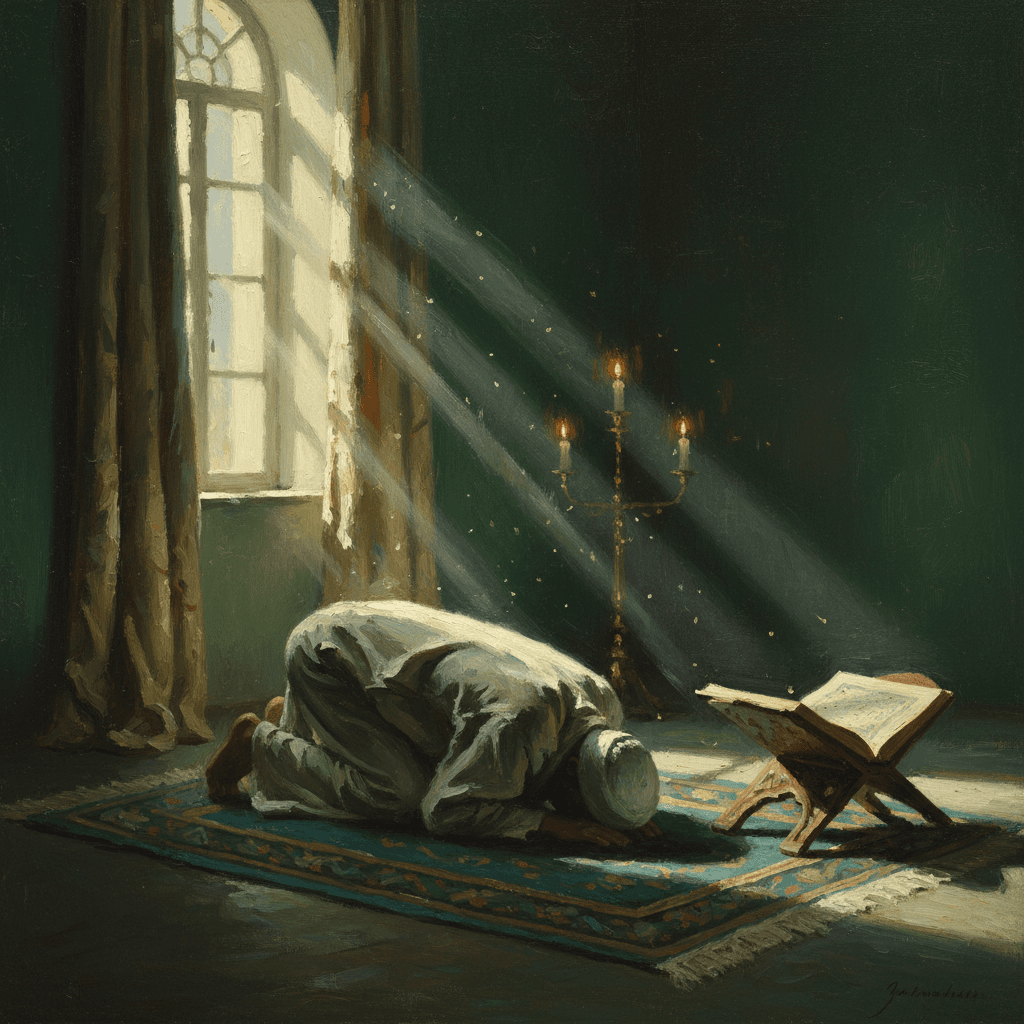
You said the words. Or maybe you came back after years away. Either way, you are standing at the beginning of something — and the beginning is simultaneously the most exciting and most frightening place to be.
The nafs does not disappear when you take your shahada. Old habits do not evaporate by morning. The people around you may not understand what you have done. And some days, the faith will feel clear and bright, and some days it will feel like a long way off.
This is normal. This is human. And Islam — through the specific duas the Prophet taught — gives every new Muslim the words to hold on when the beginning gets hard.
The Duas
For firmness in the faith:
اللَّهُمَّ ثَبِّتْنِي عَلَى دِينِكَ
Allahumma thabbitni 'ala dinik.
"O Allah, keep me firm upon Your religion." — adapted from (Tirmidhi 3522)
The Prophet himself said the ya Muqallib al-qulub dua frequently — asking Allah to keep his heart firm upon the religion. If the Prophet needed this, you certainly do.
For guidance, piety, and sufficiency:
اللَّهُمَّ إِنِّي أَسْأَلُكَ الْهُدَى وَالتُّقَى وَالْعَفَافَ وَالْغِنَى
Allahumma inni as'aluka al-huda wat-tuqa wal-afafa wal-ghina.
"O Allah, I ask You for guidance, piety, chastity, and self-sufficiency." — (Sahih Muslim 2721)
This four-part dua is everything a new Muslim needs: huda (being shown the right way), tuqa (the God-consciousness to actually walk it), afaf (restraint from what is forbidden), and ghina (contentment that does not require compromising the faith for acceptance).
For a fresh, clean beginning:
اللَّهُمَّ أَنْتَ رَبِّي لَا إِلَهَ إِلَّا أَنْتَ، خَلَقْتَنِي وَأَنَا عَبْدُكَ، وَأَنَا عَلَى عَهْدِكَ وَوَعْدِكَ مَا اسْتَطَعْتُ
Allahumma anta Rabbi la ilaha illa anta, khalaqtani wa ana abduk, wa ana ala ahdika wa wa'dika masta-ta't.
"O Allah, You are my Lord. There is no god but You. You created me and I am Your servant, and I am upon Your covenant and promise as best I can." — (Part of the Sayyid al-Istighfar, Bukhari 6306)
The Story Behind It
The Prophet (peace be upon him) addressed the condition of the new Muslim with remarkable tenderness. When someone came to him and declared the faith, he did not immediately load them with a list of obligations. He often taught them the most essential things first — the shahada, the prayer, and the general spirit of the faith — and let the rest come with time.
There is a hadith that offers enormous comfort to every new Muslim: "When a person becomes Muslim, Allah records for them every good deed they did in the days of their ignorance, and every evil deed they committed is wiped away. Then, whatever good they do after that is counted for them ten times to seven hundred times each, and for every evil deed they do, only one like it is counted." (Bukhari 41)
Every good deed before Islam is still counted. Every sin before Islam is erased. And after Islam, the scales are permanently tipped in your favor — good deeds multiply, bad deeds are recorded one-to-one.
This is who Allah is to the person who comes to Him sincerely. The beginning is extraordinarily generous.
How to Build Your Dua Practice from Day One
The single most important thing a new Muslim can do is not to try to do everything at once. The Prophet loved consistent small deeds above grand but unsustainable efforts. Here is how to build your dua practice:
Start with the morning and evening adhkar. These are the fundamental Sunnah supplications that every Muslim — new or lifelong — should build into their daily life. They take five to fifteen minutes and cover protection, gratitude, and remembrance of Allah at the bookends of each day.
Learn one dua at a time, deeply. Do not try to memorize twenty duas simultaneously. Take the guidance dua — Allahumma inni as'aluka al-huda — and say it every day for a month until it is part of you. Then add the next one. This is how the Companions learned: gradually, from a living teacher, absorbed through repetition.
Say Alhamdulillah and Subhanallah throughout the day. You do not need perfect Arabic to be in dhikr of Allah. Alhamdulillah when something goes well. Subhanallah when you see something beautiful. Astaghfirullah when you slip up. These micro-acts of remembrance are the connective tissue of a Muslim life.
Ask Allah for help when the practice is hard. Some days the salah will be difficult to establish. Some days old habits will call loudly. Do not white-knuckle through it alone — say ya Allah, make this easy for me with genuine need. The Prophet taught: "Ask Allah for everything, even for the strap of your sandal if it breaks." (Tirmidhi 3604) Nothing is too small to ask.
Find community. The Quran says believers are protectors of one another. (9:71) A new Muslim without community is like a new plant without soil. Look for a local mosque, an Islamic center, a Muslim friend who can walk with you. You were not designed to do this alone.
Build Your Islamic Practice from Day One
DeenBack is designed for Muslims who want to build real, consistent habits — daily duas, dhikr, and streaks that keep you connected to Allah even when life gets complicated. Start your journey here.


Free download. Premium features available in-app.
Related Duas
Dua for guidance: The dua for guidance covers the full set of Sunnah supplications for being kept on the straight path — essential reading for any Muslim, but especially for someone who has just begun.
Dua for steadfastness: Staying firm is the central challenge of the new Muslim's first year. The dua for steadfastness gives you the authentic supplications for enduring in the faith over the long haul.
Dua for a fresh start: If you are returning to Islam after years away, the dua for a fresh start speaks directly to your situation — the slate wiped clean and the path forward.
Dua for self-control: The hardest part of becoming Muslim is often changing what you do with your body and your time. The dua for self-control gives you specific supplications for the moments when the nafs resists.
Common Questions
What if I do not know Arabic? Can I make dua in my own language?
Yes. Dua in your own language is valid and heard by Allah. The obligation is sincerity, not Arabic. However, learning the key Sunnah duas in Arabic is a worthwhile goal over time — because the Prophet used specific words for specific reasons, and those formulations carry power. Start in your language, and learn the Arabic as you go.
What if I become Muslim and then feel doubt?
Doubt is not the same as disbelief. Having questions is not a sign that your faith is false — it is a sign that you are thinking seriously about what you believe. Bring your doubts to Allah in dua. Say: ya Allah, increase me in certainty. Seek knowledge from trustworthy scholars. Doubt that you carry to Allah is the beginning of deeper faith, not the end.
How do I explain to my family that I have become Muslim?
This is one of the hardest parts of being a new Muslim. Every situation is different. Make dua for your family before you speak to them: Allahumma ihdi qawmi fa-innahum la ya'lamun — O Allah, guide my people, for they do not know. (An adaptation of the Prophet's dua at Taif.) Ask Allah to make the conversation easy and to guide their hearts. Then speak the truth gently, clearly, and from a place of love.
Closing
You came to Allah. Whatever the journey that brought you here — however long, however complicated — you are here now.
Islam does not demand that you arrive perfect. It asks that you arrive, and keep arriving, with every sunrise. The duas in this article are not for when you have it figured out. They are for right now — in the middle of the beginning, when you need Allah's help to stay on the path He just showed you.
Say them. Mean them. And come back to them every single day.
Your Islamic Journey Starts with Daily Dua
DeenBack helps new Muslims build the foundational habits of Islamic practice — daily duas, morning and evening adhkar, and the streak-tracking that keeps small consistency alive. Welcome to the journey.
Free download. Premium features available in-app.
Frequently Asked Questions
What dua should a new Muslim say first?
The most foundational dua for a new Muslim is: Allahumma thabbitni ala dinik — O Allah, keep me firm upon Your religion. This is a dua the Prophet said regularly himself, and it is perfect for someone at the beginning of their Islamic journey. Firmness is the first thing you need.
Is there a dua for someone who just took their shahada?
After the shahada, say: Allahumma inni as'aluka al-huda wat-tuqa wal-afafa wal-ghina — O Allah, I ask You for guidance, piety, chastity, and self-sufficiency. (Muslim 2721) This four-part dua covers everything a new Muslim needs to grow: guidance to the right path, God-consciousness to stay on it, restraint from what is forbidden, and contentment.
Do all past sins go away when someone becomes Muslim?
Yes — this is one of the most beautiful aspects of Islam for a convert. The Prophet said: 'Islam wipes out whatever came before it.' (Muslim 121) Every sin before the shahada is forgiven. You begin completely clean. This is not a metaphor — it is the Islamic theological reality that every new Muslim should know and internalize.
What if I relapse into old habits after becoming Muslim?
Say: Astaghfirullah wa atubu ilayh — I seek forgiveness from Allah and repent to Him. Then return. Islam is not a single moment of perfection — it is a lifelong return to Allah. The Prophet said: 'Every son of Adam sins, and the best of sinners are those who repent.' (Tirmidhi 2499) Relapse does not undo your shahada. It invites you back to dua.
How do I build my Islamic practice as a new Muslim?
Start small and stay consistent. The Prophet said the most beloved deeds to Allah are those done consistently, even if small. (Bukhari 6464) Learn one dua at a time. Pray as much as you can manage. Build up gradually rather than trying to adopt everything at once. Community, consistent dua, and small daily practices are the foundation.