
- Published on
Dua for Motivation: The Supplication That Reignites Your Purpose
- Authors

- Name
- Ahmad
- Role
- Senior Marketing Manager, Islamic education • Deen Back
بِسْمِ اللهِ الرَّحْمٰنِ الرَّحِيْمِ
In the name of God, the Most Gracious, the Most Merciful.
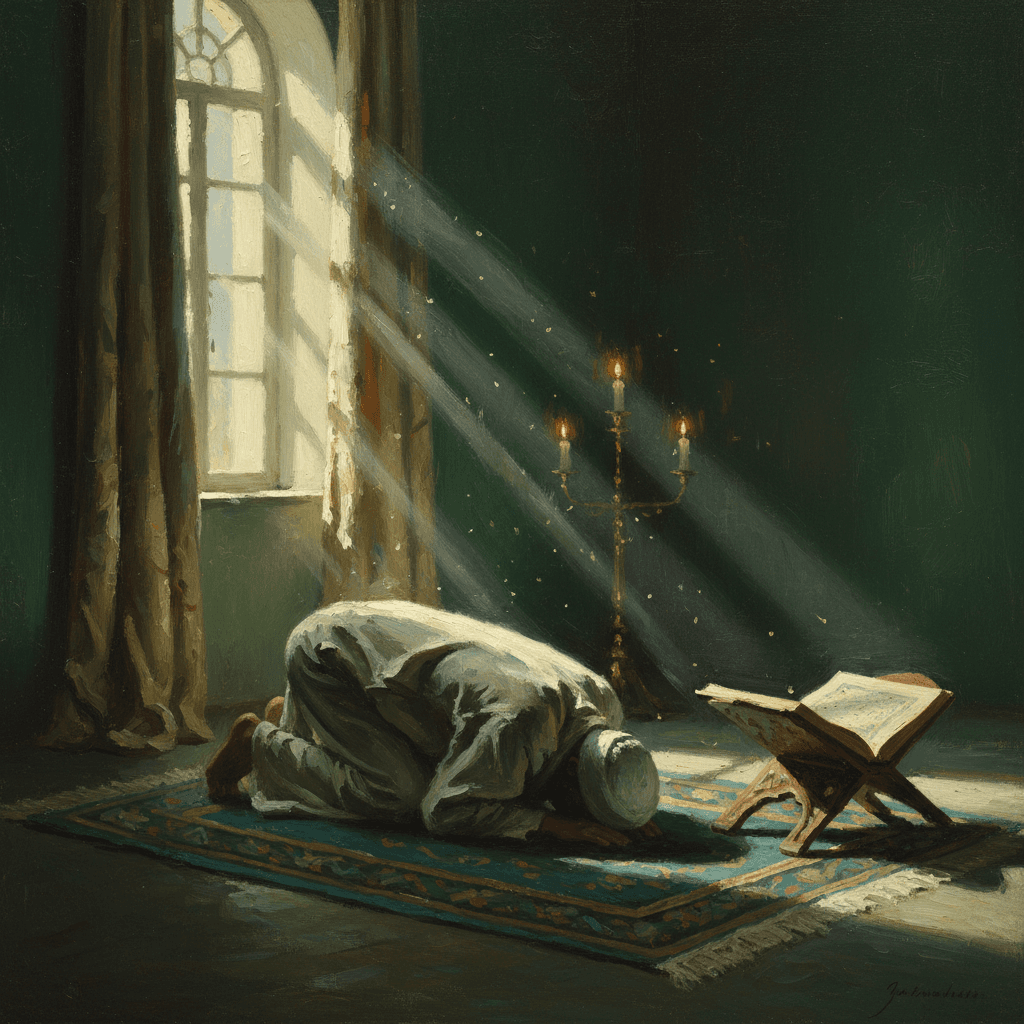
There are seasons in the spiritual life when everything feels flat. The prayers you used to feel are now just words. The dhikr you committed to sits undone. The goals you set feel impossibly distant.
This is not a unique failure. It is a human experience the Companions described openly, and one the Prophet ﷺ gave us direct tools to address.
Motivation in Islam is not treated as a feeling you wait for. It is something you ask Allah for and then actively cultivate through small, repeated actions. The dua for motivation is your entry point into that process.
The Dua for Motivation in Worship
The Prophet ﷺ taught this supplication to Mu'adh ibn Jabal رضي الله عنه and instructed him to say it after every prayer:
اللَّهُمَّ أَعِنِّي عَلَى ذِكْرِكَ وَشُكْرِكَ وَحُسْنِ عِبَادَتِكَ
Allahumma a'inni 'ala dhikrika wa shukrika wa husni 'ibadatik
"O Allah, help me to remember You, thank You, and worship You well."
— (Abu Dawud 1522 — sahih)
Three things are asked for in one breath: help with dhikr (remembrance), help with shukr (gratitude), and help with doing worship beautifully — not just mechanically. The word husn (beauty, goodness, excellence) is the key. This dua is not just asking to keep praying. It is asking to pray with presence and quality.
When to Say This Dua
The Prophet ﷺ instructed it be said after every salah. That makes it a built-in motivational reset — five times a day, at the end of each prayer, you are actively asking Allah to help you do the next one well. Over time, this changes the internal climate from effort to intention.
The Story Behind This Supplication
The Prophet ﷺ took Mu'adh by the hand and said to him: "O Mu'adh, by Allah I love you." Then he said: "I advise you, O Mu'adh, do not miss saying after every prayer: Allahumma a'inni 'ala dhikrika wa shukrika wa husni 'ibadatik." (Abu Dawud 1522)
This was a personal instruction — a gift given with love. The Prophet was not issuing a general ruling; he was giving Mu'adh a private tool for his spiritual life. The fact that the hadith was narrated and preserved means this gift was extended to all of us.
Mu'adh ibn Jabal was one of the most knowledgeable Companions. Yet even he needed to be reminded to ask for help in worship. That is the level of honesty Islam requires: admitting that without Allah's ongoing assistance, even the most learned and devoted person cannot sustain meaningful worship on willpower alone.
How to Turn This Dua Into Daily Momentum
The biggest mistake people make with motivation is treating it as a precondition for action. "I'll start when I feel ready." The Islamic model flips this: you ask Allah for the motivation, you begin the small action, and the feeling follows the doing.
Say it immediately after every salah. This is the Prophetic instruction. It takes four seconds. Over five daily prayers, you are making twenty requests for divine help in your worship. That is not nothing.
Add it to your morning adhkar. The morning is when motivation is most fragile — the day has not started yet and the nafs will suggest sleeping in, scrolling, or skipping the small habits you committed to. Saying this dua as part of your morning routine sets a different intention for the hours ahead.
Use it as a micro-reset when energy drops. Midday sluggishness, afternoon dips, the feeling of going through motions — these are the moments to pause, say this dua quietly, and then return to what you were doing. You are not trying to manufacture excitement. You are asking Allah for help and then trusting that help will come through consistent small action.
Attach one small habit to it. After saying this dua, immediately do one thing: open the Quran for two minutes, make one dhikr, read one line of a hadith. The dua plants an intention; the action waters it.
Track your consistency, not your feeling. Motivation is a downstream result of consistent behavior, not its source. If you track seven consecutive days of saying this dua after Fajr, you will notice the quality of your Fajr change — not because you feel differently, but because you have built a small sacred practice.
Build Consistent Worship — One Day at a Time
DeenBack tracks your daily dhikr and dua habits so you can see your streak grow — the most reliable way to sustain motivation when feelings fluctuate.


Free download. Premium features available in-app.
Related Duas to Reignite Spiritual Energy
Dua for increase in iman:
اللَّهُمَّ زِدْنِي إِيمَانًا وَيَقِينًا
Allahumma zidni imanan wa yaqinan
"O Allah, increase me in faith and certainty."
Dua for the turning of hearts:
يَا مُقَلِّبَ الْقُلُوبِ ثَبِّتْ قَلْبِي عَلَى دِينِكَ
Ya muqallibal-qulubi, thabbit qalbi 'ala dinik
"O Turner of the hearts, make my heart firm upon Your religion."
— (Tirmidhi 3522 — hasan)
For practical strategies alongside these duas, see how to increase iman and dua for increase in iman. For the structural side of consistency, how to be consistent in prayers provides a step-by-step system. The dua for steadfastness is a natural companion for days when motivation is low and you need something to hold on to.
Common Questions
Is it wrong to pray even when I do not feel motivated? No — it is exactly right. The Prophet ﷺ said: "The most beloved deeds to Allah are the most consistent, even if small." (Bukhari 6465) Praying without feeling is still praying. The feeling often returns after the act, not before.
I have been making this dua for weeks and still feel unmotivated. What now? Check the inputs. Are you sleeping enough? Eating well? Reducing screen time before bed? Spiritual motivation is partly a physical state. The dua opens the door; your body and habits need to walk through it.
Can I make dua for motivation for a worldly goal, like work or study? Yes. The same principle applies. Ask Allah for help in doing your work with ihsan (excellence). The Prophet's dua covers worship, but the principle of asking Allah for help in anything is universal in Islam.
What if I feel like a hypocrite asking for motivation I do not have? That feeling is actually a sign of healthy awareness, not hypocrisy. Hypocrisy is pretending to have something you do not. Asking Allah for what you lack is precisely what you are supposed to do.
Motivation Is Given, Not Found
You will not stumble across spiritual motivation by accident. It is a gift from Allah, asked for consistently, and nurtured through small daily actions.
The Prophet ﷺ gave Mu'adh a tool because he loved him. He left us that same tool because he loved his ummah. Say the words. Begin the habit. Trust the process.
Ask, Act, and Track — The Daily Motivation System
DeenBack gives your daily dua and dhikr a home — so the small practices that build long-term spiritual momentum never slip through the cracks.
Free download. Premium features available in-app.
Frequently Asked Questions
Is it normal for a Muslim to lose motivation in worship?
Yes — even the Companions experienced periods of spiritual dryness. Ibn Masud رضي الله عنه said the heart can feel alive one hour and heavy the next. The Prophet ﷺ explicitly taught duas and practices to renew spiritual energy. Low motivation is a call to dua, not a sign of spiritual failure.
What is the best dua when you feel completely unmotivated?
The dua taught by the Prophet directly: Allahumma a'inni 'ala dhikrika wa shukrika wa husni 'ibadatik — asking Allah for help in remembering Him, thanking Him, and worshipping Him well. It is short, powerful, and can be said anywhere. (Abu Dawud 1522)
Why do I feel motivated after Ramadan but lose it quickly?
Motivation spiked during Ramadan was partly built on an external structure — fasting, tarawih, collective energy. When that structure ends, the internal habit has not yet formed. The solution is building a small, consistent daily practice that does not depend on seasons.
How do I stay motivated to pray five times a day consistently?
The key is not to rely on feeling motivated — feelings fluctuate. Build a system where prayer is attached to fixed daily anchors (meals, waking up, sleeping) rather than to how you feel. Consistent dua for help in worship bridges the gap between intention and action.